

Quando llegas a Pisciotta parece que acabas de entrar en una película en blanco y negro, de esas del neorrealismo italiano. Las casas a lo largo de la calle que atraviesa el pueblo, una antigua provincial, son al más puro estilo cilentano. No hay un mero cuidado urbanístico, pero la autenticidad, esa sí, no falta. “Bienvenidos a Pisciotta, el pueblo suspendido entre agua y tierra“, me sentiría por leer. En cambio, el cartel al inicio del pequeño centro me recuerda que estamos en el pueblo del aceite, aquel extraído de la oliva autóctona que, en esta parte de la costa cilente, recibe el nombre de “pisciottana“. Los habitantes de Pisciotta, al igual que todos los demás cilentanos, durante siglos han obtenido ingresos de la pastorizia. Y la unión entre pastorizia y mar sigue siendo muy fuerte en esta tierra.
- El Cilento
- 10 Things to Do and See in Pisciotta, Cilento
- 1 The alleys and historic center of Pisciotta
- 2 The Marchesale Palace of Pisciotta
- 3 Piazzetta del Cannone of Pisciotta
- 4 Michelangelo Pagano Square in Pisciotta
- 5 Mother Church of Saints Peter and Paul
- 6 The cats of Pisciotta
- 7 The port of Pisciotta and the Marina
- 8 How to get to Pisciotta
- 9 What to eat in Pisciotta
- 10 Where to sleep in Pisciotta
- Photo Gallery of Pisciotta
El Cilento
La provincia al sur de Salerno, toma casi completamente el nombre de Cilento, excepto por el Vallo Di Diano al este, hacia Basilicata y el área del río Sele. El Cilento costero no es muy diferente del interior. Todo el Cilento formaba parte de la Antigua Lucania y hoy, a pesar de que han pasado siglos y está en Campania, las influencias lucanas aún están muy arraigadas en esta zona. El dialecto cilentano, además, toma mucho del lucano, una lengua Osca. También las costumbres y tradiciones tienen fuertes influencias lucanas.
Pisciotta no es la excepción. Símbolo del Cilento costero, en el Parque Nacional del Cilento y Vallo di Diano, el pueblo tiene forma redondeada, a unos tres kilómetros de la costa y está completamente rodeado de árboles centenarios de olivos. Cuenta con unos 2600 habitantes y en los últimos años ha visto muchas presencias extranjeras, sobre todo del norte de Europa y australianos.
10 Things to Do and See in Pisciotta, Cilento

1 The alleys and historic center of Pisciotta
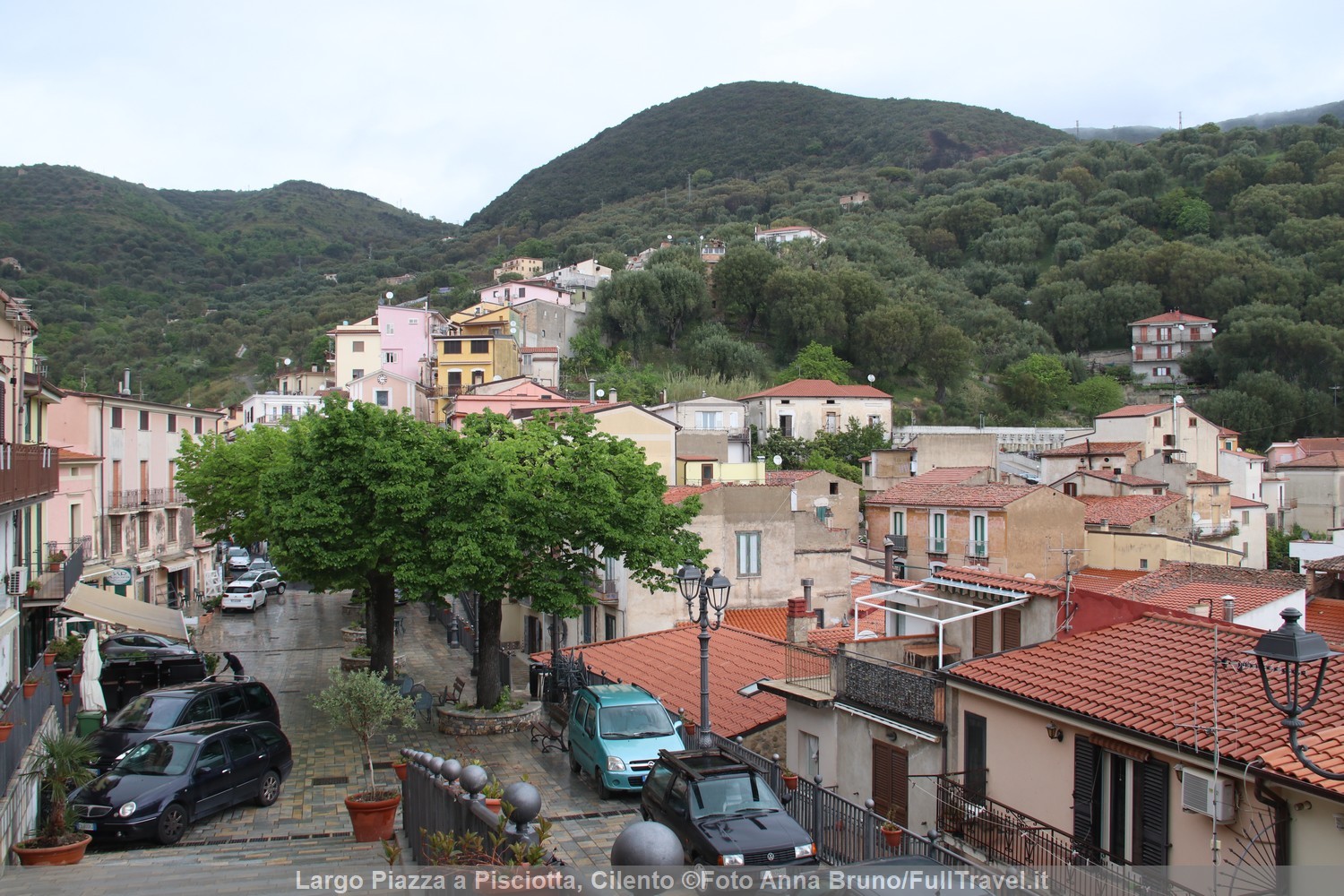
Starting point to visit the village of Pisciotta is undoubtedly “Largo Piazza” of “piazza Raffaele Pinto“. If you arrive by car, look for a parking nearby and continue on foot, winding through the maze of alleys in the historic center. The streets of the village are very narrow, lined with ancient noble palaces, popular houses, and some chapels such as that of San Michele Arcangelo and the Madonna della Mercede (fishermen used to visit them in gratitude), clear signs of religious belonging. In Via Roma, worn signs remind us of old shops and the ancient pharmacy of the town. The historic center of Pisciotta is entirely influenced by its medieval position. It is here that inhabitants took refuge to defend themselves from the attacks of Saracens, whose raids plagued all the southern coasts of the Bel Paese.

2 The Marchesale Palace of Pisciotta
The Marchesale Palace of Pisciotta, of the Pappacoda family, is located along the ascent of Via Roma. The entrance to the eighteenth-century palace is preceded by a narrow and long alley. Passing through the large door, one is thrown into an atrium with a large visible staircase and large windows, all open, in the shape of arches, through which old fig trees, wild plants, and the ever-present olive trees dotting a garden with a clear Cilento influence can be seen. The palace is partly inhabited and partially visitable.

3 Piazzetta del Cannone of Pisciotta
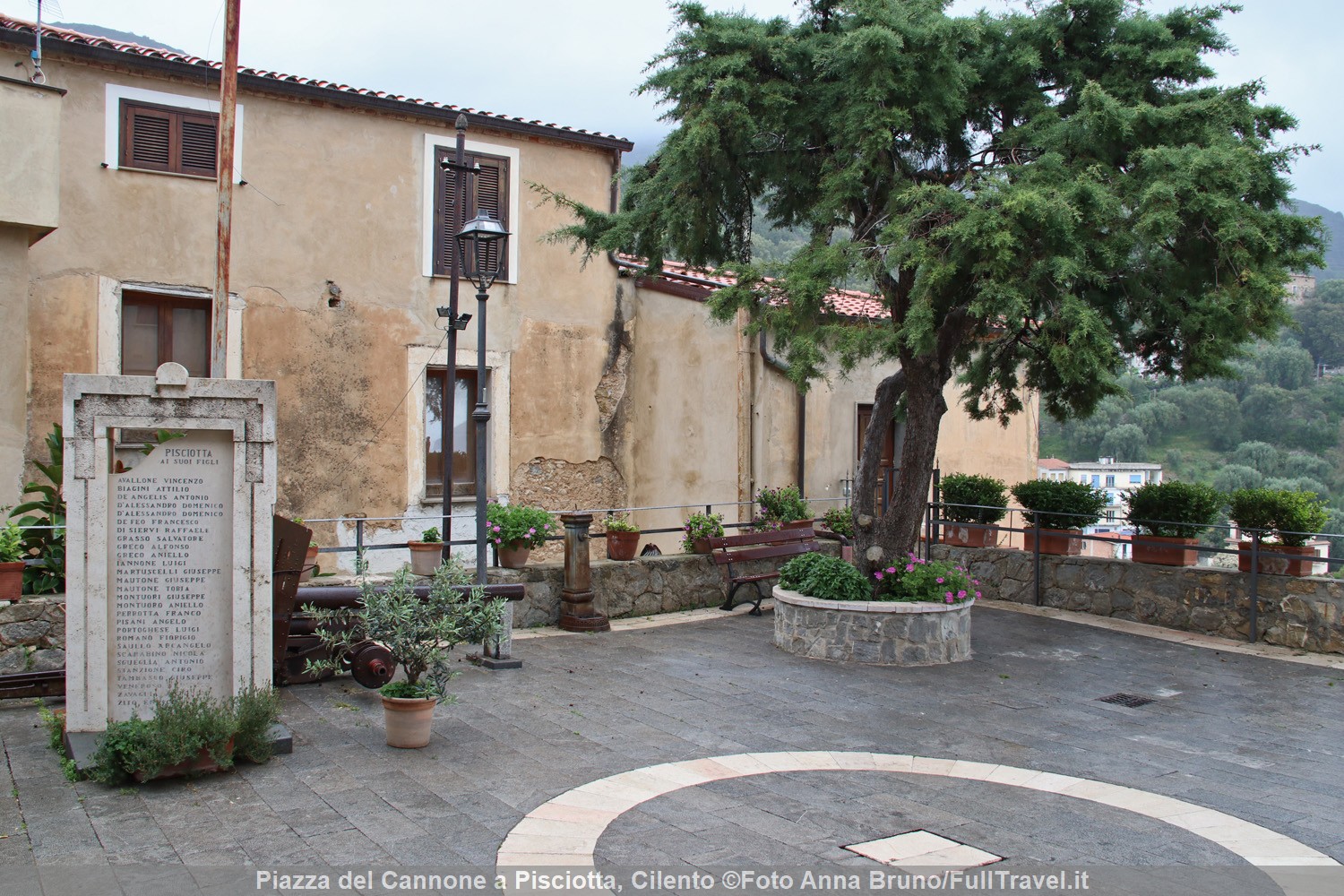
The narrow alleys of Pisciotta open onto picturesque small squares overlooking ancient palaces and popular houses. In the historic center, just after leaving the main square “Raffaele Pinto“, also called “Largo Piazza“, you can refresh yourself from the climb by stopping in the Piazzetta del Cannone, so named because here is an ancient cannon. The belvedere of the small square presents itself as a large terrace with a view that is lost among the rooftops of the houses, the greenery of olive trees, and, downslope, the view of the sea. On the wall bordering the access road, Via Roma, murals are prominently displayed which, between warning and narrative, recount how brigands populated the modern history of the area, as in nearby Lucania and the rest of Campania.
4 Michelangelo Pagano Square in Pisciotta
At the end of via Roma, towards the Mother Church of Pisciotta, a square draws attention: piazza Michelangelo Pagano. Among ancient palaces, like Palazzo Francia and the north side of the main church, the picturesque square appears halfway between a tavern with an open terrace and a film set. But it is none of these things. The Pagano square of Pisciotta is a place where time stops and remains suspended between wonder and the beauty of a wild and authentic south.

5 Mother Church of Saints Peter and Paul
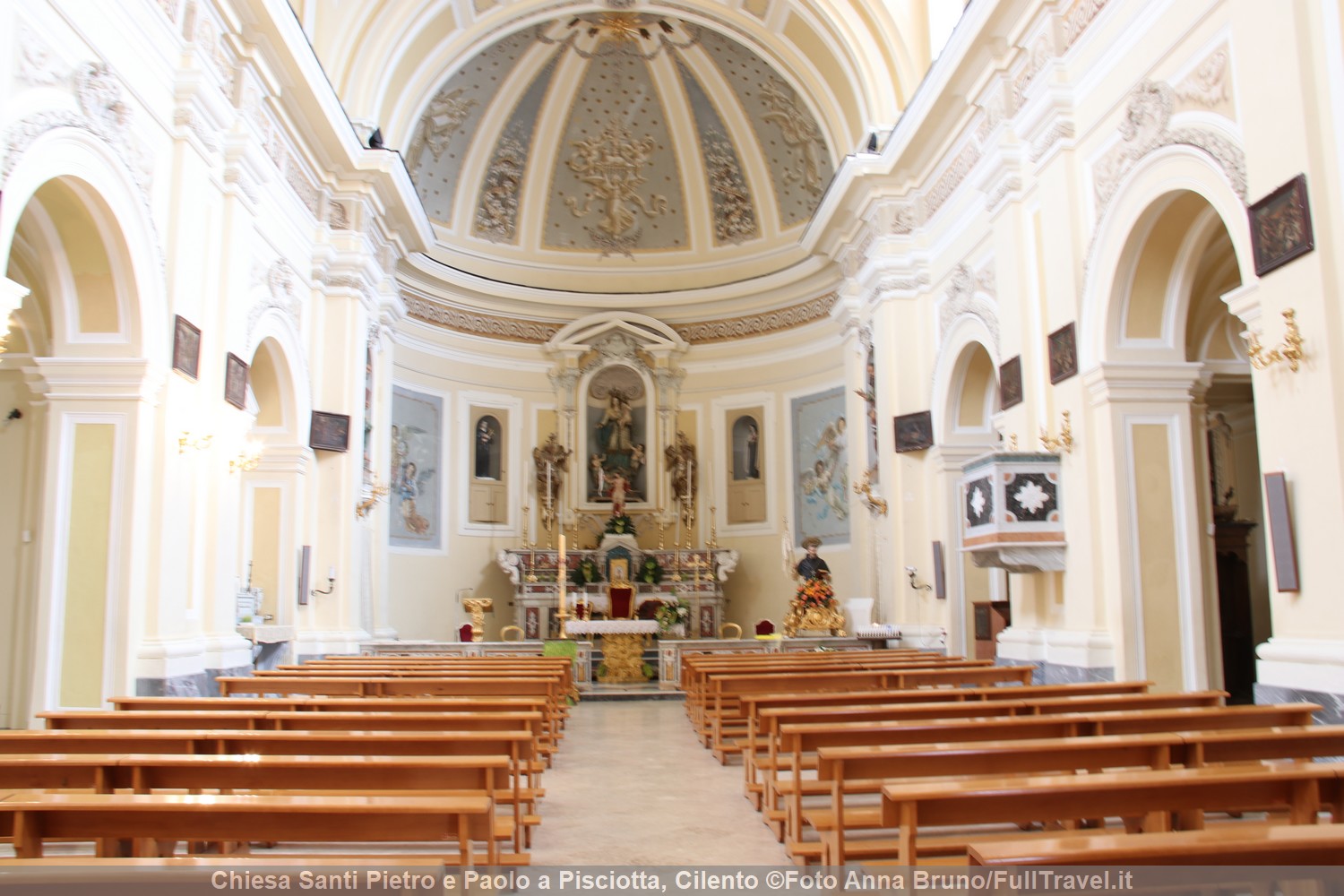
The main church of Pisciotta is dedicated to Saints Peter and Paul. It overlooks Pagano square and has an unusual side entrance since the main one is used only for special events. The church has a single, very large nave and dates back to the 17th century, although it has undergone several restorations. Inside, there are some works from the Neapolitan school and clear Baroque references. Other churches in Pisciotta include the del Carmine, which features an electric clock installed in the late ’60s by a company from Potenza; the Church of the Assumption, also called “of the Star” and the Santuario di Sant’Agnello Abate in nearby Rodio.
6 The cats of Pisciotta
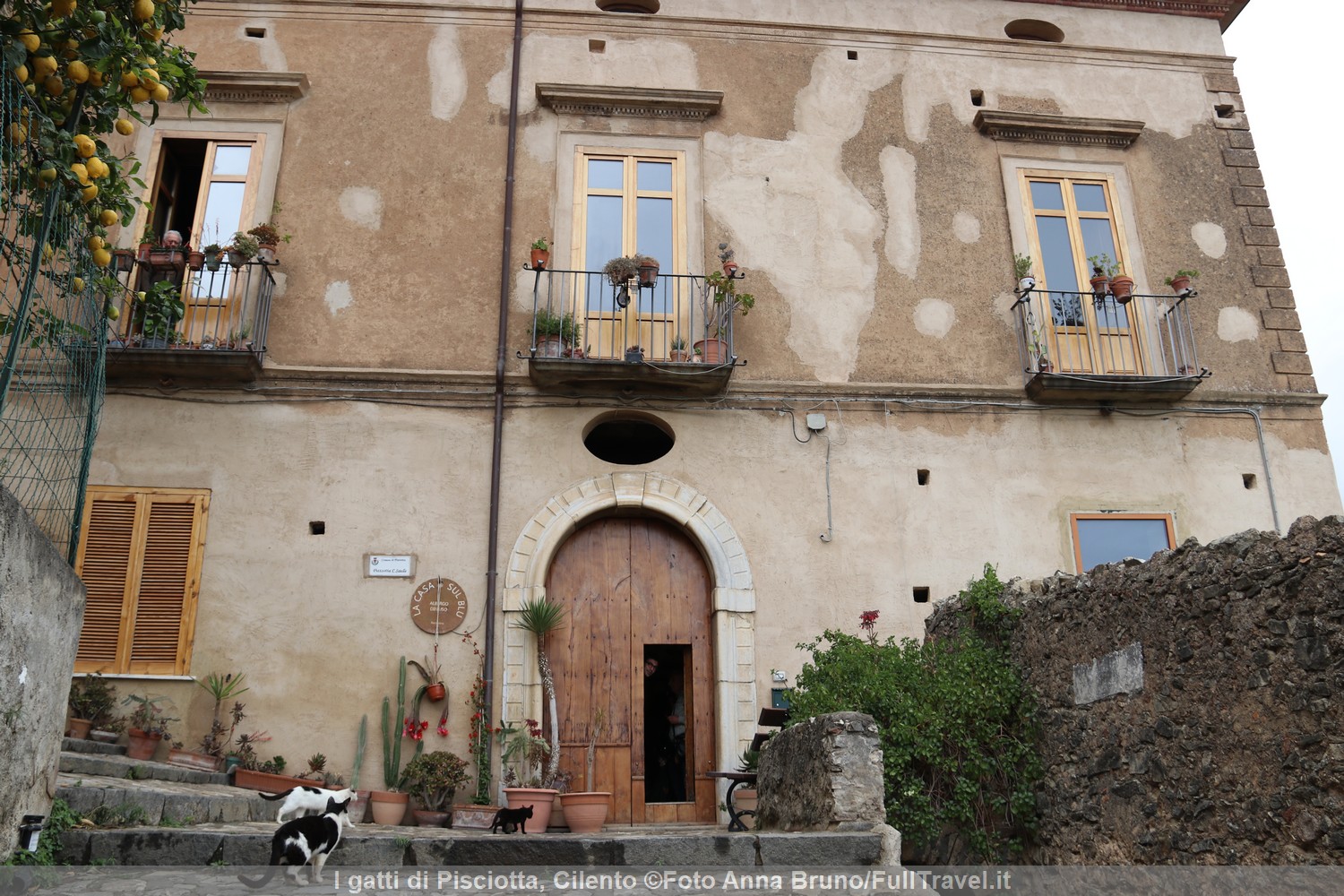
In the alleys of the historic center of Pisciotta you will be pleasantly accompanied by the cats of Pisciotta. Males, females, of various colors, tabby, kittens, in love, curious and wary, the cats of Pisciotta, which do not belong to a particular breed except the street one, although all have an owner, make the visit to the village even more authentic. Every alley reserves a close encounter with a domestic feline and, at every corner, one cat disappears to make way for another from the neighborhood. A feline relay. And if you come in the mating season, you will be accompanied by the loud meows of males seeking females.
7 The port of Pisciotta and the Marina
About three kilometers from the village is the Marina of Pisciotta and the small tourist port. The sea stretch here, as throughout Cilento (from Agropoli to Sapri), is of striking beauty. Many Cilento locations have been awarded the Blue Flag for years, and Pisciotta is no exception, making environmental protection a true banner. The town’s school is, in fact, absolutely “plastic free” and other measures are taken to protect the Cilento jewel as best as possible. Like many southern coasts, there are lookout towers, some private and others accessible after a trekking route.

8 How to get to Pisciotta
Pisciotta is served by the State Railways station “Pisciotta-Palinuro” (Naples – Reggio Calabria line). The train travel time from Naples is about two hours, while from Rome it takes just over three and a half hours. The nearest airport is Naples Capodichino, although if the Salerno Costa d’Amalfi airport works, it is the preferred hub. The alternative to the train is certainly the car. And that is the advice I would give you, besides the bicycle (for sports enthusiasts). Arriving in Pisciotta by car means making a slow journey and immersing yourself in the beauty of all Cilento.
Some directions. From the North: from the A3 Salerno – Reggio Calabria highway, exit at Buonabitacolo and continue on SS 517. Near Policastro Bussentino, turn right and join SS 18; continuing on this road exit at Poderia and from here proceed towards Palinuro on SR 562 which runs along the Mingardo river. At the Palinuro roundabout, take the right exit towards Pisciotta. After 5 km, take the direction Pisciotta Marina. Alternatively, from the A3 Salerno – Reggio Calabria highway, exit at Battipaglia and continue on SS 18 and its variant towards Agropoli/Vallo della Lucania. Exit at Poderia and from here proceed towards Palinuro on SR 562 which runs along the Mingardo river. At the Palinuro roundabout, take the right exit towards Pisciotta. After 5 km take the direction Pisciotta Marina.
9 What to eat in Pisciotta
The cuisine of Pisciotta is in perfect harmony with that of Cilento. The ingredients are the right mix of sea and land. The local dishes are flavored with extra virgin olive oil made here from the native Pisciotta olive. The Extra Virgin Olive Oil, to be good and genuine, should slightly sting. Another exclusive product of Pisciotta is the “Alici di Menaica” which owe their name to an ancient fishing technique introduced by the Greeks (a visit to nearby Velia is recommended), almost entirely disappeared but, in Pisciotta, is kept alive thanks to some local fishermen. If you love seafood and blue fish, don’t miss tasting spaghetti with anchovy sauce, which is not second to the more famous one from Cetara. The alici di menara and the anchovy sauce can be purchased in various shops in the marina or in the store in piazza Pinto. Also in Pisciotta, as in all Cilento, you can find the mozzarella in mortella (invented by transhumant shepherds), a kind of stretched cheese preserved in myrtle branches, which also gives it a characteristic flavor, braided like a braid. The restaurant offerings in Pisciotta and surroundings are quite good. Pisciotta’s restaurants offer typical dishes, and the agriturismi in the area are also of excellent level, with organic and zero-kilometer products.

10 Where to sleep in Pisciotta
The hotel offer in Pisciotta is good. If you are looking for an authentic experience, I recommend staying in a B&B or the Albergo diffuso La Casa sul Blu. Alternatively, for those who can afford it, the Hotel Marulivo, converted from an ancient 14th-century monastery, offers an exclusive experience with a terrace and sea-view rooms. The alternative is agriturismi, which, as in the case of dining, offer good-level packages at a good price.