

“See Naples and then die“. This is undoubtedly a proverb that helps to fully understand how fascinating this city can be. From breathtaking views to culture, there are so many things to see in Naples. We thought of creating a short list that could suggest which places you absolutely cannot miss during your holiday: what to see in Naples and what to visit.
- Discover Naples in video
- The 12 most famous attractions of Naples
- Spaccanapoli
- Cathedral of San Gennaro
- Naples Underground
- Lungomare Caracciolo
- Castel dell’Ovo
- Maschio Angioino
- National Archaeological Museum
- Piazza del Plebiscito
- Quartieri Spagnoli
- Royal Palace and Park of Capodimonte
- Certosa di San Martino
- Galleria Umberto I
- What to visit in Naples: places of interest and monuments
- 1 Piazza del Plebiscito
- 2 Royal Palace of Naples
- 3 Maschio Angioino
- 4 Spaccanapoli
- 5 San Gregorio Armeno
- 6 Spanish Quarters and Via Toledo
- 7 Posillipo and Via Chiaia
- 8 Underground Naples
- 9 Naples Stock Exchange Palace
- 10 Teatro San Carlo
- 11 Reggia di Capodimonte
- Churches of Naples
- 12 Naples Cathedral
- 13 Monastery of Santa Chiara
- 14 Pio Monte della Misericordia
- 15 Certosa di San Martino
- Museums of Naples
- 16 Naples Archaeological Museum
- 17 Chapel of San Severo and Veiled Christ
- 18 20th Century Museum of Naples
- 19 Santa Maria delle Anime del Purgatorio ad Arco Museum Complex
- 20 Museum Complex of the Most August Archconfraternity of Pilgrims
- 21 Other museums in Naples
- 22 How to get around Naples
- Brief information about Naples: where to eat, how to arrive, where to sleep
- 23 How to get to Naples
- 24 What to eat in Naples
- 25 Where to sleep in Naples: panoramic areas and strategic tips
- 26 Superstition
- 27 Funiculì funiculà
- Frequently asked questions about what to see in Naples
Discover Naples in video
A short visual journey through the wonders of Naples: atmospheres, glimpses, and iconic places of the Neapolitan city.
The 12 most famous attractions of Naples
Naples is a unique mix of history, culture, folklore, and breathtaking panoramas. Below you will find a selection of the 12 most famous and beloved attractions of the city, perfect for discovering the authentic essence of the Neapolitan capital.
Spaccanapoli
Area: Historic Center
Type: Iconic street
Cathedral of San Gennaro
Area: Via Duomo
Type: Cathedral
Naples Underground
Area: Historic Center
Type: Archaeological route
Lungomare Caracciolo
Area: Mergellina
Type: Panoramic
Castel dell’Ovo
Area: Borgo Marinari
Type: Castle
Maschio Angioino
Area: Piazza Municipio
Type: Castle
National Archaeological Museum
Area: Via Foria
Type: Museum
Piazza del Plebiscito
Area: Center
Type: Monumental square
Quartieri Spagnoli
Area: Center
Type: Working-class neighborhood
Royal Palace and Park of Capodimonte
Area: Capodimonte
Type: Park and museum
Certosa di San Martino
Area: Vomero
Type: Historic viewpoint
Galleria Umberto I
Area: Center
Type: Historic architecture
What to visit in Naples: places of interest and monuments
Naples is a city to visit over several days. Among the many attractions this city offers, we want to recommend some key places in Naples: what to visit during your vacation.
1 Piazza del Plebiscito
Piazza del Plebiscito, in the neighborhood Santa Lucia, is the heart and symbol of the city. Within the 25,000 sqm delimiting it, you can find some of Naples’ most important works, such as the Royal Palace and the Church of San Francesco di Paola. The square reflects buildings from the 18th and 19th centuries. From here you can admire Mount Vesuvius, located in front of the rear side of the Royal Palace. The square should be placed first in the list “Naples: what to see”.

2 Royal Palace of Naples
The Royal Palace of Naples was built in the 17th century by the Spanish viceroys. It was later expanded by the Bourbons during the eighteenth century. The royal apartments are open for visits from 9:00 AM to 7:00 PM, with a ticket purchase required. The inner courtyard and gardens have free access. Not far from the Royal Palace is the Teatro San Carlo, a very famous opera house, which can be visited daily from 9:00 AM to 5:30 PM, except during performances.

3 Maschio Angioino
The Maschio Angioino is the icon of historic Naples, located on the seafront in a particular position. It is one of the main attractions of Naples. Inside you will find the Civic Museum of Naples.

4 Spaccanapoli
Spaccanapoli is the soul of the city of Naples. The meaning of its name is literal: the district is literally split in two by one street. This split is clearly visible from above. Here intersect via Benedetto Croce, San Biagio dei Librai e Vicaria Vecchia (deumanus inferior while the decumanus major was Via dei Tribunali) . Spaccanapoli starts from Piazza del Gesù where the Church of Gesù Nuovo from the late sixteenth century. Not far away, in the narrow streets, there is the Cloister of Santa Chiara, dating back to the 14th century. In this neighborhood you will find the true soul of Naples and it is here that you must go to experience the nightlife of Naples.

5 San Gregorio Armeno
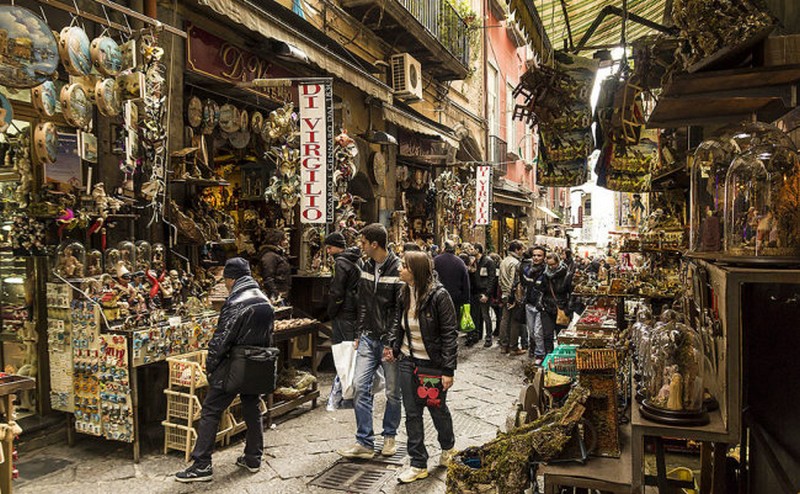
Via San Gregorio Armeno is one of the most famous streets in Naples, especially during the Christmas season. Perpendicular to Spaccanapoli, here you will find many artisan workshops producing the pieces of the Neapolitan nativity scene. It is, in fact, known as “Via dei Presepi”. But don’t worry; you can watch the craftsmen working on the figurines throughout the year. To be included in the list “Things to do in Naples”.
6 Spanish Quarters and Via Toledo
Via Toledo is the street, full of shops, that connects Piazza del Plebiscito a Piazza Dante. Perpendicular to the street you will find the Spanish Quarters, a degraded area of the city which, however, retains its charm. And speaking of picturesque areas of Naples, further down from Piazza Dante, coming from Piazza Plebiscito, there is Pignasecca, where typical city markets take place. It is also wise to be cautious here. The nearest metro station to Pignasecca è Montesanto but you can also choose to get off at the Via Toledo metro station, considered one of the most beautiful in all of Europe. Absolutely not to be missed.

7 Posillipo and Via Chiaia
The Posillipo district is located above Piazza Plebiscito. The Posillipo hill offers a breathtaking view of the city that is absolutely not to be missed. Below is the small port of Mergellina. Via Chiaia is another street to visit when you go to Naples. It runs from Piazza Plebiscito towards Piazza dei Martiri and is an ideal place for shopping and a stroll. At the end of Via Chiaia you’ll find one of the city’s historic theaters (Teatro San Carlo and Bellini are the most famous), the Teatro Sannazaro.

8 Underground Naples
Underground Naples is a visit to the tunnels and cisterns of underground Naples and should definitely be included in the “Naples: things to do” list. If you are not claustrophobic, it is the ideal place to discover the hidden treasures of the Neapolitan city.

9 Naples Stock Exchange Palace
The Stock Exchange palace (1895, designed by Alfonso Guerra and Luigi Ferrara), today home of the Naples Chamber of Commerce, preceded by the staircase flanked by bronze lions by Luigi De Luca, was born from the works of the Redevelopment, in the new Giovanni Bovio square (1841-1903, philosopher and politician who lived for a long time within these walls) built in the area of the small squares of the Mercato di Porto. Here, in 1898, the Neptune Fountain, restored to its 17th-century location on via Medina due to the work on metro line 1.

10 Teatro San Carlo
The Teatro di San Carlo, alongside staging the great operatic repertoire and reviving 19th-century masterpieces, has also in recent years carried out intense activities aimed at recovering the 18th-century Neapolitan school opera buffa. The design by Medrano of the Teatro San Carlo of Naples envisaged a hall 28.6 meters long and 22.5 meters wide, with 184 boxes, including those at the proscenium, arranged in six tiers, plus a royal box capable of hosting ten people, for a total of 1,379 seats. Eight months after work began, on November 4, 1737, the theatre was already completed.

11 Reggia di Capodimonte
The Reggia di Capodimonte, with the large park, houses the art collection of the Farnese and the Bourbons. The Reggia is open every day, except Wednesday, from 8:30 AM to 7:30 PM. Entrance requires a ticket.

Churches of Naples
12 Naples Cathedral
The Naples Cathedral is very important to the people of Naples; it is in this place that every year the famous “miracle of San Gennaro” is celebrated. The Cathedral dates back to the 13th century and is open to visitors from Monday to Friday from 8:00 AM to 12:30 PM; from 4:30 PM to 7:30 PM. On Sundays, the Cathedral is open from 8:00 AM to 1:30 PM and from 5:00 PM to 7:30 PM. It definitely deserves to be included in the list “Naples: what to visit”.

13 Monastery of Santa Chiara
The Santa Chiara Monumental Complex, including the Church, Monastery e Convent, was built from 1310 to 1328 by the will of the monarch Roberto D’Angiò and his wife Sancia di Maiorca. The sovereigns, both devoted to Saint Francis of Assisi and to Saint Clare, wanted to build a Franciscan citadel that would host in the monastery the Poor Clares and in the adjacent convent the Minor Friars. The Church, the central core of the entire complex, was established with the title of Ostia Santa or Sacro Corpo di Cristo, a dedication inspired by the Eucharistic Miracle of Bolsena, which took place in 1264; the above-mentioned name immediately changed to Santa Chiara, probably due to the extraordinary number of Poor Clares present in the monastery.

14 Pio Monte della Misericordia
The Pio Monte della Misericordia is a charitable institution, still active, founded in 1602 by seven Neapolitan noblemen. The headquarters of the Pio Monte della Misericordia also houses an Archive/Library particularly valuable for the quantity and rarity of the documents and volumes preserved within. Of notable importance is the painting executed by Caravaggio “The Seven Works of Mercy” (1607), placed in the church above the high altar.

15 Certosa di San Martino
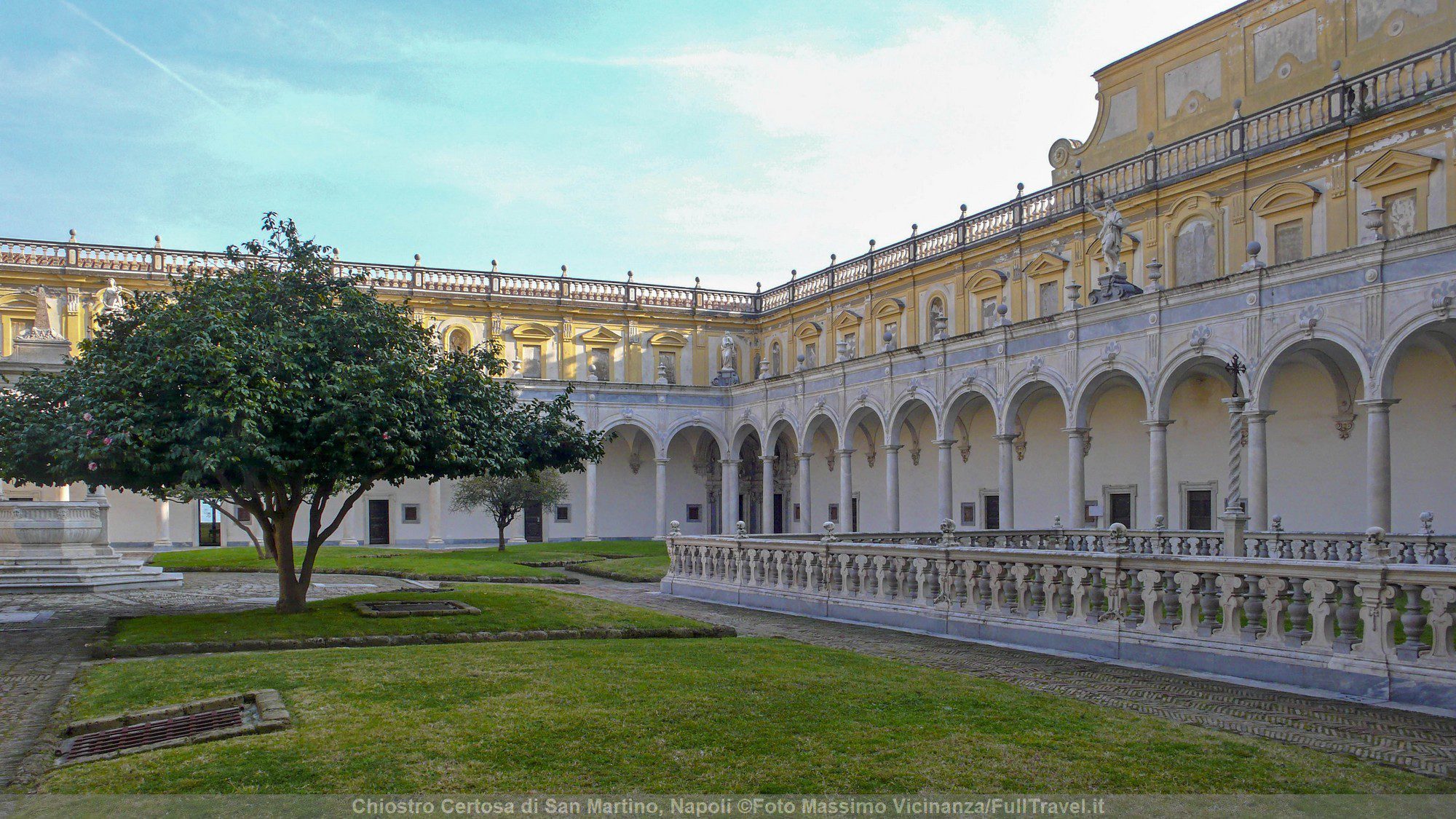
The Certosa di San Martino with its attached museum, is located in a dominating part of the city, on the hill of Vomero ( an upscale neighborhood of Naples). The Carthusian monastery dates back to the 14th century and offers itself as an attraction of the Neapolitan city. The museum hosts a nativity scene exhibition and an important collection of paintings. From the terrace, there is a magnificent view over the gulf of Naples. The museum is open every day, except Wednesday, from 8:30 AM to 7:30 PM. Admission fee applies.
Museums of Naples
16 Naples Archaeological Museum
The Archaeological Museum is one of the most important archaeological museums in Europe. The MANN hosts, in addition to important ancient works and artifacts, the Pompeian Collections derived from the excavations of Pompeii.

17 Chapel of San Severo and Veiled Christ
Visiting the Chapel of San Severo is certainly an exciting experience. Inside this building it is indeed possible to observe one of the most beautiful works of art in Naples: the Veiled Christ by Giuseppe Sammartino, from 1573. The Chapel of San Severo is located at Via De Sanctis No. 19 and is open every day except Tuesday, from 10:00 AM to 5:40 PM. On Sundays it closes at 1:10 PM. Entrance requires a ticket.

18 20th Century Museum of Naples
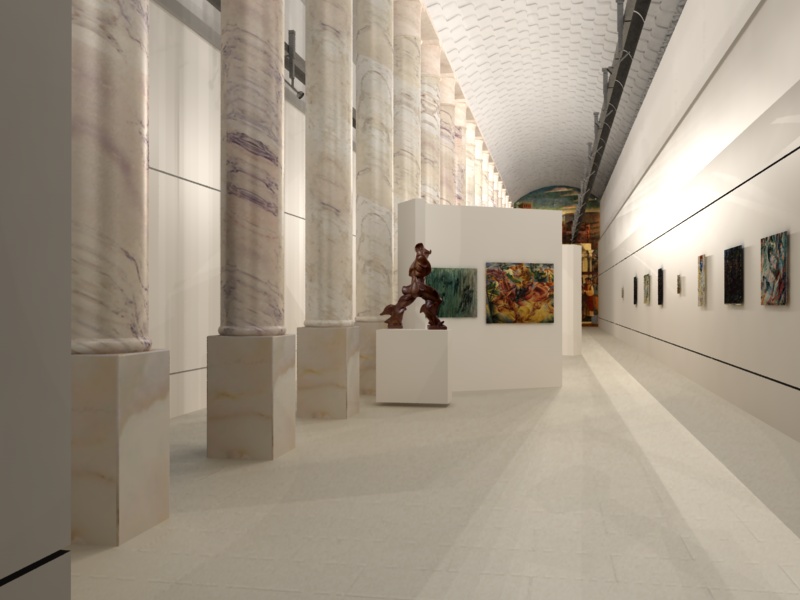
The 20th Century Museum of Naples was established in the spaces of High Prison of Castel Sant’Elmo. About 170 works created by 90 Neapolitan artists are exhibited, with the addition of some presences of non-Neapolitan artists who were active in the city in various roles. From the various testimonies of what was produced between the two wars to the experiences that followed in the post-war period (1948-1958), from the ‘South’ Group to the so-called Neorealism, from the M.A.C. group to the Informal or the ’58 Group up to our times.
19 Santa Maria delle Anime del Purgatorio ad Arco Museum Complex
The Santa Maria delle Anime del Purgatorio ad Arco Museum Complex – which includes the Church, the Opera Museum and the Hypogeum – represents an extraordinary opportunity to learn about the ancient cult of thesouls of Purgatory. In 1605 a group of nobles founded an Opera Pia, a Lay Congregation, which had among its main aims the ‘care’ of the souls of Purgatory: thus arose, designed by Giovan Cola di Franco, the elegant church, conceived from its origin on two levels, the upper church, true masterpiece of Neapolitan Baroque art, and the lower church or hypogeum, still today, the place of worship of the anime pezzentelle. Of great value is the iconographic set of the church: on the main altar the masterpiece by Massimo Stanzione, The Virgin of the Souls in Purgatory, topped by the painting by Giacomo Farelli Saint Anne offers the Virgin child to the Eternal Father, and in the side chapels the Transit of Saint Joseph by Andrea Vaccaro, and the Death or Ecstasy of Saint Alexis, a youthful masterpiece by Luca Giordano. The Complex also houses a small yet precious Opera Museum, which preserves a collection of paintings and artifacts made between the 17th and 19th centuries, the Historical Archive and a medical clinic dedicated to the needy.
20 Museum Complex of the Most August Archconfraternity of Pilgrims
The Museum Complex of the Most August Archconfraternity of Pilgrimsincludes a 16th-century church, an 18th-century church (Medrano and Carlo Vanvitelli) magnificent for its unique plan of two octagons connected by rectangles; the Holy Land (work of the architect Giovanni Antonio Medrano); the rooms intended for the life of the Archconfraternity (Mandate Hall, Vesting Rooms). Everywhere are exquisite works of pictorial art (from the 15th to the 19th century) (Bernardino Campi, Andrea Vaccaro, Francesco Fracanzano, Onofrio Palumbo and Didier Barra, Giacomo Farelli, Francesco De Mura, Giuseppe Bonito, Giacinto Diano), sculptural (in bronze, the expressive statue of the founder Fabrizio Pignatelli kneeling, by Michelangelo Naccherino; in marble, a Madonna with Child by Francesco Laurana; in stucco the scenic group of the Trinity by Angelo Viva), wooden (polychrome statues of the Passion by unknown Neapolitan authors of the 15th century; walnut burl choir and dome with 24-karat gold designs by the architect Astarita), precious furnishings and liturgical objects. Very important historical archive rich with over 1245 volumes and registers and very precious parchments numbering 328. The confreres wear a red habit (from the sixteenth century to today) symbolizing charity reminding of the blood of Christ shed for the redemption of humanity.
21 Other museums in Naples
- Hermann Nitsch Museum of Contemporary Arts, Naples
- Ascione Coral Museum, Naples
- Castelnuovo Civic Museum, Naples
- Naples Sea Museum, Thetys Foundation
- 20th Century Museum of Naples
- Treasure Museum of San Gennaro, Naples
- Textile and Clothing Museum Elena Aldobrandini, Naples
- Duca di Martina Ceramics Museum in Villa Floridiana, Naples
- Giuseppe Caravita Prince of Sirignano Museum, Naples
- Laboratory Museum of Rural Civilization “Masseria Luce”, Naples
- Madre Museum, Naples
- Scientific Museum of Technology and Labor “Luigi Petriccione”, Naples
22 How to get around Naples
If you are wondering “How to get around Naples?”, we recommend doing so by metro; we also add that it is interesting to make a real tour of the Naples metro stations, a truly interesting example of contemporary art. The Via Toledo metro station is one of the most beautiful in Europe, worth a visit. Alternatively, you can take urban buses and, ultimately, a taxi.

Brief information about Naples: where to eat, how to arrive, where to sleep
23 How to get to Naples
The best way to reach Naples is by train or by arriving by plane. LNaples airport, Capodichino Naples Airport, is about 7 km from the city center, which you can reach in a few minutes by taxi or bus towards the Central Train Station. The international airport of Naples offers connections to routes in various parts of the world, and the train station, adjacent to the bus station, is very efficient and well served.

24 What to eat in Naples
Naples is famous for its fabulous cuisine. Therefore, you will have no trouble finding an ideal place to taste dishes from the Neapolitan cuisine. In the list “Naples: what to eat”, remember to include: the pizza (born in Naples and you can’t miss trying it) from Pizzeria Brandi (the steps of Via Chiaia, here the margherita pizza was born) or those from Michele or Sorbillo on Via dei Tribunali, buffalo mozzarella, beans and mussels and for dessert babà e sfogliatelle. Famous is the Scaturchio pastry shop in Piazza San Domenico but many others require quality products.

25 Where to sleep in Naples: panoramic areas and strategic tips
In Naples, you can choose from neighborhoods full of charm and breathtaking views. For those looking for romance and a sea view, the Mergellina area is perfect: quiet, elegant, and overlooking the Gulf. If you want to stay central, Maschio Angioino and the surrounding area offer excellent connections to the port and main attractions.
Also the historic center is an excellent choice, especially for those who enjoy staying in B&Bs, vacation homes or more typical and informal accommodations. It’s ideal for exploring on foot among art, history, and Neapolitan street food.
🛏️ Tip: discover our selection of hotels and accommodations in Naples for every price range or how to stay in Naples on a limited budget.
💡 Or look for deals on: Booking.com

26 Superstition
At the end of this complete guide to Naples we couldn’t dwell on the “good and bad luck“. Superstition is inherent in Neapolitan tradition and numbers (17), things, and events often require superstitious rituals handed down through time in this city of a thousand colors, as said in “Napul’è‘ the son of Naples, Pino Daniele. Paraphrasing another great figure of Naples, Peppino De Filippo, “It’s not true… but we believe in it“.

27 Funiculì funiculà
The famous song “Funiculì funiculà” was written right in Naples when the legendary Vesuviana was operational, which took people to the crater of the volcano. After that historic line was decommissioned, the city of Naples today operates four funiculars connecting the city center with the upper neighborhoods of the hills.
Convenient, fast, with a total of 16 stations and over 3 km of tracks, their small colorful carriages are among the favorite means of transport for Neapolitans and tourists. The Centrale, Chiaia, and Montesanto funiculars connect the city center to the panoramic Vomero district; the Mergellina funicular instead is the link between the Posillipo hill and the sea. The Centrale is humorously nicknamed the “shopping funicular“, because it connects the most flourishing and elegant commercial areas: via Roma and surroundings (Galleria Umberto and via Chiaia) with via Scarlatti and via Giordano. Areas also rich from a historical, monumental, and cultural perspective.
The Chiaia funicular dates back to 1889 and is one of the oldest in Italy, connecting the neighborhoods adjacent to the Riviera di Chiaia to the very green Vomero, using two modern lines with a maximum capacity of 300 people.
The Montesanto line, operational since 1891 and deeply renovated recently, also leads to the fresh heights of Vomero but starting from the popular heart of Naples, the Pignasecca neighborhood. Meanwhile, the Mergellina goes up and down between the tourist harbor and the elegant Posillipo.

Frequently asked questions about what to see in Naples
❓ What to see in Naples in one day?
Visiting Naples in just one day requires well-considered choices, but it is possible to capture its essence. You can start from Spaccanapoli, the beating heart of the historic center, proceed to the Duomo of San Gennaro, and from there reach Piazza del Plebiscito and the nearby Maschio Angioino. A walk along the Caracciolo waterfront, perhaps at sunset, offers a magnificent view of Mount Vesuvius. With a well-planned itinerary, even one day can become memorable.
❓ What are the most famous places to visit in Naples?
Naples is rich in attractions, including historic monuments, panoramic viewpoints, and places of strong cultural identity. Among the best known are Naples Underground, the Sansevero Chapel with the Veiled Christ, Castel dell'Ovo, Maschio Angioino, the Duomo of San Gennaro, Piazza del Plebiscito, and the Spanish Quarters. There are also natural wonders like Posillipo and the views from Vomero.
❓ What is free to see in Naples?
Naples offers many free experiences that allow you to appreciate the city without spending money. You can walk through Spaccanapoli, visit the Galleria Umberto I, admire the views from the San Martino Belvedere or the Virgiliano Park, enter some historic churches, and stroll along the waterfront. Even wandering through the local markets is an authentic experience.
❓ Where can you enjoy the best panorama in Naples?
Naples offers breathtaking panoramas from various points around the city. Castel Sant’Elmo and the Charterhouse of San Martino, at Vomero, provide spectacular views of the Gulf. Also the Posillipo Belvedere, Virgiliano Park, and the waterfront are perfect places to observe Vesuvius, the sea, and the islands in the distance. The best time? Sunset, when the city's colors become poetry.
❓ What is the best time to visit Naples?
The ideal periods are spring (April–May) and autumn (September–October), when the weather is mild and the city less crowded. December, with its Christmas lights and traditions (especially in San Gregorio Armeno), offers a unique atmosphere. Summer is very hot but lively, while winter can be rainier but still pleasant.