


If you are wondering where Istanbul is located, the correct answer is: “suspended” between Europe and Asia. A wonderful city in Turkey, perhaps even the most beautiful, it is a link between the West and the East. It has so much to offer, from art to shopping. In this brief guide, we will explain to you what to see in Istanbul and what to visit.
- 1 Istanbul guide in 60 seconds
- Istanbul places of interest: what to do and what to visit
- 2 Istanbul, Basilica Hagia Sophia
- 3 Istanbul, Grand Bazaar
- 4 Topkapi Palace
- 5 Dolmabahce Palace
- Mosques
- 6 Istanbul, Blue Mosque
- 7 Istanbul, Suleiman Mosque
- 8 Istanbul, Rustem Pasha Mosque
- Istanbul Museums
- 9 Museum of Archaeology, Ancient Near East, Modern and Turkish Arts, and Literature
- 10 Monuments of Istanbul
- 11 Festival in Istanbul
- 12 Where to have fun in Istanbul
- 13 Where to shop in Istanbul
- 14 Istanbul Spice Market
- 15 The sea in Istanbul
- Istanbul in a nutshell: how to get there, how to get around, where to stay, and other curiosities
- 16 How to get to Istanbul
- 17 How to get around Istanbul
- 18 Istanbul currency
- 19 Travel safely in Istanbul
- 20 Where to eat in Istanbul: not just kebab
- 21 Where to sleep in Istanbul
1 Istanbul guide in 60 seconds
Istanbul is a unique city in the world, both for its geographical position that makes it a bridge between East and West, and for the richness of its history which has seen it as the capital of three great empires. It is an extraordinary city because contrasts blend into a lively and open atmosphere: the remains of an ancient past with modernity, local tradition with a cosmopolitan and globalized atmosphere, entertainment alongside places of faith and spirituality. Its destiny has always been determined by its location and its enchanting nature.
It is the largest city in Turkey with about 12 million inhabitants and is the economic and financial capital of the nation hosting all the main headquarters of the largest banks, companies, and agencies. Istanbul is also the cultural and artistic capital of Turkey with a large number of theaters, exhibitions, museums, and a rich tradition in opera and ballet. Istanbul was named by the EU Commission as the European Capital of Culture for 2010. All around there are testimonies of Roman, Byzantine, and Ottoman civilizations. Palaces, mosques, churches, monasteries, remnants of an ancient past coexist alongside skyscrapers and trendy venues.

Istanbul places of interest: what to do and what to visit
Among Istanbul, Turkey’s places of interest, there are some unmissable ones. We have compiled a short list for you to make organizing your trip easier.
2 Istanbul, Basilica Hagia Sophia
Hagia Sophia or Ayasofya is one of the most evocative places in Istanbul. Built 1500 years ago, it is a jewel of Byzantine architecture. Its interiors are wonderful and will leave you speechless. Hagia Sophia was born as a Christian church, then converted into a mosque, and later into a museum. It is undoubtedly one of the most splendid monuments of all times. What strikes the most about this extraordinary monument, now no longer used for religious purposes, is the brilliant division of the interiors, which surprises even more than the dimensions, the grandeur, and the colors of the marbles used to cover the walls. It is called the eighth wonder of the world. Certainly, this name is partly due to the enormous dome – it rises 55 meters from the ground and has a diameter of 31 meters – that dominates everything like a symbol of the sky.

3 Istanbul, Grand Bazaar
The Grand Bazaar is one of the largest and most extensive covered markets in the world. Saying it’s a miniature city is not wrong, as it has 60 streets, over 4000 shops, and 18 entrances. Inside you will find several types of goods, but it will be especially easy to find carpets, jewelry, clothing, and leather.

4 Topkapi Palace
The Topkapi Palace was defined by the famous Ottoman historian Evliya Celebi as “the most beautiful royal palace that human skill has ever built.” It was the Sultan’s residence and was almost a city in itself where about five hundred people lived, including up to three hundred concubines. Don’t miss the imperial treasures: gold, silver, diamonds, precious stones, and valuable objects. Built between 1453 and 1478, the palace, nearly 700,000 square meters, is today the largest and most important museum in Turkey.

5 Dolmabahce Palace
The Dolmabahce Palace, on the Bosphorus shore, 600 meters long, made of white marble from the island of Marmara, was built in 1853 by Sultan Abdulmecid and became the new imperial residence after Topkapi. All the interiors are sumptuously furnished with precious carpets, furniture, and crystals.

Mosques
6 Istanbul, Blue Mosque
The Sultanahmet Mosque is a triumph of harmony, proportions, and elegance, with its 6 minarets: entering, you will feel amazed awe. Built between 1609 and 1616 by the architect Mehmet, it is often known as the Blue Mosque for its splendid internal panels in blue and white Iznik ceramics. The name of the Blue Mosque derives precisely from the over 20,000 colored tiles that cover it; the predominant color is blue, appearing in all its shades. As it is a place of worship, it has rules to be respected: entry is allowed only barefoot, with shoulders and knees covered, and women must cover their heads. The visual spectacle this Mosque offers will be unforgettable.

7 Istanbul, Suleiman Mosque
The Suleiman Mosque (Suleymaniye Mosque) stands opposite the Basilica of Hagia Sophia and is equally monumental. From the garden at the back, you can enjoy a wonderful view, which we advise you not to miss. The Suleiman Mosque was built between 1550 and 1557 by the architect Mimar Sinan. It represents the peak of Ottoman classicism in Istanbul.

8 Istanbul, Rustem Pasha Mosque
Another work due to Sinan’s genius is the Rustem Pasha Mosque, built in 1561 by order of the Grand Vizier Rustem Pasha, son-in-law of Suleiman the Magnificent.
Istanbul Museums
9 Museum of Archaeology, Ancient Near East, Modern and Turkish Arts, and Literature
In the Museum of Archaeology you will find the sarcophagus of Alexander the Great and rich classical period collections, the Museum of the Ancient Near East which houses numeric, Babylonian, Hattian, and Hittite collections, the Museum of Modern Arts, the Military Museum holding Ottoman arms and military uniforms, the Literature Museum where manuscripts of important palace poets are exhibited, the Turkish and Islamic Art Museum with a collection of Seljuk carpets.
10 Monuments of Istanbul
There are countless noteworthy monuments. We indicate some of the most significant. Cemberlitas, the Column of Constantine, is the oldest building in Istanbul. The Galata Tower, a Genoese construction from 1348, rises 62 meters above the ground; the panorama of the Golden Horn and the Bosphorus from the top is extraordinary. Known as Leander’s Tower, Kiz Kulesi is one of the romantic symbols of Istanbul. Originally built in the 12th century on a small island at the entrance of the harbor, the current structure dates back to the 18th century.
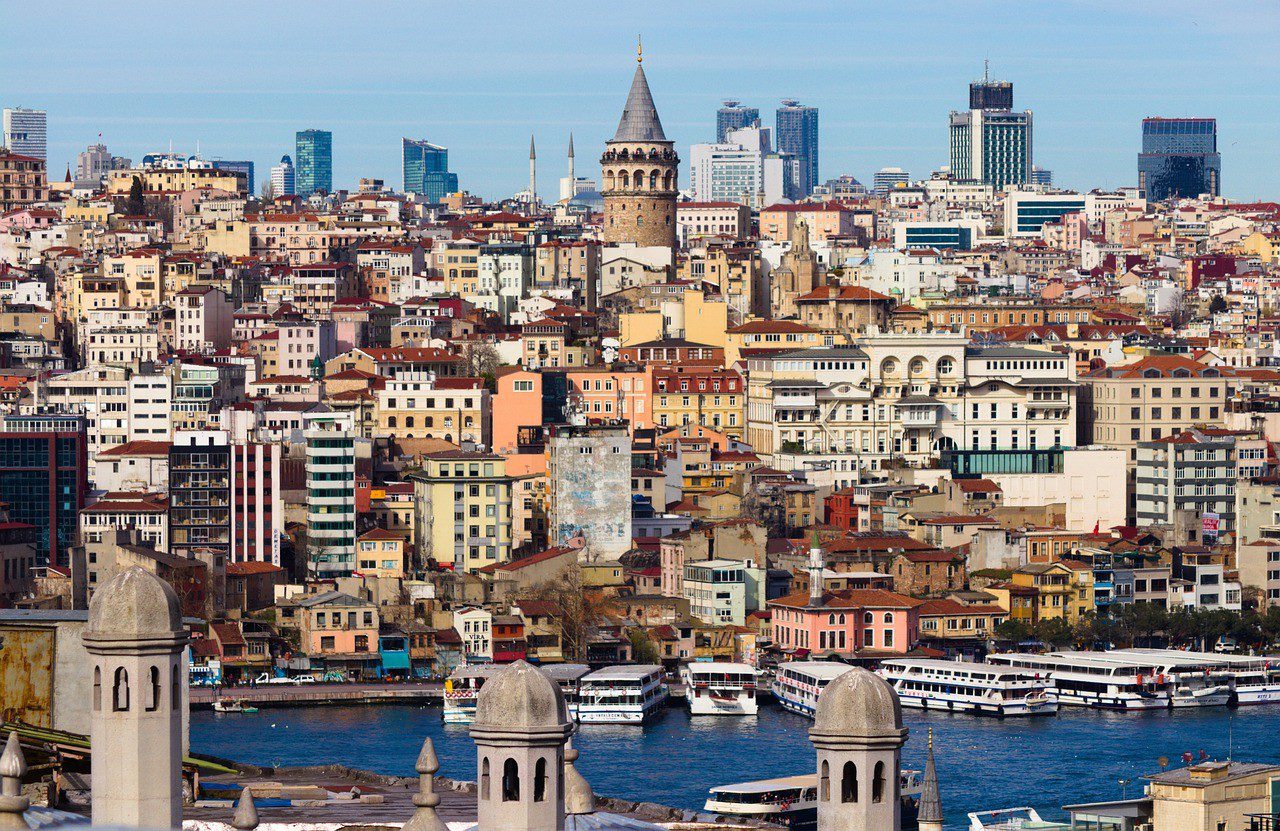
Undoubtedly, these are just some of the wonderful places Istanbul offers, but we recommend discovering them by walking through the wonderful alleys of this city, always invaded by the wonderful scent of spices.
11 Festival in Istanbul
Operas, operettas, films, exhibitions, and conferences give the city’s cultural fabric a special color. Every year in March and April, the Istanbul International Film Festival is held presenting the best of the world cinema scene. The International Art and Culture Festival, instead, is held in June and July with artists from all over the world participating. The Istanbul International Theatre Festival offers every year examples of classical and experimental performances with the aim of introducing foreign critics and audiences to the valuable works of Turkish theater. The oldest among the Festivals is the Istanbul International Music Festival. It takes place in June and July and gathers important names in international music. The Istanbul International Biennial is instead the most awaited festival by art lovers.
12 Where to have fun in Istanbul
In Istanbul there are certainly no shortages of opportunities to have fun. The best restaurants, both traditional and international, are found in this city. Istanbul is also full of venues open until morning, able to satisfy all types of tourists, from couples wishing a quiet place to enjoy a good glass of wine, to groups of young people wanting to go wild in bars with loud music. Numerous are also the cafes, an integral part of the city’s culture suitable for every taste and budget, from the most luxurious to the most economical.

13 Where to shop in Istanbul
For those who love shopping, a visit to the Grand Bazaar is a must, with its 4000 shops where you can find everything: from Turkish handicrafts like carpets and ceramics, to jewelry, to leather goods. A less touristy alternative is the shopping street Uzunçarsi Caddesi, full of carpenters’ workshops and clothing stores. Istiklal Caddesi, the promenade north of the Golden Horn in the Beyoglu district, always has a certain charm, perhaps not like a century ago when it was frequented by wealthy Ottomans and Europeans in frock coats amid lace and parasols.
14 Istanbul Spice Market
Besides the Grand Bazaar and a long series of other open-air and covered markets like the Spice Market, fish market or the used books market, there are also many modern shopping centers in a Western style. Visiting Istanbul is truly an unmissable experience and perfect for a long weekend or a holiday break in any season.

15 The sea in Istanbul
Due to its geographical configuration, most Turkish beaches are located to the north, with the only exception of Caddebostan. Given the fabulous Istanbul climate, especially in summer, you might enjoy a day at the beach to alternate your visits to the tourist sites.
Istanbul in a nutshell: how to get there, how to get around, where to stay, and other curiosities
16 How to get to Istanbul
Istanbul airport, Atatürk airport, is about 20 km from the city center, which you can easily reach by taxi or via buses, metros, and boats that take you directly to the central station. A new airport is expected to open by the end of 2018, which will increase connections to and from Istanbul.
17 How to get around Istanbul
Getting around Istanbul: our advice is to move on foot during the busiest hours so you can fully enjoy the beauties Istanbul offers. Another valid alternative is the Istanbul metro, recently built but well organized.

18 Istanbul currency
The current currency in Istanbul is the Turkish lira. We recommend starting your trip already equipped with some to avoid exchange problems on site.
19 Travel safely in Istanbul
Travel safely in Istanbul: after several attacks and coups, security in Istanbul had become quite precarious, causing a substantial reduction in tourist flow. But the danger situation seems to have subsided, and the security level for travelers is now the same as in any other place. Obviously, it is always good to be cautious, but this applies to any city you plan to visit.
20 Where to eat in Istanbul: not just kebab
Where to eat in Istanbul: the first suggestion about what to eat in Istanbul is obviously kebab (Kebap in Turkish)!! In Istanbul it will be served sliced on a plate in any restaurant. Be careful to distinguish it from Döner Kebab, found on every street corner and a typical street food dish. The best areas to eat in Istanbul are those near the Grand Bazaar, where you can taste the real Turkish cuisine: mercimek çorbası, lentil soup, manti, pseudo-tortellini, and much more.

21 Where to sleep in Istanbul
Where to sleep in Istanbul: the two most recommended areas to choose your hotel in Istanbul are Sultanahmet and Beyoğlu. The first in the old and cultural part of the city, the second in the modern part, the heart of the famous and highly developed nightlife of Istanbul. So it all depends on your tastes and needs.