Dublin is a city in constant transformation, undergoing daily change as modernization infuses its neighborhoods and fills the streets with a lively crowd—most notably a young, international generation who love Dublin’s welcoming, relaxed vibe. Unlike many formal capitals, Dublin feels more like a big village where everyone feels at home. Local experts credit the city’s boom to the new economy. Where is Dublin? Dublin is the capital of Ireland, an island to the west of Great Britain. Dublin is the capital of Ireland (EIRE), an independent country—unlike Northern Ireland, whose capital is Belfast and which is part of the United Kingdom. Consider purchasing the Dublin Pass to explore the city widely at affordable prices.
Top Things to See in Dublin, Ireland
If you visited Dublin in Ireland in the early 1990s, you’d have found a city on the brink—struggling with high unemployment and emigration, among the highest in Europe. The arrival of global investors, especially tech and telecommunications companies attracted by favorable tax rates (10% on profits, the lowest in Europe), sparked a renaissance. In just a few years, abandoned warehouses and derelict zones were replaced by new neighborhoods, shopping centers, and modern buildings.
Luxury cars now cruise the city’s classic narrow streets; on the River Liffey, which splits Dublin in two, you’ll spot cruise boats and elegant yachts coming and going. Here’s a concise guide to what to see in Dublin. For more inspiration, check out these three Dublin itineraries:
Dublin: Must-See Landmarks
1 Grafton Street, Dublin’s Shopping Avenue
These are just some snapshots of a city embracing the future, while holding onto its distinct charm—red brick houses with colorful Georgian doors (legend says it’s to help locals recognize their homes after a night out), the cozy bustle of Grafton Street where buskers and street artists perform, the elegance of Trinity College with its grand wood library, the ever-present legacy of James Joyce (whose statue stands at O’Connel Street and Earl Street North) and literary references from Ulysses, and the convivial pub scene where, in classics like Mulligan’s, you might be asked to put your phone away.

2 Trinity College
Trinity College was founded in 1592 by Elizabeth I to prevent young Irish students from leaving for continental Europe and turning Catholic. Its iconic Old Library dates to the 18th century. Trinity has all the traditional features of a UK college—an English lawn, cobbled paths, statues, and more. Closed on Christmas Day and New Year’s Day. Opening hours October to April: weekdays 9:30–17:00, Sundays and holidays 12:00–16:30; from May to September: weekdays 9:30–17:00, Sundays and holidays 9:30–16:30.

3 National Gallery
The National Gallery of Ireland showcases works by Caravaggio, El Greco, Goya, Picasso, Monet, Rembrandt, Titian, Tintoretto, Vermeer, Velazquez, Mantegna, Degas, Fra Angelico, and more—alongside Irish and British artists.

Dublin: Unmissable Sights
4 Dublin Castle
Dublin Castle is the largest fortress in Ireland. Built in the early 13th century for the city’s defense, it features a crypt with Viking-age remains, a clock tower within the castle walls, and the Chester Beatty Library, which holds religious and cultural treasures (including Bibles, Korans, and other rare works). The castle can only be visited on guided tours (lasting about 40 minutes) with opening times from 10:00 to 17:00 (Monday to Friday) and 14:00 to 17:00 (Saturday, Sunday, and holidays). Last admission is one hour before closing. Entrance is ticketed.

Visiting Dublin
5 St. Stephen’s Green
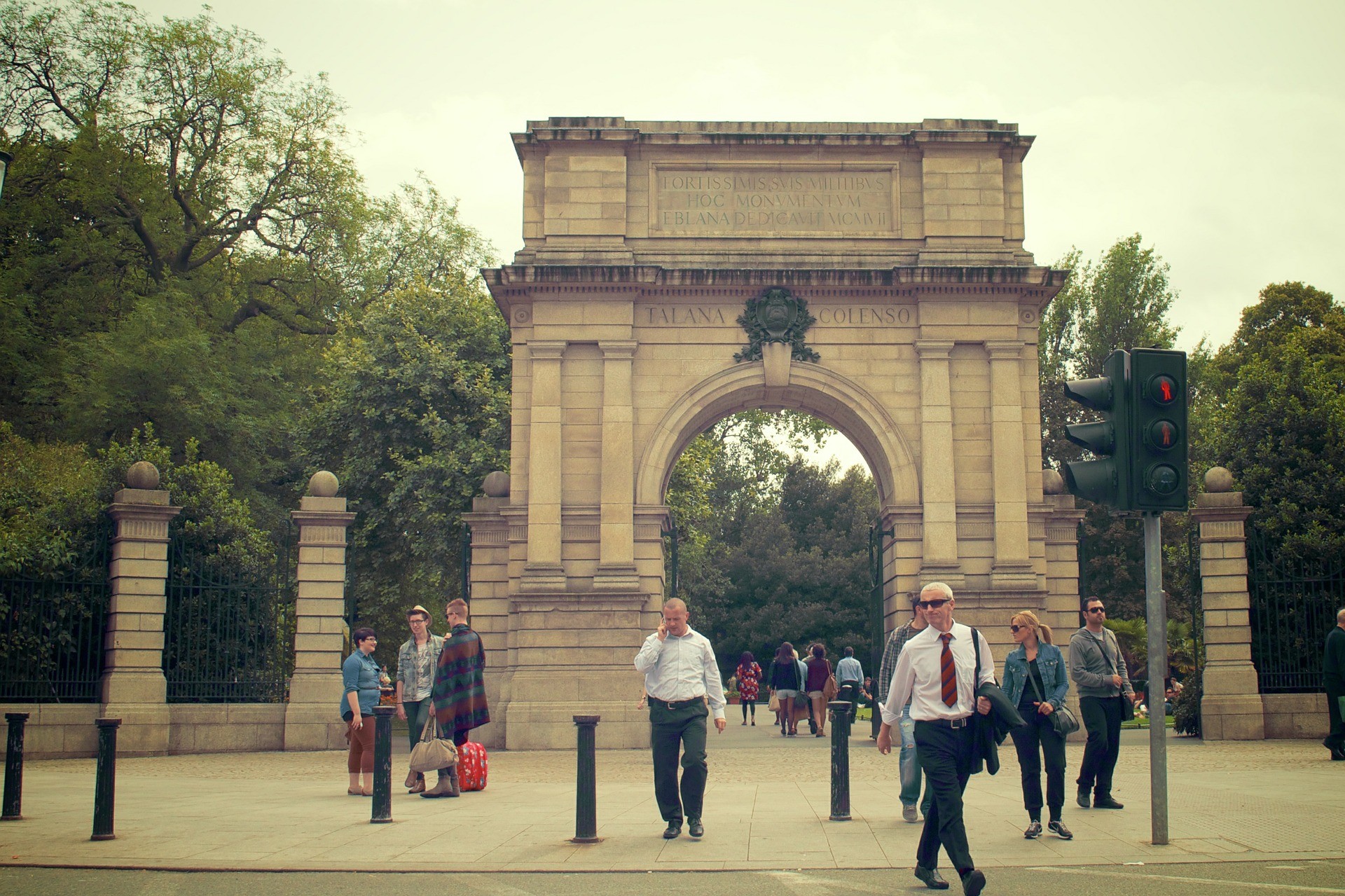
One of Dublin’s essentials is St. Stephen’s Green, the city’s most famous park. Not far from Trinity College, it was once common land, later converted into a formal park in the late 17th century. From 1814 to 1877, access was restricted to the affluent, but today it’s a favorite for families, couples, and tourists looking for a relaxing spot to unwind.
6 Christchurch Cathedral
Christchurch Cathedral is Dublin’s oldest building, dating to the 12th century, though much of what you see today is from the 19th-century restoration. Summer opening hours (June–August): Monday–Friday 9:00–18:00; Saturday 10:00–16:30; Sunday 12:45–14:45. The rest of the year: Monday–Friday 9:45–17:00; Saturday 10:00–16:30; Sunday 12:45–14:45. Entry is paid.