


And this happens especially in Naples, where the Nativity scene has always been regarded almost as a ritual. It’s no coincidence that in 1930, when Eduardo de Filippo wrote the famous play “Natale in casa Cupiello“, he chose the Nativity scene to represent the most authentic popular tradition and to ignite passion in his audience.
Naturally, its debut at the Kursaal theater was a resounding success, and the phrase “Nennillo, do you like the Nativity scene?” has become iconic.
Today, just as then, no Neapolitan home—be it wealthy and aristocratic or humble and modest—can go without a Nativity scene during the Christmas holidays. Made of cork, decorated with moss and shepherds, the tavern, the Three Wise Men, and the grotto with Baby Jesus. And sometimes, as Eduardo himself joked, with “the enema bag in the back supplying water to the tiny fountain.”
The setting that recreates the birth of Jesus is grand and lavish. Yet, the Nativity scene also depicts the harsh and humble realities of daily life, with all its struggles. The result is a scene so close to real life that it captivates everyone, rich or poor alike. For the less fortunate, the Nativity is a symbol of hope for a better life. For the wealthy, placing their affluence in the Holy Scene is a way to seek favor in heaven.
San Gregorio Armeno, the heart of Naples’ Nativity scenes
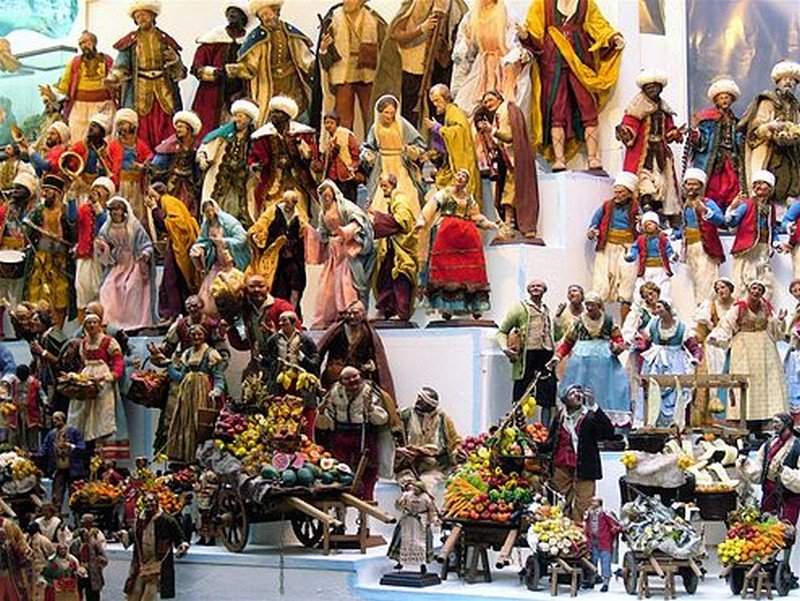
Naples and Spaccanapoli is today the undisputed home of artisan Nativity figurines. Each year, thousands flock to the most famous street in the historic center, Via San Gregorio Armeno, renowned also for the beautiful church of San Liguoro, arguably the finest example of Neapolitan Baroque. In this alleyway, the city’s entire artisan tradition comes to life, with artists and craftsmen filling dozens of workshops, competing through the originality of their figurines. The main characters are always present: Baby Jesus, Mary and Joseph, the Magi, the washerwoman, the innkeeper, musicians, the greengrocer, the cripple and the beggar, the gypsy woman, butcher, and the knife grinder. None of them have a name, except “Benino,” the shepherd boy sleeping next to his flock.