


One of the main museums in Madrid is the Prado Museum. It forms, together with the nearby Reina Sofia Art Center and the Thyssen-Bornemisza Museum, the Golden Triangle of Madrid art (UNESCO Heritage since 2021). At the same time, the Paseo del Prado, together with the Buen Retiro Park and the Barrio de los Jeronimos that contains them, is a UNESCO World Heritage cultural landscape, which, on the occasion of this recognition, was named Paisaje de la Luz.
- The Origin of the Prado Collection
- Prado Museum Works
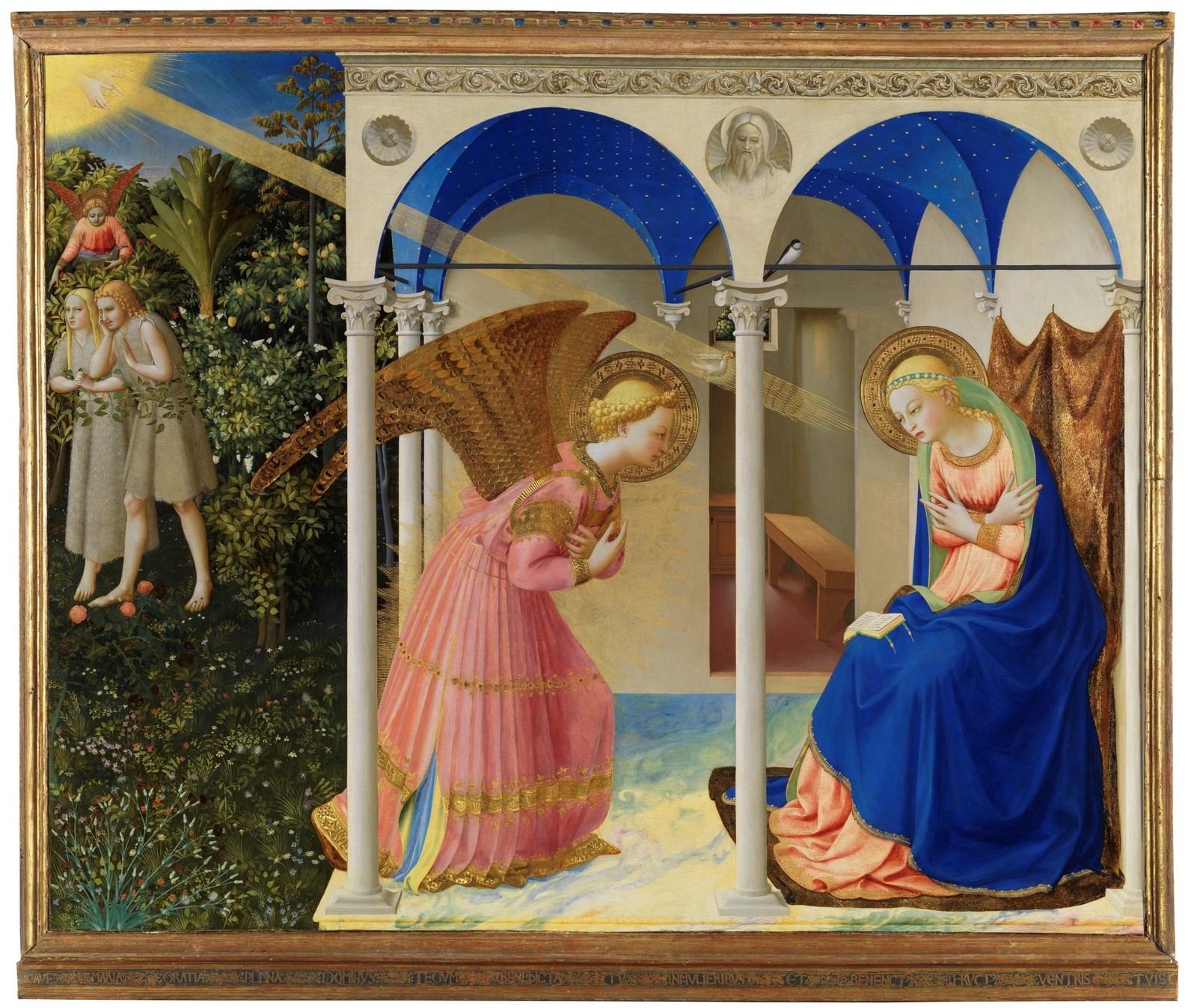
- Fra Angelico – Annunciation (1425-1428)
- Botticelli – Scenes from Nastagio degli Onesti (1483)
- Titian – The Cult of Venus (1518-1519)
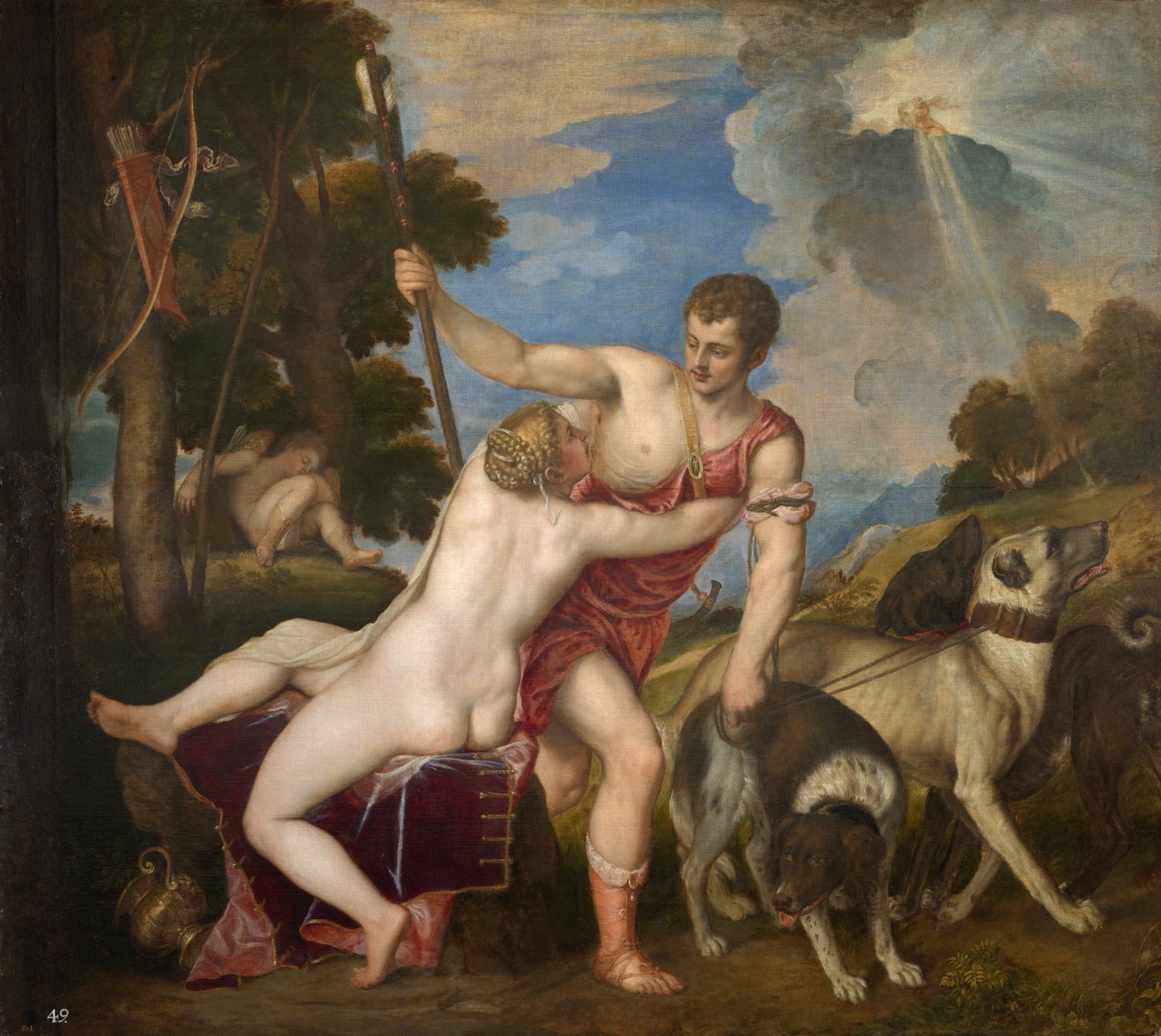
- Titian – Venus and Adonis (1554)
- Caravaggio – David Victorious over Goliath (circa 1600)
- El Greco – The Adoration of the Shepherds (1612-1614)
- Rubens – The Three Graces (1630-1635)
- Velazquez – Las Meninas (1656)
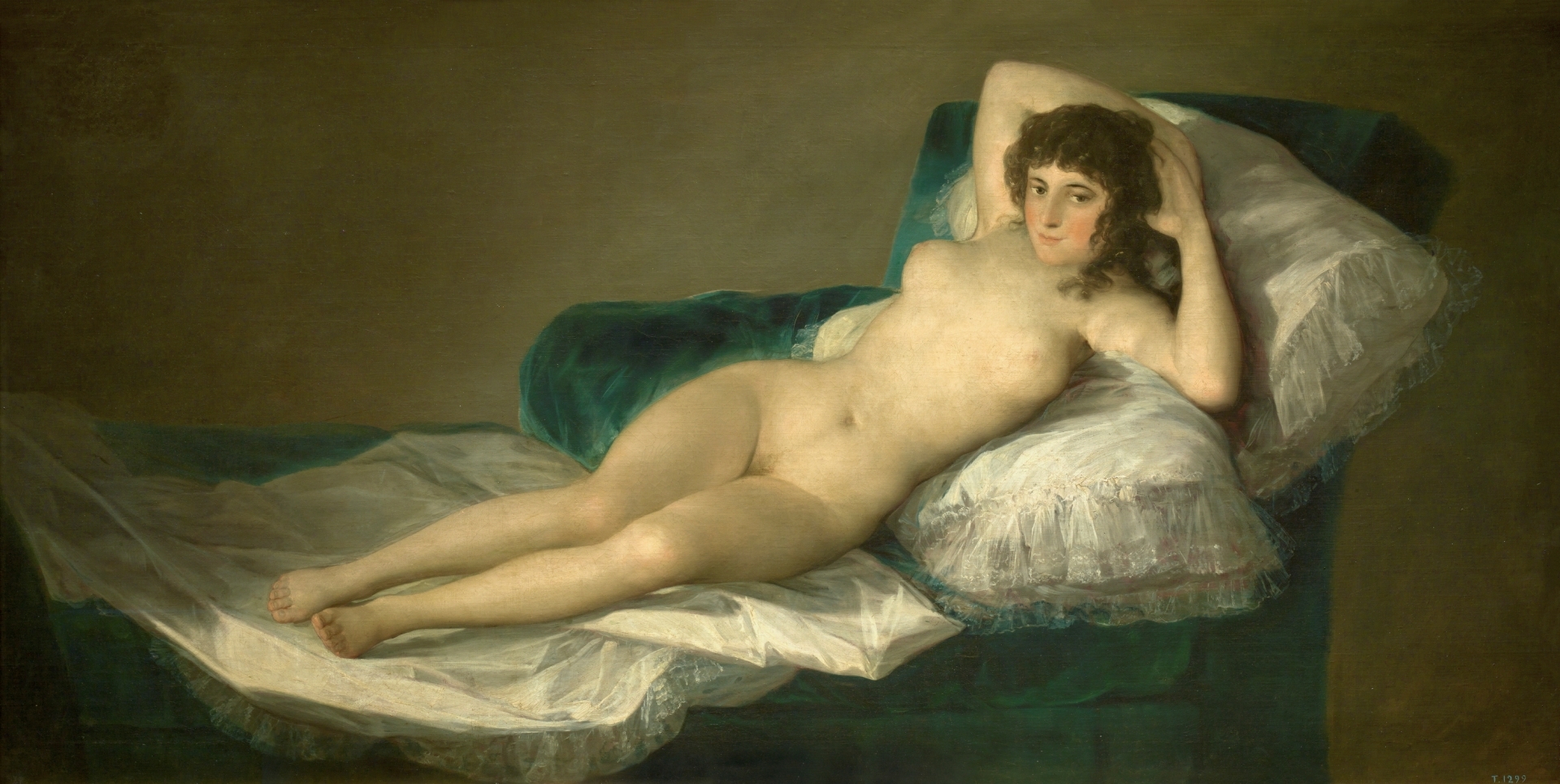
- Goya – The Nude Maja and The Clothed Maja (1800-1808)
- Goya – The Execution (1814)
- Horario Museo del Prado
- Tickets Prado Museum
The Prado’s collection includes more than 21,000 works, including paintings, drawings, prints, and sculptures. About 1,300, mostly paintings, are currently on display. To literally avoid an overdose of art, this article is a proposal for a visit through ten masterpieces on display, to grasp the essence of the collection and be sure not to miss the most significant works. You can also find on FullTravel some tips on how to get around Madrid at low cost and how to visit the Spanish capital in two days.
The Origin of the Prado Collection
The building housing the Museo del Prado dates back to 1785 and was originally intended for the natural history collection. In 1819, at the initiative of King Ferdinand VII and his wife Isabella of Braganza, it was transformed into a Museum of Painting and Sculpture. The original core of the collection was the rich art collection belonging to the royal house, which at the time consisted of 1,510 works.
Ferdinand VII’s choice was in line with what was happening in other states at the same time (for example, in France with the creation of the Louvre): displaying the royal collections to the public meant sharing with the people, for study or simply pleasure, a huge cultural heritage. In the specific case of the Prado, the royal house also wanted to demonstrate to the world the value of Spanish artists, generally less known than other European artists.
Some Masters, such as Velazquez, Titian, Rubens, and Goya, are present with a significant number of works, as they worked directly with the Spanish court. The Goya collection at the Prado, in particular, is the most important in the world, in terms of quantity and quality. Paintings by other artists, especially Italian and Flemish, have been collected by members of the royal family over the centuries. A different case is El Greco, who, despite not being particularly sponsored by the court, is rightly present with a significant number of works, given his relevance in the Spanish cultural landscape.
Prado Museum Works
The Annunciation was the central scene of an altarpiece from the Convent of San Domenico in Fiesole, where Fra Angelico served as a friar and for whom the painter had also created other works.
The painting is divided into two parts: on the left is the expulsion of Adam and Eve from the Garden of Eden, while on the right the angel brings the good news to Mary who, simultaneously, is struck by the divine light. The narrative represents the passage from sin to redemption, with Adam and Eve destined for eternal damnation, whose only path to salvation is the birth of Christ, made possible by Mary. The two moments are clearly distinct thanks also to the very different settings. The Garden of Eden is lush and painted with great detail. A palm tree and red roses stand out, symbols respectively of martyrdom and the Passion. Mary, instead, is placed in an architectural space, a Renaissance portico that is also the perspective element of the composition.
The three panels displayed at the Prado are part of a cycle of four paintings commissioned to Botticelli as a wedding gift for the Florentine couple Giannozzo Pucci and Lucrezia Bini. The story of Nastagio degli Onesti is told in Boccaccio’s Decameron and was chosen to characterize a wedding gift because it is a love story with a happy ending. Nastagio, in fact, is rejected by the woman he loves and for this reason flees to the forest outside Ravenna where he witnesses the infernal punishment inflicted on another woman who had rejected her lover. Since this cruel scene repeats every Friday, Nastagio decides to invite the woman who had rejected him and her family to dinner in the forest. When the guests see before their eyes the woman being chased and torn apart by fierce dogs, the girl who had rejected Nastagio changes her mind and agrees to the marriage. The missing panel, kept in a private collection, depicts the couple’s wedding banquet.
This work is attributed to Botticelli, but scholars agree that the Master designed the narrative of the cycle and painted some characters, but collaborated with two other artists for the overall execution.

This painting was commissioned by Alfonso d’Este, Duke of Ferrara, for his Camerino d’Alabastro, a private room he wanted decorated with mythological scenes. For the Camerino’s paintings, Alfonso d’Este involved the best painters of the time: Titian, Giovanni Bellini, Dosso Dossi, Michelangelo (who did not deliver his work), and Raphael and Fra Bartolomeo, who died before completing their works, leaving only drawings. Titian, who had already painted Bacchus and Ariadne (kept at the National Gallery in London) and The Bacchanal of the Andrians (displayed at the Prado) for this same environment, had to develop this work starting from Fra Bartolomeo’s drawings.
The subject and the source were chosen directly by Alfonso d’Este and are inspired by an annual celebration during which gifts were brought to Venus’s images. Compared to Fra Bartolomeo’s drawing, Titian completely reshapes the composition, placing Venus’s statue at the extreme right of the painting and dedicating the entire central space to the crowd of little Cupids playing, gathering peaches, and embracing.
From the Camerino d’Alabastro, besides Titian’s two works, it is also possible to admire The Arrival of the Trojans at the Strophades Islands by Dosso Dossi at the Prado.

Venus and Adonis was a very popular subject, whose success was mainly due to Venus’s nudity. In particular, Titian, unusually choosing to paint the goddess with her buttocks pressed due to the seated position, adds an additional erotic charge to the image.
Titian painted about thirty versions of Venus and Adonis. The one kept at the Prado is the oldest of those that have survived. It was commissioned by Philip II and delivered to him in London in 1554. From the correspondence between the painter and the monarch, we learn that Titian intended this painting to be displayed next to Danaë, in which a nude Venus appeared opposite. In this way, the artist wanted to demonstrate how painting, like sculpture, is capable of exploring different points of view.
The myth depicted does not exactly correspond to Ovid’s version. Thus, as in other works, Titian does an exceptional intellectual job of integrating and adapting classical sources.
The work depicts the well-known biblical episode of young David who defeats the giant Goliath by first hitting him with a stone launched with a sling and then beheading him. Caravaggio was the master of light and chiaroscuro, and this work is proof of his remarkable skill. The light captures the physical gesture of the fight, illuminating the muscular arm and leg of the hero and the shoulders of Goliath, about to be beheaded. The gesture of pulling the hair to show Goliath’s face is not recorded in the Bible but was introduced by the painter for narrative purposes.

This painting is considered El Greco’s last work. He painted it to be placed above his tomb in the convent of Santo Domingo El Antiguo in Toledo. Therefore, among the shepherds appear the painter’s self-portrait and his son Jorge Manuel.
The chosen subject was considered a metaphor for resurrection and eternity. The shapes of the figures are distorted, a common characteristic of El Greco’s late works. The contrasts between light and shadow are particularly emphasized to increase the sense of drama. The main source of light is the Baby Jesus, with obvious symbolic meanings.
El Greco, due to his tormented style strongly influenced by religious themes, was appreciated only long after his death. He is rightly considered a precursor of Expressionism.

The Prado Museum owns about ninety paintings by Rubens. The artist was highly appreciated by King Philip IV, who commissioned numerous works to decorate the royal residences in Madrid.
The famous painting of The Three Graces, however, remained the artist’s property and was only purchased by the king after his death. The myth says that the Graces were part of Aphrodite’s circle and represented the values of love, beauty, and sensuality. For this reason, Rubens probably painted the work for personal use, to celebrate the joys of his new life after his second marriage.

Velazquez was the portraitist of the Spanish court for almost forty years, under Philip IV. Las Meninas represents the pinnacle of his career, both technically and conceptually.
The scene is set in a room of the Alcazar and depicts the Infanta Margarita surrounded by her entourage of ladies-in-waiting and servants. In a corner appears Velazquez, busy painting. The mirror, instead, reflects the image of Margarita’s parents, Philip IV and Mariana of Austria.
The complexity of the composition makes it particularly enigmatic. The most accredited interpretation is that Velazquez wanted to represent, through the genre that made him famous (portraiture), his professional status. Painters, in fact, were considered in Spain more as craftsmen than artists, but Velazquez had managed to earn a prominent role at court, also becoming curator of the royal painting collection. Therefore, he symbolically portrays himself, in the only known self-portrait, inside the Alcazar, surrounded by the royal family, demonstrating the peak of his career.
The use of the reflected image in the mirror is not new to the painter; just think of the face in the famous Rokeby Venus. But in this case, there might also be a reference to a theme very current at that time, that of illusion, brought to public attention by Cervantes’s Don Quixote.

The story of these two paintings, generally exhibited next to each other, is quite controversial. Both belonged to Manuel de Godoy, Spanish Secretary of State at the end of the 18th century. The Nude Maja is documented in an inventory of 1800 and was kept in a private room at de Godoy’s residence along with other nude paintings, including the famous Rokeby Venus by Velazquez, now displayed at the National Gallery in London.
The Clothed Maja was painted a few years later, perhaps to remedy an Inquisition inquiry that, upon discovering the nude version, put de Godoy and Goya on trial. Fortunately, there were no serious consequences, as at that time the Inquisition tribunal had essentially lost its power. The paintings were confiscated and Goya saved himself by saying he was inspired by Titian’s mythological nudes and the Rokeby Venus.
In reality, the Maja is not a mythological character but a common person, as also demonstrated by the simple clothes of the second version. It is probably a portrait of one of Manuel de Godoy’s favorites.

Goya’s famous painting, also known as The Third of May 1808, is a painting that changed the perception of war in art. It depicts the execution of some common people who had joined the Spanish resistance against the Napoleonic troops. There is a contrast between the execution platoon, orderly aligned and whose faces we do not see, and the disordered mass of victims. On the left lie the bodies that have already been executed (one even shows the mark of the coup de grâce on the forehead). In the center are those about to be shot, among whom stands out the figure with arms spread wide, as a sign of surrender. Finally, on the right, another indistinct mass of people awaits their turn to be executed.
In the past, war had always been represented with an epic aura. Although cruel depictions of victims were present, artists tended to use the style of grand historical painting. In Goya’s Execution, however, there is nothing heroic or glorious. The victims are ordinary people, there is an atmosphere of pure despair, and the execution is a mechanical and repetitive action.
This work by Goya, due to its innovative narrative mode, influenced some later paintings, among them Manet’s The Execution of Emperor Maximilian and Picasso’s Guernica and Massacre in Korea.

Horario Museo del Prado
- Horarios de apertura regulares:
De lunes a sábado – de 10:00 a 20:00
Domingos y festivos – de 10:00 a 19:00
Nota: El Museo del Prado está cerrado el 1 de enero, el 1 de mayo y el 25 de diciembre. - Horarios de apertura limitados: El 6 de enero, el 24 de diciembre y el 31 de diciembre, el Museo del Prado estará abierto de 10 a 14
- Acceso gratuito: los visitantes pueden disfrutar del acceso gratuito al Museo del Prado en estos días:
De lunes a sábado – de 18:00 a 20:00
Domingos y festivos – de 17:00 a 19:00
Acceso al museo hasta 45 minutos antes de la hora de cierre.
Tickets Prado Museum



