


Saxon Beer
After Bavaria, Saxons are the biggest beer lovers in Germany. That’s why beer is a cornerstone of Saxon tradition. The first German Pils was brewed in Radeberg, a town near Dresden. You can savor this excellent brew in Dresden at the Radeberger Bierausschank or enjoy it at the renowned Radeberger Biertheater restaurant.

The Meißner Schwerter brewery is Saxony’s oldest private brewery, established in 1460 and still operating in Meissen’s historic center inside the historical “Bahrmannsche Brauhaus” building. In Leipzig, Cliff Schönemann has been passionately brewing since 2013. It all began in his small kitchen, and today his brewery on Leibnizstraße 17 produces up to 200 liters. His beers are unfiltered, untreated, and made with Leipzig water. Also worth noting are the beers from Landskron brewery in Görlitz, produced in stunning Wilhelminian architecture since 1869 using traditional methods and the utmost care. Lastly, the Braumanufaktur Schmilka brewery crafts unfiltered, unpasteurized craft beers using certified organic ingredients from the Saxon Switzerland region.
Since autumn is beer season, note that in Leipzig, from October through early November, every weekend there’s a beer festival under a big tent near the old trade fair grounds, at the foot of the Monument to the Battle of the Nations.

Saxon Wine Route
Just north of Dresden, Wackerbarth Castle is a charming estate surrounded by centuries-old vineyards, with over 850 years of winemaking tradition carefully passed down through generations. Today, Wackerbarth Castle is a must-visit in the Dresden – Elbland region for wine tourism enthusiasts.
After seeing how a classic sparkling wine cuvée is made, touring the cellars, and strolling among historic vineyards, it’s the perfect time to unwind with a tasting menu in the gardens, surrounded by a one-of-a-kind baroque and Mediterranean atmosphere in Germany. Wackerbarth Castle is also a stop along the Saxon Wine Route, which runs from Pirna to Diesbar-Seusslitz, offering visitors rustic wine taverns and luxury restaurants where you can sample excellent wines from different grape varieties.
The most highly recommended are restaurants carrying the quality seal awarded by the Elbland Dresden Tourist Association in collaboration with the Saxon Wine Association. These include rustic pubs, country inns, and historical restaurants with vaulted cellars or houses with romantic courtyards and terraces for mild summer evenings.
During the first three days of October, Radebeul hosts its famous wine festival, which coincides with the international street theater festival that draws performers from all over the world. This unique blend of Saxon wine and theatrical performances gives Radebeul a truly special atmosphere, attracting thousands of visitors each year.
Dresdner Christstollen
The Dresdner Christstollen is famous around the world. A grand celebration is held annually during Dresden’s second Advent weekend, where about 150 bakers and pastry chefs from the Original Dresdner Stollen association prepare a giant Christstollen. After parading it through the old town, it is distributed to all in attendance. This is a historical reenactment from 1730, when Prince Augustus the Strong had a 1.8-ton Stollen made by Emil Reimann’s patisserie in Dresden for a court festival. The cake was drawn into the palace by eight horses and served in 24,000 slices. The Dresdner Christstollen is made with premium-quality ingredients and top-grade raw materials. Since 1997, the name Dresdner Christstollen is protected under trademark and patent law. Only Stollen baked by around 150 bakeries and pastry shops in Dresden and its surroundings, which carry the oval seal with the raised silhouette of the famous Saxon Elector Augustus the Strong, are considered authentic.

Sächsischer Sauerbraten
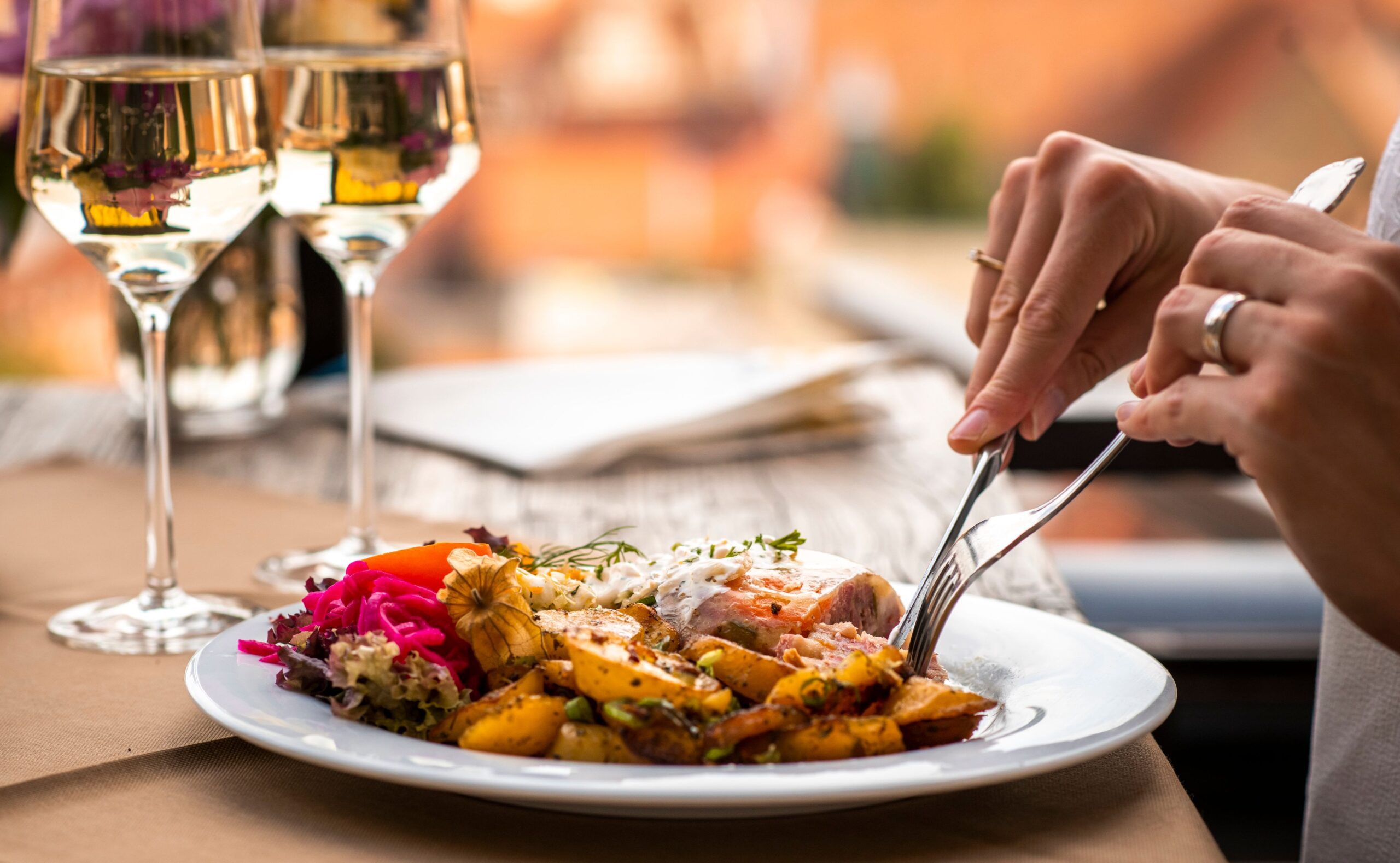
Sächsischer Sauerbraten (marinated and braised beef) is a classic dish in Saxony’s capital. Potato dumplings with red cabbage are a Dresden favorite. Sweet lovers will find two staple desserts on Dresden menus: Quarkkeulchen (a cake made with fresh cheese) and Eierschecke. Despite the name, the main ingredient in Quarkkeulchen is actually potato. It’s typically served with apple mousse, sugar, and cinnamon to enhance its flavor.
The name of this dessert comes from its traditional stick shape. Eierschecke was once a dessert reserved for Dresden’s bourgeoisie. With rich layers of quark and egg, it used to be accessible only to wealthier classes. Today, the Eierschecke from Dresden is among the most popular Saxon desserts and is freshly available daily throughout the city’s patisseries.




