

In Southern Italy, the areas around Salerno and Potenza are especially rich in abandoned villages and ghost towns.
Creating an itinerary that connects all these small villages is challenging. The lack of direct road links would make the journey much longer – it could take at least 15 days to thoroughly explore the region. Accommodation is not always straightforward either. The absence of mass tourism means hotel options are limited, though there are sometimes roadside motels where you can stay the night. On the other hand, you’ll find plenty of inns and trattorias offering homemade food at very reasonable prices.
Nevertheless, let’s try to outline a route that includes the most fascinating places.
Abandoned Villages in Campania
Roscigno
Starting from Salerno, take state road 18 south, then 166 to Roscigno. This village sits at 570 meters above sea level on a hill overlooking the Ripiti stream valley, a tributary of the Calore Salernitano river. Roscigno has recently been listed as a UNESCO World Heritage Site and is now split in two: the older part, almost completely abandoned due to a landslide, and a newer part built further uphill in a safer area.
With agro-pastoral origins possibly dating back to the 1300s, the original Roscigno was situated lower down. After repeated landslides, residents had to relocate higher and higher, reaching the current plateau around 1700. The final houses were built in the old village at the start of the 20th century before the community gradually moved to the current site chosen by the Civil Engineering Corps.

Sacco Vecchia
Just a few kilometers from Roscigno lies Sacco Vecchia, built along the ridge of Mount Motola and perched above the deep gorge of the Sammaro stream, which separates Sacco from Roscigno. This clustered settlement dates back to the early Middle Ages and sits in an almost inaccessible location, with remnants of religious and fortified structures likely from the 1200s. The site was likely abandoned because of its difficult terrain.
You then have two options: head inland or towards the coast. Let’s go inland. Follow state road 166 to Atena Lucana, then join the Autostrada del Sole northbound until Sicignano degli Alburni. Continuing toward Potenza, at the Buccino exit you’ll find signs for Romagnano al Monte, situated to the north of the Alburni mountains at the border between Campania and Basilicata.
Romagnano al Monte
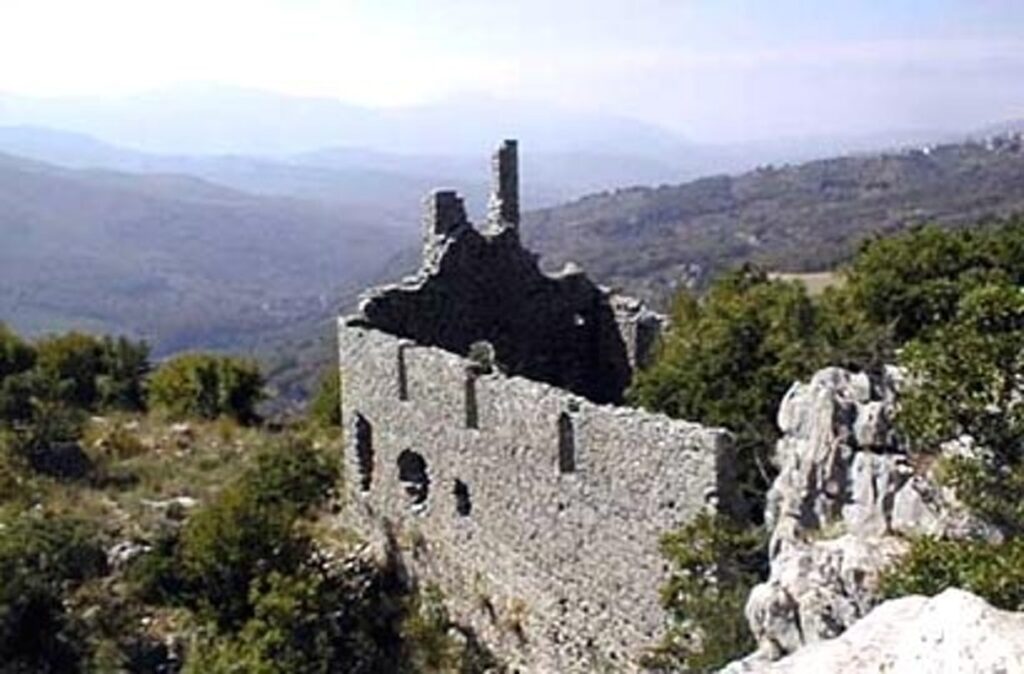
Romagnano al Monte, perched at 641 meters above sea level, clings to a rocky spur overlooking the deep valley of the Bianco River. The landscape is shaped by steep, mountainous terrain and dramatic cliffs. After the 1980 earthquake, the entire town was abandoned, although during the 1960s it had over 600 residents. A typical medieval mountain village, Romagnano al Monte shared its history with other small rural towns, often marked by feudal ownership. The remains of the Baronial Castle’s walls stand at the top, while the central square, Piazza SS Rosario, houses the town hall and a Baroque church dedicated to Madonna del Rosario. After the earthquake, inhabitants relocated to a tent city (Romagnano Nuovo) about 1 km away from Buccino, receiving small plots of land from the state in compensation. Only eight years before the earthquake had Romagnano received an aqueduct.
Back on the highway past Potenza, take state road 407 Basentana, which runs through the valleys bordering southern Campania. Here as well, stories of feudal oppression (by the same barons: Sanseverino, Morra, Carafa, etc.) and migration, combined with harsh landscapes of ravines, barren hills, and badlands, made life so difficult that residents ultimately left.
San Severino di Centola
If, from Roscigno, you prefer heading towards the sea, return to state road 18. After passing Paestum and its archaeological area, head for Vallo della Lucania. A few kilometers further and you’ll take state road 447 toward Palinuro.
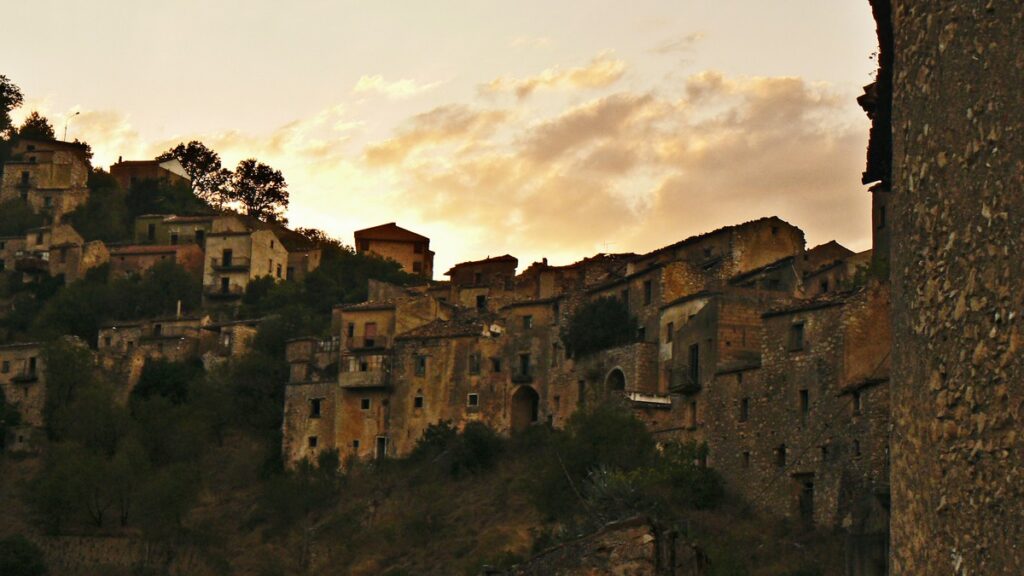
Here, in this remote stretch of coastal Cilento, sits San Severino di Centola, another abandoned hillside village. It occupies a rocky spur over the Mingardo River gorge, and the panoramic views are well worth the detour. Along the road to the empty village, visitors can glimpse the ruins of Molpa Castle, which legend says was deserted after Saracen pirates raided it.
This time, the cause of abandonment is more economical than geological. Its precarious clifftop position led to a slow, steady population decline until, by the 1960s, the mainly agricultural village’s economy collapsed. About fifteen years ago, the remaining residents moved to livelier towns by the coast. Today, San Severino is inhabited by just one person – an artist from abroad.
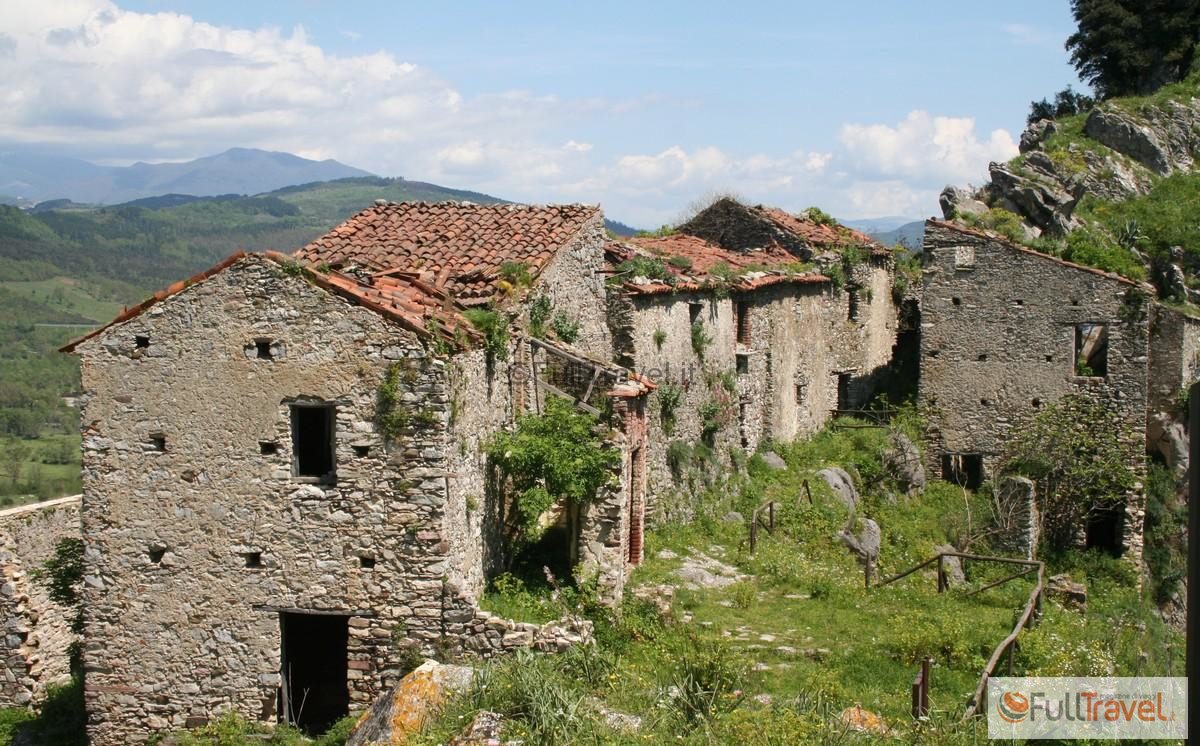
Other Abandoned Villages in Campania
All across the Salerno area, you’ll also encounter plenty of deserted hamlets (like Case di San Giovanni a Punta Tresino in S.Maria di Castellabate, Tuoro and Cavalli near Roccadaspide, San Nicola di Centola near Palinuro, Sorbo close to Salerno) that reflect the network of traditional self-sufficient rural communities shaped by the old feudal system. These hamlets tend to be in inaccessible spots; after the demise of large landholdings, they lost their purpose and were eventually left behind.
Feelings common to all these deserted sites are a deep melancholy mixed with curiosity. The reasons for abandonment differ for each place: sometimes everyone leaves, in other cases only the historic center is deserted. These causes vary from place to place.
Abandoned Villages in Basilicata
Along the Basento and Agri river valleys in Basilicata, you’ll find entirely abandoned villages:
Campomaggiore Vecchia
Campomaggiore Vecchia, about 40 km from Potenza and close to the Basentana 407, rises on a high plateau on the northern slopes of the Lucanian Dolomites—one of Italy’s most striking mountain landscapes, with towering ridges and deep valleys. The village already existed in the Hohenstaufen era, but its history is one of repeated abandonment: first in the 17th century, then in 1885 when a landslide forced residents to build a new settlement 3 km away. Today you can visit the ghostly remains of the ancient town.
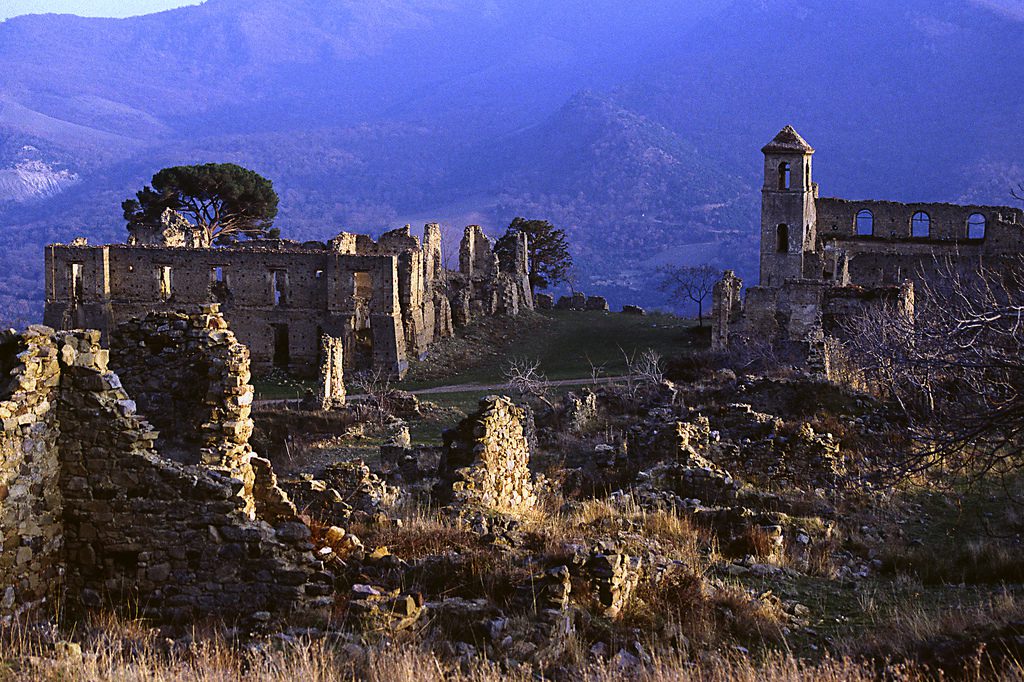
Craco
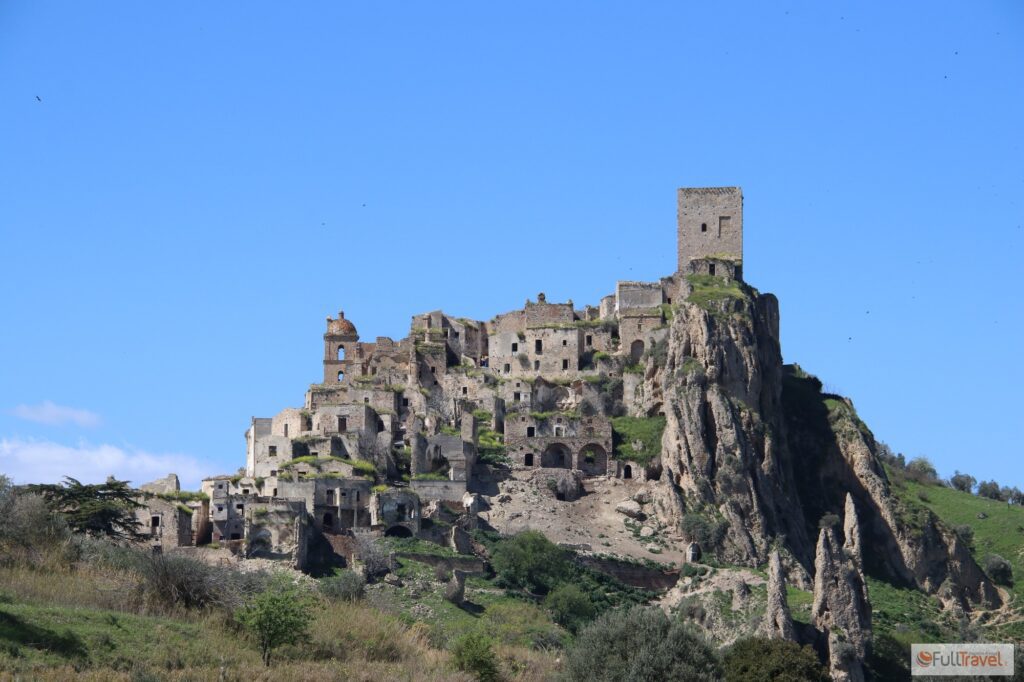
Craco, in the province of Matera, stands dramatically atop a hill. Although it’s in better condition than Campomaggiore, it’s completely deserted and rapidly deteriorating. The cause: a vast landslide that left the site unsafe.
These thematic itineraries are closely linked to efforts – where possible – to preserve ancient buildings and a lesser-known but culturally rich Italian heritage.
These sites often survived for centuries thanks to their secure mountain locations, away from major trade and military routes. Even so, their history of feudal hardship often ended with catastrophic events. Migration since the end of World War I has depopulated many rural villages, while harsh environments—prone to landslides and subsidence—have hastened the decay of fragile homes. Then came earthquakes, notably the devastating one in 1980, leading to the complete abandonment of many of these settlements.
The reasons for rural depopulation vary from village to village, yet their stories sound familiar. In the Salerno province, around the Alburni mountains, many towns have long faced unstable ground. The sandy soil is very loose, and erosion has left its mark with striking badlands. Numerous landslides, often triggered by rainfall seeping into underground channels, have further destabilized the area. Caves and abundant mountain springs also hinder ground stability.