


The Emerald Isle is divided into Republic of Ireland (Eire) with capital Dublin and Northern Ireland, with capital Belfast. The latter is still part of the United Kingdom, while Eire or Ireland – which occupies 85% of the territory – gained independence in 1922. Overall, Ireland is divided into 32 counties with a total of nearly 6 million inhabitants.
Cities of Ireland: Dublin and the others
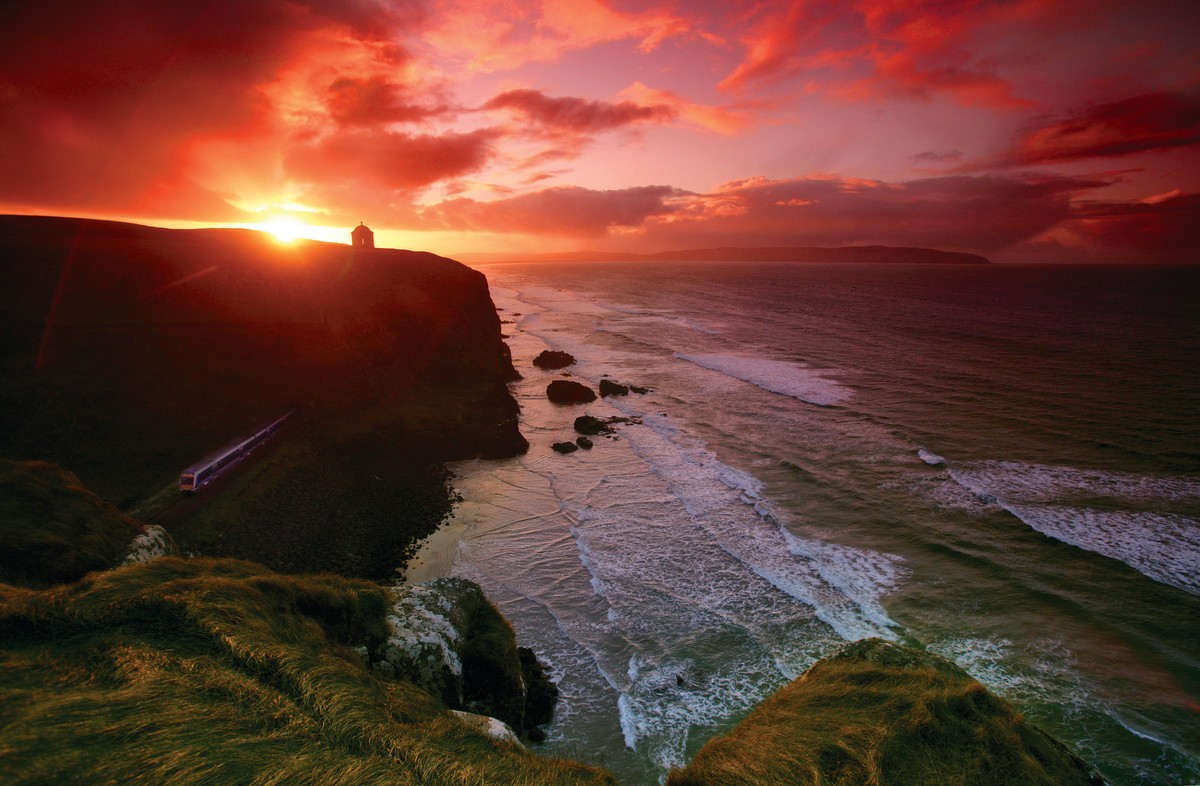
The main cities of Ireland are Dublin, Belfast, Cork, Galway, Limerick and Waterford. Ireland is bordered to the west by the Atlantic Ocean and to the northeast by the North Channel. To the east, it is washed by the Irish Sea which, to the southwest, connects to the ocean via the St. George’s Channel and the Celtic Sea. In the west, Ireland is characterized by the landscape created by the cliffs, for example the Cliffs of Moher, while, as you move south, the coast changes in favor of golden beaches, long inlets, and well-developed peninsulas. The center of the Island is instead formed by plains and expanses touched by rivers that often form lakes and marshes, such as in the Shannon.
Ireland: the climate
The climate of Ireland, temperate but rainy, ensures mild summers and harsh winters but rarely freezing. Off the coast of Ireland there are some islands, the largest of which is Achill Island, while the probably most famous are the Aran Islands. Due to a past made of dominations, invasions, and heated religious and political clashes, the Irish people today appear proud, future-oriented, warm, and hospitable. The St. Patrick’s Day, on March 17, is among the most heartfelt in Southern Ireland.
Numerous options for accommodation in Ireland which, even at very popular prices, ensure low cost holidays.
Documents and Health Advice for Ireland
European citizens can benefit from free public healthcare by presenting the Health Card, which replaces the former E111 form. Travel documents: passport or identity card valid for travel abroad.

Ireland Profile
- Country: Ireland
- Area: 84,500 km2
- Capital: Dublin (Eire), Belfast (Northern Ireland)
- Population: 6 million inhabitants
- Language: English, Gaelic
- Religion: the majority is Catholic, the minority is Protestant
- State System: the island is divided between the Republic of Ireland (Eire) and Northern Ireland, with a parliamentary monarchy, which is part of the United Kingdom of Great Britain and Northern Ireland
- Main cities: Dublin, Cork, Limerick, Galway, Belfast, Derry
Useful Information about Ireland
- Currency: Euro – Eire, Pound Sterling – Northern Ireland (€0.61)
- International dialing code: +353
- International vehicle registration code: IRL
- Driving lane: left
- Entry documents: ID card or Passport
- Vaccination required: No
- Electric current: 220 V 50 Hz
- Units of measurement: imperial system. Distances are measured in miles, yards, feet, and inches. Weights are measured in stones, ounces, and pounds. Volumes are measured in gallons and liters. Metric system used less frequently
- Time zones: – 1 hour (Italy time)
- Fixed-date holidays: common to both states: January 1st: New Year’s Day; March 17th; April: Easter Monday; April: Easter; May 1st: Labor Day; December 25th: Christmas; December 26th. Only in Ireland (Eire): first Monday of June; first Monday of August and last Monday of October. Only in Northern Ireland: last Monday of May, Spring Holiday; July 12th: Orangeman’s Day, celebration of the Protestant victory at the Boyne
- Climate: humid
- Average temperatures: The coldest month is January, with an average temperature of 4 degrees, the warmest is July with an average of 18°
- Transport: national airlines Aer Lingus and Ryanair; all airlines have direct flights to Ireland. Trains from Paris Artesia-Trains, also with Trenitalia, Deutsche Bahn, and French Railways
- Airports: many Irish cities have an airport, Belfast City Airport, Belfast International, Cork Airport, Derry Airport, Donegal Airport, Dublin Airport, Galway Airport, Kerry Airport, Knock Airport, Shannon Airport, Sligo Airport, and Waterford Airport