A travel itinerary along coastal villages among bays and rocky inlets, interspersed with river estuaries, lagoons and tides, sandy beaches to natural harbors. A route in close contact with the Ocean, among nature immersed in four hundred years of history, in the estuary north of Boston, among clams, cormorants, tides and “country art”.
Breathtaking views overlooking the Atlantic
Along the road heading north from the capital of Massachusetts, in the United States, there are breathtaking views overlooking the Atlantic, for Rudyard Kipling the coast of the Brave Captains. The heritage of this region is made up of history, culture and economy.
Salem, known worldwide as the only place of witch hunts of the 1600s in America and, in the 1800s, the first American port to maintain trade relations with China.
Gloucester, the first fishing port established in America and protagonist of the Maximus Poems by the great American poet Charles Olson, as well as the setting of a true story, narrated in 1997 by Sebastian Junger in the book The Perfect Storm later adapted into a film in 2000.
Beverly a small town residence of writer John Updike and Manchester-by-the-Sea which became the namesake dramatic film by Kenneth Lonergan, earning Casey Affleck the Oscar for best actor. This eastern coast a few kilometers north of Boston was one of the first vacation destinations for affluent American families, visited by princes and presidents.
Essex
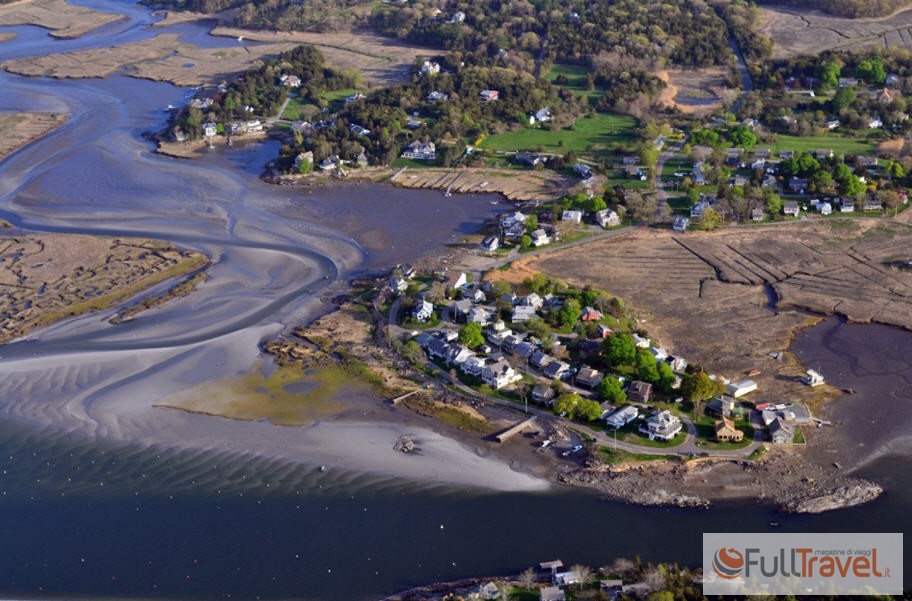
Among the twenty coastal villages, Essex – 53 km from Boston – with its almost four hundred years of history is a world of its own, full of charm, nature, centuries-old traditions, suitable for those seeking the magic of slowness and the pulse of tradition off the tourist paths. It lies among the brackish lagoons surrounding the Essex River, which flows into the sea in Essex Bay along with the nearby Castle Neck River and several streams, Walker Creek, Hardys Creek and Soginese Creek, forming a splendid estuary. The mainland rests on the water; a couple of small hills characterize the landscape. Here, where the town meets the river, is the Essex River Cultural District, geographically sensitive and compact, a meander among ancient cemeteries, historic shipyards and marinas, small restaurants, antique shops.
Shipbuilding Museum
From its shore open views over the Burnham’s Shipyard, the Essex Historical Society and the Shipbuilding Museum, which hosts an important collection of maritime antiques, backbone of Essex’s rich history. Then the view extends over the Essex River with its brackish lagoon borders, beyond the horizon towards Hog Island and the vast Crane Beach. Patches of parks dot the streets with benches designed for relaxing and enjoying the views. It is a dynamic and active fabric between river history that invites exploring and experiencing this carefully preserved heritage firsthand.
Essex Shipbuilding Museum
The shipbuilding tradition is still alive: the Essex Shipbuilding Museum tells the extraordinary story of a small New England village that built more wooden two-masted fishing schooners than any other place in the world. The museum is located in the historic Essex Central School House from 1835, adjacent to a site reserved in 1668 for a shipyard, an integral part of the village’s historic character. Over 7000 rare artifacts, photographs, tools, documents, models, including the schooner Evelina M. Goulart, are held here. Many objects were found in attics, basements and storage sheds of Essex.
Essex begins with clams and clam fishing: a true industry. This mixture of brackish waters between river and ocean is one of the most fertile grounds for clams. The industrial revolution brought no easing to clam fishing: if you want good clams you have to get your hands in the mud and work with a rake! There is still no clean and easy version that can be advertised and packaged.
Fried or steamed clams
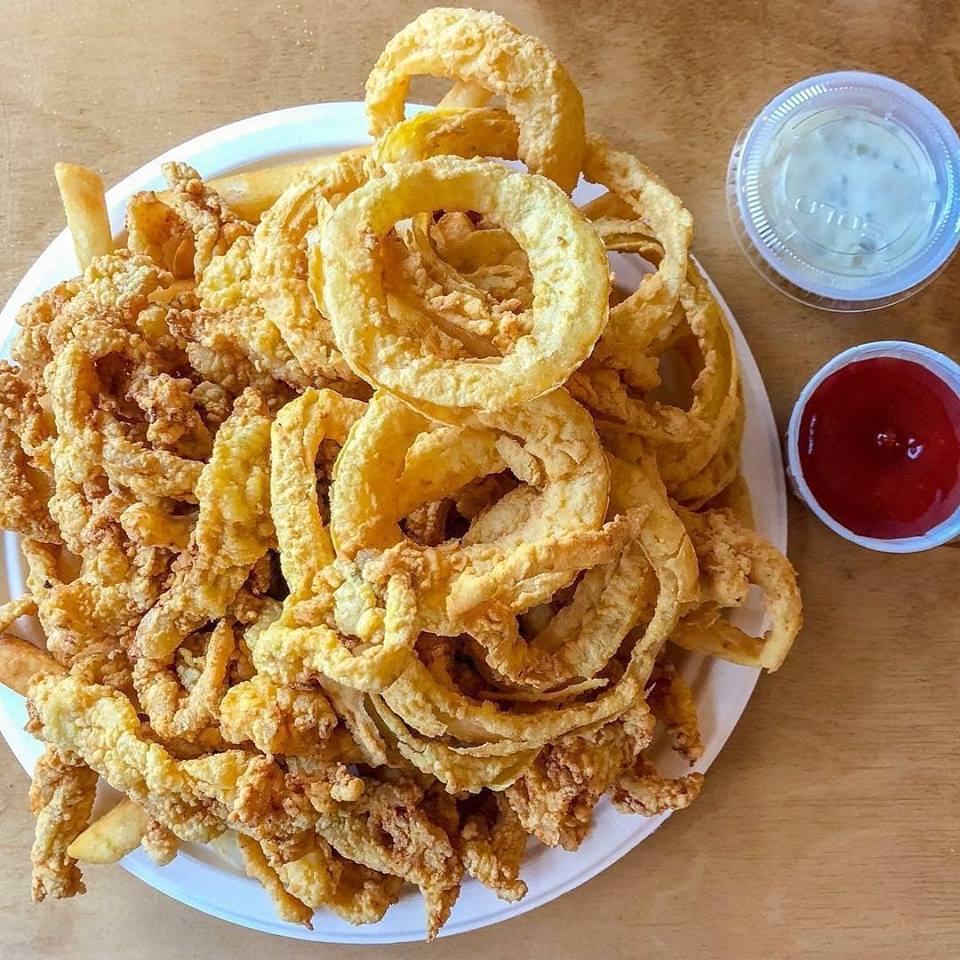
Essex has made fresh catch its hallmark and it’s no accident that its fried clams were invented right here in 1916 by Woodman’s. One of the best dishes of fried clams with lagoon views and birdwatching is J.T. Farnham’s. Fried or steamed each place serves them according to its own recipe. The annual Essex ClamFest in October celebrates their fame combining art and craft, music, and entertainment, completing the festival with the Clam Chowder Tasting, where local restaurateurs compete to crown the best clam chowder of Cape Ann.
America’s Antique Capital
Essex is also considered America’s Antique Capital with over thirty antique shops within a 2 km radius: it’s a paradise for collectors and interior decorators; art, furniture, accessories find space in old buildings, one next to the other. Many of these are just a short walk from dining establishments: you browse one shop or two, then refresh yourself with a sip of local beer and a snack. Ripple, Shea’s Riverside, Riversbend and C.K. Pearl all have outdoor seating overlooking the Essex River. The view of the water and lagoons is unmatched: fantastic panoramas pace a meal of fresh fish, shellfish and an eclectic mix of New England dishes, in rhythm with the tides awaiting a spectacular sunset. These places reconnect us to nature and the many bird species frequenting the saltwater lagoons.
Along the Essex River
There are various ways to explore the Essex River: glide on the water for example on a kayak tour guided by a local expert who also points out the locations of many Hollywood films shot here. You can paddleboard in the estuary mosaic, through salt marsh grasslands, tidal inlets, and Great Marsh estuaries. ERBA is an organization specializing in guided kayak river trips for all skill levels. Explore the protected waters of the Essex River basin and northern Massachusetts coast, offering great environmental diversity with miles of estuaries, islets, wildlife, beaches and dunes. You can swim or spot an osprey, a heron, an egret. In these waters striped bass is a preferred catch on local fishing charters.
Alternatively, you can opt for a good hour and a half narrated boat trip, while passing farms, lagoon farms, and historic shipyards. You see lobster fishing, clamming, fish. You discover islands, barrier beaches, sand dunes, winding rivers and wildlife. The Essex River Cruises & Charters regularly offers various narrated excursions seven days a week, from May until the end of October within the tidal estuary, in a sheltered bay.

Fall Foliage
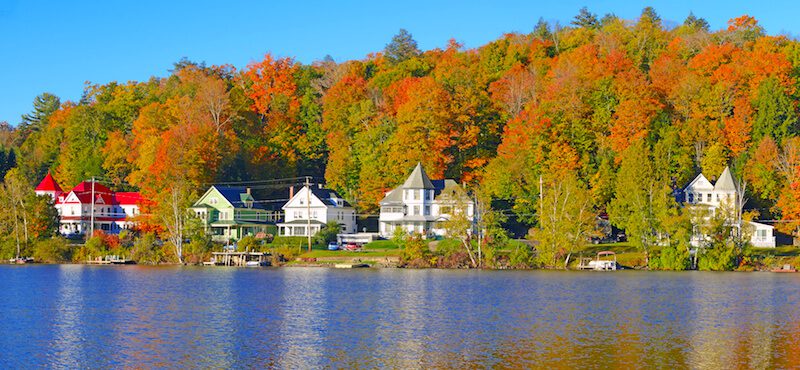
Among the various excursions those in autumn Fall Foliage Cider & Donut Cruises approach Hog Island to admire the magnificent red spruce forest. You see the foliage color change into bright yellows and oranges, while sipping warm cider and apple donuts from Russell Orchard in Ipswich. It is a great opportunity to celebrate New England’s spectacular fall foliage. In this seemingly silent nature, there is exceptional wildlife activity. Egrets are very common birds, a smaller type of heron with dark legs that stay in freshwater and saltwater lagoons to find fish nourishment just like the osprey, often called sea and river hawk. The swan, a large and graceful creature with wide wingspan; the blue heron helps control the insect population and can also swim deep.
And the cormorant often perched on the coast with wide Batman-like wings spread to dry feathers that are so little oily and make them light to dive fishing. Seals – harbor seals – are not missing, spending half the time on shore and the other half in water. The nature reserve Stavros Reservation protects over 20 hectares of saltwater marsh lands at Essex, where Whites Hill is a coastal promontory offering unbroken views of Crane Beach, the Crane Wildlife Refuge, and Halibut Point. The top of Whites Hill is an excellent spot to observe herons and raptors in the vast salt marsh, especially with a telescope. Many herons use Essex marshes to feed during their journey to and from their nesting colonies on far islands. The hill also attracts migrating songbirds.
Colonial farm: Cogswell’s Grant
A beautiful colonial-era farm is the Cogswell’s Grant property, still a working farm and historic house museum today, also the summer home of Bertram K. and Nina Fletcher Little, important collectors of American decorative arts in the mid-20th century. Cogswell’s Grant is a 66-acre coastal farm located along the Essex River banks, just two miles inland from the Atlantic Ocean. Being one of the largest land holdings remaining in the town of Essex, born as a 17th-century land grant, with landscape features existing on the property dating to each of its periods of ownership, it is an extremely significant historic agricultural landscape.
This house became perfect for the extensive “country art” collection of the Littles while offering an idyllic retreat surrounded by countryside where the couple could relax and entertain guests. Studying and restoring the interior finishes of the house was an important part of the restoration process. The woodwork and finishes had all been painted white at the end of the 19th century, and Victorian-era wallpapers were throughout the house.

Over the years, Cogswell’s Grant became a special retreat for the Littles and their three children, Jack, Warren and Selina. Their life on the farm was documented with a series of scrapbooks containing photos and notes of farm activities and gatherings, favorite animals, special events and vintage cars collected by Jack. It was also a study and research center, as the Littles had a wide circle of friends, fellow collectors, dealers and scholars with whom they enthusiastically shared their collections and exchanged information.
Cogswell’s Grant was more than just a summer home for the Little family and a splendid historic setting for their ever-growing collections; it was also a family farm, managed by caretakers year-round producing food products for the Littles’ consumption. Cows, sheep, pigs and chickens were raised, milk and eggs were sold. Vegetables and fruits came from a large garden behind the house, then were preserved to supply the Little family with farm products year-round. Caretakers made deliveries of preserves, frozen meats and fresh eggs throughout winter to the Littles’ house in Brookline, Massachusetts and the Littles were proud to tell guests at their table that everything was produced on their Essex farm.
In 1998 Cogswell’s Grant opened to the public and became the only place in the United States where such an important and pioneering collection of American folk art could be seen in the domestic setting for which it was assembled. The items are arranged as during the Littles’ domestic life comfortably and naturally, as in the original house. Cogswell’s Grant is still a farm, honoring nearly four centuries of that tradition, and keeps alive an important part of the Little family life. Since the property opened to the public, collectors, scholars and decorative arts enthusiasts have flocked to the museum, enjoying the rarity and quality of the collection, and beginning a new chapter for the house, experiencing first-hand Little’s passion for collecting and sharing their collections.
©Thema Nuovi Mondi