
The Camino de Santiago de Compostela is the most renowned and walked pilgrimage trail in the world. In recent years, the number of pilgrims has increased dramatically: from 2,491 in 1985 to about 215,000 in 2013. This is a historic journey—since the Middle Ages, countless travelers have walked to the sanctuary of Santiago de Compostela, where the tomb of Saint James the Greater is still found.
- The origins of the Camino de Santiago pilgrimage
- The Camino de Santiago routes
- French Way of the Camino de Santiago
- Stages of the Camino de Santiago on foot
- The Aragonese Way to Santiago de Compostela
- Main routes leading to Santiago de Compostela
- Via Francigena, Italy
- Puente la Reina, the pilgrim crossroads
It’s difficult to define the Camino as a single path; over the centuries, many different routes have led pilgrims to Santiago. The most famous are undoubtedly the French Way and the Aragonese Way, though the Portuguese Way is also very popular. The former two, spanning France and Spain, have both been recognized as UNESCO World Heritage Sites.
The origins of the Camino de Santiago pilgrimage
In the 9th century, word spread throughout Europe about the discovery of the Apostle James in Galicia. This event marked the beginning of pilgrimages to visit his tomb.
Originally, there was no fixed route, and the first pilgrims were forced to make risky crossings over the Cantabrian Mountains when the plains were occupied by Muslims. Over time, the path became more established, with route choices driven by safety and the presence of bridges that made river crossings easier.
In particular, during the 11th century, thanks to road and bridge improvements by Sancho the Great of Navarre and Alfonso VI of León, the pilgrimage gained traction. Various trails from different countries converged at Ostabat before entering Spain at Roncesvalles.
The Camino de Santiago routes
Although many trace the origins of the Camino to coastal routes (Ruta de la Costa) and the tales of sailors who spoke of the apostle’s tomb, today’s pilgrims generally prefer the overland routes toward Santiago.
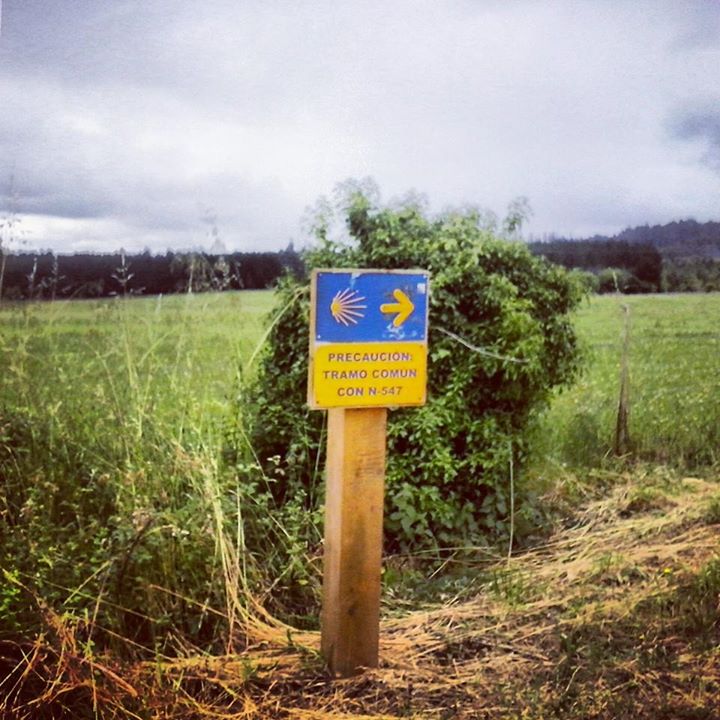
The scallop shell is the symbol of pilgrims headed to Santiago de Compostela. The trail from Roncesvalles to Estella is known as the French Way, while the one crossing the Pyrenees at Somport is called the Aragonese Way.
French Way of the Camino de Santiago
The French Way is undoubtedly the best-known stretch of the Camino de Santiago, spanning 750 kilometers from Roncesvalles to Santiago. In 1130, French priest Aymerico Picaud wrote the first guide, dividing the route into thirteen stages. The most popular passes over the Pyrenees are Roncesvalles and Somport.
Stages of the Camino de Santiago on foot
(source percorsiditerre):
2 Roncesvalles ➔ Zubiri 21.9 km
3 Zubiri ➔ Pamplona 20.5 km
4 Pamplona ➔ Puente la Reina 24.3 km
5 Puente la Reina ➔ Estella 21.3 km
6 Estella ➔ Los Arcos 21.5 km
7 Los Arcos ➔ Logroño 27.9 km
8 Logroño ➔ Nájera 29.1 km
9 Nájera ➔ Santo Domingo de la Calzada 21.3 km
10 Santo Domingo de la Calzada ➔ Belorado 22.4 km
12 San Juan de Ortega ➔ Burgos 27.3 km
13 Burgos ➔ Hontanas 31.3 km
14 Hontanas ➔ Frómista 34.5 km
15 Frómista ➔ Carrión de los Condes 19.1 km
16 Carrión de los Condes ➔ Terradillos de los Templarios 26.4 km
17 Terradillos de los Templarios ➔ El Burgo Ranero 31.0 km
18 El Burgo Ranero ➔ León 37.6 km
19 León ➔ Villar de Mazarife 21.2 km
21 Astorga ➔ Rabanal del Camino 20.3 km
22 Rabanal del Camino ➔ Ponferrada 32.3 km
23 Ponferrada ➔ Villafranca del Bierzo 23.6 km
24 Villafranca del Bierzo ➔ O Cebreiro 28.2 km
25 O Cebreiro ➔ Triacastela 20.9 km
26 Triacastela ➔ Barbadelo 28.9 km
27 Barbadelo ➔ Portomarín 18.0 km
28 Portomarín ➔ Melide 35.9 km
29 Melide ➔ Pedrouzo (Arca) 33.2 km
30 Pedrouzo (Arca) ➔ Santiago de Compostela 19.7 km
The Aragonese Way to Santiago de Compostela
The Aragonese Way, via Toulouse, is an alternative to the French Way. It’s especially popular with pilgrims coming from Italy, climbing the Aspe Valley to reach Somport in the Pyrenees. This route covers 160 kilometers over six stages.
Main routes leading to Santiago de Compostela
Via Francigena, Italy
In Italy, the path toward Santiago de Compostela starts on the Via Francigena. This ancient road links Italy to the French Way; from here you can also follow the Coastal Route from Rome to Santiago. Depending on your chosen trail, the total distance is about 800 km—walkable in a month, though many opt to cover only a week, for example, walking just the Spanish section starting from the main gathering point: Puente la Reina.
Puente la Reina, the pilgrim crossroads
No matter which path you have chosen, all roads merge at Puente la Reina before the final stages. From here, the walk becomes a “shared” journey. The following stages are:
- Estella
- Nájera
- Burgos
- Frómista
- Sahagún
- León
- Rabanal del Camino
- Villafranca del Bierzo
- Triacastela
- Sarria
- Portomarín
- Palas de Rei
- Arzúa
- Santiago de Compostela.
At Finisterre (beyond Santiago on the ocean), tradition holds that pilgrims burn their clothes and take a purifying dip in the Atlantic.