

The historic center of Naples, a UNESCO heritage site, encloses three thousand years of history and is the largest in Italy (even larger than that of Rome). Its peculiarity lies in the almost total preservation of the road layout from the Greek era, dating back to the 8th century BC, still in use today. These are the so-called Decumani.
To immediately get in tune with the soul of Naples, it is essential to start with an in-depth exploration of the Decumani, corresponding to Via della Sapienza, Via dell’Anticaglia and Via dei Santi Apostoli (Upper Decumanus), Via dei Tribunali (Main Decumanus) and Spaccanapoli (Lower Decumanus). These streets, and the alleys and squares interconnected with them, harbor many treasures, big and small: first of all religious buildings, such as the Cathedral of San Gennaro, the Sansevero Chapel (with its Veiled Christ) and the Monastery of Santa Chiara. But you can also admire traces of Greek and Roman Neapolis, the popular art of murals, or the beautiful palaces, sometimes in somewhat precarious condition, but with doorways and staircases of incredible charm.

The most noble and postcard-perfect Naples is that of Piazza del Plebiscito, with the Royal Palace and the Maschio Angioino, the Galleria Umberto I and the San Carlo Theater. The latter is visitable with guided tours on weekends. But obviously the best way to enjoy it is by attending a performance of opera, ballet or a classical music concert. And then the Liberty-style district of Naples which is worth the trip.
So far, the surface of Naples. But the city also has a surprising underground face worth exploring to more deeply understand its history and evolution. There are various tours of Underground Naples. The one likely offering the most comprehensive overall view is the Official Underground Naples Path, which starts from Piazza San Gaetano at number 68. Still staying underground, when traveling by subway, it is worth observing its stations which have been transformed into artistic installations.

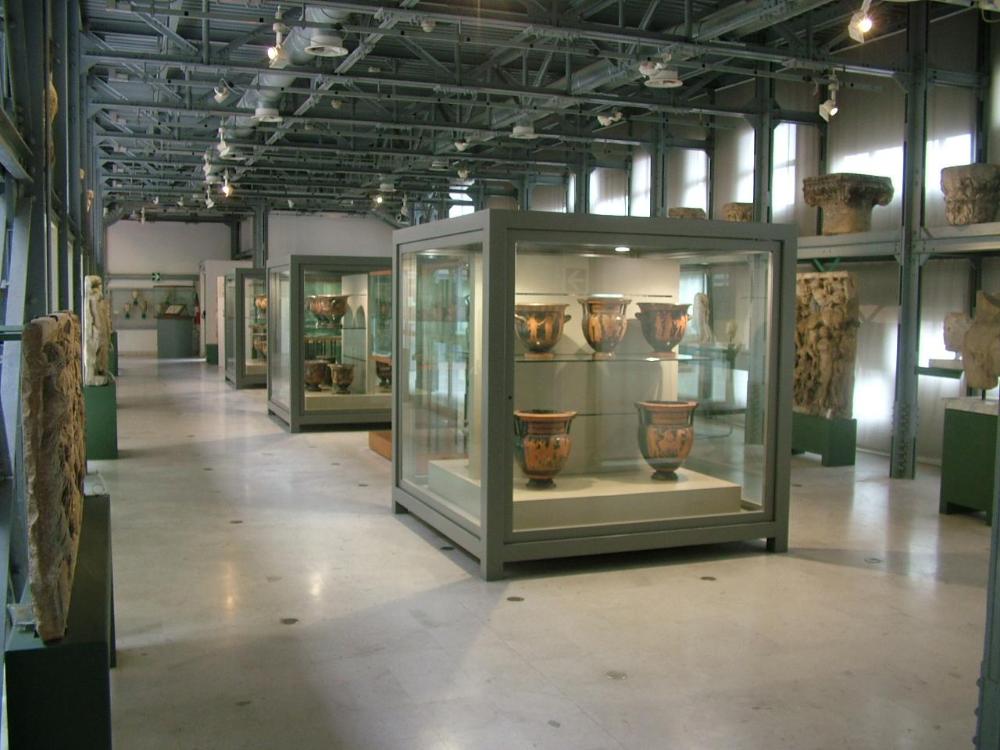
Finally, a visit to the Archaeological Museum of Naples cannot be missed, considered one of the most important archaeological museums in the world regarding Roman archaeology. Its visit is preparatory to excursions to Pompeii and Herculaneum, since it houses numerous artifacts from these cities, including mosaics and paintings.

What to eat in Naples
The national dish of Naples is pizza and Via dei Tribunali has been nicknamed by many as “The Street of Neapolitan Pizza” due to the large number of pizzerias located there. Among these is the one by Gino and Toto Sorbillo, descendants of one of the oldest families of pizza makers in Naples. Gino’s grandparents, who opened a pizzeria on Via dei Tribunali in 1935, had twenty-one children, all of whom became pizza makers. The pizza by Gino and Toto Sorbillo is that “of the city’s poor alleys, meaning bigger, generous, and accessible to everyone.” Another institution is L’Antica Pizzeria da Michele. To best preserve tradition, it offers only two pizzas, margherita and Neapolitan, prepared with the best ingredients available in the territory.
Finally, Campania street food is a gastronomic experience not to be missed. The main specialties are o’ cuoppo, a paper cone filled with fried delights (fish, potatoes or small mozzarellas), folded pizza, fried pizza, pasta frittatina, and panuozzo, a hybrid between a pizza and sandwich.

The Amalfi Coast is the stretch of Campanian coast, located south of the Sorrento Peninsula, overlooking the Gulf of Salerno. It is a stretch of coast famous worldwide for its natural beauty and is home to important tourist settlements, such as Positano. It takes its name from the city of Amalfi, the central core of the Coast not only geographically but also historically as it was one of the Maritime Republics. The beauty of the coast was discovered in the nineteenth century, during the Grand Tour. After World War II it became one of the vacation destinations of the international jet set.
The best way to move between the locations of the Coast is by ferries departing from Piazza della Concordia in Salerno or it is recommended to rent a motorboat, provided you have a boating license.

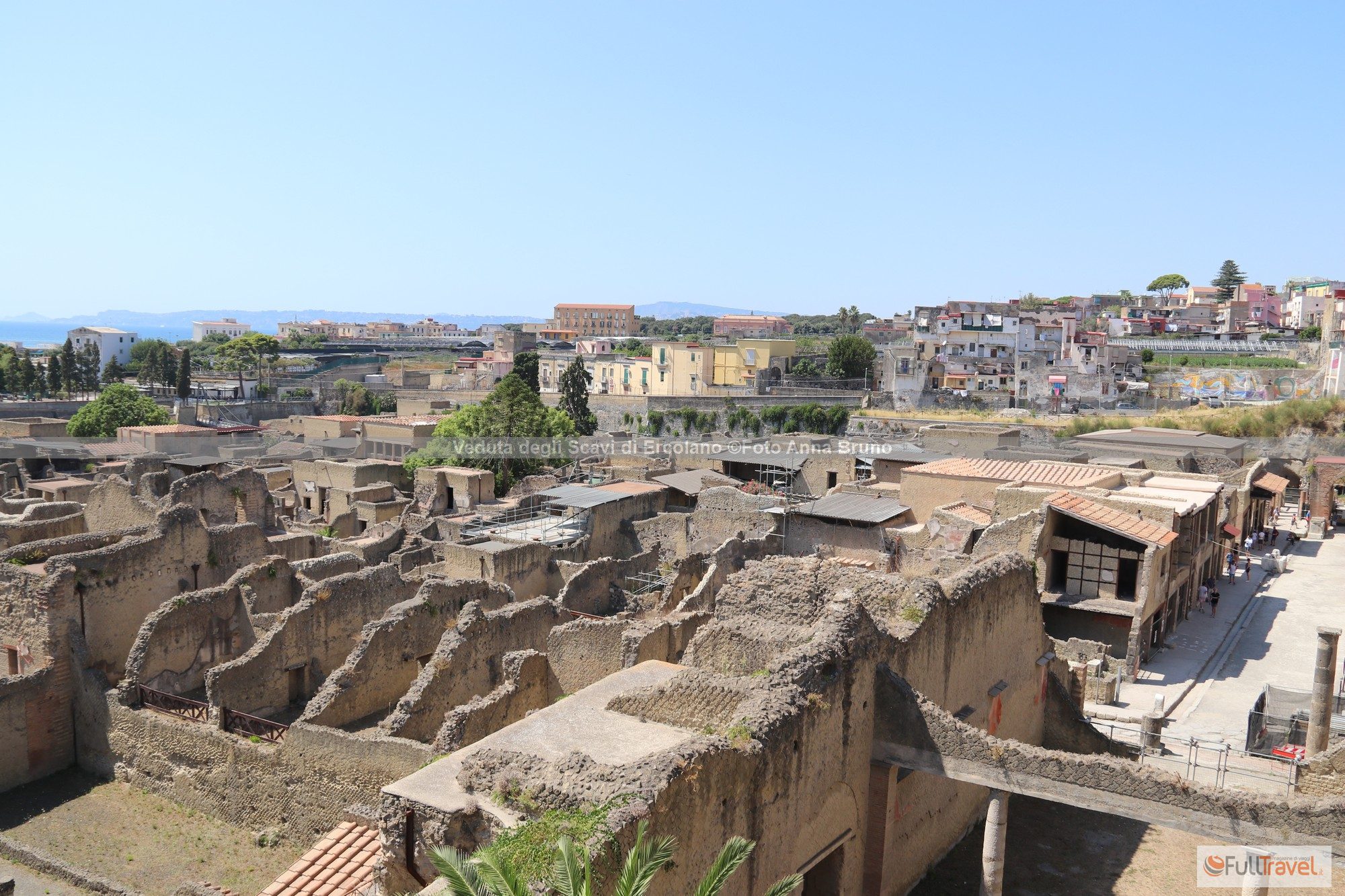
The cities of Pompeii and Herculaneum, buried by the eruption of Vesuvius in 79 AD, each deserve a day of visiting. They are easily reachable from Naples using the Circumvesuviana line, departing from Porta Nolana station.
Ancient Pompeii was buried under a layer of ash and lapilli. The excavations, started by the will of Charles III of Bourbon, have led to its complete uncovering. Therefore, all possible types of buildings present in Roman cities can be found there: private houses, forums, craft and commercial premises, entertainment buildings, baths, and temples.
The city of Herculaneum, on the other hand, was a vacation spot for the Roman aristocracy, as evidenced by the numerous villas such as Villa of the Papyri. It was completely buried under a layer of mud and pyroclastic materials following the eruption of Vesuvius: this layer, over the years, solidified, forming a rock surface similar to tuff but softer, which has protected the city’s remains, although making the archaeological excavations more difficult. The theater, in particular, is still buried and, when open to the public, is accessible via a series of Bourbon-era tunnels.
During these first four days, you can stay overnight in Naples and use public transport for traveling. At the end of the fourth day, it is advisable to rent a car and move to Salerno for the second part of the trip.
In Cilento and Vallo di Diano, three sites are selected by UNESCO as World Heritage Sites: Paestum, Velia, and the Certosa di Padula.
Paestum is a colony of Magna Graecia, founded by the Sybarites. The extent of its settlement, enclosed by its Greek walls, is still clearly recognizable today. Paestum is mainly known for its temples, miraculously preserved in excellent condition, to the extent they are considered unique examples of Magna-Greek architecture. The local museum houses a remarkable collection of artifacts found in the areas around Paestum, primarily the funerary goods from the Greek and Lucanian necropolises. Countless are the vases, weapons, and frescoed tomb slabs, among which the most famous is that of the Diver.
Velia was also a Greek colony, founded by Phocaean exiles fleeing their homeland threatened by the Persians. The archaeological area therefore preserves remains of the Greek city, the best known being the Porta Rosa, the oldest example of a full-centered arch in Italy, dated to the 4th century BC.
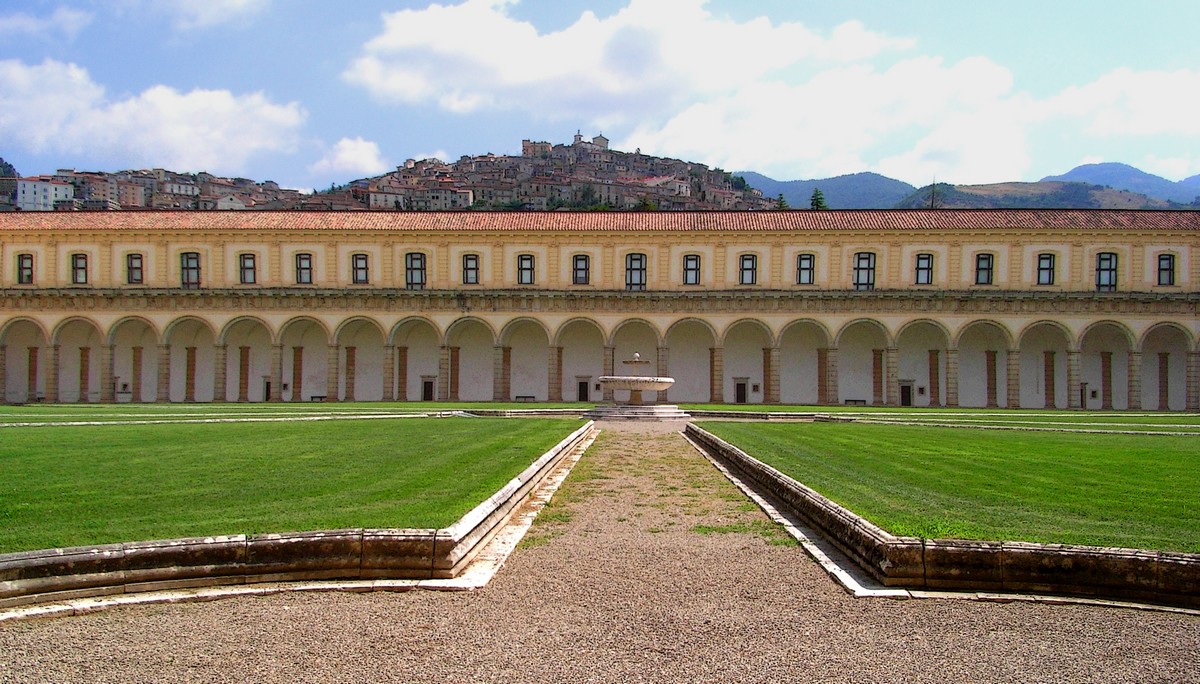
The Charterhouse of San Lorenzo in Padula is the first charterhouse to be established in Campania, at the beginning of the 14th century. Its 17th-century restructuring transformed it into one of the most sumptuous Baroque monumental complexes in southern Italy, as well as one of the largest charterhouses in Europe.
The last stops of the tour are Benevento and Caserta.
In Benevento is the monumental complex of Santa Sofia, which is part of the serial site “Lombards in Italy: the places of power”. It develops around the church, built in 760 by the Lombard duke Arechi II. The attached monastery, whose most notable part is the cloister, houses the Sannio Museum which has, among other things, a remarkable collection of archaeological finds, including many remains of a temple of Isis located in the city.
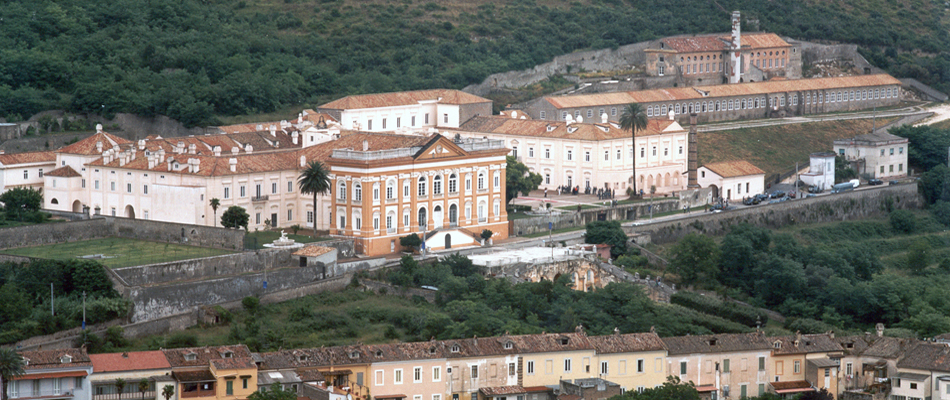
The most famous monument in Caserta is undoubtedly The Royal Palace known as the Reggia di Caserta, commissioned in the mid-18th century by Charles of Bourbon who, driven by a sense of competition with the French royals and eager to provide Naples with structures capable of serving as a European-level capital city, decided to inaugurate a palace that could rival in magnificence and grandeur that of Versailles. The palace, considered the last great achievement of Italian Baroque, is a magnificent complex of 1,200 rooms. The park extends for 3 kilometers in length, covering 120 hectares.

Less famous than the palace, but worthy of a visit, is the complex of San Leucio. The eponymous hill was purchased in 1750 by Charles III of Bourbon initially with the idea of making it a hunting reserve and secondary residences for the recreation of the royal family. Later, Ferdinand IV established a factory there for silk manufacturing and made it the forefront of his industrial policy: a manufacturing center for his population, which later became a colony governed by a special code of laws. San Leucio’s products are still proudly displayed today in the Vatican, the Quirinale Palace, the White House, and Buckingham Palace.
The Wine of Sannio
Benevento is the pantry of Campanian wine: its area alone produces more than half of the DOC and IGT product of the entire region. The best known wine of the area is probably falanghina, a native white grape with a fruity flavor. The first bottle of falanghina was produced in 1979 by the Mustilli Winery of Sant’Agata dei Goti, which decided to bet on a grape variety that at the time was destined only for distillation. Needless to say, the bet was largely won, as evidenced by the numerous awards won by Mustilli’s falanghina and the spread that this grape variety had in the area of Sant’Agata in the following decades. The winery’s historic cellar, dug 15 meters underground under the family palace, is open for tastings and visits.