


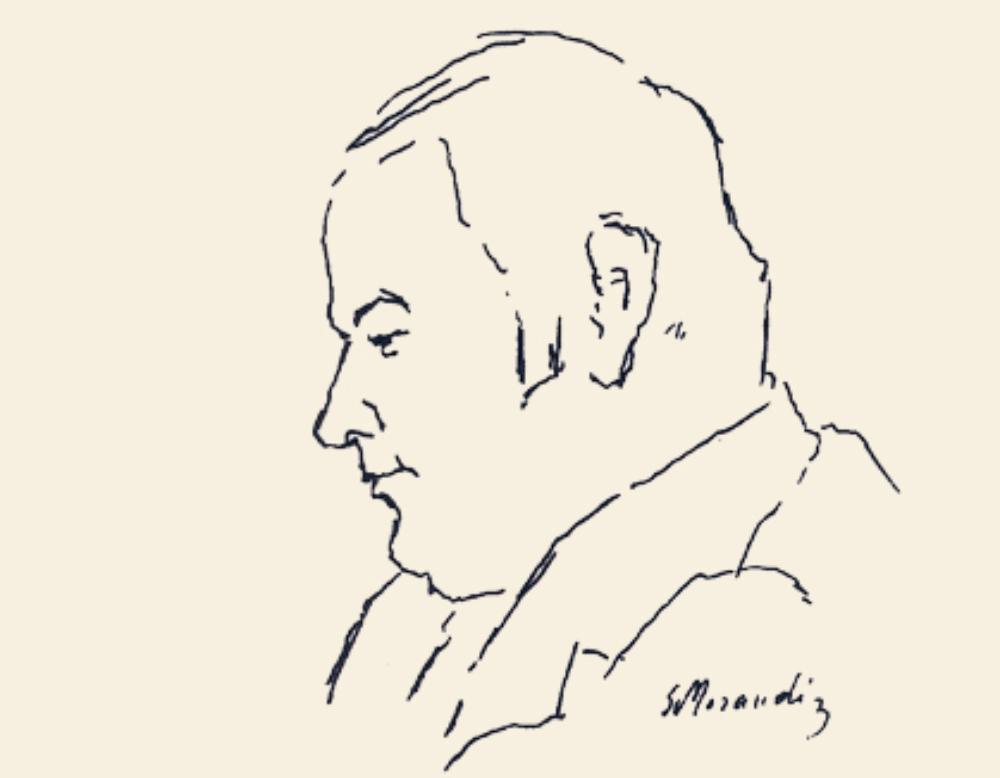

Established in 1962 by the National Body of Popular and School Libraries of Rome, named after the writer and literary critic Antonio Baldini and created according to the most advanced principles of library science, the library stood out in the 1960s for modernity, functionality, and updating of collections. In 1977, after the suppression of the Body, it was acquired by the State and assigned to the Ministry for Cultural and Environmental Heritage, then very recently established (1975), and took the current name of Antonio Baldini State Library.
From its beginnings, the Baldini library institutionally set as a priority objective the “friendliness” towards users, already at times when this was certainly not universally considered a value.
Hence in the rooms, already in the ’60s, the arrangement of book collections on open shelves and in classified order, that is by subject, to facilitate the reader as much as possible in searching and use, and to allow them to find titles they were not previously aware of; also the brightness and the spaciousness of the rooms (certainly made possible by the favorable location in the greenery of Parioli and the modernity of the architectural structure); and also the very furnishing of the reading rooms, which until the ’80s even included lounge corners, with low tables and armchairs, a feature that unfortunately had to be given up over time in order to increase available seating.
This “friendliness” of the facility indeed results in remarkably significant attendance statistics: average daily attendance of 150 people, with peaks of monthly attendance around 5000 users. For this reason, it became necessary to regulate entry and manage users with automated systems (since 2012, the Ermes system owned by the Central National Library of Rome has been used).



