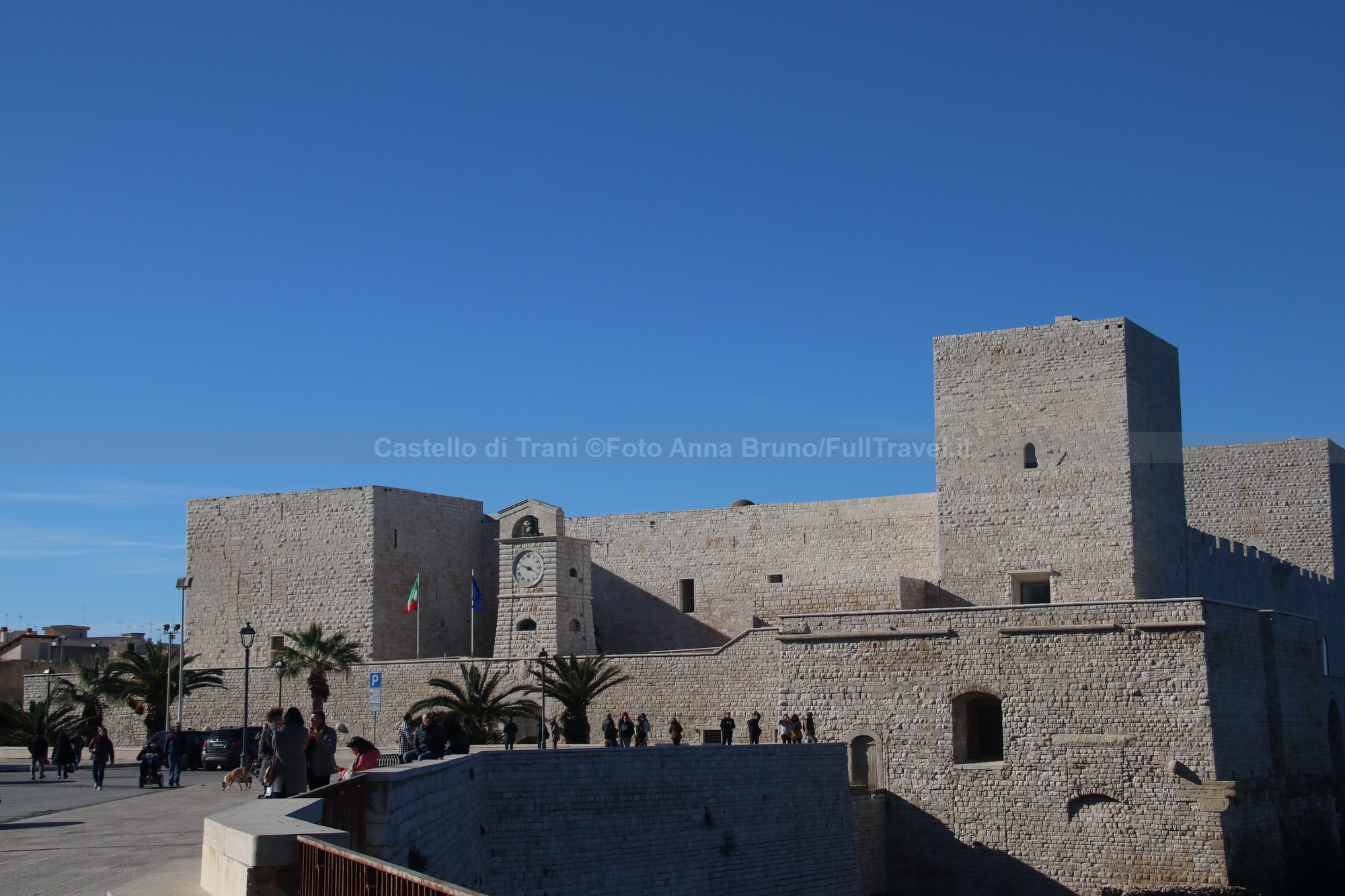


Divided into the provinces of Bari, Brindisi, Foggia, Lecce, Taranto, and Barletta-Andria-Trani, Puglia offers numerous vacation and discovery opportunities thanks to the vast landscapes shaped by its terrain.
Different areas are distinguished: the Gargano, the Murge, the Capitanata, the Tavoliere, and the Salento. Offshore, the Tremiti Islands stand out, a constant summer tourism destination due to the award-winning quality of waters and beaches. Nature in Puglia is generous, just think of the lush beauty of the Gargano National Park and the coastal panoramas at Vieste, Peschici, or Mattinata. Speaking of beaches, Salento is equally impressive with its cliffs plunging into the sea (at Porto Badisco, Castro, or Santa Cesarea Terme) as well as the golden stretches of sand at Ugento, Gallipoli, Otranto, and Santa Maria di Leuca.
For speleology enthusiasts, the underground world of the Castellana Caves is worth a visit, a karst complex among the largest explored by humans. Alongside these natural monuments are those of human origin developed over the centuries: in Puglia there are many archaeological sites, from the dolmens to the Manduria necropolis and the temples of Canosa di Puglia.
Probably, however, the ancient relic that characterizes the Puglian landscape, even in the collective imagination, is the Alberobello trullo, a typical conical-shaped building. Majestic and elegant are the churches and cathedrals in Puglia, mostly in Romanesque style; however, there are also Gothic buildings and especially Baroque ones, marvelously built in Lecce. Puglia is also a destination for religious tourism: in San Giovanni Rotondo stands the Father Pio church, a highly visited sanctuary born out of devotion to Saint Pio of Pietrelcina and designed by architect Renzo Piano.
Puglia is also a region of festivals, events, and celebrations throughout the year: foremost among them is the renowned Fiera del Levante in Bari, known worldwide; the Notte della Taranta in the villages of Grecìa Salentina with the final in Melpignano; the Premio Barocco in Lecce; the Passio Christi in Ginosa; the Putignano Carnival; the Salento Rally and more.
Puglia offers many vacation experiences: whether staying in a masseria, on a beach, in a historic town center, or archaeological sites, the discovery is continuous.
Putignano Carnival
Its origins date back to 1394 when, for safety reasons, the relics of Saint Stephen the Martyr were moved from the castle of Monopoli to Putignano, a town inland, thus ensuring greater protection for the holy remains from Saracen attacks.
At that time, the peasants of the village were busy grafting vines, still one of the main agricultural activities of the town. They left the fields to welcome the relics of the saint, with faces covered in flour and holding their work tools.
They began reciting verses, jokes, and satires in the local dialect. It is from this event that the now typical Propaggini originated, still the core of Putignano’s carnival tradition. They take place on the evening of December 26th, the start date of the carnival, following the ceremony of candle exchange: the faithful donate a candle to the church of Putignano to ask in advance forgiveness for the sins they will commit during the carnival.
The Propaggini consist of reciting, in Putignano dialect, rhyming verses that ridicule prominent figures of the town. They address the most important and felt issues of the past year. The verses are sung by groups of people dressed as peasants and carrying agricultural tools.
Every Thursday starting from January 17th, the day of the St. Anthony Abbot feast, a different category of people is ridiculed: the Thursday of the monsignors, of the priests, of the nuns, of widowers, of bachelors, of married women, and of the cuckolds follow in succession.
The celebrations end on Shrove Tuesday, with an evening parade of allegorical floats, built by local artisans, and the funeral of the carnival itself, which takes on the appearance of a pig.