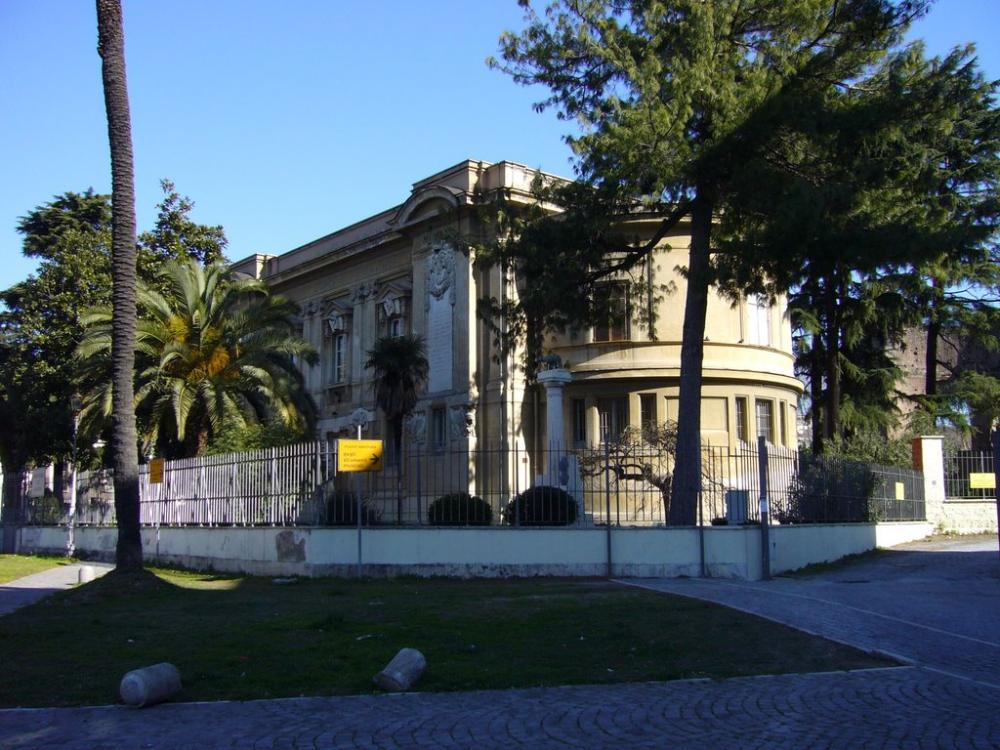
The Schola Saxonum was conceived by the king as a sort of reception center for his countrymen, who each year came to Rome on pilgrimage to visit the tomb of Saint Peter. The entire complex was rebuilt in 1198, during the papacy of Innocent III, by Marchionne D’Arezzo.
The reconstruction works were necessary following fires and looting that severely damaged the complex’s structures. The Pope decided to entrust the Order of the Hospitallers of Santo Spirito with establishing a sort of hospital to host the poor, the sick, and the protected, meaning all those children abandoned by their mothers. Between the years 1471 and 1478, the complex was partially rebuilt and expanded, following the design of architect Baccio Pontelli, by the will of Pope Sixtus IV. The fresco cycle in the Sistine Ward is due to Sixtus IV’s initiative and depicts the history of the ancient hospital and the Sistine refoundation.
The Sistine Ward is divided into two by an octagonal tiburio and houses inside an altar attributed to Palladio and a painting by Carlo Maratta. During the pontificate of Pius V, the complex was further expanded and the construction of the Commander’s Palace was commissioned, the work of architect Giovanni Lippi, known as Nanni di Baccio Bigio. In the nineteenth century, the two wings that make up the Sistine Ward were named Sala Lancisi and Sala Baglivi, after two famous doctors.
The entrance is dominated by a magnificent marble portal, called the Paradise Portal and attributed to the school of Andrea Bregno.