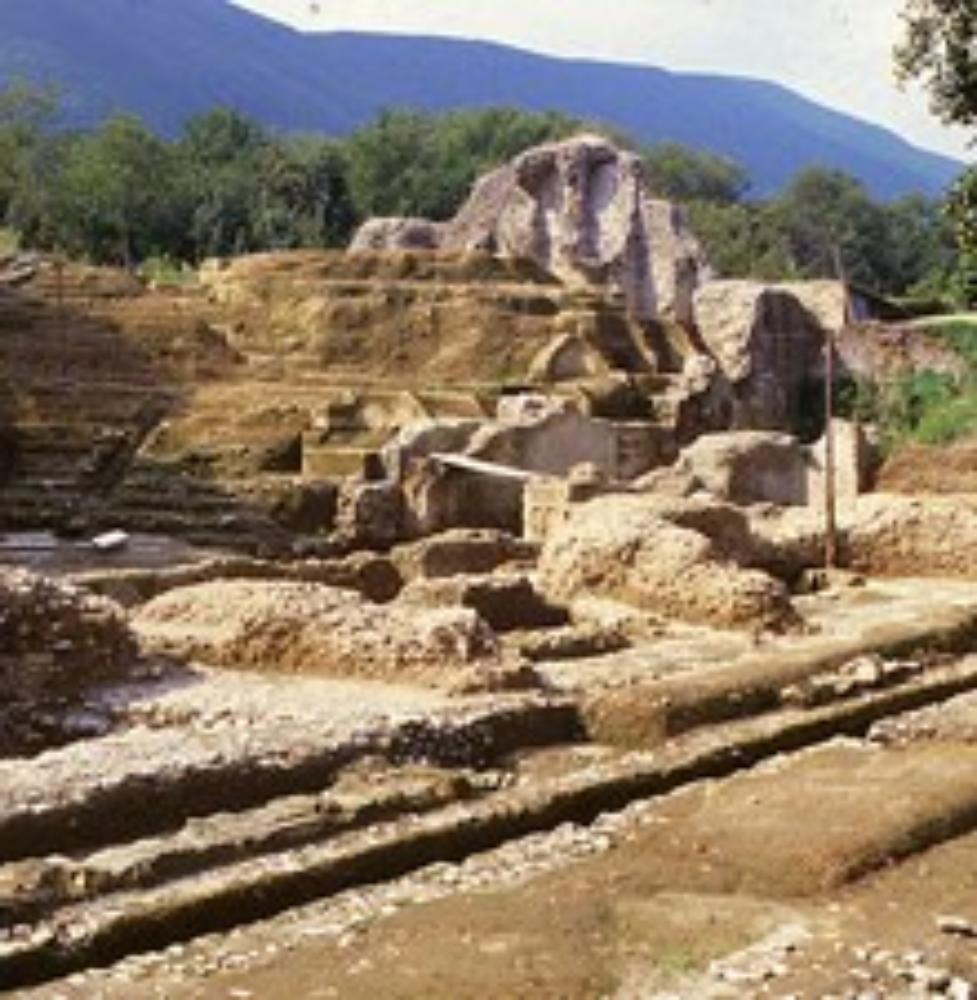
We learn about the events of the monastery from the Chronicon Vulturnense, an illuminated manuscript written in 1130 by a monk named Giovanni, who in turn used internal sources from the monastery dating from the 8th to 11th centuries. According to the Chronicon, the foundation dates back to the early 8th century and was due to three noblemen from Benevento, Paldo, Taso, and Tato, in their search for a place to dedicate themselves to ascetic life. The chosen area had been frequented in the late Roman age as shown by the remains of a church and a burial site from the 5th-6th centuries AD.
A particularly important moment for the monastic community is 787 when Charlemagne placed the monastery under his direct protection, issuing a privilege granting tax and judicial exemptions and authorizing the community to elect its own abbot without any interference from other ecclesiastical authorities.
The importance of the abbey is due to its position as an outpost on the border between the Lombard principality of Benevento and territories conquered by the Franks, highlighted in 849 when, following the division of the Principality of Benevento between territories subject to Salerno and Benevento, the monastery of San Vincenzo al Volturno remained an autonomous entity directly subject to imperial authority.
A time of great difficulty for the monastic community occurred in the second half of the 9th century due to movements of the Saracens that culminated in the October 881 attack, which ended with a fire that severely damaged the monastery; following this event, the surviving monks were forced to seek refuge with the Lombard princes of Capua.
The reconstruction of the monastery took place only at the end of the 10th century with the help of the German emperors, Otto II and Otto III. At the end of the 11th century, due to the Norman threat, the monastery was moved along the right bank of the Volturno to a safer and more defensible location (the so-called “New San Vincenzo”).
During the 13th-15th centuries, the decline and disintegration of the monastic complex and its land holdings (which extended across Molise, Abruzzo, Lazio, Campania, Basilicata, and Puglia) began, and in 1699, by the will of the last abbot Innico Caracciolo, they passed under the jurisdiction of the Montecassino Abbey.