

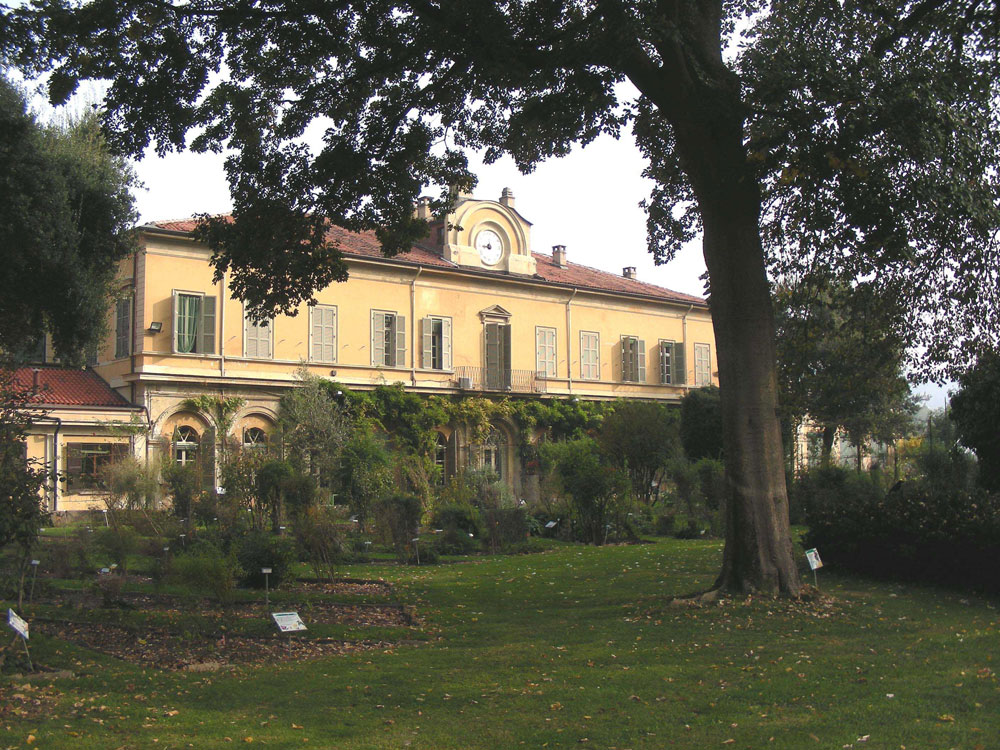

The oldest part (about 500 sqm) of the Botanical Garden of Turin is occupied by flower beds, large rectangles divided into geometric beds arranged fan-like around the central pools.
The flower beds are bordered by low hedges and contain collections of perennial herbaceous plants native to the Piedmont flora. At the beginning of the 19th century, the villa with the orangery, the warm greenhouse, and the museum with the herbarium were built.
During that period, the cultivation of woody plants also began. In 1825, the lands donated by Vittorio Amedeo III were included, and in 1831 new flower beds with a third pool were laid out. By the mid-19th century, the Botanical Garden had reached its peak development with over 12,000 species in cultivation.
In 1840, the grove, nearly two hectares, was enriched with numerous tree and shrub species. The alpine garden, an artificial hill hosting a rock garden with alpine species, was built in 1962. Since 1969, the orangery has been replaced by a greenhouse for tropical plants. In 1986, a greenhouse for succulent plants was constructed. Currently, the flower beds mainly host collections of aromatic and medicinal species. Of particular interest is the collection of precious herbariums.