


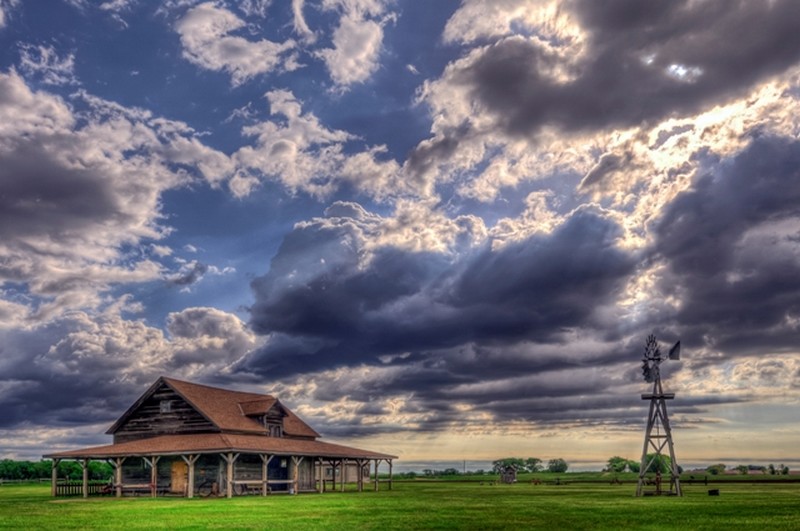

A timeless itinerary along the village that inspired “Little House on the Prairie,” the book by Laura Ingalls Wilder from which the successful series was adapted. The authentic memory of courage and perseverance in South Dakota, United States.
Settlement in South Dakota
Let’s go back to 1862. With the Homestead Act, the American government allowed each head of family the opportunity to appropriate about sixty hectares of government-owned land provided they settled there for at least 5 years and paid the administrative charge. There was so much publicity to create farms and homesteads on the lands of the Dakota Territory that it filled the minds of young men and women seeking adventure and fortune. The desire to own land became a dream for many. In 1880, the Dakota Central Railroad pushed the railroad boundaries even further west, touching small communities beyond Volga and Huron in eastern South Dakota, and gave rise to many small villages that sprang up like mushrooms: Arlington, Lake Preston, De Smet, Manchester, Iroquois, Cavour. Many of these settlements counted on a couple of shops, a boarding house, stables, and a couple of additional shacks. Swarms of settlers arrived there from the eastern United States and also from Europe.
De Smet, South Dakota
De Smet, in South Dakota, was indeed founded in 1880 as a classic prairie colony. It had a general store, a bank, a hotel, a saloon, a local newspaper, a church, and a carpentry shop. At the time, those who arrived to own land built a shack, a claim shanty. In the books of Laura Ingalls Wilder, it is described as “a small room, barricaded from top to bottom, with a slanted roof making it look like a little house” (Wilder, 1939). If you walk today on Calumet Avenue in De Smet, you can imagine it in 1880.
Little House on the Prairie
“Little House on the Prairie” (1943-1945) by the American author Laura Ingalls Wilder, tells about her hardships in numerous moves searching for a better life, recounting events she personally experienced during her childhood. Laura Ingalls Wilder and her family, like other settlers around 1880, arrived in De Smet in 1879 at the very beginning of her book By the Shores of Silver Lake. The author, in her many books, captures the essence of De Smet’s founding since her family was among the first residents. Here she grew up on the family farm, attended the first and only school in De Smet, had her first job on Main Street, courted her future husband Almanzo on the prairie, and built her family right here.
Today De Smet proudly holds the title of Little Town on the Prairie, carefully preserving Laura’s memories for over 50 years, to the delight of many passionate fans worldwide. Exploring the area where the Laura Ingalls Wilder family settled, you can experience pioneer life in South Dakota firsthand. This land was precious in many ways: school, church, and part-time work were important to Laura’s father, Charles Ingalls.
The shack built on the homestead hosted the Ingalls family. The Ingalls Homestead in the heart of the eastern South Dakota prairie is where Laura Ingalls Wilder lived from ages 13 to 18.
Things to Do in De Smet, South Dakota
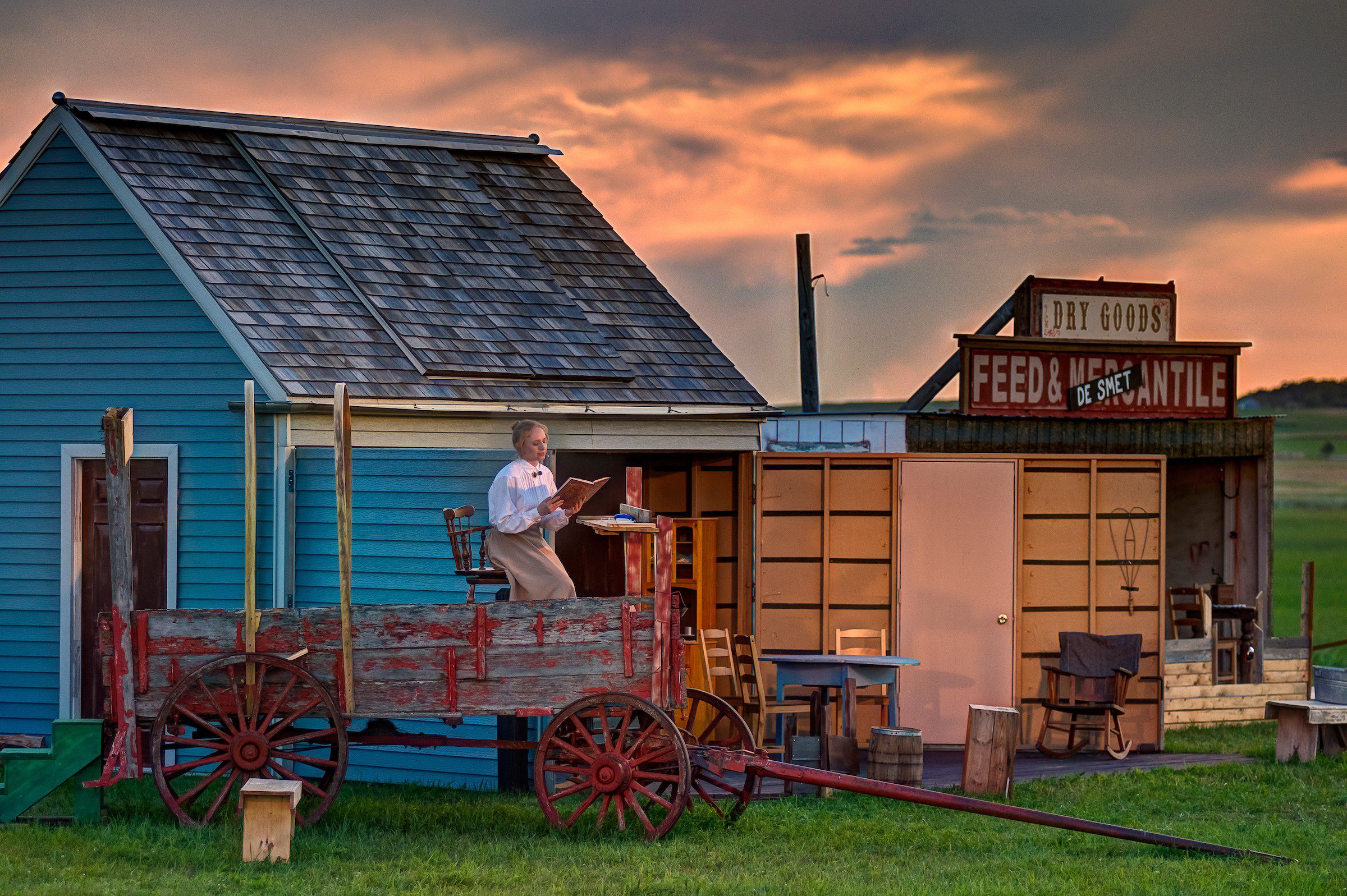
Several experiences await you to relive in person in De Smet: driving a pioneer wagon, participating in a lesson in the only school class, twisting hay, grinding grain, making rope, washing clothes on old boards, experiencing everyday life as a settler in a history that shaped the nation.
Today the vast prairies and original historic buildings hosting exhibitions on pioneer life and all related activities allow you to grasp aspects of the evolution of agricultural life. You can stay at the charming Victorian B&B Prairie House Manor, a splendid 1894 house mentioned in Wilder’s book The Long Winter.
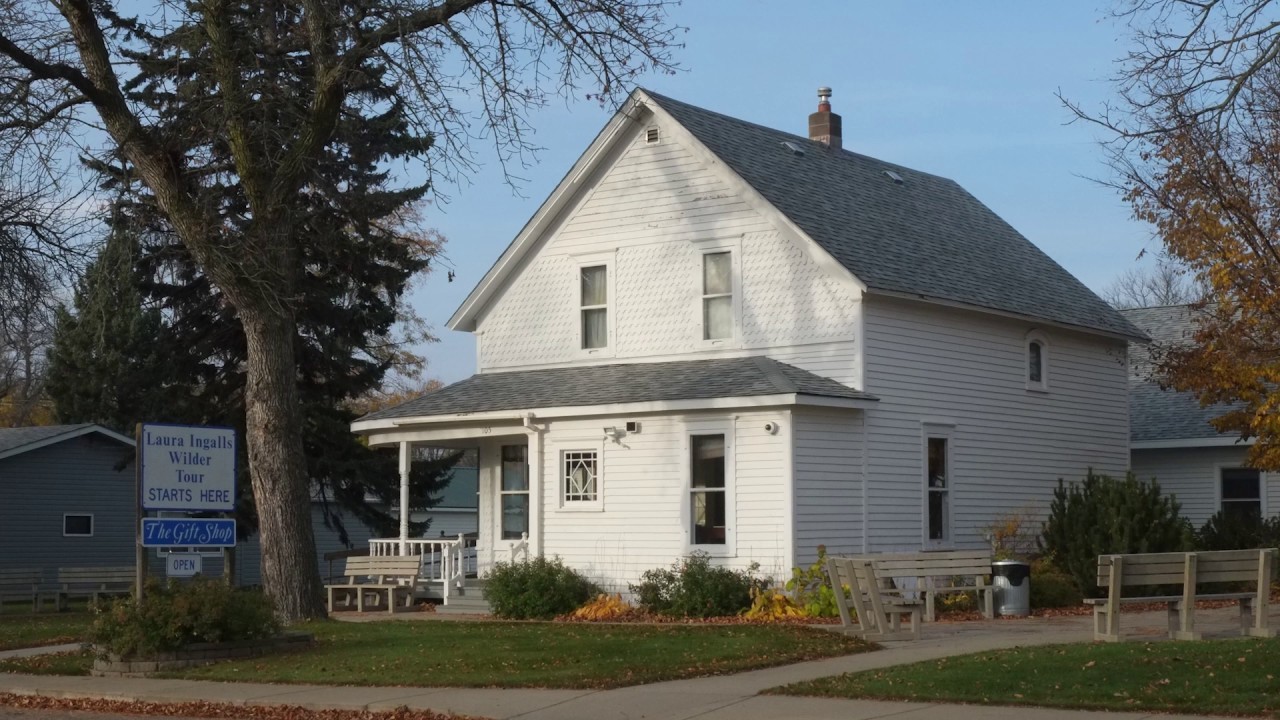
It is recommended to begin your exploration at the Hazel L. Meyer Memorial Library, with its vast collection of Laura Ingalls Wilder’s literary works and over 2000 original artifacts. The Laura Ingalls Wilder Memorial Society was founded shortly after the death of Laura Ingalls Wilder in 1957. A tour shows several historic homes including the Surveyors House from the book By the Shores of Silver Lake and the last home of Ma, Pa, and Mary Ingalls.
The Loftus Store opened in 1879 and is still in its original building; Wilder wrote of Mr. Loftus and the The Loftus Store in the book The Long Winter. The store remains one of two authentic 19th-century buildings on Main Street and offers souvenirs, books, clothing, and gifts but also memorabilia such as the tin lunchbox Laura carried to school, the tin cup Christmas gift, the mint candy stick, and the shiny penny. The candy corner mentioned in the book still exists!
There are lovely illustrations by Harvey Dunn, a prolific artist and painter of the Pioneer West, native to South Dakota, who lived near De Smet during the same period as the Ingalls. He is known for his portraits of prairie girls and women, the “Prairie Pictures”. Also noteworthy is the historic first Congregational church organized by Charles Ingalls in 1880, with the town’s first religious service held in his home on February 29, 1880.
The De Smet cemetery is located southwest of De Smet on a hill overlooking the town and today holds the graves of various Ingalls family members, including Charles, Caroline, Mary, Carrie, Grace, and the newborn son of Laura and Almanzo Wilder. In summer, on July weekends, the outdoor theater show Laura Ingalls Wilder Pageant brings Laura Ingalls Wilder’s book to life. Worth a trip are the series of lakes surrounding the area: Spirit Lake and Silver Lake.
Surroundings of De Smet, South Dakota
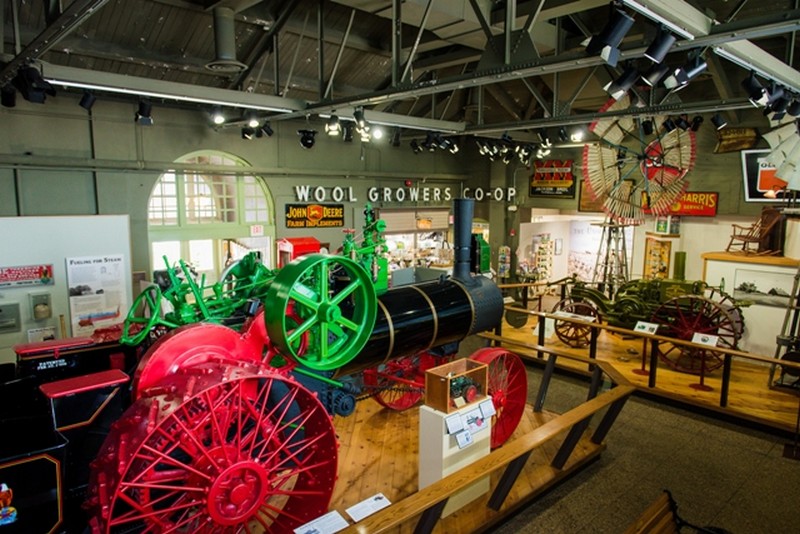
By car, extend your exploration of South Dakota’s eastern prairies, reaching Brookings about 60 kilometers away, where you can visit the South Dakota Agricultural Heritage Museum showcasing the region’s agricultural heritage and the South Dakota Art Museum with galleries displaying works by Native American artists as well as about 140 of Dunn’s finest paintings.
Prairie Village
South of Madison, another small historic gem shows rural life many years ago in South Dakota: Prairie Village with its 40 original buildings presents life as it unfolded 100 years ago on Main Street. The Lawrence Welk Opera House, the century-old steam carousel Herschell Spillman with hand-carved wooden figures rising to the calliope music. The country school, churches, and one of the only traveling railroad chapels that carried the good news around the country via missionaries.

“Emmanuel” is listed in the South Dakota Register and the National Register of Historic Places and is the oldest railroad Baptist chapel among the three remaining in the entire United States. It traveled with the missionary and his family aboard from 1893 to 1942 to preach and teach the Gospel. The thousands of settlers who had left the east of the country in 1880 to claim a piece of the Wild West were devout Christians, deprived of a place of worship. The 18 m long railroad chapel, entirely made of oak wood and metal, was inaugurated in Denver, Colorado, in 1893 to serve the western and northwestern United States until 1940, when permanent churches were built. The Village is surrounded by about 5 km of Herman & Milwaukee Railroad tracks. Experiencing these prairie localities of South Dakota reconnects you to the courage and perseverance of people who managed to create a new life and appreciate the little things.
©Thema Nuovi Mondi



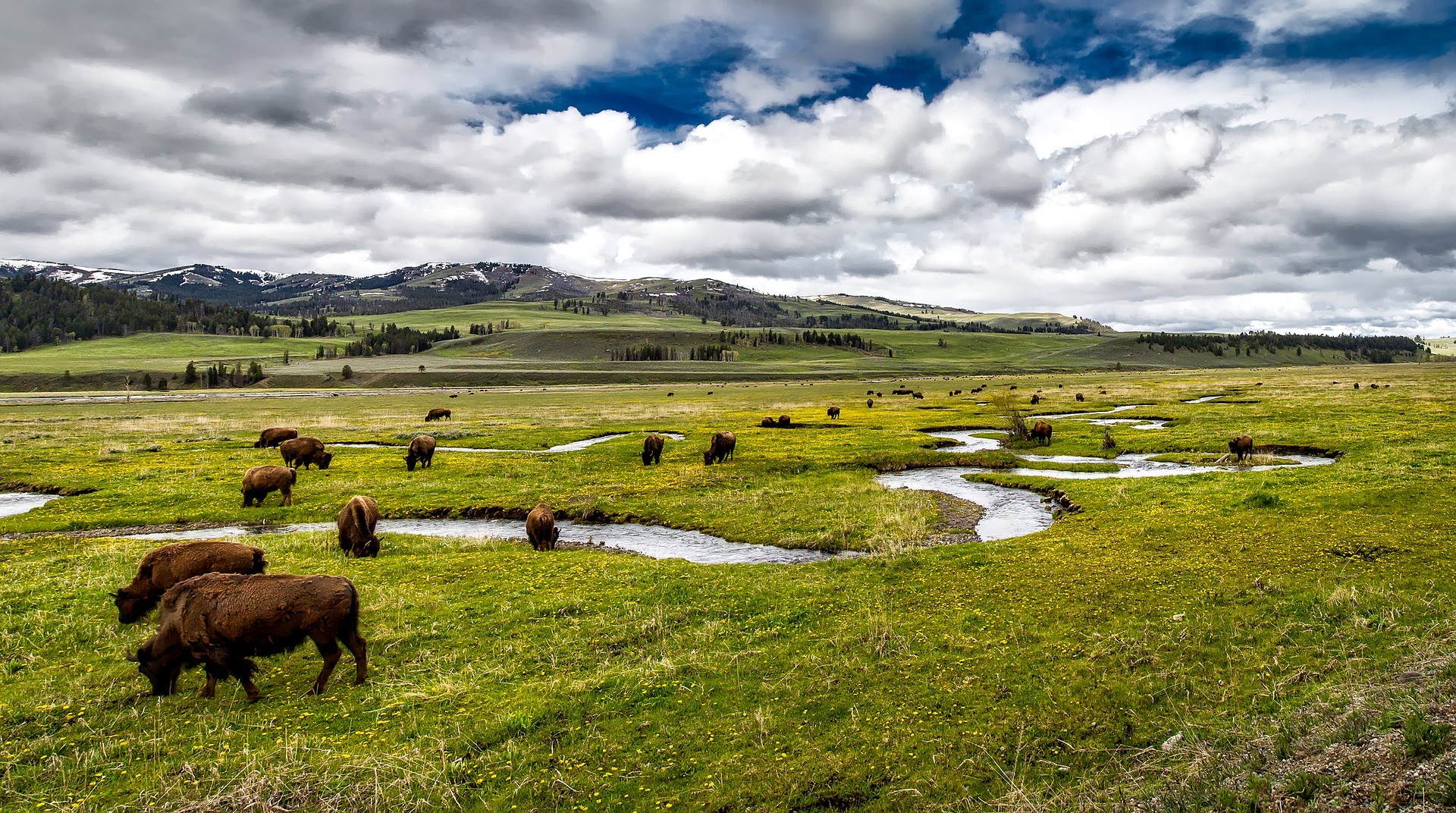
 by American writer Laura Ingalls Wilder that inspired the eponymous series.)