


Let’s face it: not all pasta is created equal. The best ones are rough and porous, allowing sauce to cling beautifully and holding their texture when cooked, while lower-quality pastas become mushy and sticky almost instantly. And yet, true pasta production relies on just three ingredients: water, air, and durum wheat. So what makes the difference?
Gragnano Pasta
In Gragnano, a small town set between Naples and Sorrento, some traditional pasta makers—known as the “maestri maccaronari”—are still crafting pasta by ancient methods honed over more than four centuries. Their workshops, which today reach industrial scale, produce a quality pasta that enthusiasts from Japan have called the world’s finest. The secret? It lies in the sea breeze and hillside air, the pure mountain spring water, and grains ripened under the warm Mediterranean sun. But that’s not all. The dies—pierced bronze plates that shape each format—are still made from bronze, and drying happens in ovens at sixty degrees Celsius, mimicking the warmth of the sun.
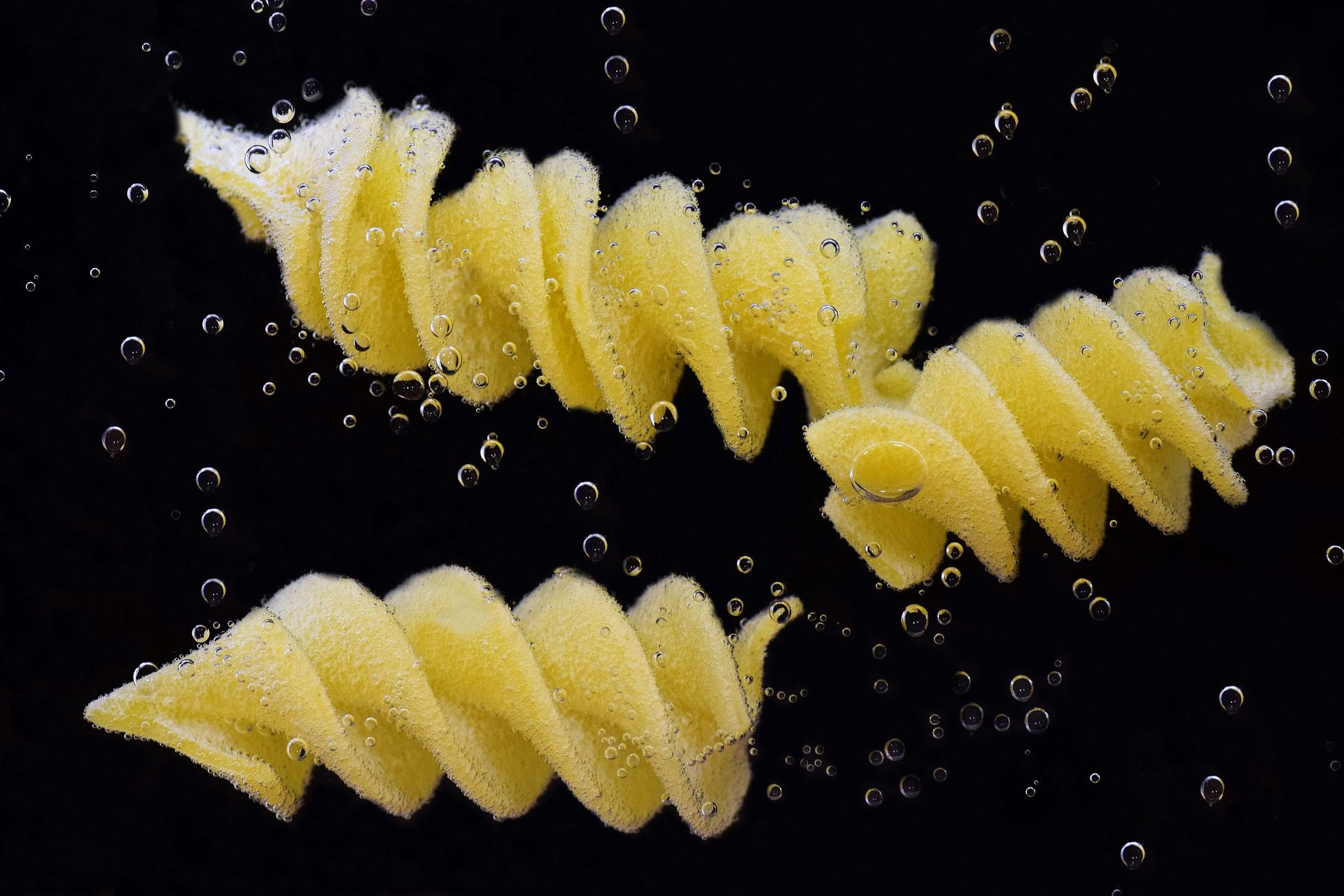
Long ago, wheat was precious, offered as a sacred good alongside oil and wine. Today, it’s a daily staple—thanks again to pasta. Shop shelves are lined with endless varieties. Beyond classic spaghetti, you’ll find maltagliati and schiaffoni, trenette and mezzani, penne and fusilli, bucatini and rigatoni.
Sometimes designers even invent new shapes, such as ridged pasta that holds sauces inside even better.
Pasta comes in long and short shapes, chosen according to your recipe. Long pasta pairs perfectly with sauces and seafood, while short cuts go well with vegetables and legumes. Whichever you choose, true pasta should always be cooked “al dente.”
To achieve perfect cooking, use tall, cylindrical pots filled with 1 liter of water for every 100 grams of pasta. Add salt—10 grams per liter—three minutes before the pasta goes in. Then add the pasta all at once when the water boils. Stir often and taste to check for doneness. With a few simple rules, it’s hard to go wrong.
Pasta’s rich nutritional profile and its 360 calories per 100 grams make it essential for children’s balanced growth. Pasta is mineralizing, helps combat anemia and arteriosclerosis, and is useful against colitis, constipation, and underweight. Cereal starches fuel our bodies, and unsaturated fats from wheat germ help lower cholesterol.
Nutritionists recommend cereals make up 40-50% of your daily food intake. And perhaps they’re right, as for thousands of years Triticum Durum—hard wheat—has been a cornerstone of the human diet.