

Bisogna ammetterlo, c’è pasta e pasta. The good one, rougher and more porous, adheres better to the sauce and keeps its texture, while the less good one becomes soft and sticky immediately. Yet, the processing requires only three ingredients, water, air, and durum wheat. So what is the difference?
Gragnano Pasta
In Gragnano, a small town between Naples and Sorrento, there are still some pasta factories where the “master macaronari”, with a tradition of over four hundred years, manage to produce pasta following ancient methods. In their facilities, which have nevertheless reached industrial dimensions, a quality of pasta is produced that the Japanese did not hesitate to define as the best in the world. Certainly, the secret lies in the sea breeze and the hill air, in the water from mountain springs and the wheat ripened by the warm Mediterranean sun. But it is not only that. The dies, the perforated plates that give shape and size to the various types of pasta, are still made of bronze and the drying takes place in ovens at sixty degrees, like the sun’s rays.
A long time ago, wheat was a precious good and was offered along with oil and wine during sacred rites. Today, however, its consumption has become daily, and this is also due to pasta. On the shelves of shops, there is an infinite variety and beyond the traditional spaghetti, we can indulge among maltagliati and schiaffoni, trenette and mezzani, penne and fusilli, bucatini and rigatoni.
Every now and then, designers create new pasta shapes, like the one ridged inside, which better holds the sauce.
Pasta can be long or short, and it is chosen based on the recipe to be made. The former pairs well with sauces and seafood, while the latter is better with legumes and vegetables. However, both must be strictly “al dente”.
To achieve good cooking, tall and cylindrical pots must be used, filled with 1 liter of water for every 100 grams of pasta. Salt, 10 grams per liter, should be added 3 minutes before the pasta, which should be thrown in all at once when the water boils. Remember to stir often and taste to check the doneness. Following these few rules will hardly lead to mistakes.
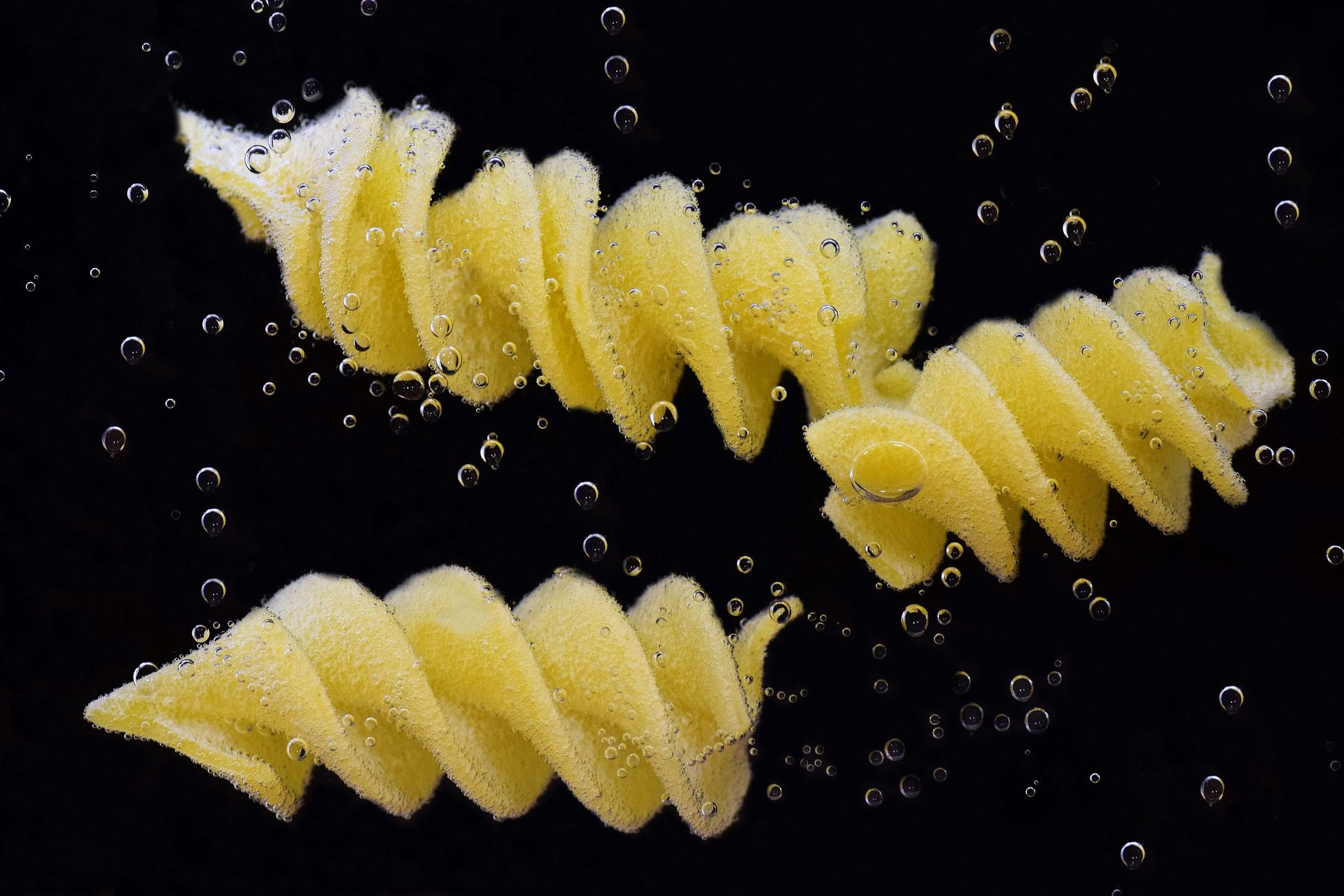
The marked nutritional characteristics and the caloric value of 360 calories per 100 grams, make pasta an indispensable product for the regular and balanced growth of children. It is mineralizing, fights anemia and arteriosclerosis, is useful in colitis, constipation, and leanness. The starch from cereals gives energy to our body, and the polyunsaturated fats from wheat germs reduce blood cholesterol levels.
According to nutritionists, cereals should represent 40-50% of daily food intake. And perhaps they are not entirely wrong since for thousands of years Triticum Durum, durum wheat, has been the basis of human nutrition.