


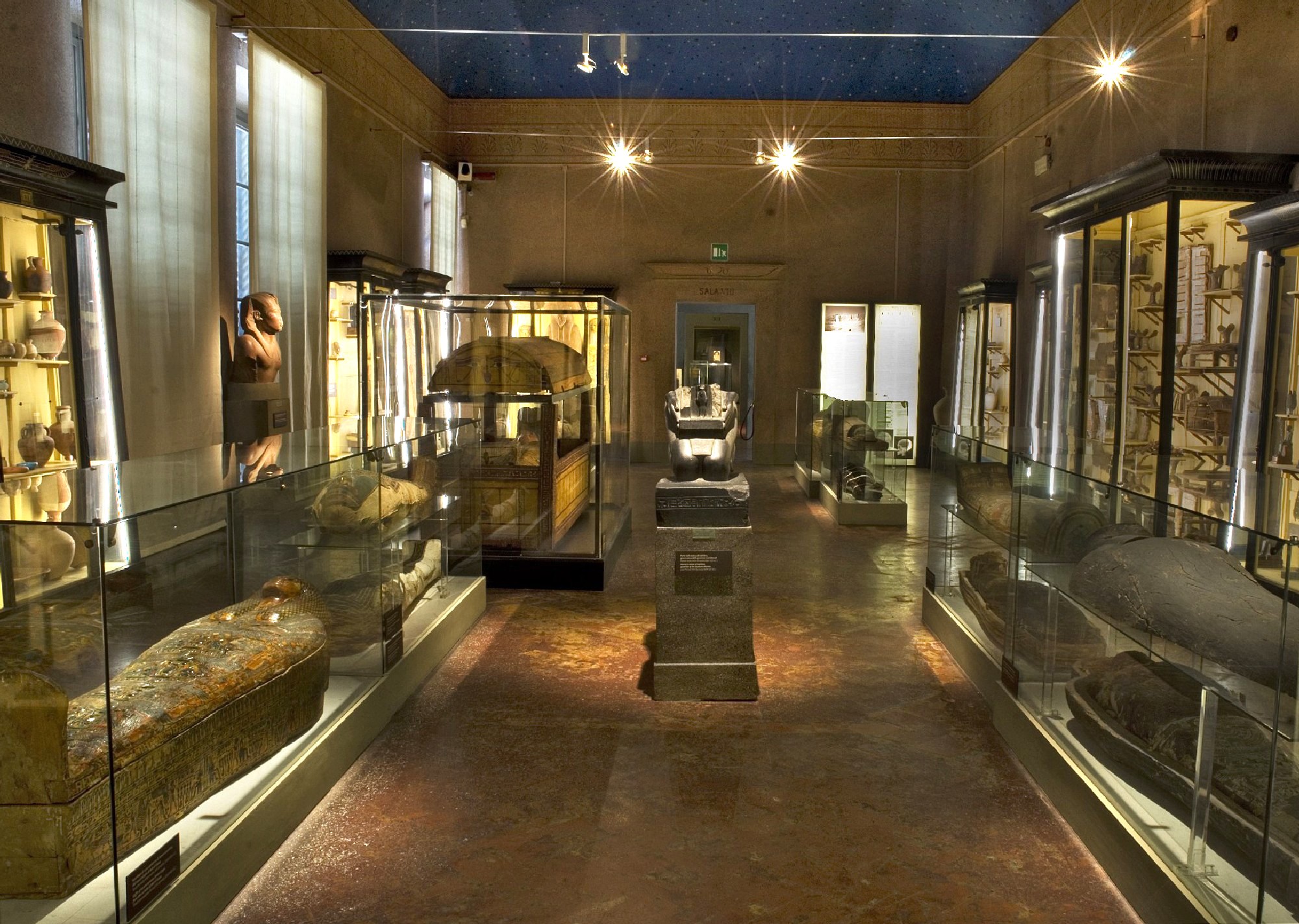


A first core of Egyptian antiquities was already present in Florence in the 18th century, within the Medici collections. However, during the 19th century, the collection was significantly expanded by Grand Duke of Tuscany Leopold II. In addition to acquiring collections, he also financed, alongside Charles X, King of France, a scientific expedition to Egypt in 1828 and 1829. The mission was led by Jean François Champollion, the scholar who deciphered hieroglyphics, and Ippolito Rosellini from Pisa, who became the father of Italian Egyptology and was a friend and student of Champollion.
Many objects were gathered during the expedition, through both archaeological excavations and purchases from local merchants. Upon their return, the collections were equally divided between the Louvre in Paris and Florence.
In 1855, the Egyptian Museum of Florence was officially established. In 1880, the Egyptian scholar Ernesto Schiaparelli from Piedmont, who would later direct the Egyptian Museum of Turin, was tasked with transferring and organizing the Egyptian antiquities in their current location alongside the Archaeological Museum. Thanks to Schiaparelli, the Florentine collections saw substantial growth.
The most recent additions to the Egyptian Museum of Florence come from donations by private collectors and scientific institutions. Notably, objects donated by the Florentine Papyrological Institute stand out, originating from excavations carried out in Egypt between 1934 and 1939.
Today, the Egyptian Museum of Florence houses over fourteen thousand artifacts, displayed across nine halls—most recently renovated—and two storage areas. The collection spans from the prehistoric period to the Coptic Age, with significant groups of stelae, vases, ushabti, amulets, and bronze objects from various eras.
Among the most noteworthy and fascinating items are statues from the era of Amenhotep III, a chariot from the 18th dynasty, the pillar from Sety I’s tomb, a square-mouthed faience goblet, the funerary set of Pharaoh Taharqa’s daughter’s nurse, a Fayum woman’s portrait, the collection of Coptic textiles, as well as an important group of late 19th-century plaster casts. Egyptian Museum of Florence – Via della Colonna, 38 – Florence