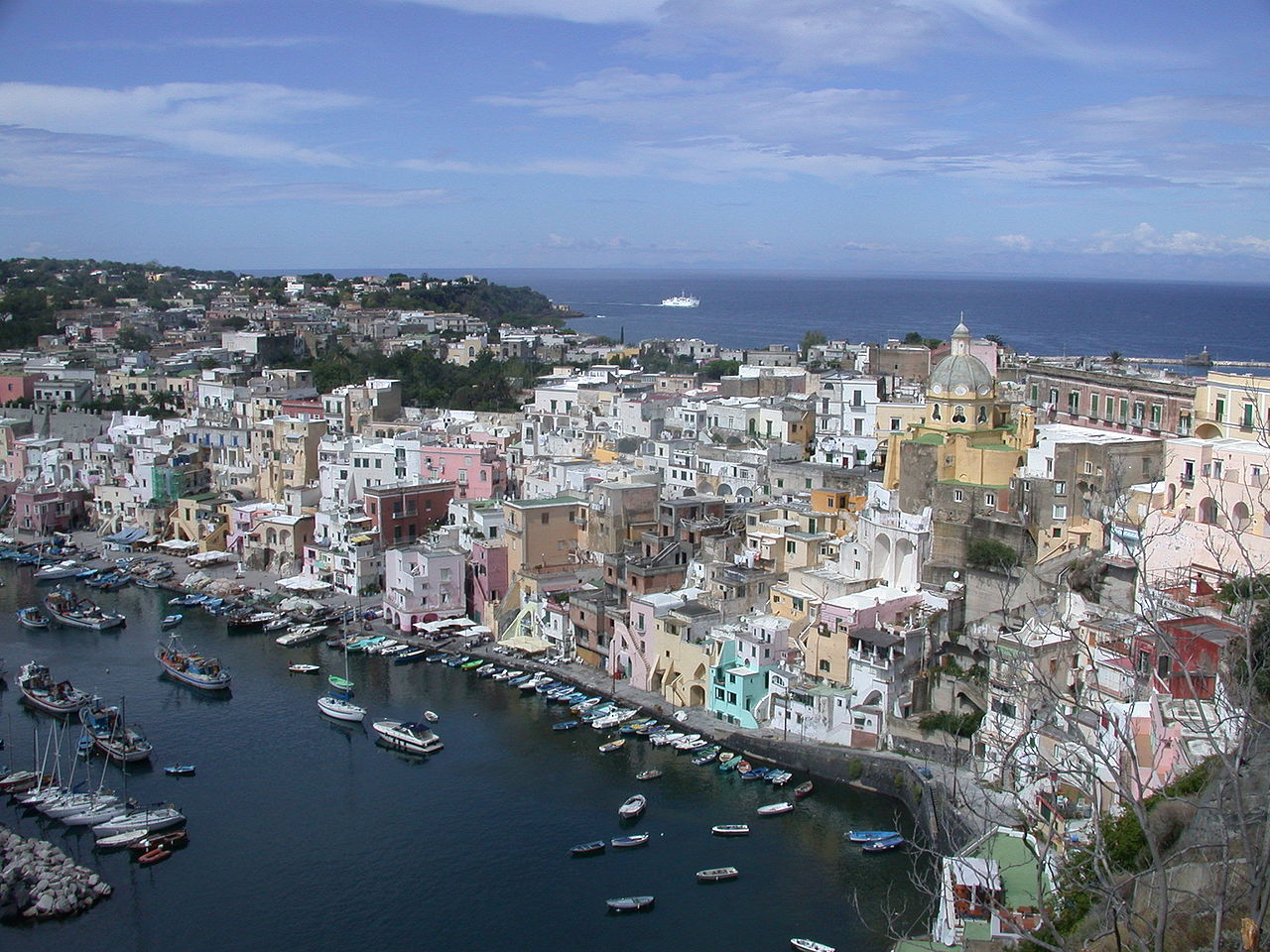


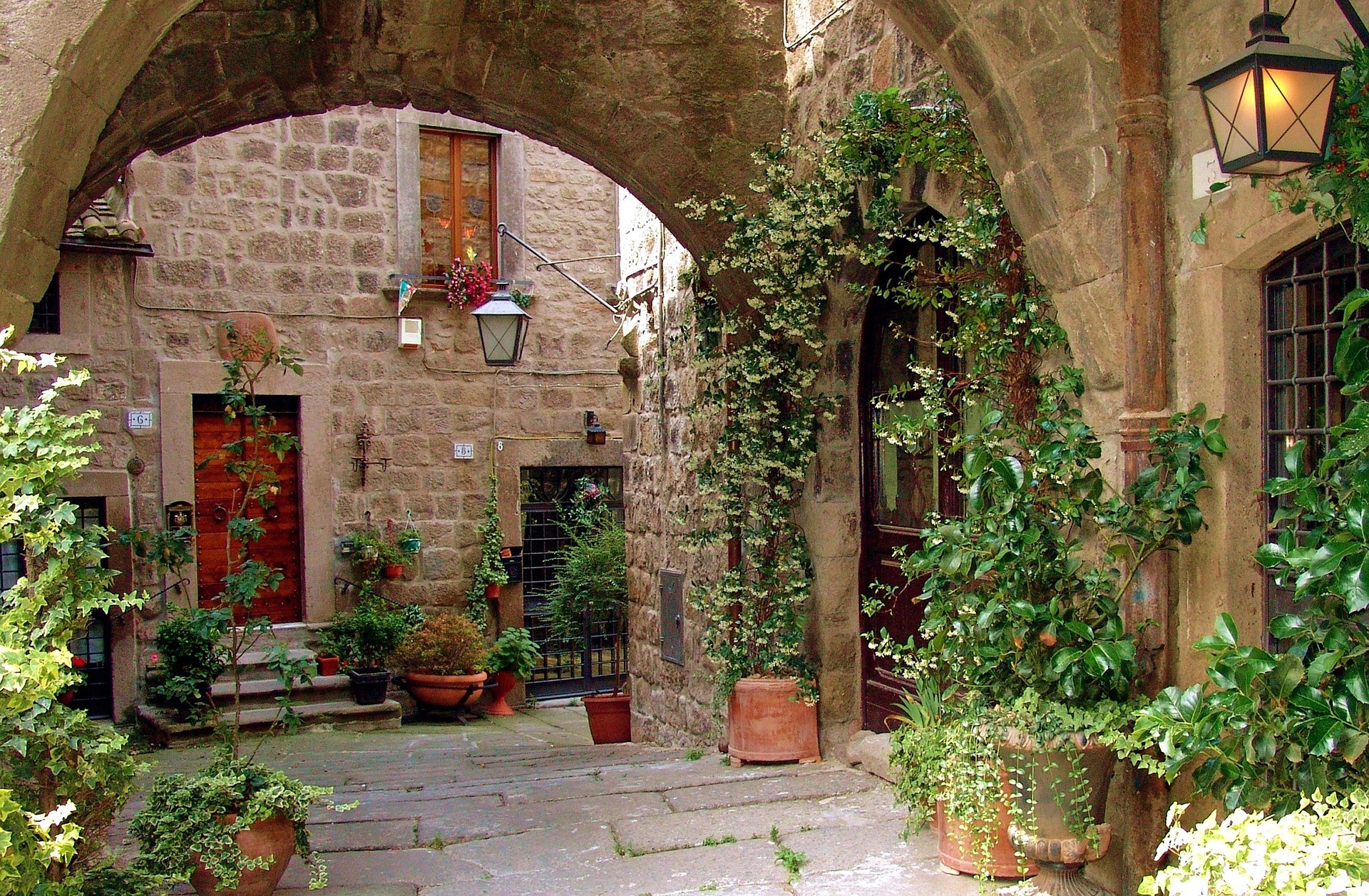

The historic center of Viterbo is a continuous succession of aristocratic palaces, intriguing medieval districts, churches and cloisters from various eras, slender towers, and elegant peperino fountains, the typical local stone. Ancient walls, built between 1095 and 1268, encircle the city center of Viterbo, accessible at several points through seven gates, many of which still retain their medieval form, among which Porta Fiorita is the oldest.
- Viterbo places of interest
- 1 Medieval district of San Pellegrino
- 2 Piazza del Plebiscito
- 3 Palazzo dei Priori
- 4 Cathedral or Duomo of San Lorenzo
- Viterbo to see
- 5 Santuario Madonna della Quercia
- 6 Viterbo Civic Museum
- What to visit in Viterbo
- 7 The fountains of Viterbo
- 8 Palace of the Popes
- 9 The walls of Viterbo
- 10 Basilica and Convent of San Francesco alla Rocca
- 11 Herbarium Museum of Tuscia
- 12 Santa Rosa House Museum
- 13 The Macchina di Santa Rosa
- 14 Viterbo and surroundings: The Bullicame spring and Villa Lante
- Things to do in Viterbo
- 15 Where and what to eat in Viterbo
- 16 Where to sleep in Viterbo
Viterbo places of interest
1 Medieval district of San Pellegrino
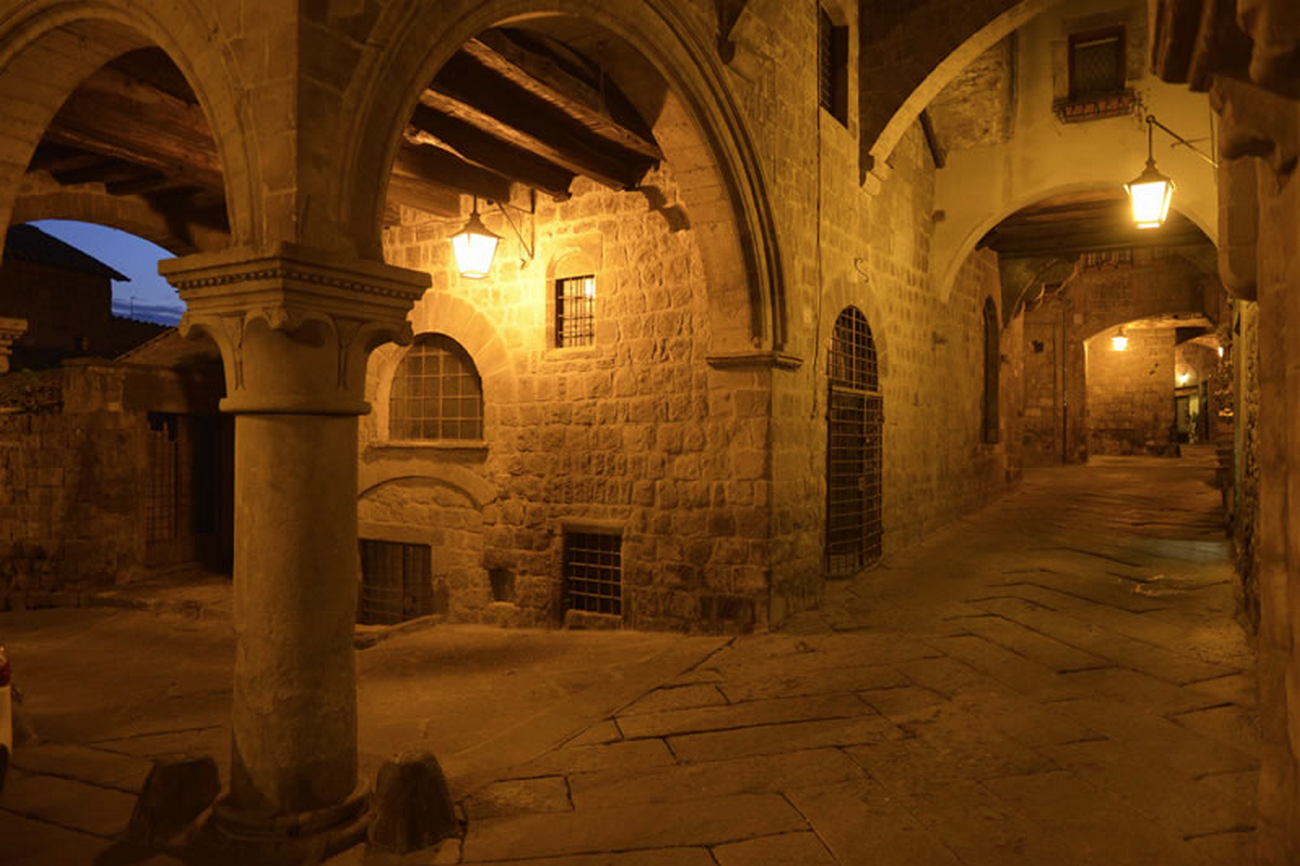
Characteristic, is the medieval district of San Pellegrino, a kind of gallery of 13th-century architectural styles: towers, small squares, narrow streets, arches and the characteristic profferli, the external stairs of the houses which were usually built directly on tuff and lacked foundations. On the square of the same name overlook the Palazzo degli Alessandri (13th century), the Torre Scacciaricci and the Church of San Pellegrino from 1045. The medieval district of San Pellegrino, characterized by the ancient peperino stone buildings, with the typical profferlo-style staircases running along the facades, the narrow cobblestone streets and red flowers on the windowsills, transports the visitor into a timeless atmosphere and enchants the gaze with unexpected views of the city.
2 Piazza del Plebiscito
Piazza del Plebiscito, dominated by the Clock Tower and the Palace of the Priors, has been the center of the municipal administration of Viterbo since 1270. Until then, the town hall was in Piazza del Gesù, mentioned by Dante for the murder of Henry of Cornwall by the brothers Guido and Simone di Monfort, which took place on March 13, 1271, inside the church of the same name.
3 Palazzo dei Priori
The magnificent Palazzo dei Priori, in Piazza del Plebiscito, the original seat of the municipality, built beginning in the 13th century and completed in the post-Renaissance period, with a beautiful inner courtyard decorated with an elegant loggia and the Fountain of the Lions, and the stunning frescoed interiors: the Royal Hall, the Madonna Hall with a famous cycle of paintings, the Council Hall and the Town Chapel.
4 Cathedral or Duomo of San Lorenzo
Among other Viterbo wonders is the Cathedral or Duomo of San Lorenzo, built in Romanesque style starting from the 12th century. From the mid-13th century, with the presence of the popes, it gained considerable importance, becoming the stage for religious and political events of great notoriety, such as the excommunication of Corradino of Swabia and the coronation of as many as 7 popes.

Viterbo to see
5 Santuario Madonna della Quercia
The Sanctuary of Santa Maria della Quercia arose around a painted tile, depicting the Virgin with Child. In the second half of the Fifteenth century, following a plague epidemic, the population built, out of devotion, a wooden hut that surrounded the oak tree. The church, a work of the Dominicans, in Renaissance style, features ceramic lunettes by Andrea della Robbia on the three entrance portals, while the coffered ceiling in pure gold is by Antonio da Sangallo the Younger.
6 Viterbo Civic Museum
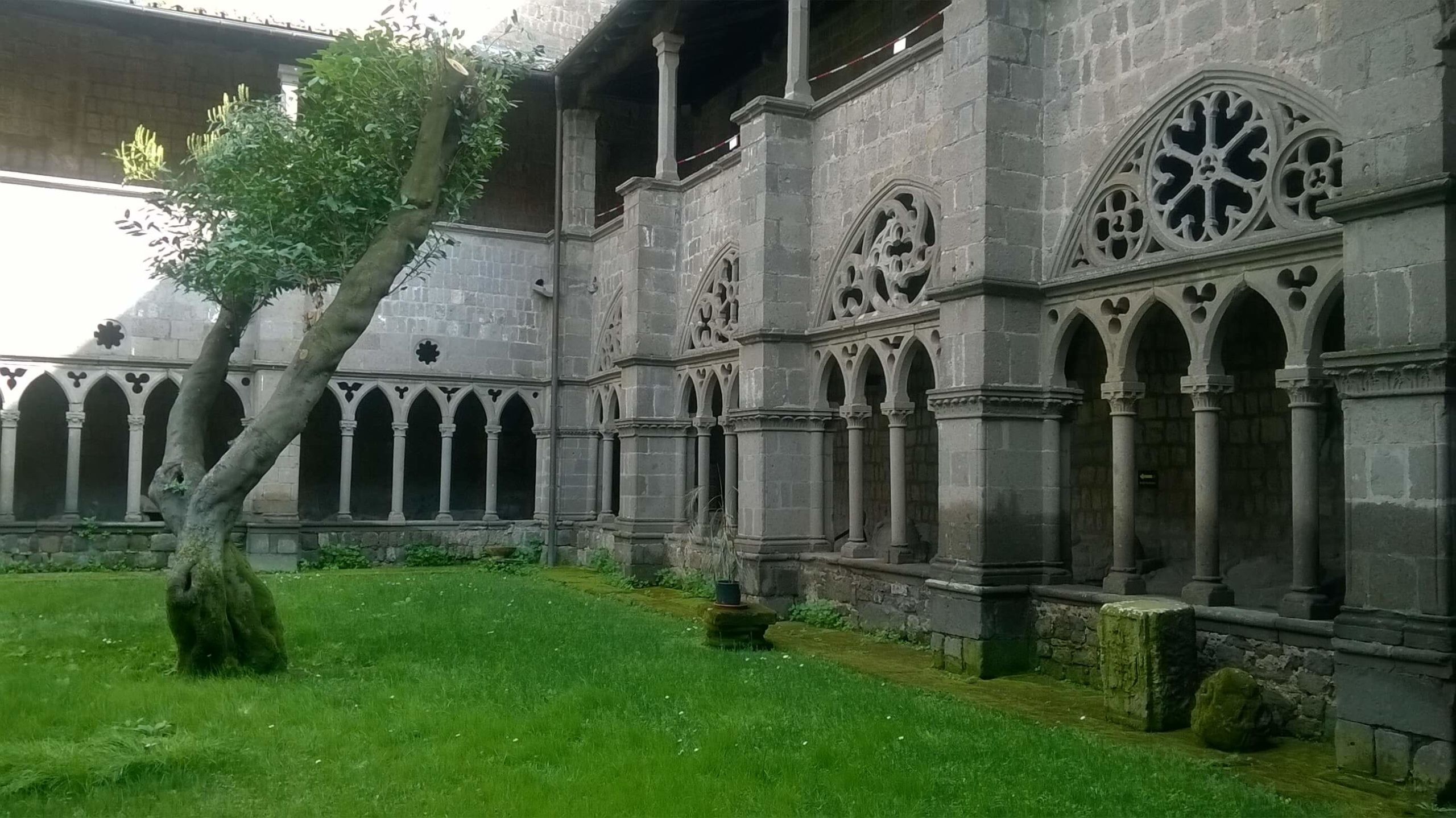
The Civic Museum has been housed since 1955 in the cloister and rooms of the convent annexed to the church of Santa Maria della Verità, founded in the 12th century by the Premonstratensians, and renovated in the 14th century by the Servite Fathers, from whom derived the name Convent of the Servites. On December 13, 1994, thanks to the efforts made by the Municipality of Viterbo and the Lazio Region, it was presented to the public renewed in all its structures. The Civic Museum displays its heritage on three exhibition levels, variously articulated within two major chronological sections: the Ancient Age on the lower floor, the Middle Ages and the Modern Age on the upper floors.
CLOISTER AND GROUND FLOOR ROOMS
The cloister houses archaeological finds from the Viterbo area within a chronological range between the 8th century BC and the 3rd century AD, through the Etruscan and Roman civilizations: sarcophagi, funerary steles, fragments of slabs (mostly from Ferento). An exhibition space is dedicated to the figure of Annio da Viterbo and the false relics that the friar had made to support his hypotheses on the Etruscan history of the Tuscia capital.
FIRST FLOOR
On the first floor, the historical-artistic section formed after the Unification of Italy is displayed: medieval paintings and sculptures, paintings from the Modern Age (the “Pietà”).
SECOND FLOOR
The third exhibition level is reserved for minor arts and historical memories. It includes the exhibition of a 16th-century papal treasure and a set of 18th-century pharmacy ceramics from the Ospedale Grande degli Infermi, as well as a collection of design drawings of the Macchina di Santa Rosa. The exhibition concludes with a significant gallery of 18th-century portraits in which several figures linked to the origins and the first development of the civic collections housed in the Museum can also be recognized.
What to visit in Viterbo
7 The fountains of Viterbo
Not to be missed is a look at the fountains, numerous and mostly from the medieval period, which together create an architectural system that, perhaps, has no equal in Italy. In the squares of Viterbo there seem to be 99 fountains, all characterized by a spindle shape with a lion’s head and leaves decorating the upper part. The oldest, dated 1200, is the fountain in Piazza della Morte, named after the “Religious Brotherhood of Prayer and Death” that resided here. The fountain in Piazza della Rocca holds the record for its impressive size, while the fountain in Piazza Grande is recognized as the most beautiful, once called Fontana Separi, meaning “without equal in beauty”.
8 Palace of the Popes
Viterbo is called the “city of the Popes” in memory of the time when the papal seat was moved here as a refuge from the struggles of Rome. The Palace of the Popes, dating from 1255, stands on the top of San Lorenzo hill, where the namesake Cathedral from 1192 and the 14th-century bell tower in Tuscan Gothic style stand out. The artistic loggia, built in 1267, is the pride of the palace: characterized by seven arches and the crescent below, it is an elegant terrace overlooking the Faul valley, from which the Popes used to appear for blessings. The facade is preceded by a wide staircase and topped with picturesque battlements, leading to the main entrance door of the palace, the access point to the Hall of the Conclave. Here was held the first-ever Conclave in history, which owes its name to the people of Viterbo: in 1270, after 3 years since the death of Pope Clement IV, citizens tired of waiting for the election of the new Pontiff locked the cardinals in and uncovered the palace roof, urging them to quickly elect Gregory X.

9 The walls of Viterbo
And a walk around the mighty walls that surround the historic center, equipped with ancient gates, often topped by a noble tower (originally there were said to be more than one hundred), guarding not only their respective palaces but also the city itself.
10 Basilica and Convent of San Francesco alla Rocca
Entering from Porta Fiorentina on the left side, in the upper part of San Francesco square, stands the monumental complex of the Basilica and Convent of San Francesco alla Rocca. Construction began in 1237 on land donated to the Franciscans by Gregory IX. In 1873 the church-convent complex was expropriated due to the suppression of religious orders, and only in 1886 was the temple, declared a national monument, reopened for worship. The bombings of 1944 severely damaged the church, leaving only the perimeter walls standing. The reconstruction, completed in 1953 by the Superintendence, restored the temple to its original lines. Inside the church stand out the beautiful mausoleum of Adrian V, attributed to Arnolfo di Cambio, the mausoleum of Clement IV by Pietro Oderisio, and the oil container signed by the Vassalletto family.
In the convent’s rooms are housed: the interconventual library and a contemporary art museum, with works by Greco, Mastroianni, Brindisi, Cesetti, De Chirico, Valery Escalar, and others. This museum is the result of the intelligent work of Father Felice Rossetti (native of Grotte) who managed over the years to accumulate the material now on display.

11 Herbarium Museum of Tuscia
It is one of the three University Herbaria in Lazio, included in the network of Museums of the City of Viterbo and in the Network of University Museums of the CRUI (Conference of Italian University Rectors). The Herbarium Museum of Tuscia has been listed since 1996 in the Index Herbariorum (the world catalog of herbaria) with the acronym ‘UTV’, today boasting a collection of over 29,000 dried samples of ‘spermatophytes’ and ‘pteridophytes’ in excellent preservation condition, grouped in 360 packages; the samples were provided by over 700 Italian and foreign collectors, and the collection is increased by about 500-1,000 samples per year. The Herbarium has a library with more than 150 volumes, equipment for preparation, study and preservation of samples, and an important computerized archive. It primarily serves as a facility dedicated to the study of plant biodiversity and its documentation over time, with particular reference to the Italian territory, ensuring consultation and loan of samples especially to taxonomic and geobotanical specialists.
12 Santa Rosa House Museum
The Santa Rosa monastic structure was established by Pope Innocent III to host a group of pious Viterbo women who had retired to San Marco hill to live according to Franciscan rules. From that moment the structure, being on the Via Francigena, became a meeting and transit point for pilgrims heading to Rome. The sanctuary has housed the incorrupt body of Santa Rosa since 1253.
13 The Macchina di Santa Rosa
A characteristic cultural event of the city is the “Macchina di Santa Rosa”: a 28-meter high tower weighing 50 quintals, carried by the Facchini di Santa Rosa, patroness of the city, which every year on September 3rd, for about 750 years, has been carried on shoulder through the streets of the city.

14 Viterbo and surroundings: The Bullicame spring and Villa Lante
Outside the city center is the Bullicame spring, a sulfurous water source mentioned by Dante in the XIV canto of the Inferno, whose aesthetic and healing properties make it one of the main tourist destinations of the city. Not far away, the Signorino road offers a suggestive path between the walls of an ancient Etruscan road carved into tuff, as well as many underground galleries that once connected buildings within the city, now used as cellars.
Villa Lante in Bagnaia, a hamlet of Viterbo, is, together with the Park of the Monsters of Bomarzo, one of the most famous Italian surprise mannerist gardens of the 16th century.
Things to do in Viterbo
15 Where and what to eat in Viterbo
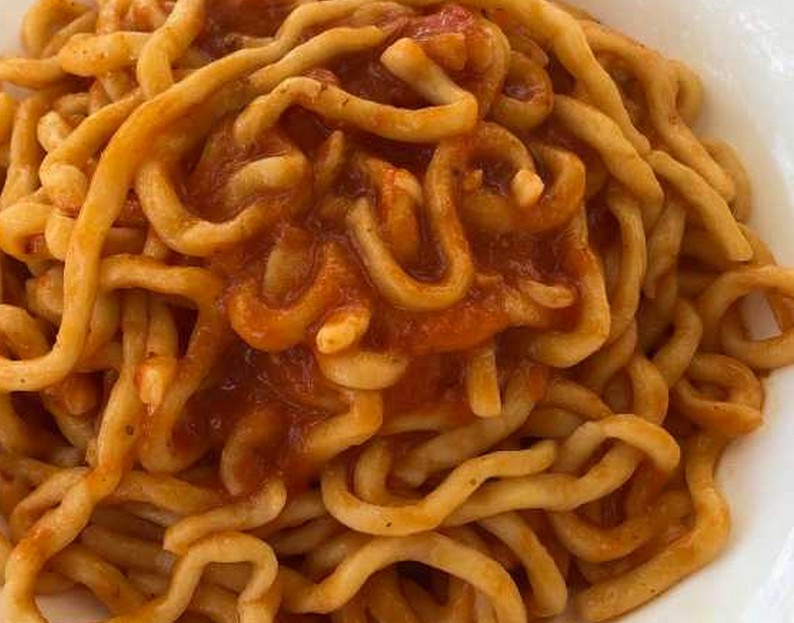
Viterbo is full of local restaurants, inns, and taverns typical of the Tuscia region with average prices. Among the culinary specialties, we recommend lombrichetti, tasty water and flour pasta, acquacotta viterbese, chicory, potato and poached egg soup, and tozzetti with hazelnuts replacing the almonds traditional to Siena.
16 Where to sleep in Viterbo
The accommodations in Viterbo have prices that vary depending on the type and category. They range from more affordable B&Bs to luxury 5-star hotels. It all depends on how much you intend to spend.