


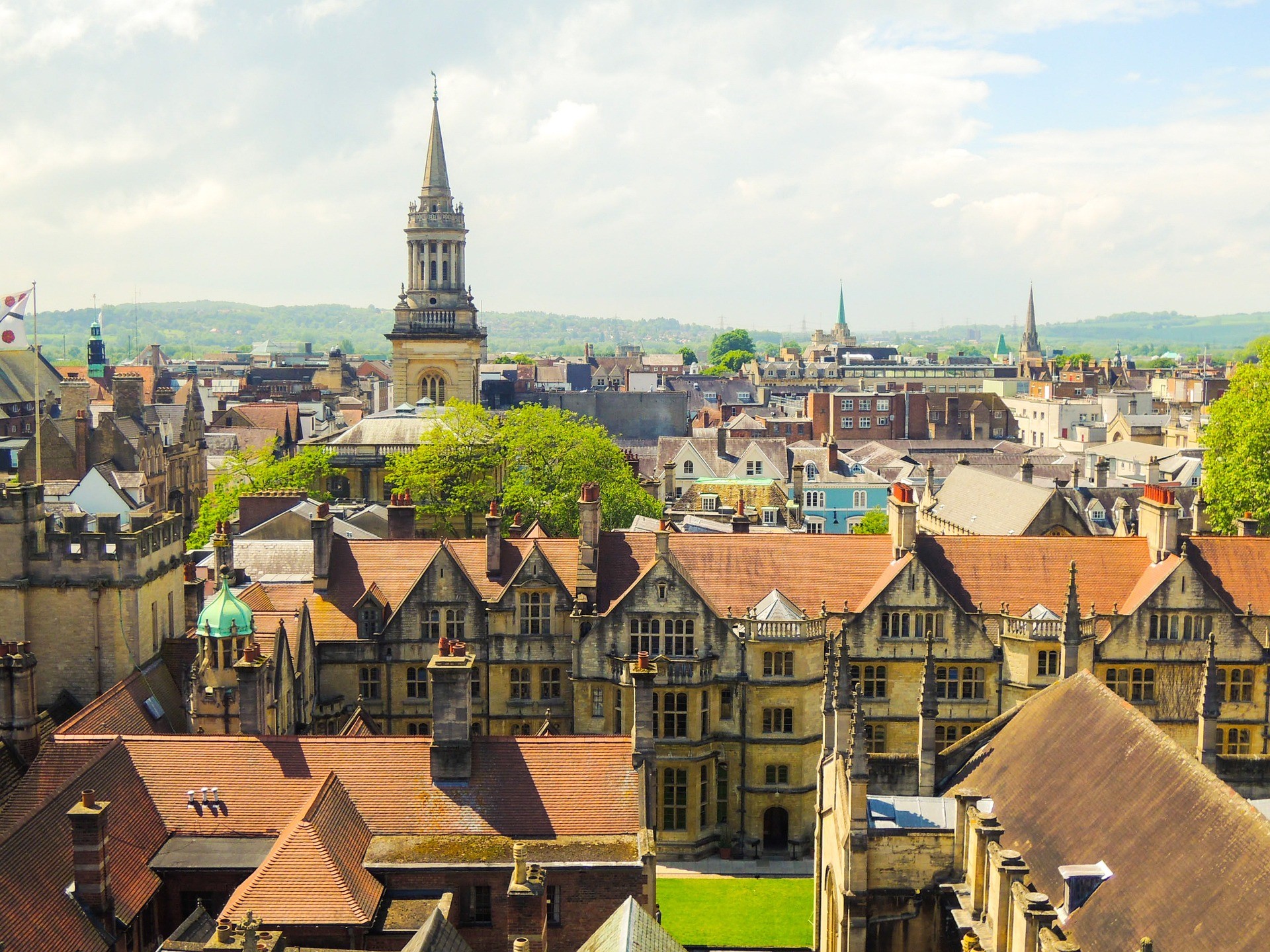

Oxford is, together with Cambridge, the most illustrious university in the United Kingdom and one of the world’s most important. You can’t truly visit the city without delving into its almost thousand-year history as a cultural institution, significant on its own and for the influence it continues to exert to this day. Even the Harry Potter universe owes much of its imagery to Oxford.
What to See in Oxford, UK
The University of Oxford
The University of Oxford in England is the second oldest university in the world (after Bologna). The earliest records of teaching date back to 1096, but the first signs of an organized educational system appear at the start of the 13th century (Scholae Oxoniae). The development of the university was strongly influenced by the expulsion of English students from the University of Paris (Sorbonne) in 1167. Historically, Oxford has no main campus—the 39 colleges and 6 permanent private halls, along with libraries, accommodations, and other facilities, are scattered throughout the city.
Most of the colleges were originally founded by religious institutions, which is why they so closely resemble monasteries, especially with their large cloisters.
Be sure to visit Christ Church College, the city’s most prestigious, founded in 1525 by Cardinal Wolsey and re-established eight years later by Henry VIII. Among its distinguished alumni are the writer Lewis Carroll and the philosopher John Locke.

Inside, you’ll find Tom Quad: originally intended as a cloister, it is now Oxford’s largest courtyard. Here stands the Tom Tower, designed by Christopher Wren, which houses the bell that rings every evening at 9 p.m. with 101 strokes to mark the college’s closing.
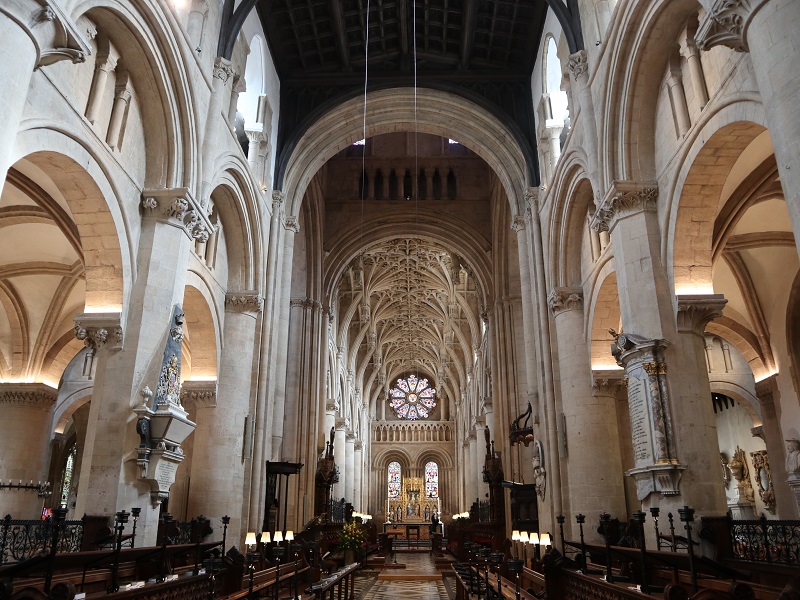
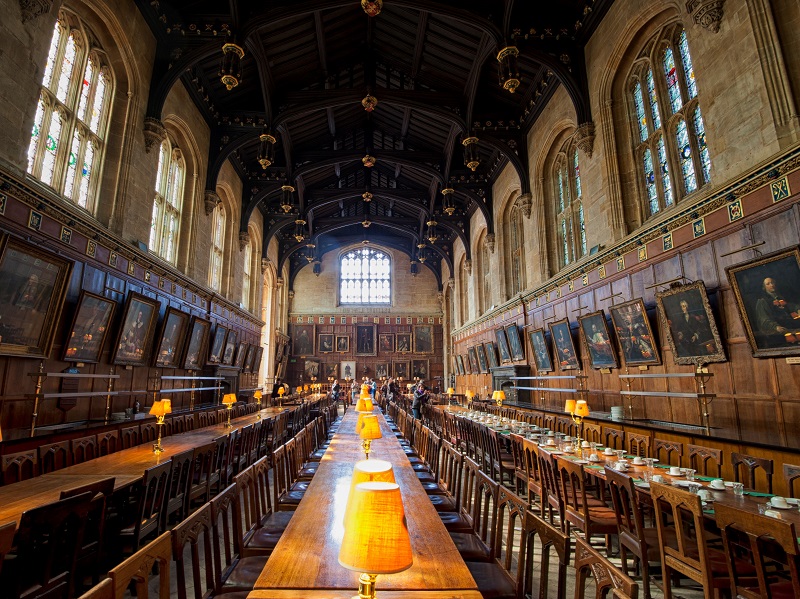
The Christ Church College complex includes Oxford Cathedral, a fine example of medieval architecture. Another highlight is the Great Hall, used daily for student and faculty meals, with its beautifully carved wooden ceiling.
The College also has its own Picture Gallery which includes, among others, three Italian masterpieces: The Butcher’s Shop by Annibale Carracci, The Supper at Emmaus by Lorenzo Lotto, and The Martyrdom of Saint Lawrence by Tintoretto.
Other colleges worth visiting are Magdalen College, regarded as the most architecturally beautiful, and New College, which has remained almost unchanged since its founding in 1379.
The Bodleian Library
No university can exist without its own library, and Oxford’s main library, the Bodleian Library, lives up to its reputation. The library’s original collection dates to the 14th century. After a significant donation from Humphrey, Duke of Gloucester, around 1435, a special facility was needed—thus an upper floor was built over the Divinity School, Oxford’s oldest classroom, reserved for theology lectures and exams.
After a period of decline, Thomas Bodley, a professor at Merton College and ambassador of Elizabeth I, offered to reorganize the library at the start of the 17th century (hence the name Bodleian). Bodley expanded the collection and established, still in force today, the agreement that one copy of every book published in the UK must be deposited in the library.

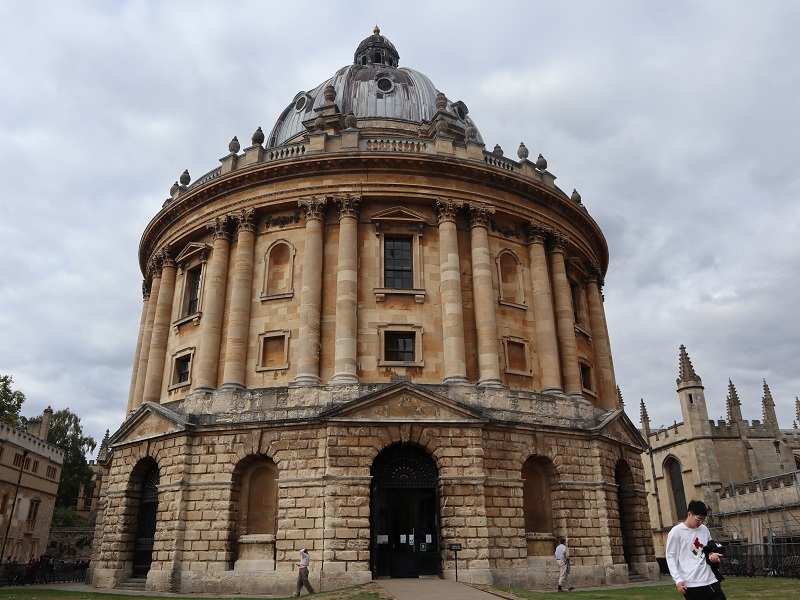
Guided tours of the historic section of the Bodleian Gallery are available. Depending on the tour, you’ll discover the stunning Gothic hall of the Divinity School, the Duke Humfrey’s Library above (the oldest part of the Bodleian), and the iconic baroque rotunda of the Radcliffe Camera.
Oxford and Harry Potter
The Gothic buildings at the University of Oxford embody the classic image of British educational institutions. That’s why several locations here were chosen for filming Harry Potter’s adventures at Hogwarts School of Witchcraft and Wizardry.
The main staircase in Christ Church College is where Albus Dumbledore greets new students and assigns them to their houses at the start of term. The Great Hall from the same college inspired the Hogwarts dining hall, included in the Harry Potter Studio Tour by Warner Bros near London.
The Gothic hall of the Divinity School became the Hogwarts infirmary. That’s where Harry ends up in the first movie after a Quidditch accident and where Hermione is brought after being petrified in “Harry Potter and the Chamber of Secrets.”
The Duke Humfrey’s Gallery served as Hogwarts’ library. Its oldest section was used as the Restricted Section. Fun fact: one historical rule of the library is the absolute ban on any flames. When Harry sneaks in at night under his invisibility cloak carrying a lamp, all the flames were digitally added in postproduction.
Finally, the New College cloister is where the three main characters often meet and talk, and where, in “The Half-Blood Prince,” Ron is seen coughing up frogs after casting a spell with his broken wand.