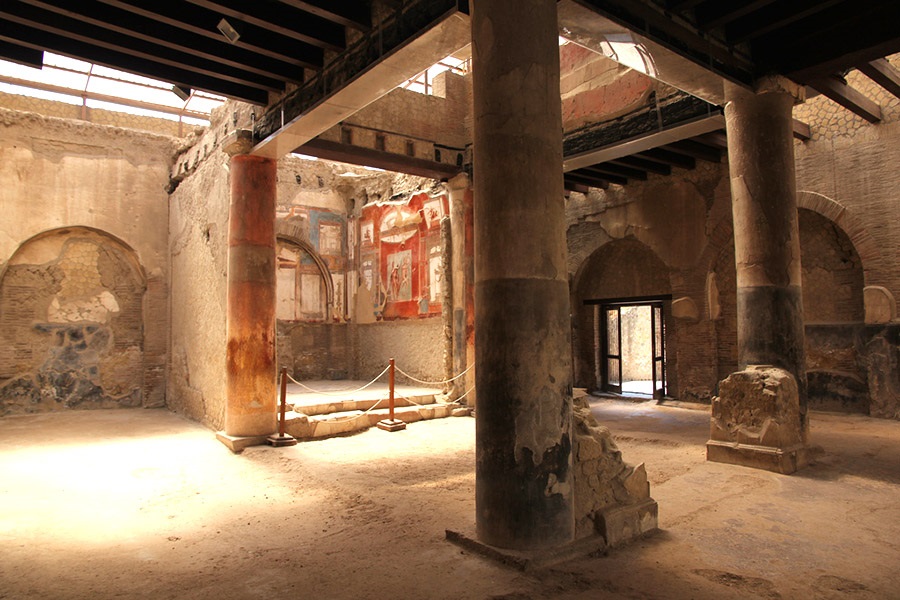


The residence of the Pisones called Villa of the Papyri
The residence of the Pisones, also known as the Villa of the Papyri of the Herculaneum excavations, near Naples, which until that moment had remained buried under the ash and mud of that distant August of 79 AD, thus became “the greatest discovery of the century.” Finally a moment of glory for the small Herculaneum, but also a moment of glory for the Swiss archaeologist Carlo Weber, who in distant 1750 directed the excavation works ordered by the Bourbons and drew the detailed plan of the ancient city of Herculaneum. Including, of course, the residence of the Pisones.
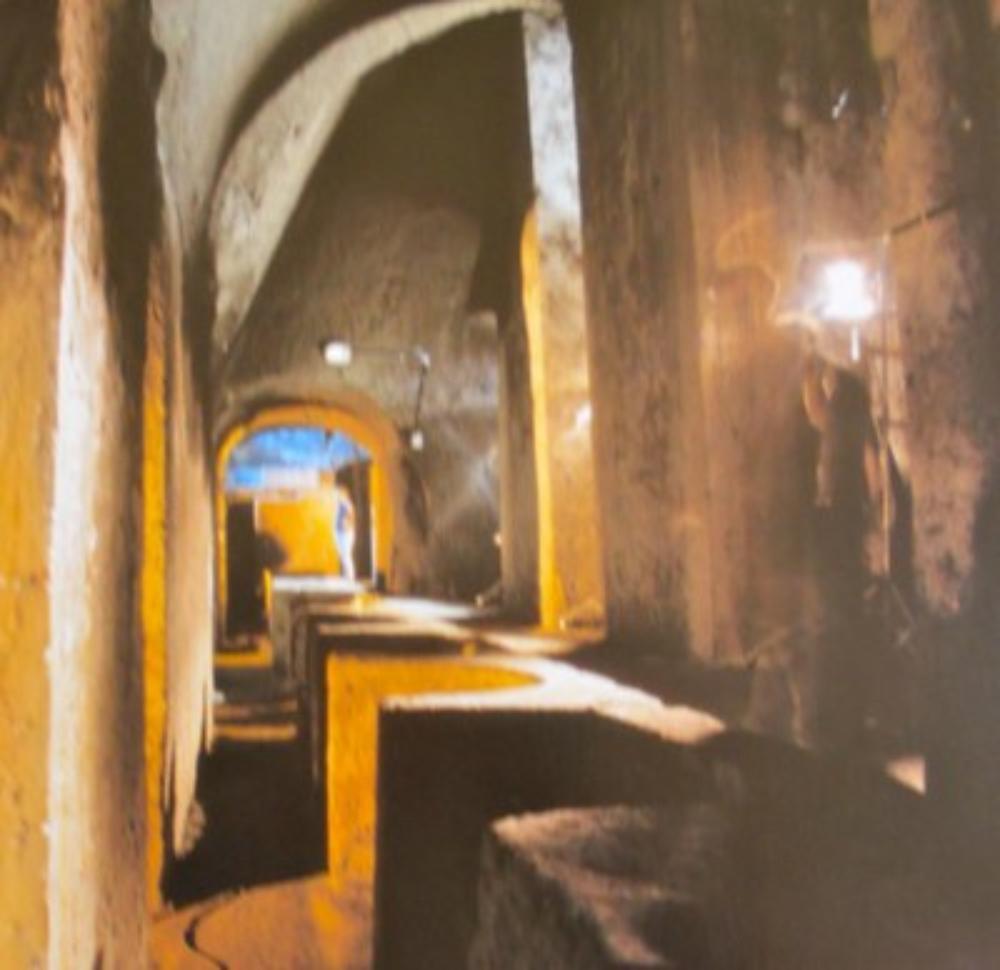
Today a small part of the Villa has been restored and opened to everyone. Although with some limitations. Access to the site will only be possible on weekends, and in guided groups of 25 people, from 9 am to 12 pm. To date, the excavation has covered an area of fourteen thousand square meters, of which 1500 include monumental works. But there is still much to do, because the Villa, which has an area comparable to that of three football fields, extends completely beneath the current town center, about thirty meters deep.
The excavations commissioned by the Superintendent of Pompeii also brought to light a grand sacred shrine, five meters wide and twenty meters long, with an apse facing the sea and a vaulted roof, built on a promontory. This discovery allows the ancient city’s coastline to be redrawn because it extends the coastal boundary beyond the line drawn by 18th-century archaeologists. This revives the hypothesis timidly suggested until now: the western area of Herculaneum had terraces towards the sea, and sophisticated access ramps led, overcoming a height difference of 10 – 15 meters, to the verandas and viewpoints of the luxurious villas that 1922 years ago overlooked the blue sea of Naples.

Villa of the Papyri: the most famous archaeological site in the world
But what is so extraordinary about the Villa of the Papyri that it became the most famous archaeological site in the world?
Beneath the lava layer that preserved its structure, since 1752 archaeologists have recovered about 2000 papyrus scrolls that could reveal still unknown aspects of ancient Roman history. Since 1996, archaeologists from the ERPO ’90 consortium, in collaboration with technicians from Infratecna, have reached the “heart” of what was the “summer” residence of Julius Caesar’s father-in-law, Lucius Calpurnius Piso. Scholars hope to find more precious papyrus scrolls to add to the 1826 already recovered and kept in the National Library of Naples. A veritable collection of Greek philosophy, from Epicurus to Philodemus of Gadara.
The great Greek scholar and papyrus researcher Marcello Gigante, who passed away a few years ago, was convinced he would also find Latin texts on papyrus because, he argued, “at that time many Latin libraries were bilingual, and Herculaneum belonged to the Latin civilization.” Scholars hope that among the papyri of Villa Pisone there may also be the last existing copy of the “History of Rome” by Ennius, a work of which only one third is known, and whose discovery could lead to the rewriting of the entire history of Rome.
It was possible to recover the papyri because the carbonization of the documents did not happen due to the heat of the lava, but through a mineralization process favored by the material that submerged Herculaneum in 79 AD. Unlike Pompeii, a city founded by Hercules, Herculaneum was buried by a river of lava and mud that penetrated all the houses, solidifying and sealing everything. Thanks to the nature of this material, the precious documents have reached us intact. It is said that when between 1762 and 1764 the German art historian Johann Joachim Winckelmann saw the papyri, he said they looked like pieces of coal, and the room where a large number were found was named the “coal room.”