


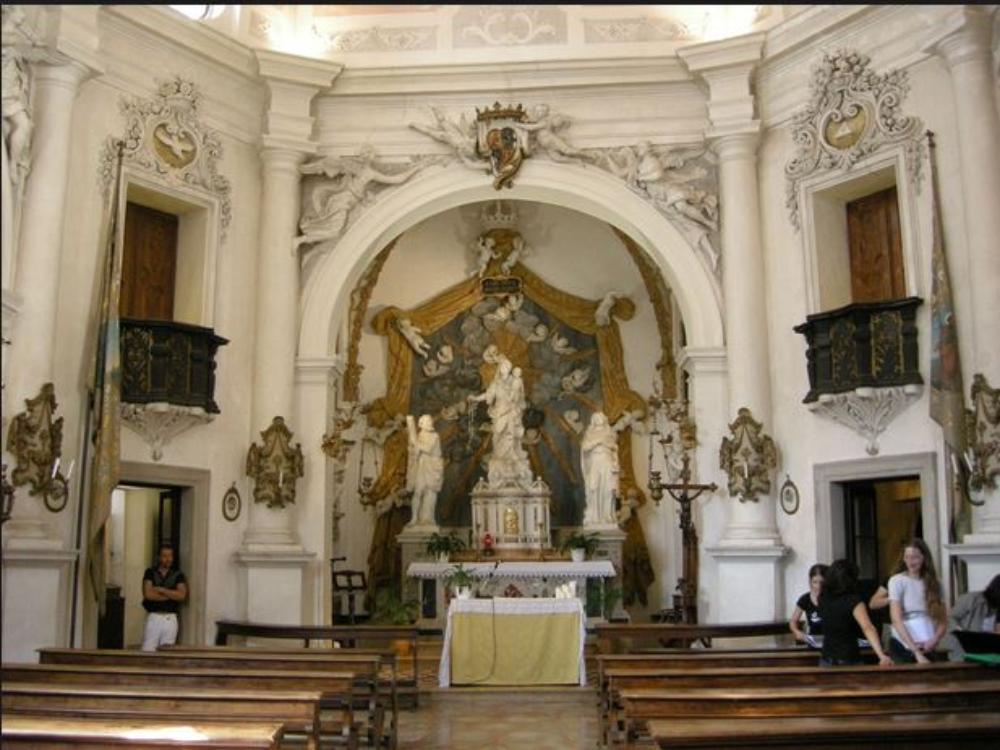
The Patriarchal Basilica of Santa Maria Assunta is the main religious building of Aquileia (UD) and the ancient cathedral church of the suppressed Patriarchate of Aquileia.
- Mosaics of the Basilica of Aquileia
- World War I Fallen Cemetery
- Opening Hours of the Basilica of Aquileia
- Opening Hours of the Aquileia Bell Tower
- Tickets for the Basilica of Aquileia
- Entrance to the Basilica with the Fresco Crypt
- Entrance to the Basilica with the Fresco Crypt and the Northern Theodorian Hall (Excavation Crypt)
- Bell Tower (open from April to September)
- Entrance to the Cromaziana Hall, the Baptistery, and the Domus/Episcopal Palace
- Domus and Episcopal Palace
- Basilica Complex (suspended during autumn and winter)
- Where to buy tickets for the Patriarchal Basilica of Aquileia
The oldest remains date back to the 4th century; the current basilica was built in the 11th century and remodeled in the 13th century. It stands beside the Sacred Way, overlooking Piazza del Capitolo, along with the baptistery and the imposing bell tower.
Founded in 313 by Bishop Theodore with direct support from Emperor Constantine, the buildings known as the Theodorian halls (whose remains are still visitable in the nave of the current building and under the foundations of the bell tower) probably represent the first public worship complex for Christians.
The halls rested on pre-existing Roman buildings (likely horrea, vast Roman granaries certainly located in the area near the basilica), whose perimeter walls were presumably reused. The two parallel halls (both about 37×20 m) were connected by a 29×13 m vestibule, next to which stood the first baptistery. Both halls lacked an apse, with six columns supporting a richly decorated coffered ceiling and a floor made up of an extraordinary mosaic complex. The northern hall probably served as the actual church, while the southern one (located where the current basilica stands) was a catechumenate, a place where catechumens received Christian instruction and prepared to join the community.
The next phase of the basilica dates to the mid-4th century, during the time of Bishop Fortunatianus, with the expansion of the northern hall (73×31 m) and the creation of new rooms. The large basilica, divided into three naves by twenty-eight columns and without an apse, was connected through the baptistery to the catechumenate and preceded by a large atrium (a scheme also found in the contemporary complex of Trier).
The northern basilica, burned during the sackings, was never rebuilt. The large city construction sites were abandoned and the population sharply declined. Only in the 9th century did Patriarch Massenzio, thanks to Charlemagne’s support, begin restructuring the ancient buildings.
The Basilica of Massenzio, constructed from 811 onwards, reused the southern hall of the old complex, adding a short transept and building the so-called Church of the Pagans between the basilica and the baptistery.
In 988 an earthquake caused extensive damage, which led Patriarch Poppone in 1031 to carry out a radical restoration of the complex in Romanesque style, rich with Carolingian-Ottonian influences. Poppone’s extensive building program, a sign of the city’s renewed economic prosperity, culminated in the construction of the large Patriarchal Palace (now destroyed) and especially a “turris celsa quod astra petit,” the imposing bell tower over 70 meters tall, dominating the Friulian countryside (built in opus quadratum with massive marble blocks from the ancient amphitheater), said to be inspired by the famous Lighthouse of Alexandria and serving as a model for many subsequent bell towers.
A new earthquake in 1348 prompted Archbishop Marquard of Randeck to carry out further restorations and replace the semicircular arches of the central nave with pointed arches.
The last major intervention dates to the 16th century, when Venetian craftsmen and carpenters were called upon to create the grand wooden ceiling still visible today.
A community of Christians adhering to Gnosticism was present in Aquileia in the first centuries of the Christian era.
To the left, near the basilica entrance, stands the Holy Sepulcher, an 11th-century structure reproducing the Holy Sepulcher of Jerusalem, as described by ancient medieval chronicles. The structure was used during the liturgy of Holy Week.
Mosaics of the Basilica of Aquileia
The main floor depictions can be divided into four bays, starting from the entrance.
In the first bay, various portraits of donors, crossed elliptical knots called Solomon’s knots, and animals appear, as well as a later insertion of a panel with the fight between the rooster and the turtle, symbolizing the struggle between good and evil, also found in the Crypt of the excavations.
In the second bay, particular interest lies in the male and female portraits enclosed in clipeus-shaped medallions, including representations of the seasons.
Also in the second bay, Jesus as the Good Shepherd is depicted in a pose mediated by pagan classicism, with a sheep on his shoulders, exactly like the Greco-Roman god Mercury. Around, in octagonal panels, are fish, a deer, a gazelle, various birds perched on branches, and storks.
In the third bay, where the altar once stood, the central panel shows the allegorical scene of Winged Victory with crown and palm. The meaning is highly significant for the early Christian church, which emerged victorious and effectively became, after Constantine’s edict, the main religion of the Roman Empire.
Finally, the fourth bay, concluding the cycle of depictions, is a single wonderful mosaic carpet representing a fish-rich sea with the story of Jonah, a Hebrew prophet sent by God to preach in the city of Nineveh in Mesopotamia. Jonah opposed this mission and fled on a Phoenician ship; thrown into the sea by sailors and swallowed by a sea monster, he was later spat out by the same monster on the shores of Palestine. Jonah’s story is a recurring motif in early Christian art because of its close connection to the resurrection of the dead.
World War I Fallen Cemetery
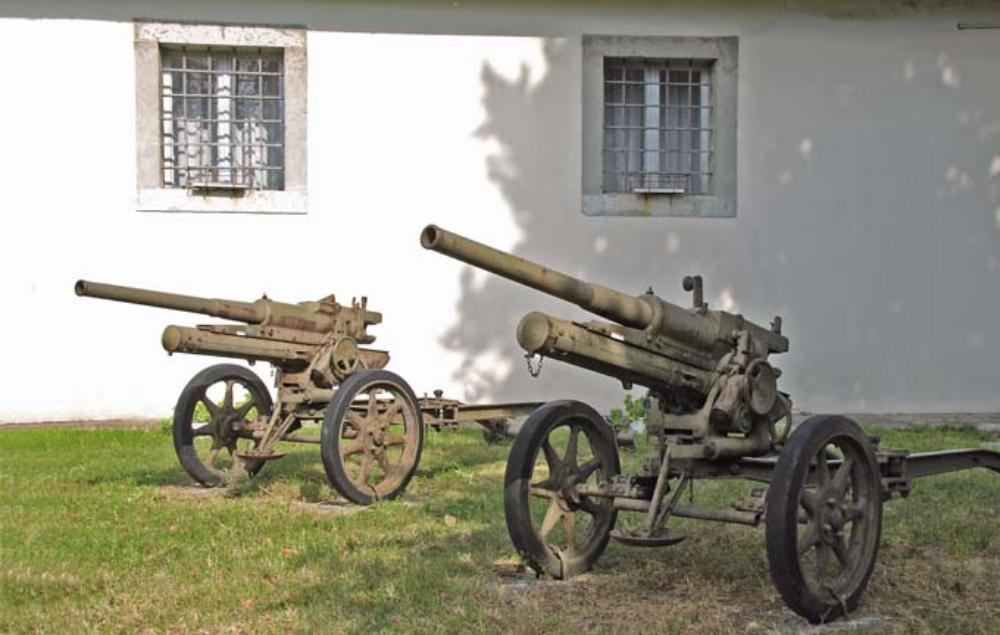
Outside behind the basilica lies the cemetery of the war casualties of 1915-1918, where ten of the eleven unknown soldiers rest, among which Maria Bergamas, mother of a voluntary fallen soldier, chose the one whose mortal remains have rested at the Altar of the Fatherland in Rome since 1921. Also here are the tombs of General Alessandro Ricordi of Milan, commander of the Murge Brigade, along with Captain Count Riccardo della Torre of Cividale, both killed by the same shell on the slopes of Hermada.

Opening Hours of the Basilica of Aquileia
From April to September: 9.00 AM – 7.00 PM
March and October: 9.00 AM – 6.00 PM
From November to February: 10.00 AM – 4.00 PM (Saturdays, Sundays and holidays 9.00 AM – 5.00 PM)
January 1: 10.00 AM – 5.00 PM
Closures: December 25 afternoon
January 6 from 2:00 PM to about 3:30 PM for the Blessing of the Children
Every Sunday from 10:00 AM to 11:30 AM
During all unscheduled parish religious ceremonies (funerals, weddings or special ceremonies), closing 30 minutes before the ceremony begins
Opening Hours of the Aquileia Bell Tower
From April 1 to September: 10:30 AM – 1:30 PM and 2:30 PM – 6:30 PM
October: Saturday and Sunday
10:00 AM – 5:00 PM
November, December, January, February and March: closed
Tickets for the Basilica of Aquileia
Entrance to the Basilica with the Fresco Crypt
FULL PRICE: € 3.00 per person
REDUCED: € 2.50 per person (valid for groups of at least 15 people)
SCHOOL GROUP REDUCED: € 1.00 per person (valid for groups of lower and upper secondary schools with at least 15 people)
Entrance to the Basilica with the Fresco Crypt and the Northern Theodorian Hall (Excavation Crypt)
FULL PRICE: € 5.00 per person
REDUCED: € 4.00 per person (valid for groups of at least 15 people)
SCHOOL GROUPS: € 2.00 per person (valid for groups of lower and upper secondary schools with at least 15 people)
Bell Tower (open from April to September)
FULL PRICE: € 2.00 per person
REDUCED FOR GROUPS AND SCHOOL GROUPS: € 1.00 per person (valid for groups of at least 15 people)
Entrance to the Cromaziana Hall, the Baptistery, and the Domus/Episcopal Palace
FULL PRICE: € 5.00 per person
REDUCED: € 4.00 per person (valid for groups of at least 15 people)
SCHOOL GROUPS: € 2.00 per person (valid for groups of lower and upper secondary schools with at least 15 people)
Domus and Episcopal Palace
FULL PRICE: € 2.00 per person
REDUCED: € 1.00 per person (valid for groups of at least 15 people)
Basilica Complex (suspended during autumn and winter)
Access to the Basilica with the Fresco Crypt, the Northern Theodorian Hall (Excavation Crypt), the Baptistery with the Cromaziana Hall (South Hall), the Bell Tower, and the “Domus and Episcopal Palace”
FULL PRICE: € 10.00 per person
REDUCED: € 7.50 per person (valid for groups of at least 15 people)
Where to buy tickets for the Patriarchal Basilica of Aquileia
At the Basilica Shop, located in Piazza Capitolo no. 4, individual visitors and groups already equipped with their own microphone system can purchase tickets. Ticket offices close half an hour before the Basilica’s closing time.
Free Admission
Residents of Aquileia
Children under 10 years old
Disabled visitors upon presentation at the Ticket Office of a disability certificate over 74%. In case of non-self-sufficiency, free admission also extends to one accompanying person
Teachers accompanying school groups
One group leader every 25 paying guests
Journalists
Tour guides
Holders of the FVG CARD
FAMILY TICKET: minors under 18 years free if accompanied by both paying parents (only on full tickets)


 and the ancient cathedral church of the suppressed Patriarchate of Aquileia. Let's see what to visit in the Basilica of Aquileia.)