

Two years after his death (1226), the construction of the Basilica began, using the pink stone from Mount Subasio and structuring the building on two superimposed levels.
The Lower Basilica is in the Lombard Romanesque style, with a single nave, ribbed vaults, a large transept, and splendid frescoes signed by Giotto, Cimabue, and their pupils. Beneath the central altar, in a small crypt, the Saint’s remains are kept; visitors can also see the room housing his relics and the Treasure Museum, featuring rare illuminated manuscripts, paintings, and other precious items.
The Upper Basilica showcases Gothic lines, and its construction allowed the functions of the two worship places to be clearly defined: intended for pilgrims and the veneration of the Saint’s relics, the Lower Basilica; dedicated to large gatherings and official meetings, even with the Pope, the Upper Basilica houses frescoes by Cimabue and the extensive painted cycle “Stories of Saint Francis” by Giotto: 28 scenes highlighted by the depth of perspective applied to landscapes and human figures.
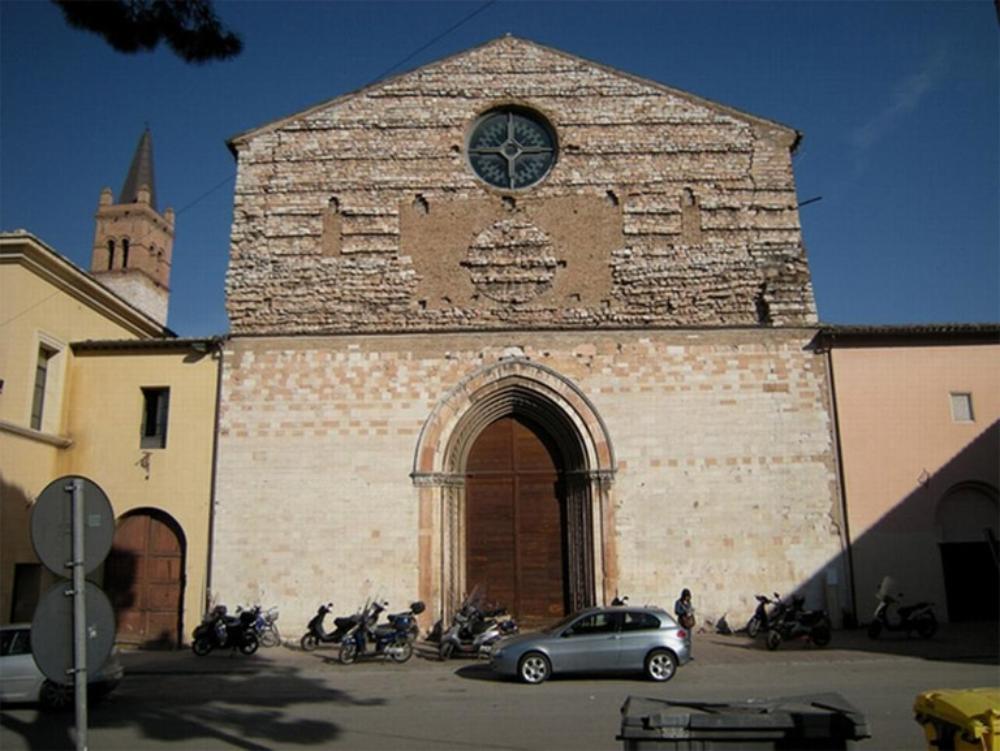
The 1997 earthquake severely damaged the Upper Basilica, especially in the transept area, causing its closure for over two years. Assisi boasts a large number of churches, including Santa Chiara, in the Italian Gothic style, consecrated in 1265 and similar in form to the Franciscan Upper Basilica.