

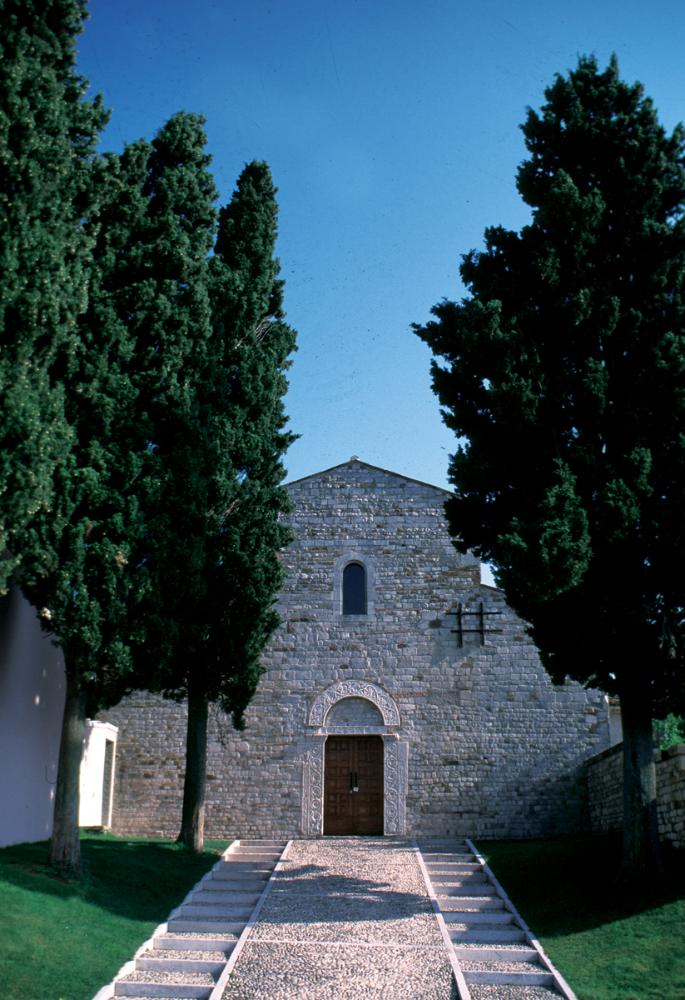


Founded in the 9th century on a slope on the right bank of the Vomano river valley, the church was part of a Benedictine monastery dependent on that of San Clemente in Casauria, commissioned by Ermengarda, daughter of Emperor Ludovico II. Partially the result of the 1926 restorations, the building still retains the reconstruction from the 12th century.
The façade, made of white stone blocks and bricks, features a beautiful architraved portal with a semicircular arch, also carved in stone with classical-style scrolls, dated 1108. The interior has three naves ending in apses. The central one is dominated by the ciborium, perhaps the oldest in Abruzzo, with dense stucco decoration from the mid-12th century, signed by master Roberto di Ruggero. Beneath it is an altar table whose antepedium is a precious inlay of marbles and crushed tile.