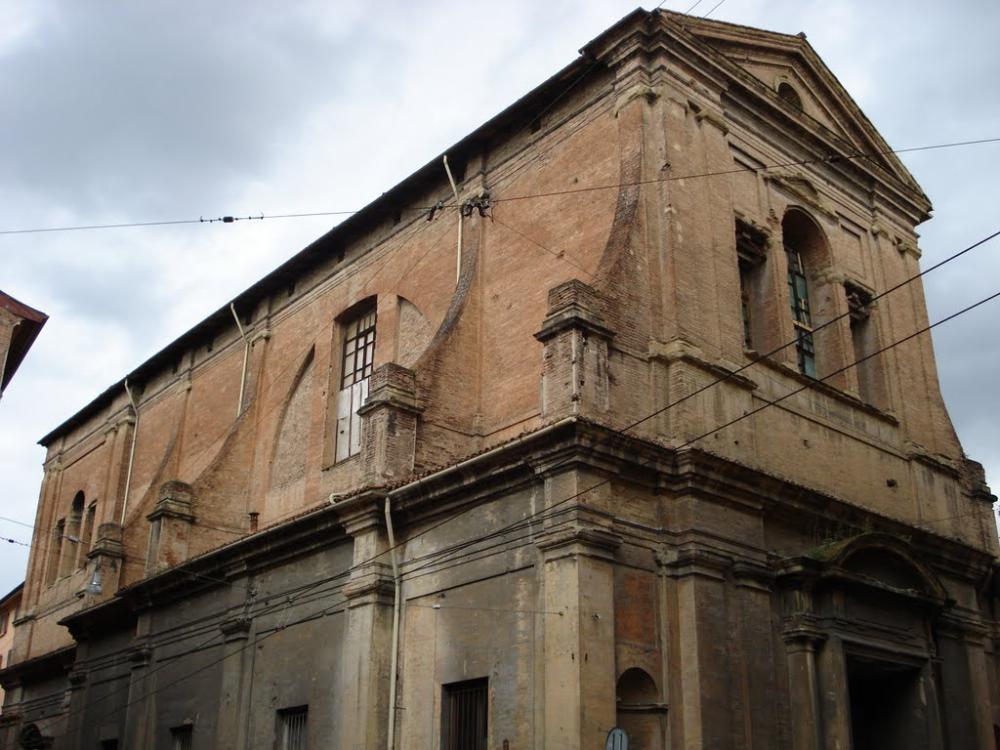


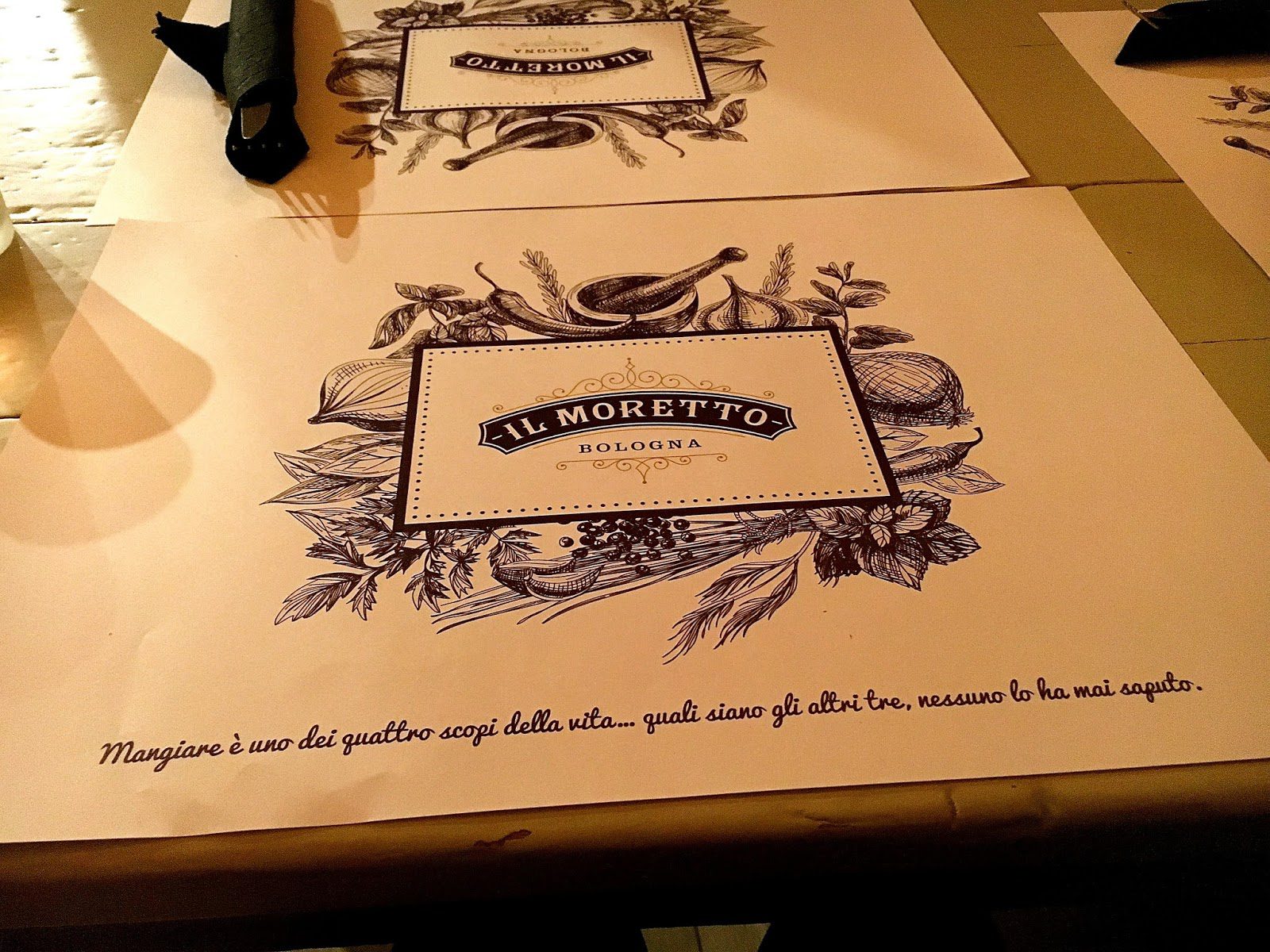
L’Osteria del Moretto is a former tavern from the 1920s, which has preserved almost everything from that era: the tables with marble tops, the chairs, the counter, and the colorful terrazzo floors, where three hatches can still be seen through which the must flowed into the gigantic underground barrels.
On the white and wine-red walls hang prints, large black-and-white photos (such as the beautiful ones of the Guccini family and a young Garibaldi), posters, and flyers of cultural events that the tavern continually hosts.
The Moretto has been a springboard for many artists, and not a year goes by without films or commercials being shot inside. As you can understand, the place is full of authenticity. The very walls bear witness to centuries of struggles between the sacred and the profane; the entire building stands on the ruins of the church of the Olivetan Friars, deconsecrated by Napoleon and later set on fire (the dilapidated cloister is still visible today). In the nineteenth century, given its proximity to one of the city gates, it was a place of welcome and rest for pilgrims.
Today it is run by Massimo Mutti and some “patron” partners, who have turned it also into a space for musical reviews, poetry, cabaret, painting, and photography exhibitions.
Massimo, very experienced in staying up late, loves entertaining the large and diverse clientele, including young people who, in the nice season, when they cannot find a place, settle for the little wall across the street. The cellar is very well cared for, mostly with red wines, while the kitchen offers cold and hot dishes, with prices for every budget.
We return towards piazza Maggiore and head to the university district to reach another popular tavern not only among Bolognesi but also students: Da Matusel, in via Bertoloni, inside the fifteenth-century Palazzo Bianconcini.
The place, which for a long time tied its fame to pasta and beans, has changed management about a year ago. The new owners have tried to relaunch its image by restoring the interiors and offering quick lunch cuisine and Sicilian specialties for dinner.
True or not, the story has nonetheless tickled the imagination of many, and even today, in the ground-floor room, you can see some marble plaques with the names of the most famous brothels and a “Map of Pleasure of Bologna,” painted by Antonio Pinotti in 1978.
The place has a mezzanine; upstairs the large vaulted ceilings and the stucco work create a delightful environment for dining and meeting with friends.
[custom-related-posts title=”Osterie a Bologna” order_by=”title” order=”ASC” none_text=”nessun articolo”]