


Visiting Mantua in One Day
Exploring Mantua in a single day is a challenge, as the city is rich in fascinating sites. However, here’s how to make the most of your visit and what not to miss while moving between the main attractions.
From Piazza Sordello to Palazzo Guerrieri
The oldest heart of Mantua is certainly the area surrounding Piazza Sordello. Overlooking the square is the Duomo, with its 18th-century façade designed by Nicolò Banchiera in pure Roman Baroque Mannerism style. The bell tower, on the other hand, features Romanesque architecture in keeping with the medieval origins of the church, later rebuilt in the 16th century. The Palazzo Ducale also faces the square, made up of several buildings: the Magna Domus, Palazzo del Capitano, Palazzo Castiglioni, and Palazzo Guerrieri. Here you’ll find the Torre della Gabbia, the tallest tower in Mantua, named for the large iron cage built by Guglielmo Gonzaga in 1576, once used as a unique open-air prison for criminals.

From San Giorgio Castle to the Church of Sant’Andrea
The San Giorgio Castle is a beautiful example of the grandeur of the city during the Gonzaga era. It was built in the 14th century by Francesco Gonzaga as a quadrangular brick fortress with four corner towers, surrounded by a moat.
You can reach Piazza Virginiana via Via Cairoli. The square is dedicated to Virgil, and the famed poet is remembered in many places around the city. One of Mantua’s most striking squares is Piazza delle Erbe, named after the fruit and vegetable market traditionally held here.
Here you’ll find the Church of Sant’Andrea, a superb example of Renaissance architecture. Designed by Leon Battista Alberti in 1472, the church was not completed until between 1697 and 1699. The building features a single nave and three side chapels, adorned with frescoes by followers of Mantegna and Correggio, and houses Mantegna’s tomb.

From Piazza delle Erbe to Palazzo Te in Mantua
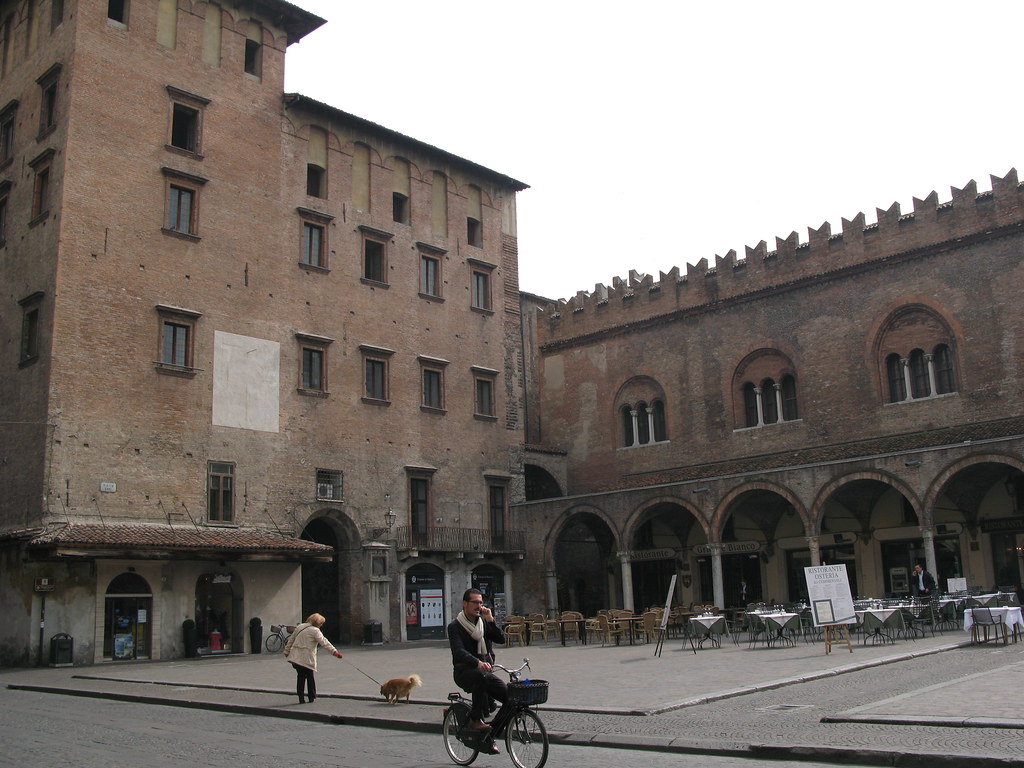
No day trip to Mantua is complete without a stroll through Piazza delle Erbe, surrounded by the Palazzo del Podestà, the Ragione Palace, the Torre dell’Orologio, and the Rotonda di San Lorenzo, the city’s oldest church.
The Palazzo del Podestà was once Mantua’s city hall and features a niche with a statue of Virgil, dating back to the 12th century.
Mantua also boasts other fascinating sights. Among them is Palazzo Te, an attraction that alone justifies a visit. Built between 1525 and 1535, it epitomizes the architecture of its time. The beauty and splendor of its halls, frescoed by Giulio Romano and his pupils, make this palace a must-see.
Where to Stay in Mantua
If you plan to fully enjoy Mantua, it’s worth staying overnight. There’s a good selection of hotels to suit every need. In the city center, just steps from the pedestrian area, the Hotel Broletto combines comfort and warm hospitality. The hotel offers everything from classic rooms to a Junior Suite and Family Room. Stylish and comfortable, it’s a highly recommended choice.




