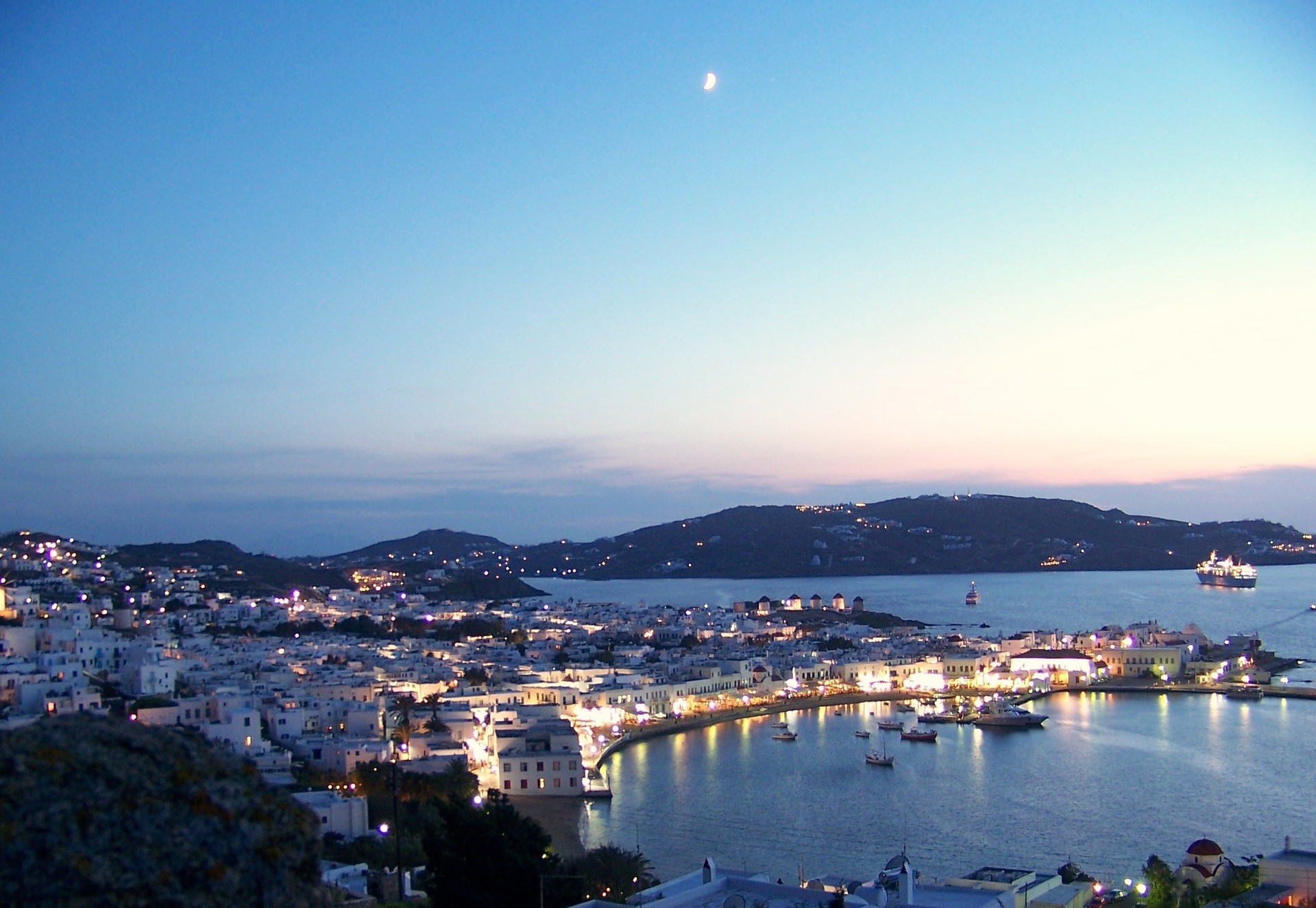


Malta, a small but enchanting Mediterranean gem, is a destination offering an extraordinary variety of experiences, ideal for those looking for a trip blending history, culture, sea, and nature. In this 5-day Malta itinerary, you’ll have the chance to discover the historical wonders of Valletta, the monument-rich capital, and explore charming towns like Mdina and Rabat, which tell the island’s millennia-old story. Malta is also famous for its beautiful beaches and crystal-clear waters, which you can enjoy by following our 5-day Malta itinerary. Each day will take you to unmissable places such as the bays of Gozo and Comino, the two twin islands that make up the Maltese archipelago.
The Perfect 5-Day Malta Itinerary
This 5-day Malta tour will allow you not only to visit the main attractions but also to experience the local culture through unique activities. You’ll discover culinary traditions, ancient churches, and historic palaces, as well as explore natural trails and marine reserves that make Malta a true paradise for nature lovers. If you’re wondering what to do in Malta in 5 days, you’ll find everything you need in this guide, designed to offer a complete and varied trip.
To help you understand the best places to visit in Malta and where to find them, this guide will show you what Malta has to offer travelers. Following our Malta travel itinerary, you’ll start in the tiny capital, Valletta, before expanding to the country’s most remote corners. You’ll not only see other cities, the coast, and countryside, but also have the opportunity to visit the other main islands of Malta, Gozo and Comino.
However, before diving into our Malta itinerary, we just want to remind you to purchase travel insurance. You never know what might happen, and believe us, you don’t want to face thousands of dollars in medical bills.
Heymondo, FullTravel’s partner, offers a travel insurance with a 10% discount for all our FullTravel readers. Just click this link and proceed with the purchase with the discount already applied.
Now, back to our guide on what to do during your 5 days in Malta. Below you’ll find everything you need to know about the best things to do in Malta so you can have a fantastic time exploring this fascinating place.
The itinerary we propose is designed to maximize your time on the island, with tips on how to organize your days best, balancing relaxation and adventure. If you’re interested in a summer trip, our 5-day Malta summer itinerary will also guide you to the best beaches to relax in the sun or snorkel in crystal-clear waters. There will also be advice on how to visit main cities like Sliema and St. Julian’s, and how to take advantage of numerous walking tours to discover Malta’s history, from prehistory to today.

There’s no better place to start your Malta journey than the country’s capital, Valletta. Stretching across a peninsula with harbors on both sides, Valletta is a treasure trove of important Maltese cultural and heritage sites.
Your time in Valletta begins first by passing through the city’s mighty fortifications and entering the City Gate of Valletta. From there, you can explore the city’s historic streets, from the main pedestrian area of Republic Street to all the steep side streets that run down toward the harbors. If you want to see the classic colored Maltese balconies, you’ll find them here.
After a while, try to reach one of Malta’s most important religious sites, the St. John’s Co-Cathedral. It dates back to the 16th century and has strong associations with the Knights of St. John, but the real attraction for visitors is the incredibly opulent baroque interior full of frescoes and gilded borders. Nearby is the Grandmaster’s Palace, where you can tour the State Rooms and the Palace Armoury, once used by the Order of St John.
There’s more of Valletta’s past to discover in the city’s top museums. For a comprehensive look at the islands’ long history, visit the National Museum of Archaeology. To better understand Malta’s complicated and bloody military history, tour Fort St Elmo at the end of the peninsula. If you want to see what noble life was like in Malta, the beautiful rooms of Casa Rocca Piccola will surely satisfy you.
Finally, to enjoy some of the city’s best views, head to one or both of the Upper and Lower Barrakka Gardens. These garden terraces, besides being beautiful themselves, offer superb views over the Grand Harbour and other points of interest in Valletta.

On your second day in Malta, venture beyond the Grand Harbour from Valletta to the historic Three Cities. Comprising Senglea, Cospicua, and Birgu, the Three Cities are a fortified urban area boasting traditional Maltese architecture and monuments, but with far fewer tourists.
Start your visit there in the city of Senglea and the Gardjola Gardens located at the peninsula’s tip. Part of the fortifications protecting Senglea from the 16th century onward under the Order of St John, they feature lovely turrets and splendid views of Valletta. Strolling the picturesque streets of Senglea, reach the imposing Senglea Basilica. Exiting the city, pass through the main gate of St Michael’s Bastion, the fortress protecting this end of Senglea.
Following the waterfront, you’ll soon reach the next of the Three Cities, Cospicua. The most residential of the three, there are few sights in Cospicua apart from the beautiful St Helen’s Gate and the recently renovated docks.
Last but not least is Birgu, the oldest of the Three Cities and Malta’s capital before Valletta’s foundation. Following the waterfront you’ll find the Maritime Museum covering Malta’s proud naval traditions. From there, continue into the center of this medieval city and visit the historic Inquisitor’s Palace. Wander the tranquil but characteristic side streets until you reach Fort St Angelo. Here you can learn about all civilizations that influenced Malta’s history and enjoy more views of the Three Cities and Valletta.

If you are looking for a organized trip to Malta at discounted prices, we recommend our partner, click here
Next, it’s time to see what’s happening on Malta’s other islands with a trip to Gozo and Comino. Located northwest of the main island of Malta, these two islands let you experience very different sides of Malta.
Recommendation: The best way to experience Gozo and Comino is with a relaxing boat tour. This tour, for example, is highly recommended and visits all the most famous spots in the area.
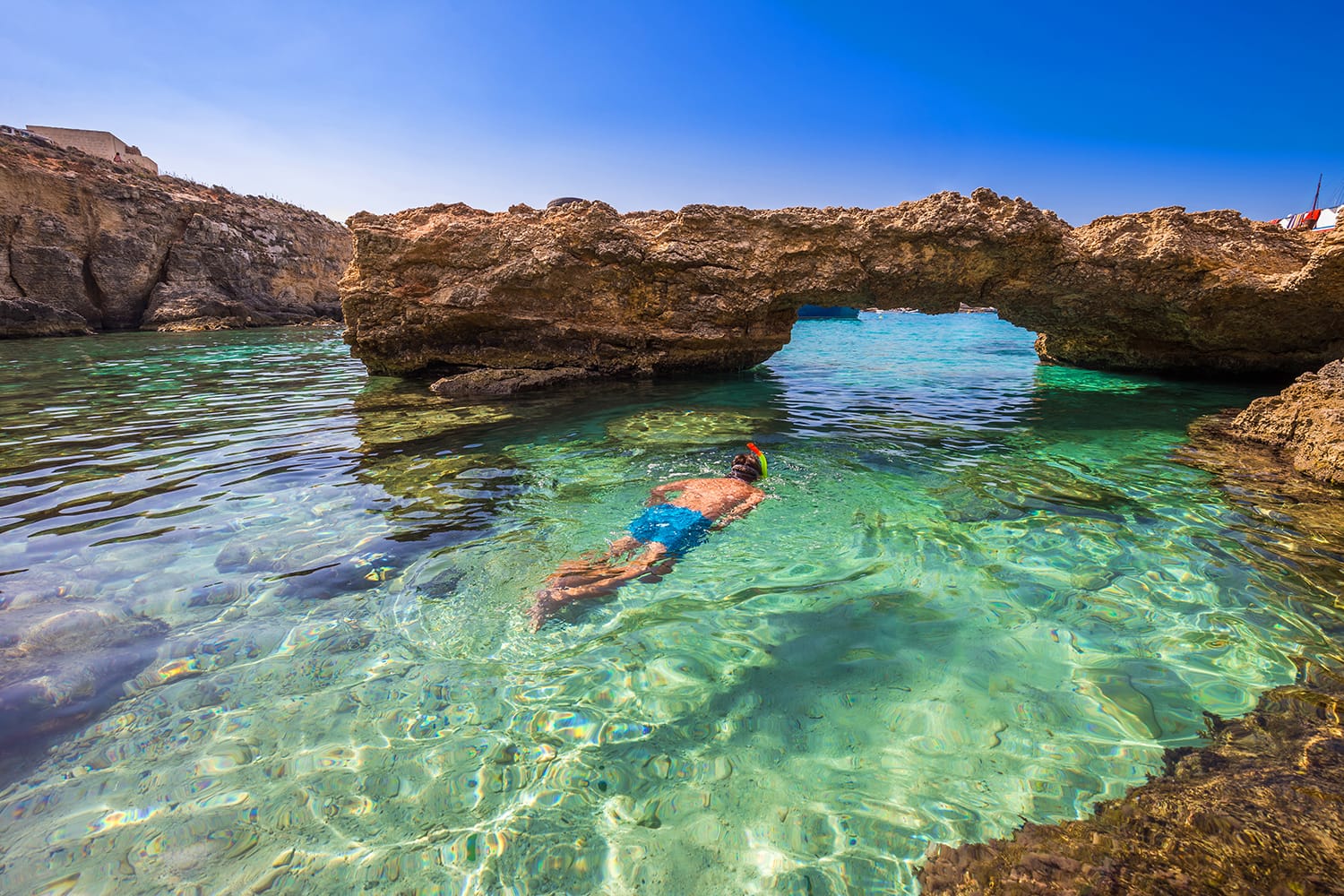
Since it’s closer, start with some time in Comino. The smallest of the three main islands, Comino has only three permanent residents and is a nature reserve featuring rocky, arid terrain. The island is best known for its bathing spots, with the Blue Lagoon by far the most famous. The Crystal Lagoon, however, is a nice alternative. On land, you can walk or bike to St Mary’s Tower and enjoy beautiful coastal views.
Gozo has a very different, much more rural and rustic atmosphere and is much larger than Comino. Entering the Mgarr harbor, you are already treated to a picturesque town and the Lourdes Chapel looking down at you. While half a day is too short to see all of Gozo, most travelers focus on the island’s main town, Victoria.
Found in the island’s dead center, Victoria, also known as Rabat, is Gozo’s capital. Begin your visit at Independence Square to get a feel for this old-fashioned town, before climbing to the city’s imposing Cittadella. This castle turned fortress offers not only beautiful views from its fortifications but also a large cathedral and several museums, including the Gozo Archaeological Museum. Before leaving, take time to stroll the incredibly narrow streets of Victoria lined by traditional Maltese houses.

Moving away from the coast, it’s time for a short trip to the ancient fortified city of Mdina and its modern neighbor Rabat. A day here will immerse you in a different era in Mdina and some important religious monuments in Rabat.
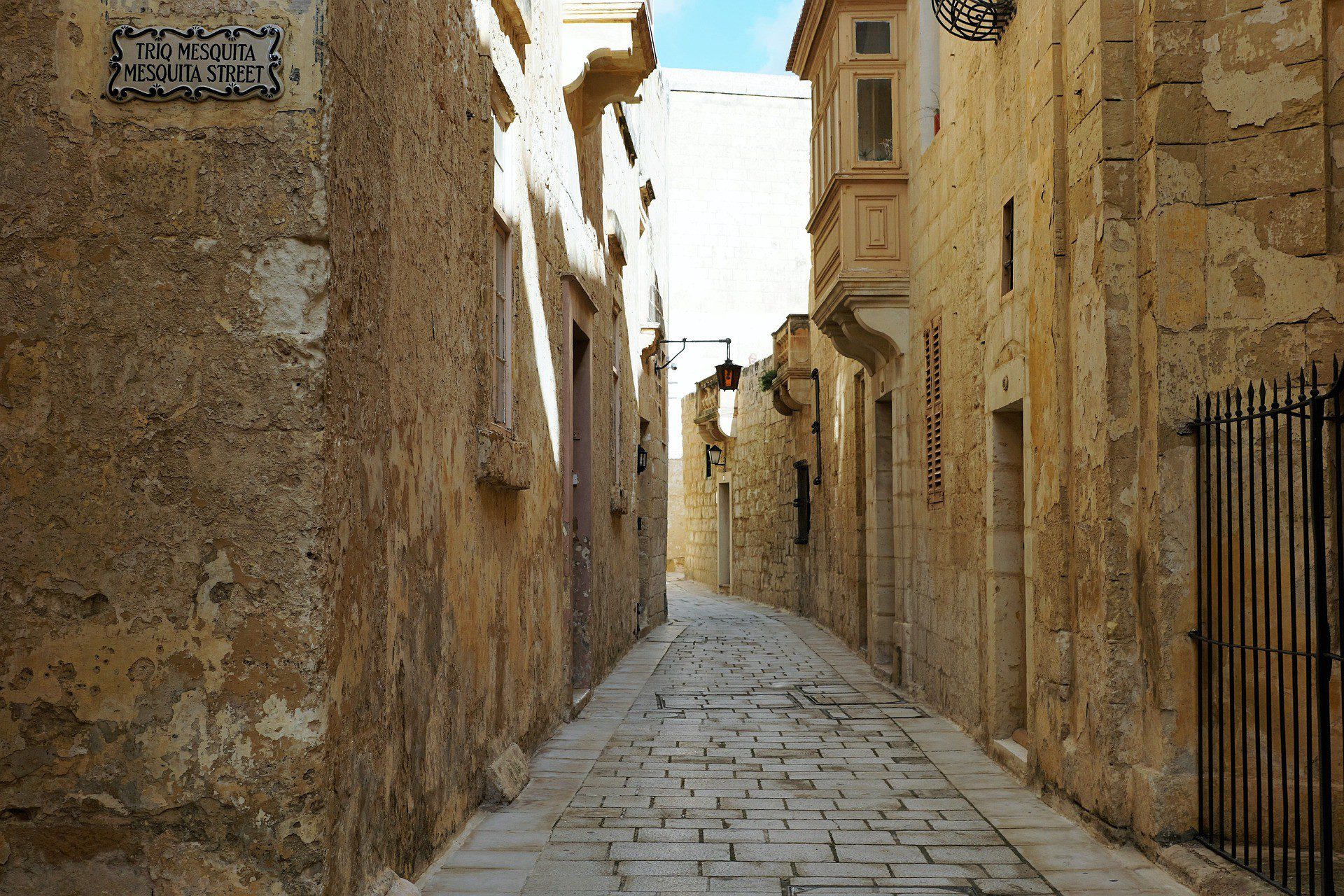
Often known as the Silent City, Mdina was Malta’s capital for a long time. Standing before the city’s defenses, with high stone walls before you, it’s obvious how ancient this city is. Much of a visit to Mdina involves simply wandering from one scenic square to another along narrow, atmospheric stone streets. You might even recognize some spots, like the bridge over the main gate, as Mdina was a filming location for Game of Thrones in Malta.
Mdina also has landmarks and attractions. One of the best things to do here is to walk to the bastions at the northern end and admire the wide views of the island. Despite Mdina’s inland location, you can still see the coast from here. The fortified city also houses several preserved palaces such as the Palazzo Falson, churches like St Paul’s Cathedral, and the National Museum of Natural History.
Outside Mdina’s walls lies the modern town of Rabat, which developed around the fortress. Less popular than Mdina, Rabat still has its share of attractions. There’s the Domus Romana museum housing relics and remains of an ancient Roman-era house. You can also see what a 16th-century palace looked like at Casa Bernard or witness early Christianity’s signs in Malta inside the St Paul’s Catacombs.
If you are looking for a organized trip to Malta at discounted prices, we recommend our partner, click here
With so much more to see in Malta, you’ll want to use your last day there to explore the northwest end of the island. In this part of Malta, the main focus is the town of Mellieha and a quirky assortment of sites scattered throughout the countryside.
Mellieha isn’t a large town, but a place like the Mellieha parish church is reason enough to visit. Not only are the church and nearby sanctuary quite pleasant, but the surrounding terraces offer breathtaking views. Mellieha also hosts old air-raid shelters, some of the largest used in Malta during World War II. Just a short trip downhill and you’ll reach the fantastic beach on Għadira Bay where you can sunbathe or swim.
In this part of Malta, you’ll also find a strange but popular attraction, the Popeye Village. This small village on a sheltered bay was built for the live-action Popeye film. Today it is a Popeye theme park with boat rides, minigolf, and more. The village looks quite charming from the nearby cliffs, which are worth exploring for their super coastal scenery.
Other assorted nearby attractions include the Red Tower, one of many towers built across Malta by the Order of St John in the 17th century. And on the opposite side of Mellieha you’ll find Fort Campbell, a British fort built just before World War II.

Day 6 and Beyond
The idea behind this 5-day Malta itinerary is to show you the kinds of places you can include during your first Malta visit. So far, we have highlighted some of the best destinations in the country, but there’s no reason why you can’t stay longer and spend 1 week or more in Malta. To help you decide if you want to spend more time in Malta, here are some suggestions of other fantastic places to visit.
- Marsaxlokk: On Malta’s east coast, Marsaxlokk is a traditional fishing village known for its picturesque scenery. Take a stroll along the village promenade to see the traditional brightly colored Maltese fishing boats known as luzzu. Marsaxlokk is also famous for its Sunday market, where the fish market has evolved into a farmer’s market with local produce, clothing, and souvenirs.
- Dingli: Another beautiful coastal destination beyond Mdina is the small village of Dingli. Best known for the epic and rugged Dingli Cliffs, you will definitely want to take a walk along this spectacular coastline. Inland, you can visit the cart ruts at Clapham Junction showing where an ancient road once ran near Għar il-Kbir cave. From there, walk to the Buskett Gardens, Malta’s only real forest, for the orange groves and woodland scenery.
- Gozo: Although you have spent some time on Gozo island already, there is much more to see there. For giant cliffs and rocky coastlines, head to the Ta’ Ċenċ Cliffs or Dwejra Bay. Gozo also hosts some incredible historic monuments, namely the UNESCO-recognized Ġgantija Neolithic temple. Head to Ramla Bay, a beautiful spot, or visit the salt pans by the sea located west of Marsalforn, which are a unique sight. Best of all, you can hike in most places here.
If you are looking for a organized trip to Malta at discounted prices, we recommend our partner, click here
When to Visit Malta
While planning your trip to Malta, one of the first things to consider is the time of year you want to visit. Although it’s an island destination in the Mediterranean, Malta experiences different seasons and can get quite crowded during the high season.
Many think of Malta as a summer destination because of its resorts and coastline. Consequently, Malta’s high season comes in summer, with July, August, and September being the busiest months on the island. During this time, you can expect warm and sunny weather, and prices for accommodations and tours will be at their peak.
Unless you’re really looking for the heat, the best time to visit Malta is actually in spring. From April to June, Malta enjoys comfortable daytime temperatures, and nights that aren’t too cool. Plus, there’s the added benefit that you won’t have to pay peak prices.
Another time of year not to underestimate is winter, which is officially Malta’s low season. Although it won’t be as warm as in spring or summer, winter in Malta is much milder than what the rest of Europe experiences. There is a chance of some rainy and windy days, but for the most part, bad weather won’t bother you too much.
Getting Around Malta
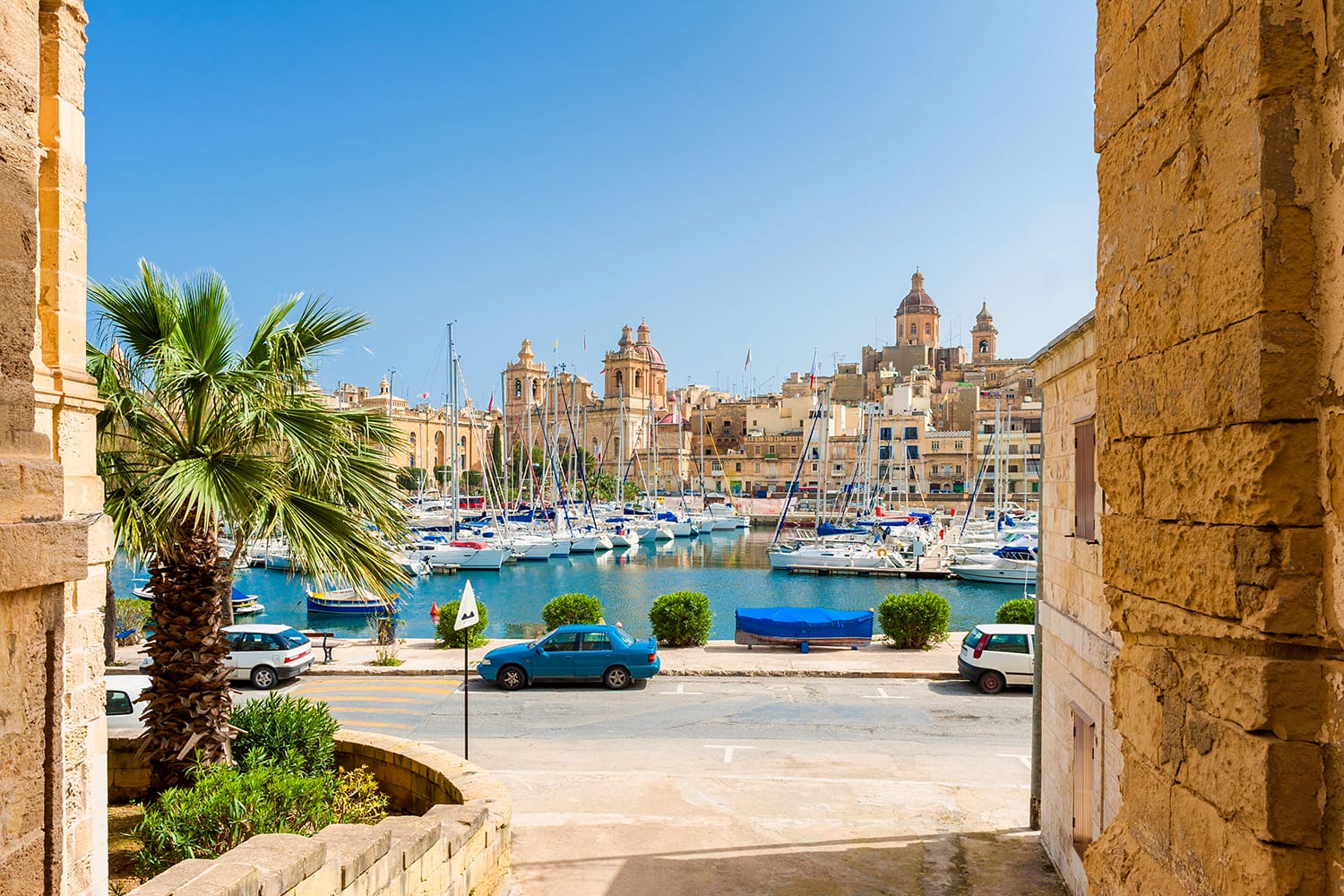
Malta is not a large country, and traveling from one side to the other and back is feasible in a single day. Thanks to its size, travelers visiting Malta have the opportunity to explore the entire country often basing themselves in one place such as Valletta. Malta consists of several islands, so you need to consider moving from one island to another.
Getting around Malta is usually more convenient on foot, by bus, or by ferry. While it is certainly possible to rent a car and drive around Malta, traffic and narrow roads can make the experience slow and tiring. That said, there is a car ferry to Gozo, so there is practically no place in Malta you can’t reach by car.
The same applies to Malta’s bus network. Being Malta’s only public transport mode, buses reach every corner of the country. From the moment you land at Luqa airport, you can use the bus network to go almost anywhere, and the ticket price is always the same regardless of distance. Of course, buses also have to contend with Malta’s traffic issues, so always allow extra time to get somewhere compared to the bus schedule.
Being an island nation with so much coastline, Malta’s ferries are a necessity. The most useful ferries to be aware of run from Valletta to Sliema and the Three Cities, as well as from Cirkewwa to the islands of Gozo and Comino.
Where to Stay in Malta
Figuring out where to stay in Malta is another important consideration when planning your trip. In general, the best places to stay in Malta are those that keep you central in Valletta, whether that’s in the capital itself or nearby locations like the Three Cities or St Julians’ Bay. Regardless of the area chosen, be sure to book in advance during high season as options usually sell out quickly.
Unlike other countryside itineraries, there really is no need to move around during your trip since everywhere mentioned here can be covered as day trips if you stay in a central spot. That said, if you want to move around a bit, that’s fine. You could move from the Valletta area to Mellieha or St. Paul’s Bay halfway through and it wouldn’t really impact your Malta itinerary.
If you enjoy staying in hotels, resorts, hostels, or apartments, you’ll definitely find something that suits you in Malta. Malta might not be the cheapest holiday destination but regardless of the type of accommodation you’re looking for in Malta, Booking.com is definitely the best place to search.
If you are looking for a organized trip to Malta at discounted prices, we recommend our partner, click here