


The Republic of San Marino is a peaceful and virtuous microstate, renowned for its high quality of life and a notably friendly tax system.
Its physical identity is closely tied to Monte Titano, a massive limestone block that rises 749 meters above sea level, dominating a landscape of rolling hills with the Adriatic Sea as its backdrop.
Without Titano, there would be no San Marino. The mountain has become the undisputed symbol of the state. All borders are land-based and shared between Marche and Emilia Romagna, while streams originating from the mountain (mainly Marecchia and Marano) flow into the Adriatic after travelling about twenty kilometers.
Administratively, the territory of the Republic of San Marino is divided into 9 “Castelli”, similar to small municipalities, though with more limited authority. Each Castello is governed by a Captain (akin to a mayor) and an administrative board, both elected by residents.
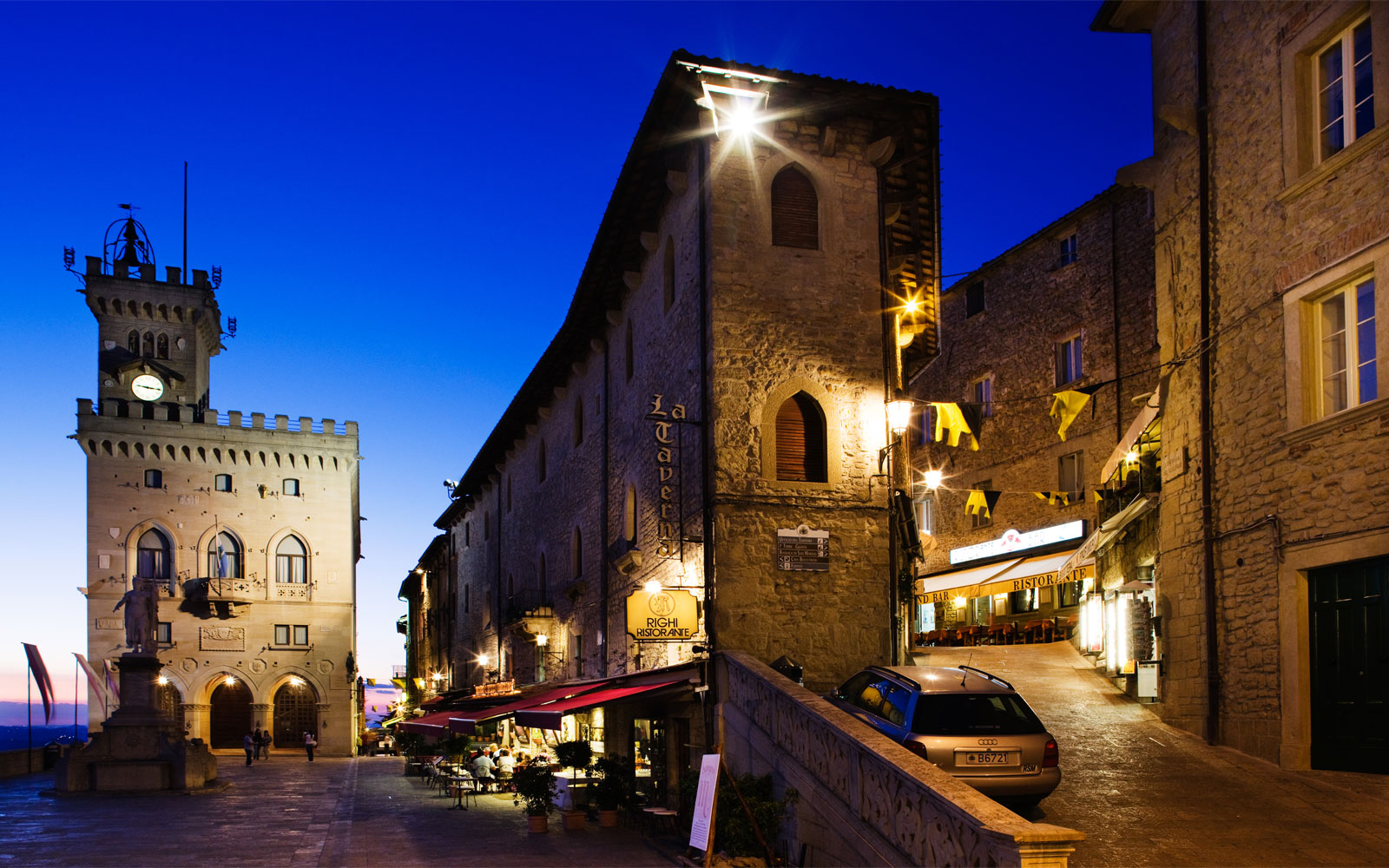
The City of San Marino is the capital, the oldest settlement, home to landmark monuments, and around 4,500 inhabitants spread across 7 km². Iconic medieval architecture stands out against the blue sky, especially the “three peaks”—the stunning fortresses of Cesta, Guaita, and Montale, all surrounded by crenellated walls and featured on the state’s coat of arms. Key sights include the Basilica di San Marino, Monastero di Santa Chiara, Porta, and Chiesa di San Francesco. You’ll also find charming areas like contrada Ombrelli, piazzetta del Titano, piazza della Libertà with the Palazzo Pubblico, plus a panoramic terrace offering sweeping views.
About the Republic of San Marino
- Country: Republic of San Marino
- Area: 61 km²
- Capital: San Marino
- Population: 31,000 residents
- Language: Italian
- Religion: Predominantly Catholic
- Government: Parliamentary republic
Useful information for travelers
- Currency: Euro
- International dialing code: +39 0549
- International vehicle code: SMR
- Driving side: Right
- Entry documents: ID card or passport
- Required vaccinations: None
- Electricity: 220V AC 50Hz
- Units of measurement: Metric system
- Time zone: Same as Italy
- Public holidays (fixed dates): January 1: New Year; January 6: Epiphany; February 5: Anniversary of the Liberation of the Republic from Alberoni’s occupation and St. Agatha’s Day, patroness of San Marino; March 25: Arengo Anniversary; April 1: Investiture of the Captains Regent (historical parade from the Palazzo Pubblico to the Basilica del Santo); Easter (March/April); Easter Monday; May 1: Labour Day; July 28: Fall of Fascism; August 15: Ferragosto; September 3: San Marino Day—Founding of the Republic—big celebration in the Castello di Città; October 1: Investiture of the Captains Regent (parade with traditional costumes); November 1: All Saints; November 2: Remembrance of the Dead; December 8: Immaculate Conception; December 24: Christmas Eve; December 25: Christmas; December 26: St. Stephen’s Day; December 31: New Year’s Eve
- Climate: Temperate Mediterranean, generally breezy
- Average temperatures: Annual average: 16°C; winter: 10°C to -2°C; spring: 12°C – 24°C; summer: 20°C – 30°C; autumn: 20°C – 10°C
- Transport: By car: A14 motorway, Rimini Sud exit. No internal ports; closest are Rimini, Riccione, and Portoverde. Nearest airport: Rimini
- Airports: Rimini-San Marino Airport