


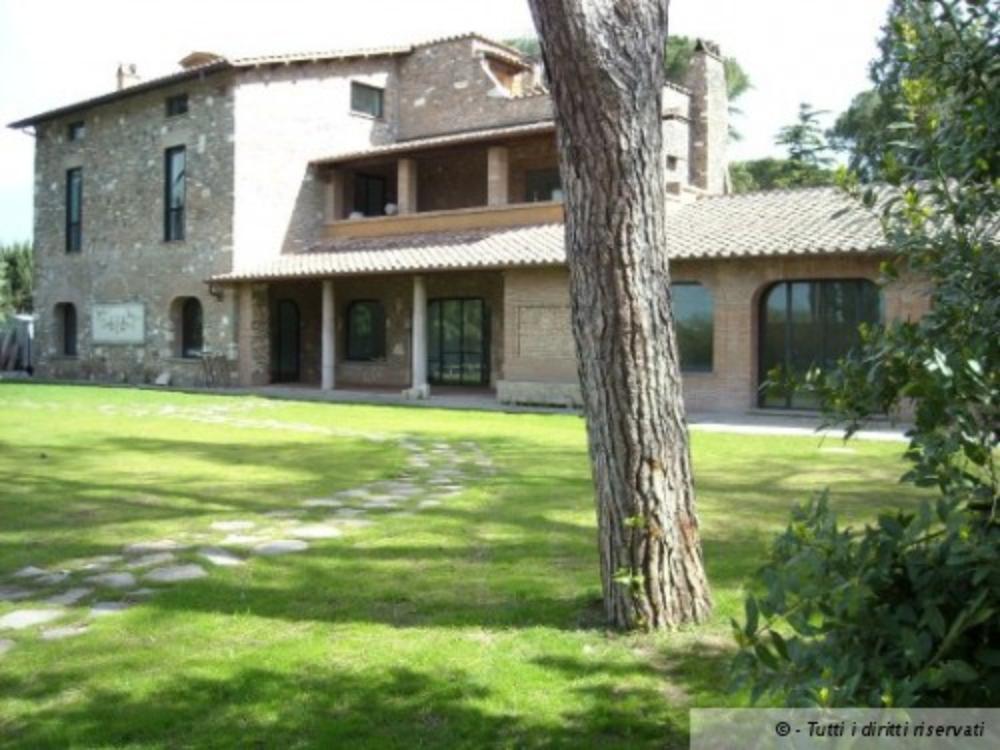


In January 2002, the Ministry for Cultural Heritage and Activities, on the recommendation of the Archaeological Superintendency of Rome, purchased the property located at number 222 Via Appia Antica by exercising the right of first refusal. The archaeological significance of the site was already known due to the presence of ancient wall structures and a mosaic floor with white and black tiles. It is a green area of about 8,500 square meters including a main building on three levels and a secondary one originally serving as the dépendance of the villa.
Between 2003 and 2005, three archaeological excavation campaigns were carried out in the garden covering an area of about 1,400 square meters, which uncovered a thermal complex whose initial construction phase dates back to the mid-2nd century AD. The baths show clear signs of subsequent building phases documenting the use of the facility and the transformation of parts of it, at least until the 4th century, with traces of later phases of use, probably medieval and post-medieval, supported by the discovery of agricultural and production-related structures.
Significant restoration work has completely redesigned the villa’s garden where new tree species have been planted, transformed the dépendance into a visitor reception point, and finally brought the main building up to code. The latter, built over a Roman cistern and known from the Gregorian Cadastre (1816-1835) as a “house for vineyard use,” was transformed in the post-war period and today features a characteristic external wall made of ancient materials, many probably recovered from Roman monuments that flanked the Appian Way.
The facility houses the offices of the Superintendency, a conference room, and the archive of Antonio Cederna, which his heirs donated to the State.