


Scava, scava. Here… good… bring it here!!!” And they, excited by the game, keep poking their snout – that’s what the dog’s nose is called – between humus and dry leaves, in search of the precious tuber. The best ones can smell the odor of a truffle ground even at half a meter deep, or under twenty centimeters of snow, or even under a layer of ice.
Truffle Dogs
And with incredible speed, they dig holes deeper than themselves to gently bite the fragrant “prey” and run back to exchange it for a biscuit. If the truffle is very large and the dog cannot grab it or there is a risk of breaking it, then the digger intervenes, extracting it from the ground using a special pickaxe designed not to cut the tree’s roots.
What may seem to many like a fun and pleasant walk through the woods is actually the result of long work done by truffle diggers along with their puppies.
At the foundation is the difficult training of the dog. To sensitize its sense of smell to the particular scent, and especially to teach it to bring back the truffle intact, training must start immediately, because it takes a long time and just as much patience. If things go well, man’s best friend will also become his precious business partner, and will receive many biscuits in exchange for however many truffles he finds.
It starts when the dog is still a puppy, playing together and throwing artificial products similar to truffles far away instead of the classic ball, or Parmesan crumbs, which smell just as intense. Then, to get the dog used to reality, real truffles are thrown, of not precious quality but with the same unmistakable smell. For every return, the dog will receive its deserved “biscuit reward,” and so, run after run, it will get used to not eating or breaking them, but handing them over intact to its owner.
The commercial value of a good truffle dog, three or four years old, can exceed three thousand euros, because well-trained dogs correspond to large quantities of truffles found, and therefore high earnings. Usually, every truffle digger trains his own dog alone, otherwise, specialized breeders must be contacted. The choice of the dog to buy happens on the field, or better, in the woods. The breeder brings about ten dogs and unleashes them all together. The one who finds the most truffles will probably also have found a new owner.
Generally, breeders prefer mongrel dogs to purebred ones because they have a much more developed sense of smell. Some, perhaps to advertise their animals, claim that puppies born from a dog already trained to search for truffles are more skilled than others at recognizing the scent. We also have news of the Lagotto Romagnolo, a dog breed not yet registered, which seems particularly inclined to this scent activity.
How much does truffle cost?
But how profitable is searching for truffles? Mr. Domenico Azzaro, a digger who knows the beech forests in his area by heart, explains: “It all depends on the season, quality, size of the truffle, and market demand. For example, the white truffle (more precious) and the hooked truffle are found between October and December, the bianchetto from January to April, and the estivum, from May to November.
The retail price starts from €15 per 100 grams for the Masentericum Uncinatum, a fairly widespread black truffle but with a high phenol acid content that must undergo a chemical treatment—kept secret by major industry players—to be preserved and hence sold in shops. But it is easy to spend even €200 for the white truffle.” This is in fact the average price we have to pay as we write this, if we want to buy 100 grams of the famous Alba White Truffle.
Searching for truffles thus seems a very profitable activity, but it is subject to specific legislation. The law requires a specific exam and the issuance of a permit card. It also limits the use of dogs to no more than two at a time and forbids collecting truffles during nighttime hours. However, there is no weight limit, at least until today. So, if a rich white truffle ground is found, and the dog is good, then it means money by the shovelful.
Every year in Alba, the undisputed truffle capital, a large exhibition market takes place throughout October, ending this year on November 10 with the awarding of the best truffle found. Another event not to be missed is the extraordinary world truffle auction, which will also be held on November 10 at the Grinzane Cavour Castle.
It is the opportunity for enthusiasts from all over the world to grab the best truffles on the market, coming not only from Alba but also from Norcia, Spoleto, Acqualagna, and many other locations fiercely kept secret by the diggers.
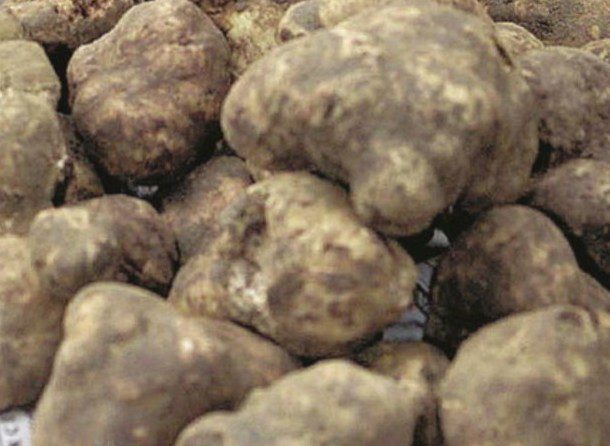
We ordinary mortals know that tuber magnatum, that is, the truffle, is found between zero and seventeen hundred meters of altitude, grows well from mycorrhizae located at the ends of oak, beech, and turkey oak roots, and the soil must be calcareous. They are there to be collected. You just need to find them.
Good to know…
To consume fresh truffles, you need to clean them from soil with a brush and rinse under running water. Then cut into slices, and eat raw on simple dishes like eggs in a pan or rice with butter and sage, which do not overpower the characteristic aroma.
To keep it for a few days, it should be stored in the fridge at 2 degrees Celsius, wrapped in a cotton cloth, or in a jar full of rice (to be cooked afterwards), which will absorb the moisture, thus preventing mold formation.