

Bomarzo, Monster Park: the history
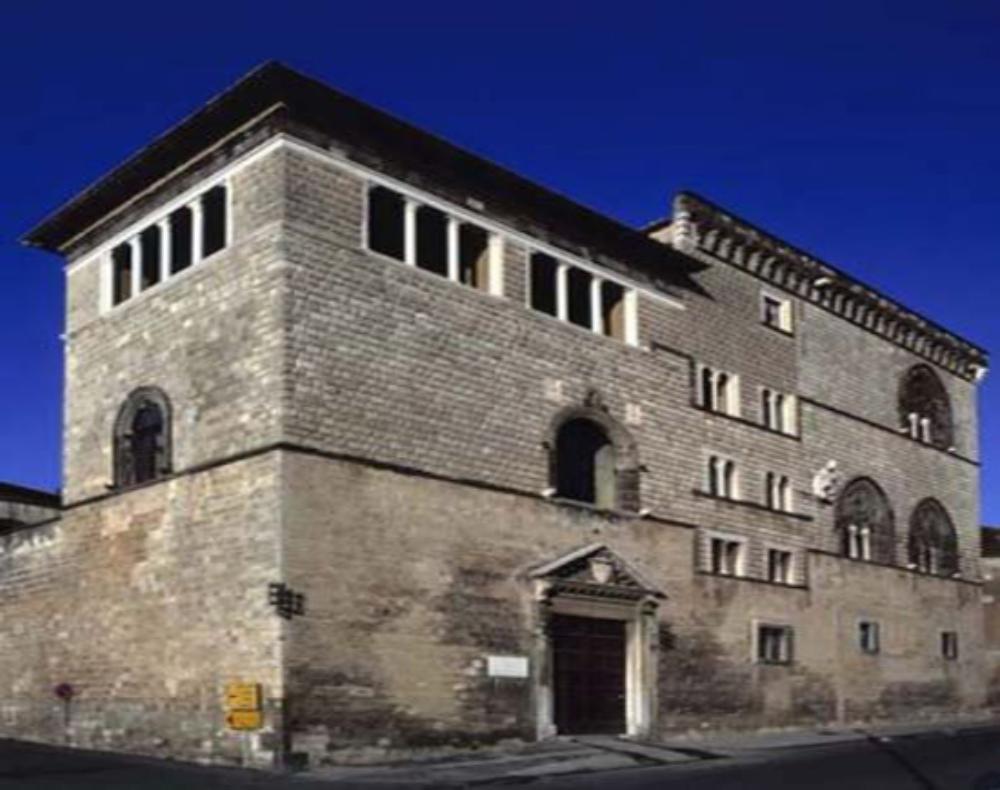
We are in Bomarzo, in the heart of Etruscan territory. From the small town perched on the hill, you can see the entire green valley crossed by the bends of the Tiber River. In the 15th century, the Orsini princes established their residence here, and around the mid-16th century, one of them, the scholar and valiant man of war Vicino Orsini, wanted to create at the foot of the hill, a grand and unique monumental park. To shape the sculptures, the Prince used the stone abundant in the area: a light gray tuff, with a characteristic black speckling similar to pepper grains: the “peperino”.
The volcanic origin of this material evidently matched well with what the eccentric Prince had in mind: the creation of gigantic and fantastic statues, carved directly into the large blocks of “peperino” scattered across the land. Why the Prince Orsini wanted to create that complex “scenic machine” is unknown; perhaps the work was part of the vast phenomenon that was one of the characteristics of the 16th century, the Kunst- und Wunderkammer, when the collection and collecting of rarities, curiosities, unique and extravagant things spread through the princely courts of half Europe, as a symbol of vanitas. The Monster Park, however, was a special Wunderkammer because it was outdoors and immersed in greenery, and this was something quite unique.
Whatever the reason for its establishment, certainly today the Monster Park in Bomarzo is one of the most fascinating places in central Italy: a true “Sacred Grove” of the Baroque period. An open-air art gallery with sculptures created by unknown artists. In fact, many legends are told about who contributed to the creation of the mysterious and unusual park. It seems that its eccentric creator, the Prince Orsini, during a battle near Vienna captured Turkish prisoners, transferred them to Bomarzo, and here ordered them to carve the statues. This could explain the clumsy and artisanal execution of the works; the sculptures are indeed rough, but certainly these figures of monstrous animals and fantastic and grotesque colossi do not fail to fascinate adults and intimidate children.
A certainly unique character, this Vicino Orsini who was able to merge various symbolisms and many allegorical figures, obtaining an elegant mélange of cultures and different eras. Bears in medieval symbolism represented the conversion of pagans to Catholicism, and the goddess Fortuna was, according to Horace, the lady of the sea; although in the Renaissance Fortuna was the goddess revived from Antiquity who unpredictably distributed her favors. The monsters, then, were typical elements of Greek mythology and Jewish apocalyptic literature, while dragons, in Christian culture, represented Satan. Surely this grand monumental complex, which perhaps is the symbol of an instinctive human defense against the unknown, is one of the most bizarre and fantastic works of the Italian 16th century.

Bomarzo, Park der Monster: die Gärten
Das Gefühl, das man in den Gärten des Parks der Monster von Bomarzo hat, ist eine „freche Vorsicht“, vielleicht ist es der Name, der uns unbewusst einschüchtert. Am Eingang begrüßen uns zwei steinerne Sphingen, die scheinbar einen riesigen Herkules bewachen, der dabei ist, Cacus zu zerreißen, den römischen Gott, Sohn von Vulkan, der Feuer spuckt und die Größe eines Riesen hat; ein leichter Schauer läuft uns den Rücken hinunter, doch wir schreiben ihn lieber der Frische der schönen Gärten zu und wagen uns mit größerer Neugier weiter in den Park hinein.
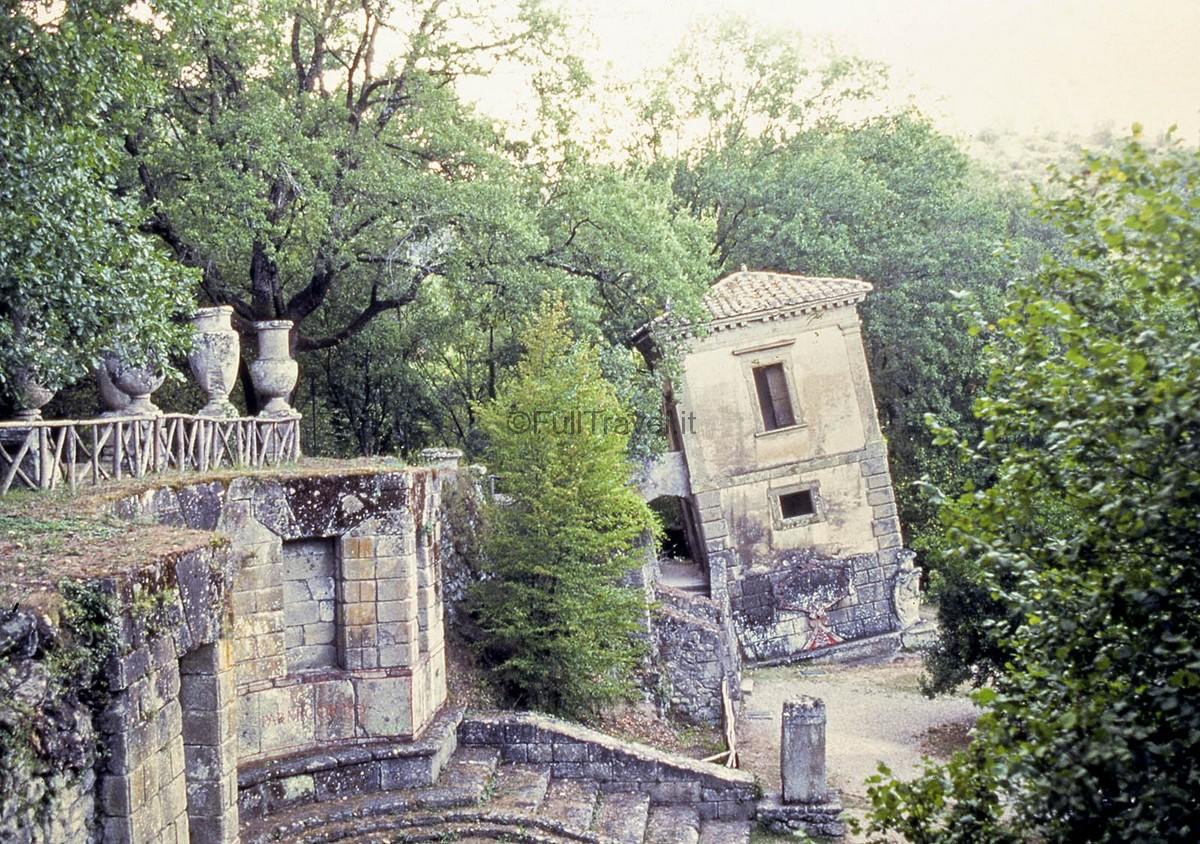
Schiefe Brunnen und Köpfe höllischer Monster, eine gigantische Schildkröte, bekrönt von der Statue des Fortuna, ein Drache, der von Löwen und Hunden attackiert wird, eine Maskerade in Gestalt eines Orks mit weit aufgerissenem Mund, in dessen Inneren ein Tisch und steinerne Stühle stehen. Vor all diesen Figuren spielt unsere Fantasie frei, und wir sind uns sicher, dass Prinz Orsini wirklich ein ganz besonderer Typ gewesen sein muss. Wir treffen noch auf Meeresmonster, die aus den Felsen hervorkommen, geflügelte Sirenen und Löwen, einen Elefanten, der mit seinem Rüssel einen Krieger zu zerquetschen scheint, ein schiefes Haus, das zu seinen eigenen Fundamenten hin abzusinken scheint. Wir betreten das Haus und uns wird schwindelig, wir haben das Gefühl, das Gleichgewicht zu verlieren, und alles wird instabil. Wir rennen aus dieser rätselhaften Struktur hinaus und gehen weiter bis zur Xisto, dem großen Platz mit einem Aussichtspunkt. Die Einrichtung des Platzes besteht aus riesigen Vasen, Zapfen und dekorativen Eicheln, und am Ende, fast um den Bereich abzuschließen, ist eine Reihe von heraldischen Bären, die eine Rose tragen: das ist das Wappen des Hauses der Fürsten Orsini. Während wir gehen, sehen wir überall auf den Felsen Inschriften und Verse, die uns entlang der Wege begleiten, fast um uns daran zu erinnern, dass der Ort dazu gedacht war, Raum für Reflexion und Meditation zu geben.
Am Ende des langen Weges durch den Park der Monster von Bomarzo, im höchsten Teil dieses „verzauberten Gartens“, der sich entlang einer terrassenförmigen Route entwickelt, steht ein kleines Tempelchen mit Kuppel: Einige behaupten, dass Prinz Vicino Orsini es zum Gedenken an seine früh verstorbene Frau Giulia Farnese hat errichten lassen. Schließlich verlassen wir den Park der Monster, und es ist, als würden wir aus einem Traum erwachen; das angenehme Gefühl, das bleibt, ist das, einen Beitrag zur Unterhaltung einer Persönlichkeit geleistet zu haben, die seit fünf Jahrhunderten mit all ihren Gästen spielt.