


In South Tyrol, also known as Sudtirol, lies the Ahrntal Valley: 200 square kilometers, from Lutago to Predoi, with as many as 80 peaks exceeding 3000 meters. The Ahrntal Valley is the skiing paradise with 70 kilometers of slopes, the Speikboden and Klausberg ski areas. All around are endless activities for winter and summer: skating, curling, and snowshoeing when ice reigns; freeride, mountaineering, and high-altitude hiking when the snow gives way to incredible alpine greenery.
This is the realm of mountain biking, ideal both for bike enthusiasts (who can pedal on trails leading to 1500 meters of altitude and beyond), and for families who want to enjoy breathtaking views and have fun riding on easy flat trails.
What to See in Valle Aurina
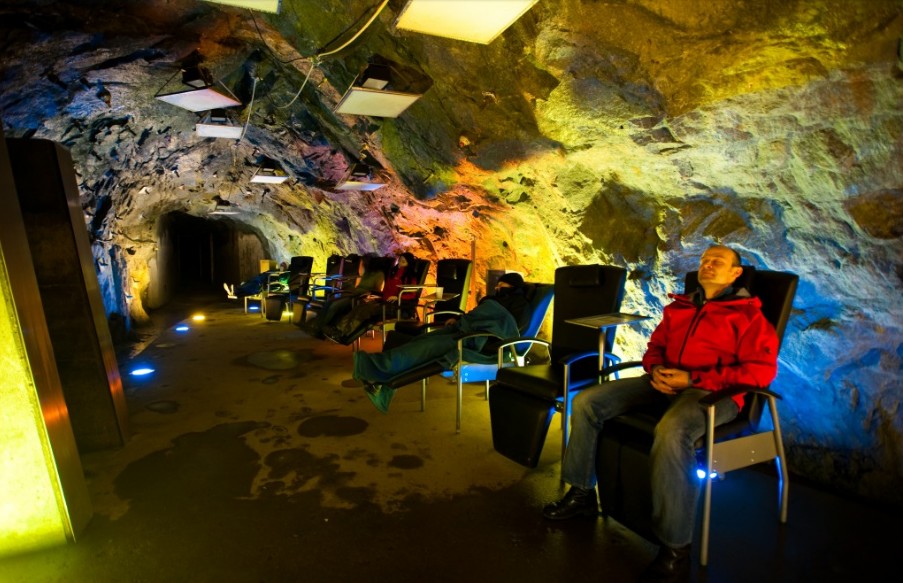
The valley is accessed through a magnificent entrance: Campo Tures, which has earned the Orange Flag from the Touring Club as a welcoming and excellent village. Because here hospitality goes hand in hand with the splendid work of nature, which in these slopes to the sky has given its best: for the truly good air, as demonstrated by the Climatic Center of Predoi, for the panoramas to open your eyes to, starting with the Rieserferner-Ahrn Nature Park, for the bright paths, like the Sun Path between Lutago and San Pietro, for the ever-moving waters, like at the Rio Nero waterfall, and for those calm and welcoming, like Lake Chiusetta at Klausberg in Cadipietra. BUT that’s not all: in Predoi there is an ancient disused copper mine, which has become a modern climatic center. Opened in 2003, the climatic gallery of Predoi is the first Italian speleotherapy center because it preserves ultra-pure air, a true elixir for the health of lungs and bronchi, an effective remedy for those suffering from respiratory disorders, such as allergies and asthma. The environment, comfortable and relaxing, allows you to read, listen to music, or sleep, while the “underground breath” brings its beneficial effects.
This small secret valley, embraced by the mountains, also carefully preserves ancient traditions: the patient bobbin lace weaving, the laborious wood carving, the protection of mountain huts and refuges, the return of livestock to the alpine pastures, rites that continue unchanged, and are revived in modern South Tyrolean taste even in the kitchen, which uses genuine cheeses recognized as Slow Food presidia and wines as strong as the Alps, ideal for a vacation of the senses. But also of the mind: small churches and castles, among which is one of the best-preserved in the region, Schloss Taufers, exciting museums like the Copper Mines Museum in Predoi, a piece of mountain heart that you can enter with a little train, it is easy to get lost in the history of a valley that is not just about skiing.
The Path of the Sun
The route of the Sentiero del Sole lasts about 7 hours but it is not necessary to complete it all at once. Because besides the main trail, there is a whole network of thematic paths also of short duration, designed so as not to miss any of the miracles of the Valley. The route of the Sentiero del Sole follows the footsteps of past smugglers, offering the rainbow of waterfalls or tasting the flavor of the farmhouses.
Kneipp-Wege im Ahrntal, im Herzen der Dolomiten
Die Kneipp-Wege, benannt nach dem Deutschen, der zuerst ihre außergewöhnlichen Eigenschaften erprobte. Es sind Wasserspaziergänge, die die Beine leicht machen, ein wahrer Gesundheitsweg bei Kreislaufbeschwerden.
Für diese Hydrotherapie-Strecken braucht man barfuß seine Füße, Flusskiesel zum Darüberlaufen, eiskaltes Wasser zur Anregung der Blutzirkulation und dann das Ahrntal, das davon reichlich vorhanden ist. Hier, am nördlichsten Punkt Italiens in Südtirol, genau im Herzen der Dolomiten, ist Wasser ein perfektes und reichhaltiges Element, so sehr, dass der Name des Tals wahrscheinlich von „Awerina“ stammt, einem vorromanischen Begriff, der fließendes Wasser bezeichnete. Und so tut das Barfußlaufen in der Ferienregion Kronplatz, die von Sand in Taufers bis Predoi reicht, gut. Man kann Kilometer um Kilometer zurücklegen mit erfrischenden und kostenlosen Pausen.
Die Wege des Weißen Bachs
Um sich sofort leicht zu fühlen, kann man den Spaziergang testen, der vom Weißen Bach ausgeht, einem kleinen Bergdorf, in dem man Zeit findet, sich um sich selbst zu kümmern. Von hier starten die Gesundheitswege, ein Wunder gegen moderne Herz-Kreislauf-Erkrankungen, deren Hauptursache Bewegungsmangel und zu viel Stress sind. Auf diesem Weg haben die drei Säulen der Kneipp-Therapie jeweils ihren Platz. Es gibt einen Bereich, der der Phytotherapie gewidmet ist, es ist der Kräutergarten, ein sonnenexponierter Weg mitten in der Blütezeit der wilden Bergpflanzen. Dann der Weg der körperlichen Aktivität, der laut Kneipp (und nicht nur) den Körper stärkt, wenn er mit angenehmen Ruhephasen abwechselt. Schließlich der eigentliche Kneipp-Weg: ein Becken, eine Kneipp-Treppe im Wald und Wasserfälle, die als natürliche Aerosole dienen. Alles inmitten der grünen Natur, die reine und frische Luft atmet.
Der Weg des Heiligen Leonhard
Es gibt auch einen besonderen Weg, der um St. Jakob führt und, durch Wälder und Wiesen hindurch, nach etwas mehr als anderthalb Stunden zum Ausgangspunkt zurückkehrt. Dem Heiligen Leonhard gewidmet, folgt er dem alten Mühlenweg, noch lebendige und funktionierende Zeugnisse dafür, wie sehr Wasser im Ahrntal zuhause ist. Auf diesem Weg, den jeder gehen kann, geschützt von der Ruhe der Dolomiten, befindet sich eine der bekanntesten Kneipp-Anlagen, mit einem einladenden Wasserbecken, das extra dafür eingerichtet wurde, um müde Füße und Beine ruhen zu lassen. Und auch die Arme einzutauchen, für ein ganzheitliches Gefühl der Leichtigkeit.
Der Gesundheitsweg in Predoi
Wir befinden uns im Naturschutzpark Rieserferner-Ahrn, auf 1400 Metern über dem Meeresspiegel, im ersten „Gesundheitsdorf Südtirols“, wo Luft, Wasser und Grünflächen laut Experten dazu beitragen, die natürlichen Abwehrkräfte zu stärken. Und es sind 5 Kilometer Natur, die der Gesundheitsweg in Predoi umfasst, eine einfache Wanderung, die im berühmten Klimazentrum beginnt und bis zum Haus des Naturparks in Kasern führt. Dazwischen die Röt-Wasserfälle, eine rauschende und gesunde Pause, die dank der negativen Ionen des im Luftnebel zerstäubten Wassers das Immunsystem stimuliert und hilft, Asthma und Allergien zu bekämpfen. Und dann das Kneipp-Tümpel, ein Ort der Energie, an dem man das verlorene Wohlbefinden wiederfindet. Ein Wohlbefinden, das aus einem einfachen und urtümlichen Element stammt: Wasser, hier noch rein und wundersam, wie einst.
Die Ahrntal mit dem Fahrrad
Mit einer Ausdehnung von 200 Quadratkilometern von Lutago bis Predoi, eingerahmt von achtzig Gipfeln, die bis zu dreitausend Meter hoch reichen, ist das Ahrntal, eine touristische Region des Plan de Corones, ohne Übertreibung als Paradies für Radfahrer aller Art zu bezeichnen.
Unter den vielen möglichen Routen darf man sich als Liebhaber gemütlicher Fahrten auf einfachen oder mittelschweren Strecken die Panorama-Tour Ahrtour „Bruneck-Casere“ nicht entgehen lassen, die entweder in Bruneck oder Casere startet und das offene Land und herrliche Wälder durchquert, entlang des Flusses Ahr vorbeiführt und sich nach und nach zu einer Entdeckungsreise der Orte Sand in Taufers, St. Maurizio und Predoi wandelt, zwischen kleinen Kirchen und Burgen. Die Erfahrenen mit ausreichend Kilometern in den Beinen finden ihre Herausforderung auf der Runde „Ameisberg“ von Predoi nach Casere, die mit ihrem Panoramablick bis zum Italienspitze Auge, Herz und Gaumen fesselt und verschiedene Möglichkeiten für Pausen in traditionellen Almen des Ahrntals bietet. Und mithilfe der Kabinenbahnen Klausberg und Speikboden – dank denen Fahrräder auf Anfrage bis zu 2000 Meter Höhe transportiert werden können – ist es sogar möglich, hoch in den Bergen in die Pedale zu treten und anschließend ins Tal hinabzufahren. Besonders geschätzt wird die Tour, die nach Michlreis führt, mit einem bezaubernden Blick auf die umliegenden Berggipfel, der die Mühen und den Schweiß rechtfertigt. Eine weitere Attraktion der steilen Routen ist die Möglichkeit, mit dem Mountainbike entlang von Forst- oder Bergstraßen eine Vielzahl von Almen mit traditioneller Küche zu erreichen, die oft mit Ladestationen für E-Bikes ausgestattet sind.
Wer sich von der großen Auswahl überfordert fühlt, kann sich im Sommer dem Expertenteam von Ahrntal Aktiv anvertrauen, das Fahrradtouren für alle Leistungsklassen organisiert und diese mit anderen alpinen Erfahrungen wie dem Klettern kombiniert.
Doch dies sind nur einige der unendlichen Möglichkeiten, das Ahrntal mit dem Fahrrad zu entdecken. Das dichte und verzweigte Netz von Radwegen, das insgesamt 300 km abdeckt und Dörfer und Städte durchzieht – wobei es auch die 13 Sensorstationen durchquert, die wie kleine und stetige Überraschungen entlang der Strecke verteilt sind – führt bis nach Lienz in Osttirol und ist ein Eingangstor zum Ahrntal, zum Antholzer Tal und zum Gsiesertal. Es ist nicht notwendig, perfekt vorbereitet anzukommen, denn das Ahrntal selbst empfängt seine Gäste mit der MobilCard, einem Kombiticket für die Nutzung von Bahn, Bus und Fahrrädern an insgesamt 30 verschiedenen Verleihstationen, die häufig auch die Möglichkeit bieten, das Fahrrad an der Ankunftsstation in einem Partnerbetrieb zurückzugeben oder auf ein E-Bike umzusteigen – in Casere, Sand in Taufers, St. Johann, Lutago, Sand in Taufers und Bruneck –, um sorgenfrei und schweißfrei in einer Welt von Panoramen aus Naturparks, Seen und Wasserfällen in die Pedale zu treten.
Active holiday in Valle Aurina
For those with an adventurous spirit, the top choice is the huge adventure park Kron-Action, the largest in South Tyrol, with many tree climbing courses for adults and children, from one and a half meters up to very high altitude for the bravest, experiencing the excitement of walking on trees safely. Or, more classic but still thrilling, four hours of rafting on the Rienza river in the Lower Puster Valley. To raise the heart rate even more, you can launch yourself from one hanging platform to another suspended on a pulley, with your feet dangling into space towards San Vigilio: no wonder it’s called Adrenaline X-treme Adventures and is the largest zip-line in Europe. And yet, at full speed, there is the Klausberg Flitzer Alpine Coaster, the longest and most spectacular alpine roller coaster in Italy, a breathtaking rail bob.
For those with a more Heidi-like spirit who would always stay in the meadows observing nature moving, here are another series of appealing proposals. Like the sunrise hike in San Martin to observe wild animals when the dawn colors the valleys pink, an experience that can also be lived in Terento with expert hunters who know the places where chamois and marmots live. Or to fill your eyes with unparalleled panoramas, walking from alpine hut to alpine hut at Speikboden, an area named after Speik, a small but hardy mountain flower that covers the meadows with its intense violet.
The Val Casies is another amazing excursion, made of vast green spaces, with gentle hills at the foot of imposing rocky mountains, while for nordic walking lovers, you start from Valdaora, heading to high altitude or quieter excursions: here, at the foot of Plan de Corones, there is an embarrassment of choice. It is indeed the largest park in Europe dedicated to this sport, with over 275 km of trails, between Falzes, Bruneck, Valdaora and Rasun.
Or, to experience history and hardship up close, a visit to the last of the six museums set up by Reinhold Messner and dedicated to mountains, the MMM Corones. In a building offering a spectacular view of the great faces of the Dolomites and the Alps, like a terrace overlooking the power of nature, the museum traces the history of mountaineering. And from here, a hike to Corones, with eyes towards the rocky spires that seem to touch the sky. To finish with an energizing activity: it is called “Nature under your feet,” a Kneipp course in Valle Anterselva to recharge the body’s batteries between water and dry.
The Mines of the Aurina Valley
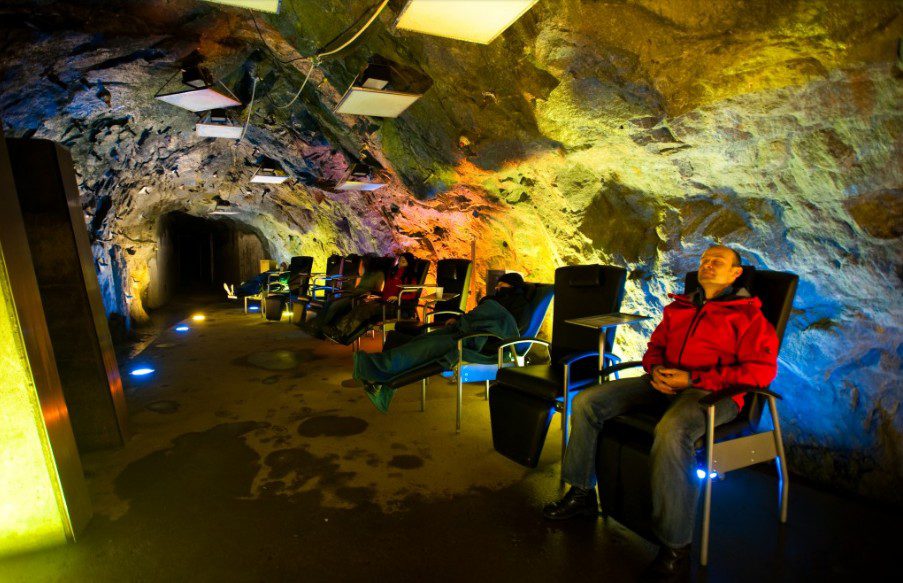
Entering a mine and breathing the healthiest air found in nature. It seems like a contradiction, but in Aurina Valley everything is possible. Because here, at the northernmost tip of South Tyrol/Alto Adige, there is the Predoi Climatic Center, the only Italian paradise of speleotherapy. That is a form of respiratory support practiced at 1100 meters in the heart of the mountain, in natural caves and abandoned mines, a therapy that uses the beneficial microclimate to help with respiratory weaknesses, from asthma to sinusitis, from allergies to pulmonary emphysema. A treatment suitable for children and adults, with only one warning: dress warmly because the temperature is quite low, constant at 9 degrees. And then nothing else: just breathe.
“I breathe” is the motto of the Center, where sitting in a cave on a comfortable deckchair and covered by a warm sack, you listen to music, read, and wait for the clean air, free of pollen and allergens, to do its work, an hour and a half a day with a nurse for every need. And for the little ones, a group of experienced entertainers offers games and activities.
So what was once a copper mine that provided work in this formerly very poor region, even when closed, continues to give resources. Even tourist ones, because speleotherapy in Predoi can be an opportunity to enter the past. A history of toil and drama spanning 500 years of the Predoi Copper Museum, which drips water dust among the blue reflections of the mineral, in one of the most famous excursions of the Aurina Valley, loved by children and adults for the sense of adventure and the leap into a time that no longer exists. At the entrance to the St. Ignaz gallery, there is still a miners’ house, called “the topographer’s,” which shows what life was like for those who saw daylight so rarely. Then, wearing a helmet and yellow raincoat, you board the little train that once transported arms and pickaxes to long working days, and traveling along the tracks, you head straight to the heart of the mountain, with a dark stretch just like in the past, then enter the tunnels on foot and look for some of the remaining copper.
The Museums of Valle Aurina
Valle Aurina houses interesting traditional museums that contain curious and valuable objects. They are ideal to visit at any time, although they are certainly an alternative to what to do in Valle Aurina when it rains or when you can’t ski or go hiking.