


The imperial city of Augusta (Augsburg), at the beginning of the 16th century, built a city wall with mighty bastions surrounding the city, themselves protected by moats and historic canals where water still flows today. Eleven gates were built in the walls, of which five can still be admired today.
What to see in Augsburg
The historic city walls were largely demolished in the 19th century, but the remains of the city’s ancient fortifications can still be visited at various points in Augsburg. The fully intact area of the city walls covers a total length of about four kilometers. Restoration work is currently underway at some points of the old city walls.
Wertachbrucker Gate
At the edge of Augsburg’s historic center is a gate called the Wertachbrucker Tor, originally built in Gothic style around 1370. In 1605, the master architect of the imperial city of Augsburg, Elias Holl, restored and redesigned the gate in Renaissance style. In 1805, Napoleon passed right through this gate of the city of Augsburg. A year later, the city became part of Bavaria, which had been an ally of Napoleon during the military campaign that brought the French Emperor the historic victories of Ulm and Austerlitz.
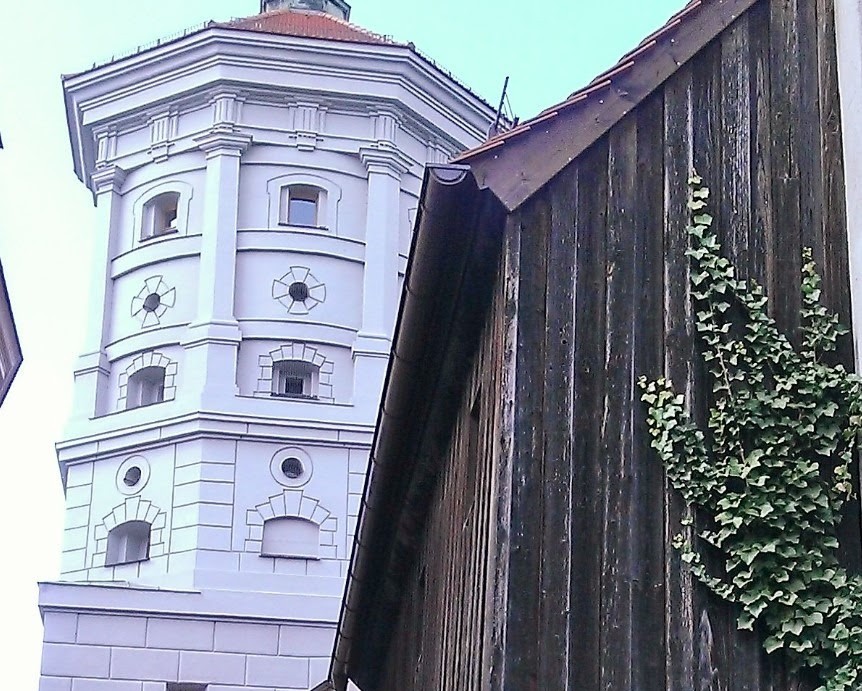
Fischertor Gate
In the northwest of Augsburg’s old town, you can visit the Fischertor Gate. From the gate, a narrow staircase leads to the city walls, passing the witches’ fountain, a wooden sculpture about which legend says it was the place where witches drank for the last time before their capital punishment. From this point, you reach the former bastion Luginsland. The building is listed among Bavarian historical monuments and from its height, you can admire a splendid view of Augsburg.
From this former watchtower, descending a few steps, you come to a moat and, continuing the visit along the city walls, you can admire the Schwedenstiege, a masonry staircase where one of Augsburg’s symbols is located, the Stoinernen Ma, a life-sized stone figure commemorating the Thirty Years’ War.

Venetian Fountain
At the foot of this staircase is the Venetian fountain, so called because it was built in Venetian style. It is one of the fountains of the Stadtwerke Augsburg, the municipal company, where you can freely drink the excellent water of Augsburg. Throughout the city, it is possible to drink from twenty-two public fountains. A pleasant refreshment especially appreciated during the hot summer by citizens and visitors alike.
Augsburger Kahnfahrt: eating and renting boats
Crossing the street towards Bert-Brecht-Straße, you reach the Augsburger Kahnfahrt, a traditional restaurant offering an outdoor beer garden and the possibility to rent boats. For more than a hundred years, part of the outer canal has been accessible by boat. Immediately afterward begins the Oblatterwall, another famous former bastion of Augsburg’s walls. These places are famous, also because they were dear to the young high school student Bertholt Brecht, born in Augsburg in 1898.
Jakobertor Gate
Continuing the visit, you reach the Jakobertor gate and, further on, continuing along the Obere Jakobermauer and Vogelmauer walls, you arrive at the Vogeltor gate. Following the ancient moat stream, you go back up towards the upper city and reach the Red Gate. Opposite the Red Gate, on the right, you can admire the artisans’ courtyard where it is possible to visit and understand the historic and sophisticated technology of the Red Gate’s Water Towers.
This architectural complex, part of the UNESCO World Heritage since 2019, consists of the Great Water Tower, the Small Water Tower, and a third tower that served to supply water to the fountains.

Artisans’ Courtyard, Augsburg