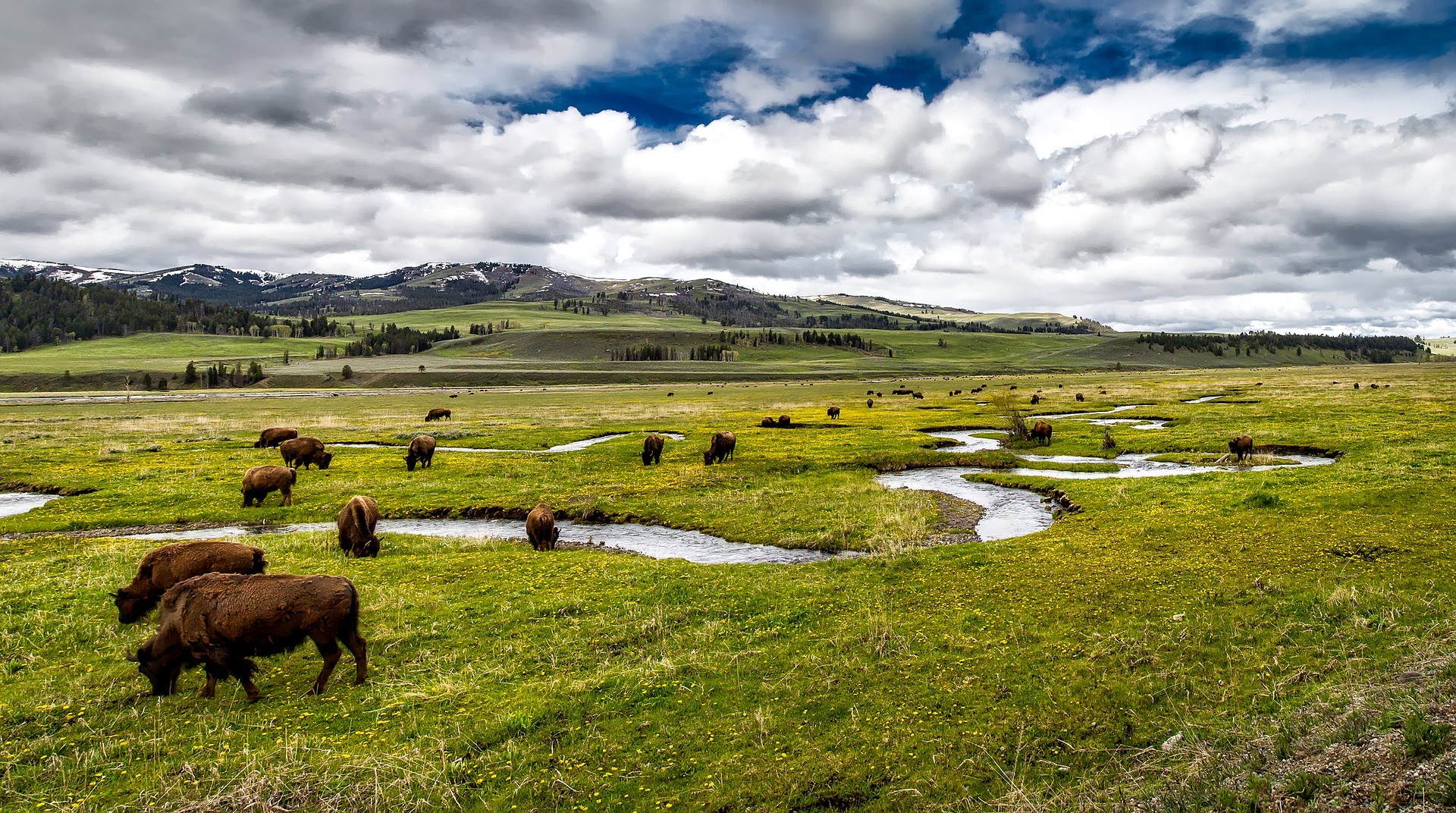


Mennonites, Hutterites, and Amish – all Anabaptist groups with deep roots in the European history of the 16th-century radical counter-reformation – are peaceful people, with solid and strict rules, and self-sufficient and hardworking colonies. If the Amish follow severe restrictions and live in communities isolated from the world, this is not the case for Mennonites and Hutterites, whose colonies, spread throughout the northwestern American region, reflect the rural communal lifestyle. The Hutterites – similar to the Mennonites and Amish – are pacifists in their attitude toward life and lead a simple lifestyle. Sunday is a day of prayer. They speak both English and German and are very frugal.
Montana Hutterite Community
The Montana Hutterite communities, in the United States, contribute to the state’s economic life by excelling in pig, cattle, and poultry farming, egg, dairy, and grain production, and often also baked goods. In the summer, they are often seen with their vans at farmers’ markets. Their colonies are self-sufficient; they make their own clothing, build their own buildings, and repair almost everything, including their farm equipment. When they arrived in the United States in 1870, these European farmers of German origin maintained traditional sustainable farming systems for over a century, working and living collectively, growing and raising most of their products on family farms without employing any external labor.
In 1912 the first Montana colony was established near Lewistown, the Spring Creek Colony, followed by the Warren Ranch Colony near Utica, then in 1935 the King Ranch Colony was also established near Lewistown, continuing with Grass Range, Ayers Ranch, Deerfield Colony, and so on. Within ten years, Montana saw the rise of 50 Hutterite colonies, just short of South Dakota which already boasted 54.

Montana Agricultural Strength
This agricultural strength of Montana seems invisible, but it produces 90% of the state’s pork and 98% of the eggs. Milk production is also largely managed by Hutterite dairies. If the harvest were to be poor, perhaps due to drought or low market prices, the Hutterites do not look for work outside their colony.
On the contrary: they impose a more frugal lifestyle on themselves and wait for the next season with a better harvest. Their farms consist of 10 to 20 families living in separate residences but eating and working together. Children quickly learn to work enthusiastically, and if one were to visit a Hutterite Colony in the evening, one would notice that the children are busy helping their parents sew clothes, build a wagon, or make washing soap.
On the Hutterite farm, each member specializes in a specific product, becoming a deep expert in the product they grow or manufacture. They often buy second-hand equipment and repair it for use. Each Hutterite farm in Montana produces its own food and fodder, raises between 300 and 400 sows, and pork products are mostly sold in California.
The Hutterites live in isolated areas, are very rarely affected by diseases, and the pigs raised appear to be absolutely natural and happy. They also produce chickens, eggs, beef, and lamb in traditional, family-style methods, just as the first settlers did. Small and modest means less disease and fewer problems. Contrary to what one might think, and compared to other very conservative religious communities, the Hutterites use advanced technologies, from tractors with GPS to smartphones and tablets. The women of the colony do not work in the fields but work in the colony kitchen gardens.
Cool Spring Hutterite Colony
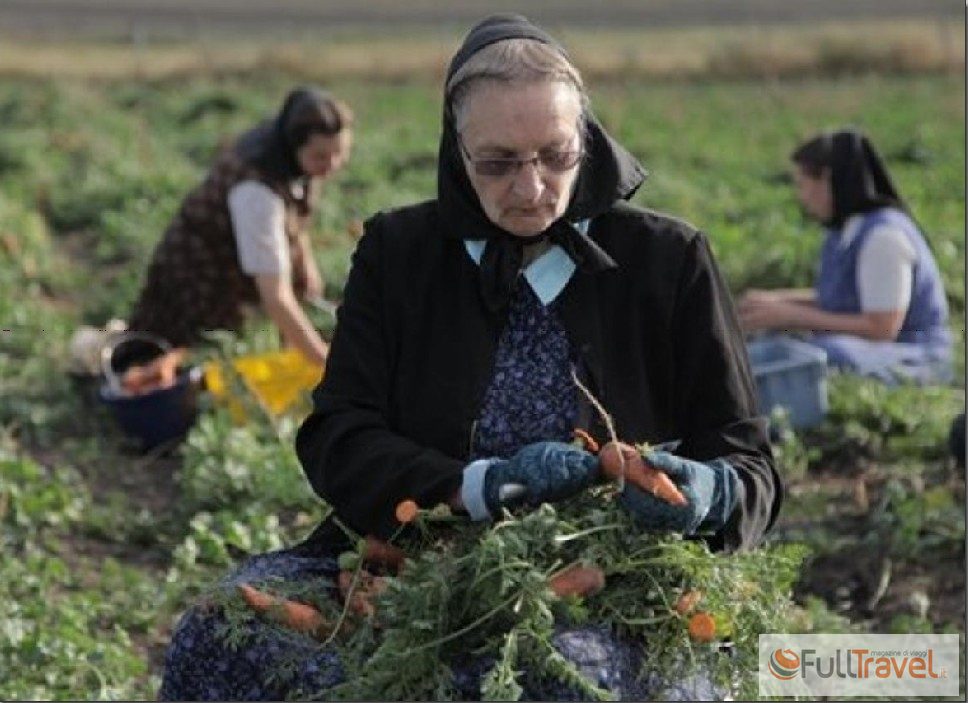
At the Cool Spring Colony, the Hutterites prepare about 200 loaves of banana bread and 200 loaves of zucchini or orange bread each week. Many types of bread are baked on Wednesdays to be sold at the farmers’ markets on Fridays and Saturdays. The women also take shifts every day to prepare meals for the entire colony, and bake all the bread needed for the whole week every Monday.
The Cool Spring Colony in Montana raises 8,000 chickens, 1,000 ducks, and 1,000 turkeys every year in a state-of-the-art facility covering more than 3,800 hectares, including nearly 5 hectares of cultivated fields. The animals graze freely, without hormones or antibiotics, and are mainly fed barley and wheat grown on the farm. After slaughter and packaging, they are sold early in the morning at farmers’ markets, grocery stores, or at hotels and ranches in the area.
The Hutterite Rural World
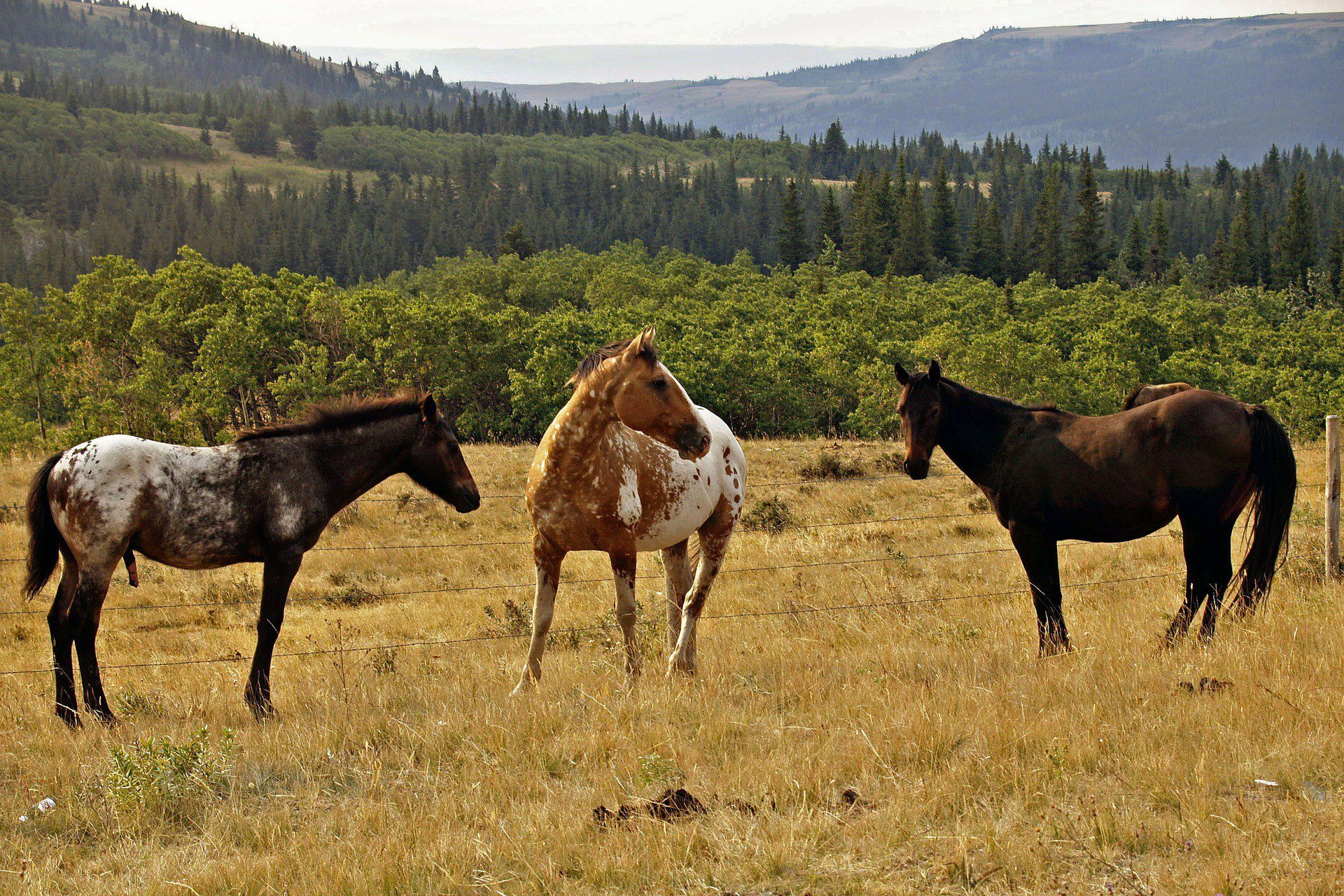
There are 50 of these Hutterite colonies, located at least 90 minutes away from small towns by road, which in Montana, due to its size and scenic grandeur, is like a world apart. Entering the Hutterite rural world is like stepping into a separate realm. There are 450 rural enclaves scattered throughout the Great Plains of Montana, isolated from the outside world, self-sufficient. Since the 19th century, they have lived free from external interference, focused on agricultural work to maintain their free status.
The Hutterites of Montana are among the most consistent communities, experienced farmers and ranchers, using methods from a hundred years ago and preserving their centuries-old traditions. Tools and products are shared, some farms are organic, others are not, some vast, others smaller. The guarantee comes from the community that sustains all the Hutterites of each colony.
Cultivated products and raised animals must first feed the community and, despite the differences among various farms, certainty rests on the care and method of work, in the sacred relationship with the land. Grains are grown for baked goods and animal feed, and on some Hutterite farms, egg and dairy production is emphasized alongside the cultivation of certain vegetables and fruits. On other farms, excellence is provided by the treatment and preservation of meat during Montana’s harsh winters.

The Hutterites Supply Food to Luxurious Ranches
The quality and diligence of the Hutterites’ work yield good results. It almost seems contradictory that the Hutterites supply food to one of the most luxurious ranches in the entire northwest USA, the Paws-Up Ranch in Montana, which has been sourcing chickens and ducks, some vegetables such as turnips and onions, and occasionally bread for 14 years. Many chefs around Missoula and Helena choose supplies from Hutterite farms.
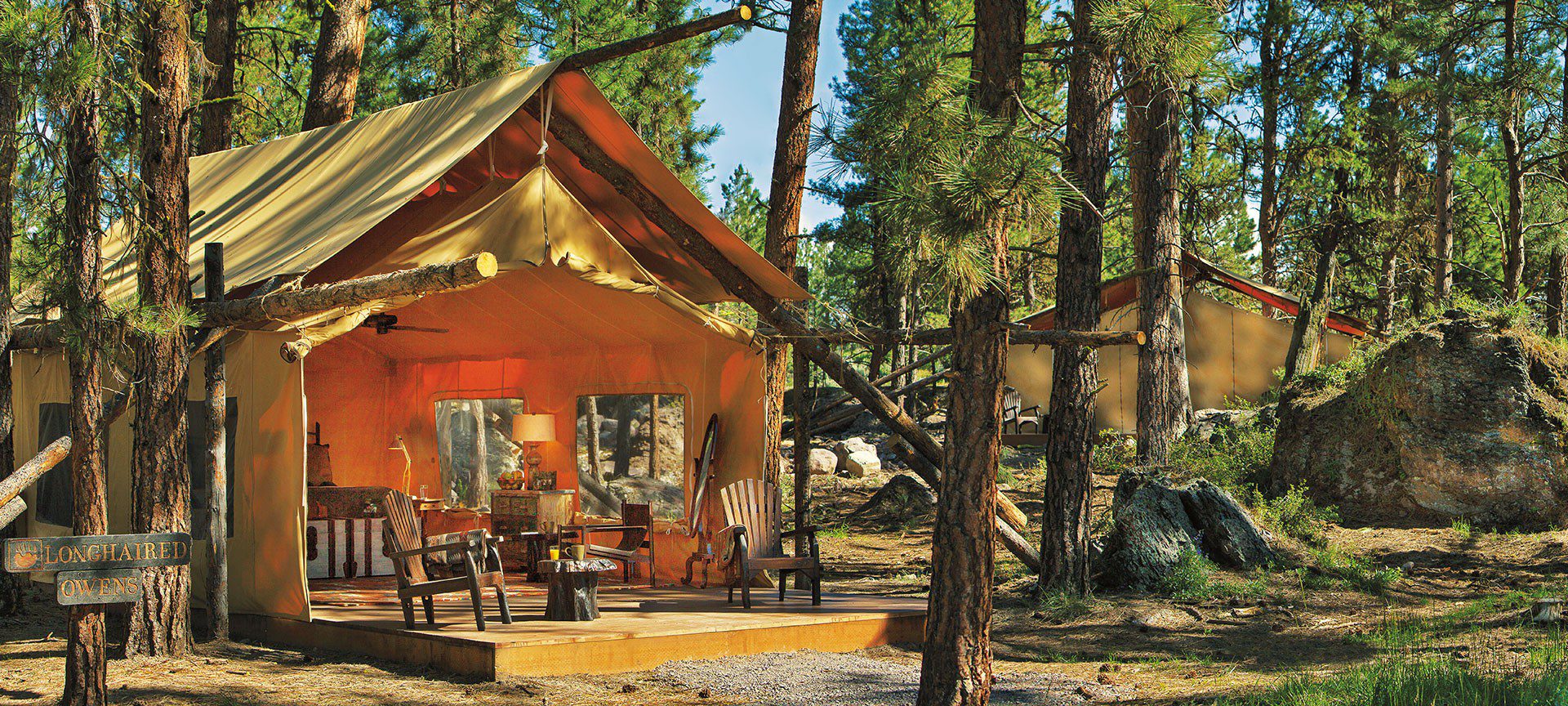
The Glacier Park Lodge, a historic hotel at Glacier National Park in Montana, is supplied by the Birch Creek Hutterite Colony near Valier. Every week a truck arrives loaded from the colony with fresh vegetables, tomatoes, pumpkins, potatoes, fennel, lettuce, carrots, corn, zucchini, onions, and turnips during the season. The chef designs the menu around the colony’s cornucopia. The lodge also sources bread, carrots, pickled cucumbers, and other vacuum-packed fruits. The gardener of the Birch Creek Hutterite colony confirms that he has been supplying Glacier Park Lodge for at least 25-30 years. The Hutterites founded the Birch Creek Colony in 1948. The men wear black collarless jackets and hats, while the women wear dresses, aprons, and head coverings.