


Dublin is a city that lives the thrill of a daily metamorphosis, of a modernization that permeates its fabric and fills the streets with a lively crowd, made up of many young faces of all nationalities, who especially appreciate its familiar atmosphere, more like a small town than a stuffy capital. The credit for the rebirth goes to the new economy, local chronicles say. Where Dublin is located. Capital of Ireland, an island to the west of Great Britain. Dublin is the capital of Ireland (EIRE), an independent country unlike Northern Ireland, with its capital Belfast, which is part of the United Kingdom. The purchase of the Dublin Pass is recommended to get around the city extensively at affordable costs.
What to see in Dublin Ireland
Those who landed in Dublin in Ireland only in the early nineties of the last century found a city in decline, on the brink of a nervous breakdown, with one of the highest unemployment and emigration rates in Europe. The arrival of investors from all over the world, particularly IT and telecommunications companies and multinationals, attracted by a favorable settlement policy (10% tax on profits, the lowest percentage at the European level), reversed the fortunes of a city and a country, making it a valuable hub of new technologies and wealth. The signs of prosperity can be seen everywhere. In just a few years, new neighborhoods, buildings, and shopping centers mushroomed where abandoned areas and dilapidated warehouses once prevailed.
Powerful and luxury cars parade through the usual streets (some too narrow for heavy traffic); on the River Liffey that cuts the city in two, there is a continuous coming and going of cruise boats and beautiful yachts docking at the port. Let’s see what to see in Dublin, the fascinating Irish city, in this concise Dublin Guide. You can also deepen your knowledge with these three Dublin tours.
Dublin places of interest
1 Grafron Street, Dublin’s shopping street
And these are just a few examples, snapshots of a city that has boarded the tram to the future, while keeping its timeless soul intact: the red brick houses, with Georgian-style doors in bright colors (useful, it seems, for finding one’s home when returning tipsy from the pub), the intimacy of Grafton Street, the most elegant shopping and strolling street, whose corners are not missed by singer-songwriters and street performers; the allure of the Trinity College, the prestigious university, with its immense wooden library; the cult of James Joyce, whose statue stands undisturbed at the corner of O’Connel Street and Earl Street North, and of the places described in Ulysses; the pleasure of meeting and chatting at the pub (some, like the old Mulligan’s, even invite customers to abstain from using their cellphones).

2 Trinity College
The Trinity College was founded in 1592 by Elizabeth I. The purpose was to prevent young Irish people from choosing other European cities with the risk of leaving Protestantism for the Catholic religion. It houses an ancient library (Old Library) dating back to the 1700s. The Trinity College has all the characteristics of colleges in the United Kingdom: English lawn, cobblestones, statues, etc. It is closed at Christmas and New Year’s. The hours from October to April are from 9:30 AM to 5:00 PM on weekdays, on Sundays and weekdays from 12:00 PM to 4:30 PM; from May to September they are from 9:30 AM to 5:00 PM on weekdays, Sundays and weekdays from 9:30 AM to 4:30 PM.

3 National Gallery
Inside the National Gallery of Dublin you can admire great artists like Caravaggio, El Greco, Goya, Picasso, Monet, Rembrandt, Titian, Tintoretto, Vermeer, Velazquez, Mantegna, Degas, Beato Angelico. Inside there are also local artists, from the Irish tradition and English.

Dublin things to see not to be missed
4 The Dublin Castle: Dublin Castle
The Dublin Castle (Castello di Dublino) is the largest fortress in Ireland. Built at the beginning of the 13th century for reasons related to the defense of the city. The manor features a crypt, where the remains of Viking fortifications are located, a clock tower situated in the castle walls, where the Chester Beatty Library is located, housing religious (Bible, Quran, etc.) and cultural relics. The castle is visitable only with guided tours (about 40 minutes long), with opening hours from 10:00 to 17:00 (Monday-Friday) and from 14:00 to 17:00 (Saturday, Sunday and holidays). Entrance to the manor is allowed up to one hour before closing. The entrance is paid.

Visiting Dublin
5 St. Stephen’s Green
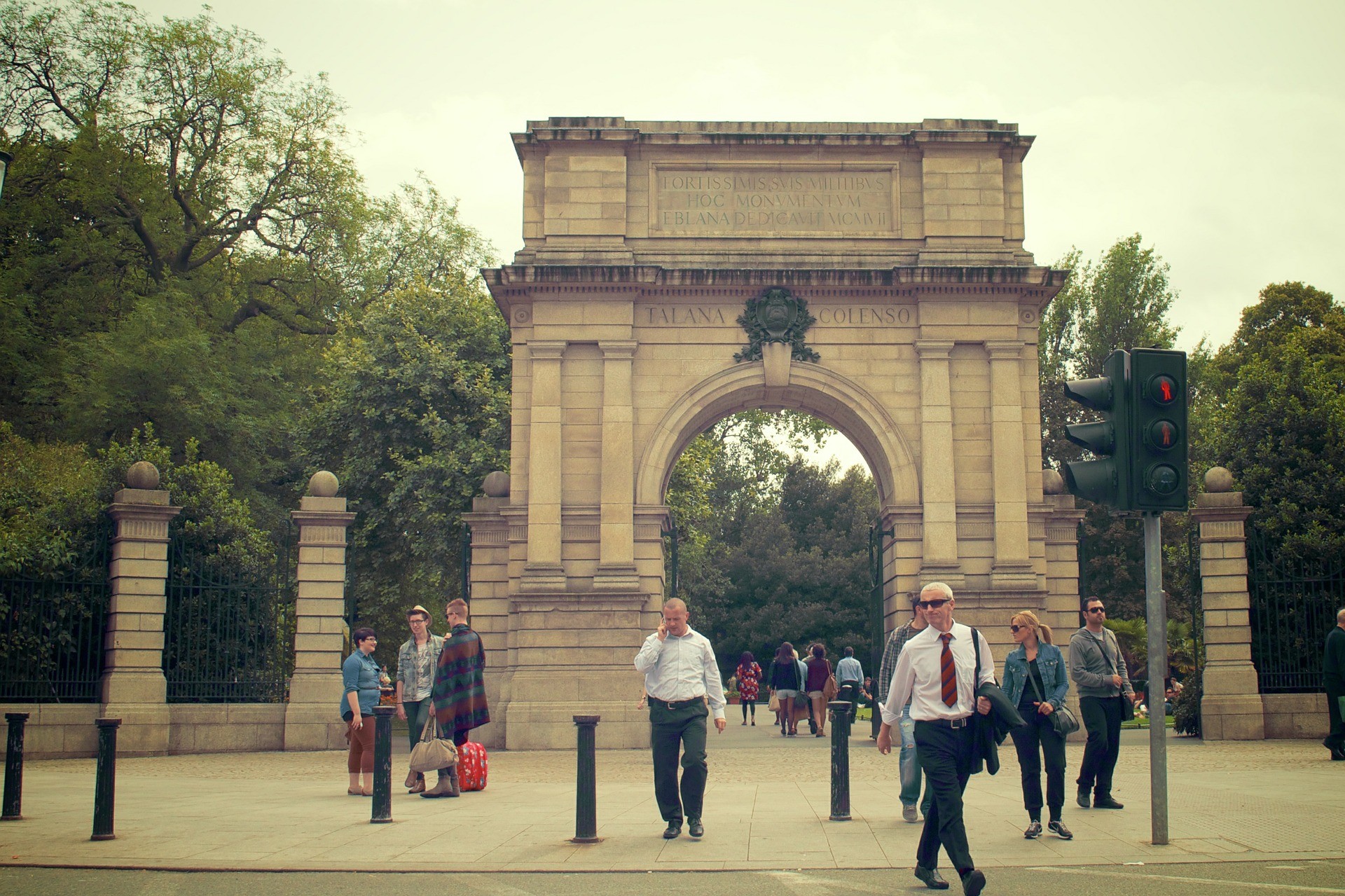
Among the things to see in Dublin is St. Stephen’s Green, the most famous park in the Irish capital. Located not far from Trinity College. Over the years it was first an open space, intended for grazing. Then, after the creation of the park (second half of the 17th century), it was accessible to citizens except for the period 1814-1877 when the park remained accessible only to the wealthier citizens. Today the park is a destination for families, singles, and tourists who want to picnic.
6 Christchurch Cathedral
The Christchurch Cathedral is the oldest building in the city. It dates back to the 12th century but has undergone major renovations in recent centuries. Much of what is admired today dates back to the 19th century. The opening hours are, from June to August, Monday to Friday, from 9:00 to 18:00; Saturday from 10:00 to 16:30; Sunday from 12:45 to 14:45. In the remaining months, the hours are from 9:45 to 17:00 (Monday to Friday); from 10:00 to 16:30 (Saturday); from 12:45 to 14:45 (Sunday). Admission is charged.



