

The Historic Center of Galway
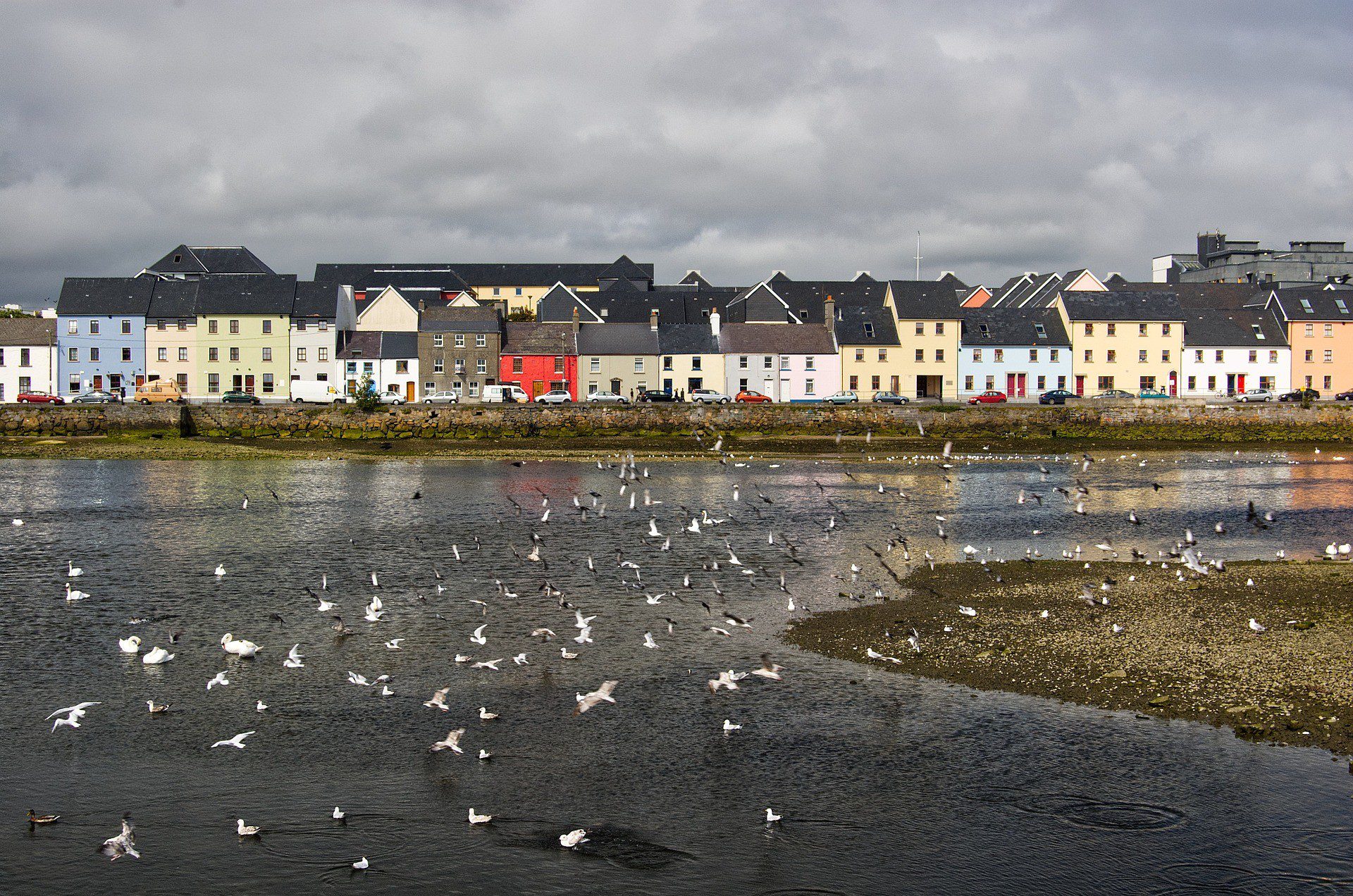
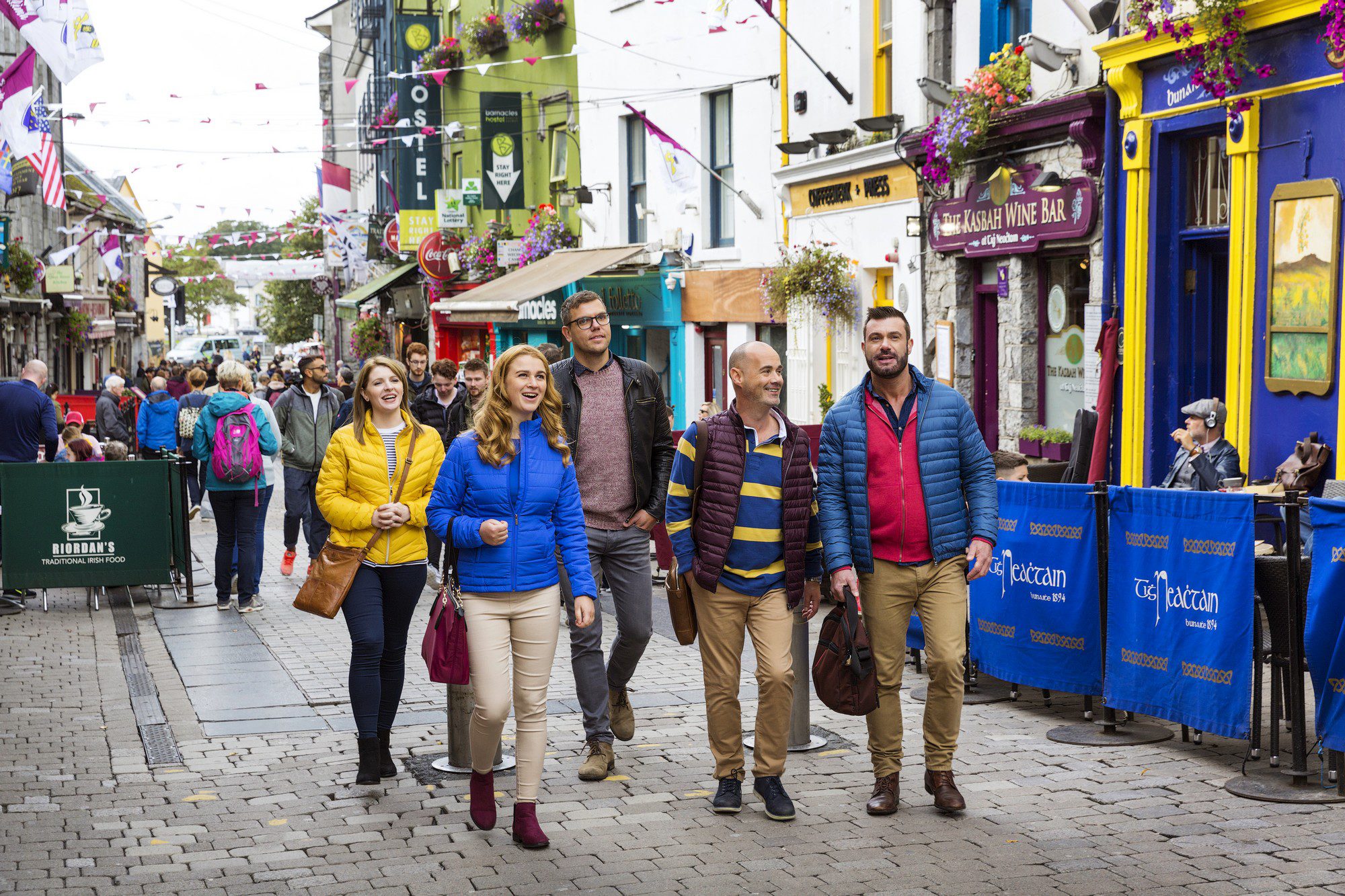
The historic center of Galway, in Ireland, stretches along the banks of the Corrib River and is ideal for exploring on foot. Start your visit from Eyre Square, the park-like square framed by impressive 19th-century buildings. On its northwestern side, you’ll find the Browne Doorway, a 17th-century portal rescued from a noble residence.
Nearby are two cannons from the Crimean War and a fountain adorned with a sculpture of a traditional fishing boat, known locally as pucans or gleotogs. Parts of the ancient city walls (Galway was once fortified) can be seen inside the modern Eyre Square Centre, while fascinating pedestrian passages link the old Shoemakers and Penrice towers.
The Latin Quarter
The Latin Quarter is lively and characterful, easily reached from Eyre Square via William Street and Shop Street. Not far away stands the Collegiate Church of St. Nicholas, Galway’s main medieval building, founded in 1320 and expanded in the 15th and 16th centuries. Quay Street is a delight, lined with popular pubs and restaurants that showcase the city’s culinary and social scene.
Spanish Arch
The Spanish Arch area is another vibrant spot where the Corrib River broadens. The historic docks, once used by Spanish merchants, now make for leisurely strolls. For a scenic boat trip on Lough Corrib—well-known for its salmon, trout, perch, and eel—head to Wood Quay.
Another point of interest is the Weir Bridge, connecting the riverbanks; beneath it, you might spot salmon resting on their upstream journey.

Claddagh
Just beyond the Spanish Arch lies the historic Claddagh district, once home to a Gaelic-speaking fishing community governed by its own local leader. The last “king” passed away in 1954, but the area still boasts charming pubs and is famous for the Claddagh ring, a traditional token of love passed from mother to daughter.
Galway Surroundings: Aran Islands
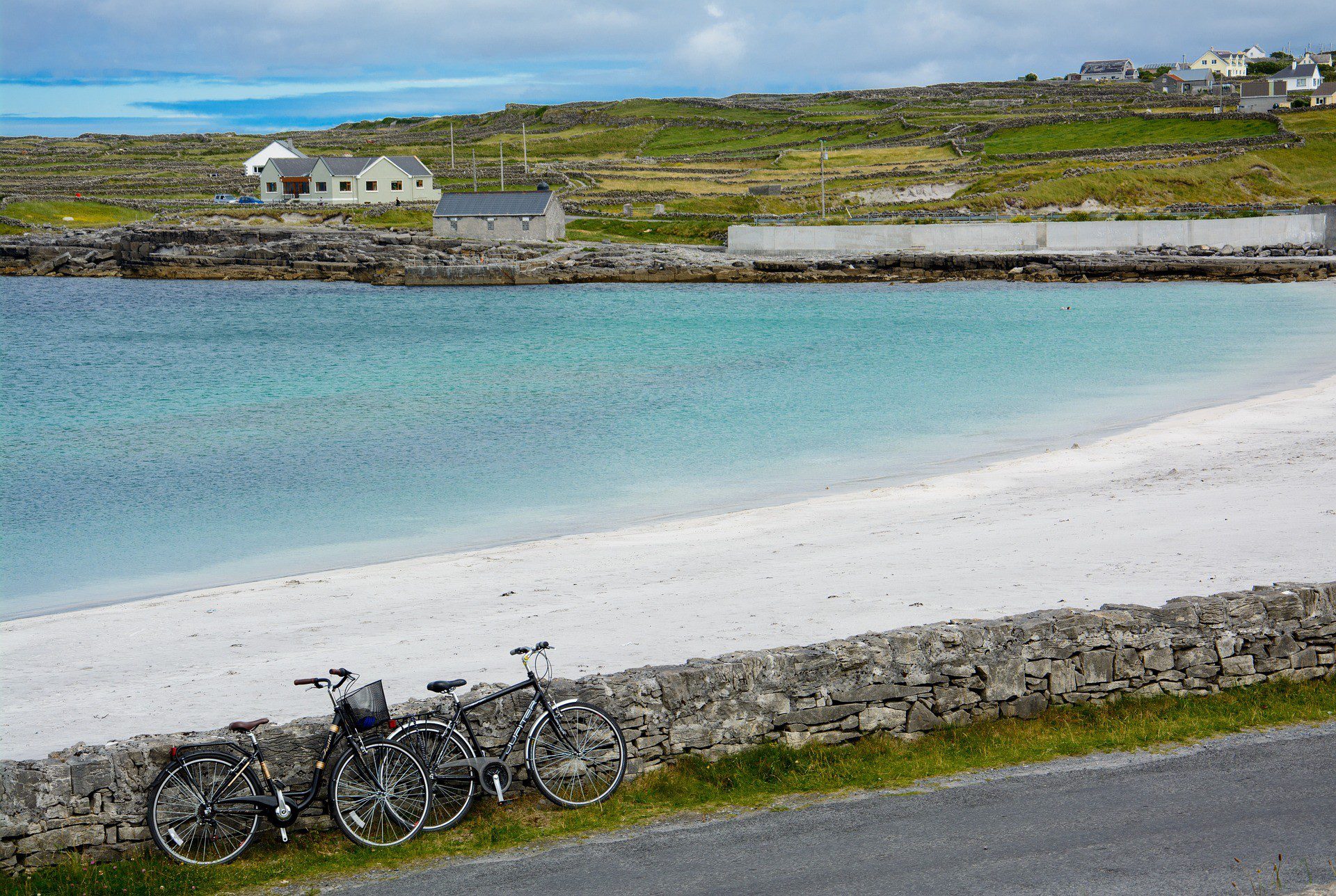
In the bay off Galway, between Western Ireland and the Lower Shannon, lie the three Aran Islands—Inishmore, Inishmaan, and Inisheer. These islands are fascinating, remote places with ancient customs. Of limestone origin, they offer dramatic coastlines, prehistoric sites, and a labyrinth of stone walls around fields and pastures. Inishmore is the largest, 13 km long and 3 km wide. The Aran islands are known for a rich monastic tradition dating to the 5th century AD with St. Enda’s arrival. Islanders remain devoted to fishing, farming, tourism, and local crafts, especially their famed thick wool sweaters featuring symbolic patterns. The local costumes are unmistakable: women in red flannel shirts and shawls, men with tweed vests and brightly colored belts. Another island symbol is the currach, a traditional low, tarred-cloth boat used for centuries for transportation. The Aran Islands can be reached via the small airport near Rossaveal or by ferry from Galway, Doolin (County Clare), and Rossaveal.
Oyster Festival
Summers in Galway are especially lively, crowned by the energetic Oyster Festival held every September.

Galway, European Capital of Culture
Galway 2020, European Capital of Culture, with a focus on landscape, language, and migration.
In 2020 (the year of the global pandemic), Galway was named European Capital of Culture—one of the world’s most prestigious cultural designations. Galway 2020 promised to bring an exciting and diverse year of art, culture, and unique experiences.
The pan-European program saw events spread across the region in unexpected settings: from the islands to remote villages, boglands, countryside, mountains, and beaches. With food, music, dance, literature, visual arts, poetry, theatre, and major performances, everyone could find a memorable and fun experience.
For music lovers, Music for Galway launched the first edition of CELLISSIMO, a nine-day cello festival held every three years, bringing a diverse European music lineup to Galway’s stage.
Project Baa Baa recognizes the cultural, economic, and environmental impact of sheep farming and related traditions in Ireland and Europe. As part of Galway 2020, it hosted a European congress and several related events and exhibitions.
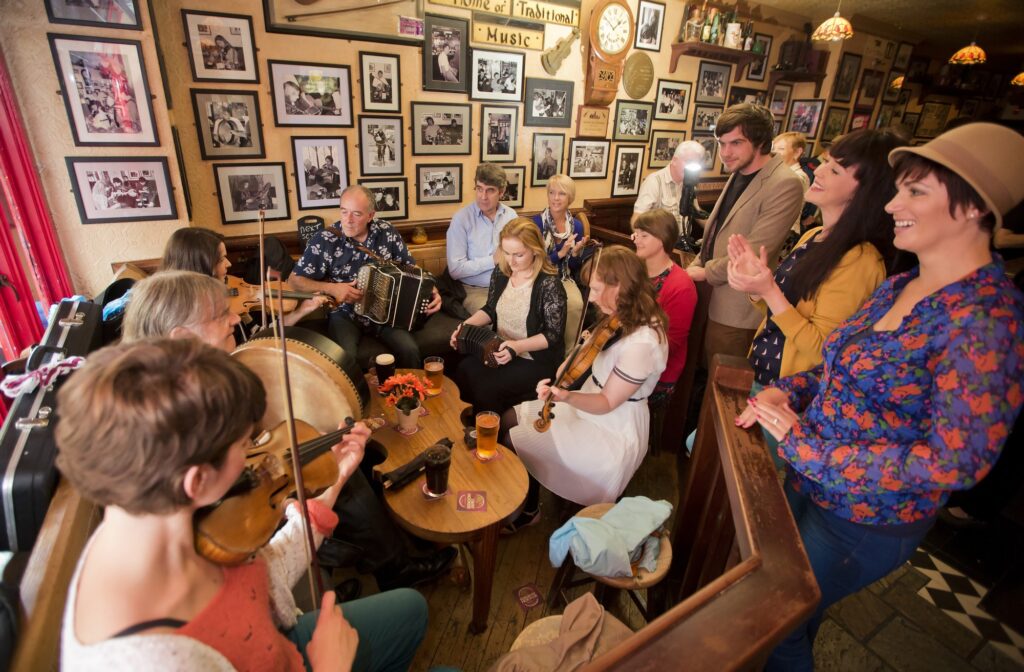
While choosing which cultural experience to enjoy in Galway 2020, immerse yourself in the city’s vibrant culture. Sing along in a classic Irish pub, chat with locals in the bustling cafés set along cobbled medieval lanes, and simply enjoy the famous Irish craic.
Steeped in culture and history, Galway is home to the largest community of native Irish or Gaelic speakers. The beauty of the Gaelic language—integral to Irish lifestyle—shines in its music, dance, art, and history. All year long, the Galway 2020 program celebrated the Irish language and others from around Europe through a diverse series of engaging events.

Galway’s European Capital of Culture Program