

The historic center of Galway
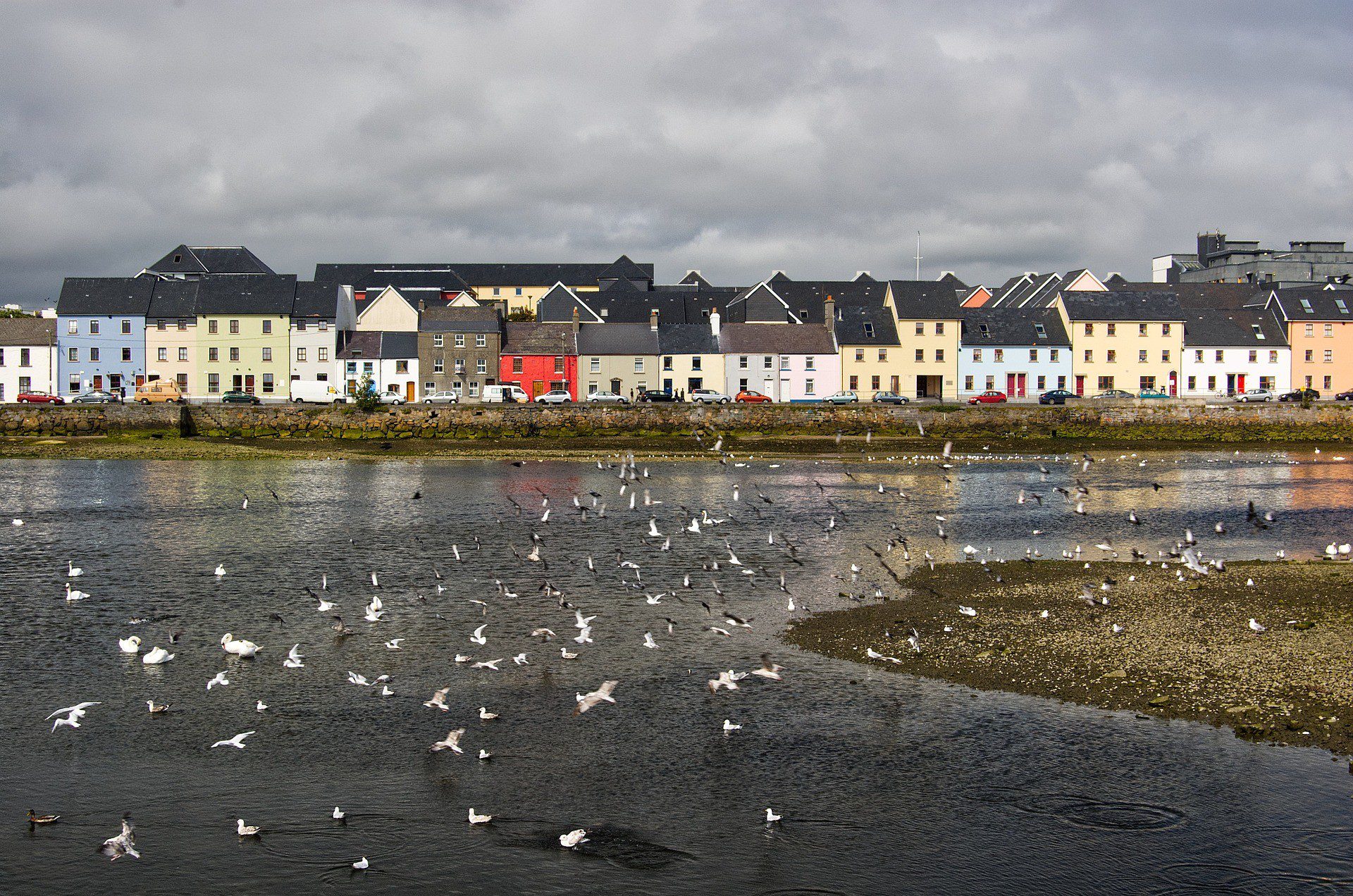
The historic center of Galway, in Ireland, now stretches along the banks of the Corrib river and is particularly pleasant to explore on foot, perhaps starting from Eyre Square, the square that encloses a park bordered by imposing nineteenth-century buildings. On the northwest side, you find the Browne Doorway, a seventeenth-century portal from a noble residence.
Accompanying it are two cannons from the Crimean War and a fountain adorned with a sculpture of a typical fishing boat, called pucans or gleotogs. Parts of the ancient walls (Galway was a fortified town) can be admired inside the Eyre Square Centre, a modern shopping center, while intriguing pedestrian passages connect the seventeenth-century Shoemakers and Penrice towers.
Latin Quarter of Galway
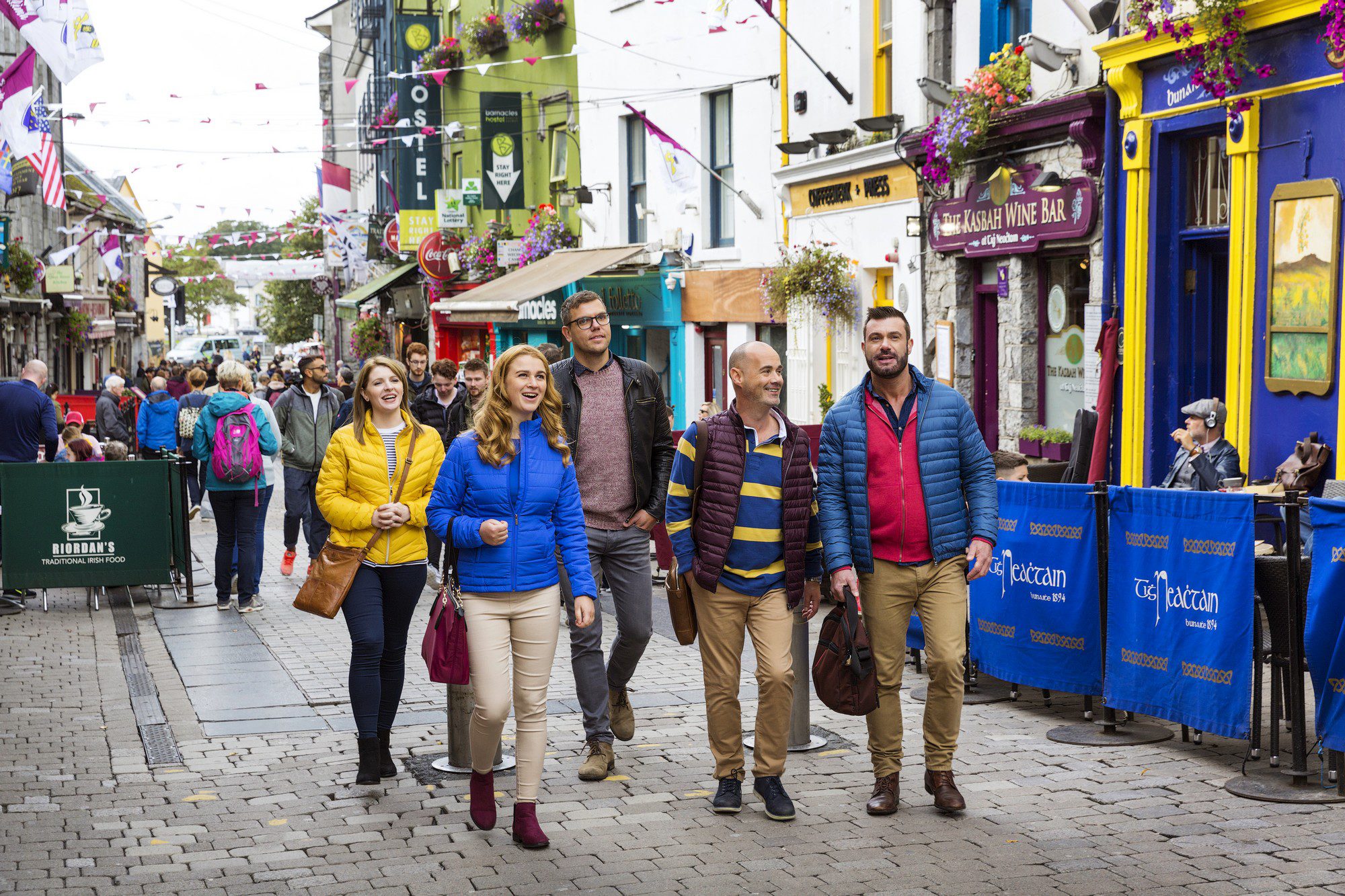
Lively and irresistible is the Latin Quarter, the Latin neighborhood, reachable from Eyre Square via William Street and Shop Street. Not far is the Collegiate Church of St.Nicholas, the main medieval building of Galway, founded in 1320 and expanded in the 15th and 16th centuries. Delightful is Quay Street, lined with pubs and restaurants, which are the pride of the city.
Spanish Arch
Charming and lively is also the area of the Spanish Arch, where the Corrib river widens its course: on the ancient quays, where Spanish merchants unloaded their goods, you can take peaceful and relaxing walks; while for a boat trip on the Lough Corrib, rich in salmon, trout, perch, and eels, you have to reach the Wood Quay.
Another curiosity is the Weir Bridge, the bridge that connects the two riverbanks, under which it is not uncommon to see schools of salmon resting during their upstream journey.

Claddagh
Beyond the Spanish Arch finally emerges the Claddagh, a characteristic neighborhood of medieval origins, once inhabited by a community of Gaelic-speaking fishermen, with its own ruler. After the last “king” died in 1954, all that remains of the past are beautiful pubs and the Claddagh ring, the traditional engagement ring passed down from mother to daughter.
Nearby Galway: Aran Islands
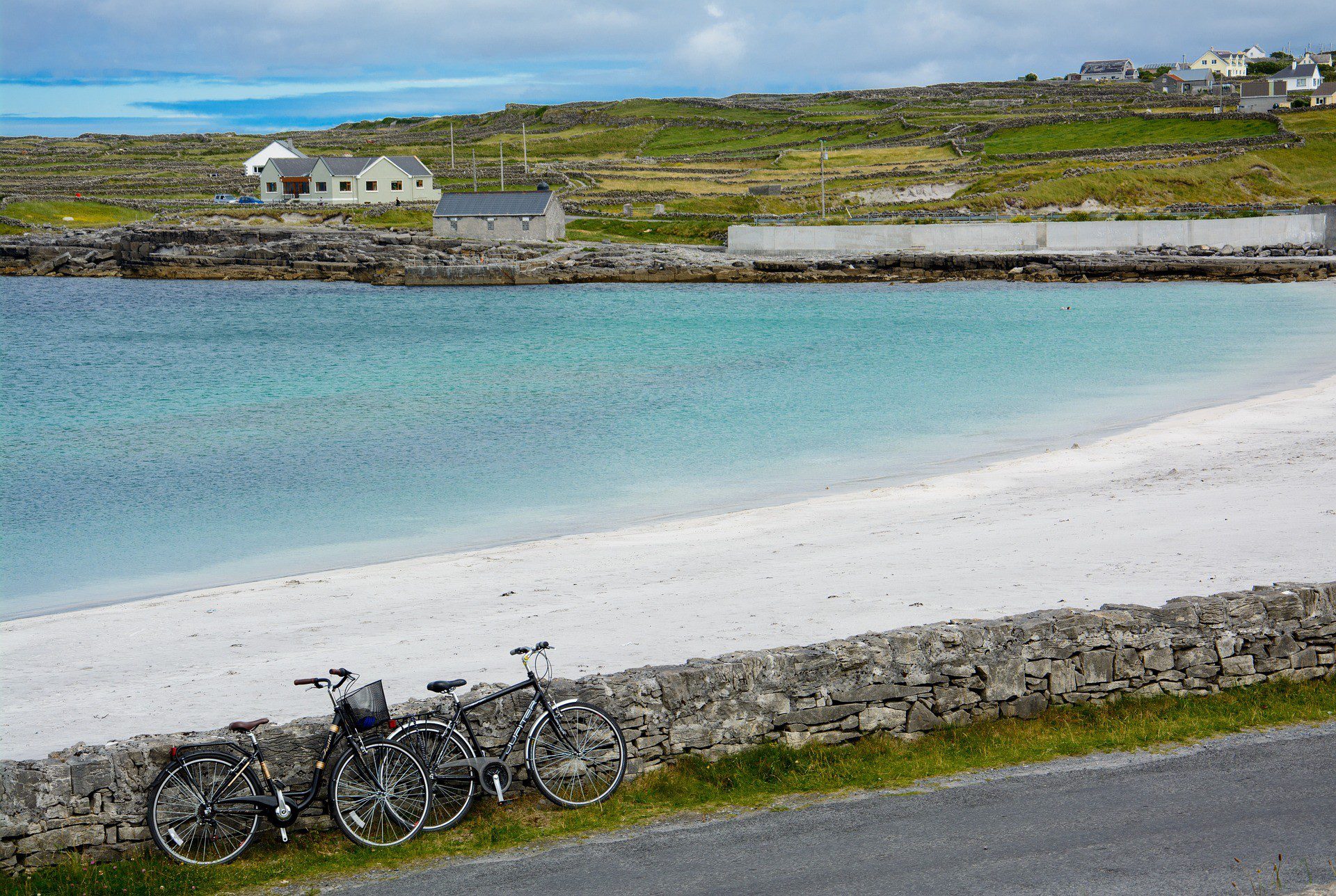
Facing Galway Bay-fjord, between the West of Ireland and Lower Shannon, the three Aran Islands – Inishmore, Inishmaan and Inisheer – embody a fascinating and secluded world, rich in ancient customs and traditions. Originating from a limestone platform, these islands are characterized by spectacular coasts, remains of prehistoric sites, and a dense network of dry stone walls, which delimit fields and pastures. Inishmore is the largest, 13 km long and 3 km wide. The Aran were also home to a prestigious monastic tradition, starting in the 5th century AD with the arrival of Saint Enda. The islanders are devoted, today as in the past, to fishing, agriculture, tourism, and craftsmanship induced by this. It is impossible, for example, to resist the temptation to buy one of the white and very warm rough woolen sweaters, which the small shops make, reproducing symbolic and traditional patterns. Also unmistakable are the local costumes: women wear a red flannel shirt and a crossed shawl, while men wear a tweed waistcoat with a colorful belt. Another island symbol is the currach, a low tarred canvas boat, which has represented for centuries the main local means of transport. The Aran Islands can be reached from the small airport near Rossaveal or by ferry from Galway, Doolin (County Clare) and Rossaveal.
Oyster Festival
Summer in Galway is particularly lively and also long, thanks to the lively Oyster Festival, the Oyster Festival in September.

Galway, European Capital of Culture
Galway 2020 European Capital of Culture with the theme of landscape, language and migration.
In 2020 (the year of the dreadful pandemic) Galway was the European Capital of Culture – a designation that constitutes one of the world’s major cultural events – and Galway 2020 promises to promote culture and the arts by creating a year full of thrilling and substantial experiences.
The exciting pan-European program of the year foresees events held throughout the region in unexpected locations: on islands, in remote villages, in bogs, in the countryside, in the mountains and on the beaches. Between food, music, dance, literature and visual arts, poetry, theater, sports and spectacular shows, everyone will have the opportunity to choose a unique and fun-filled experience.
For those more interested in music, the organization Music for Galway will propose the first edition of CELLISSIMO, a 9-day cello festival held every three years, whose dense and varied lineup will bring the entire European musical scene to the stage of Galway.
Project Baa Baa deals with recognizing the cultural, economic and environmental contribution that sheep farming and the traditions linked to it have brought to Ireland and all of Europe and, within the framework of Galway 2020, will organize its European congress as well as several events and exhibitions.
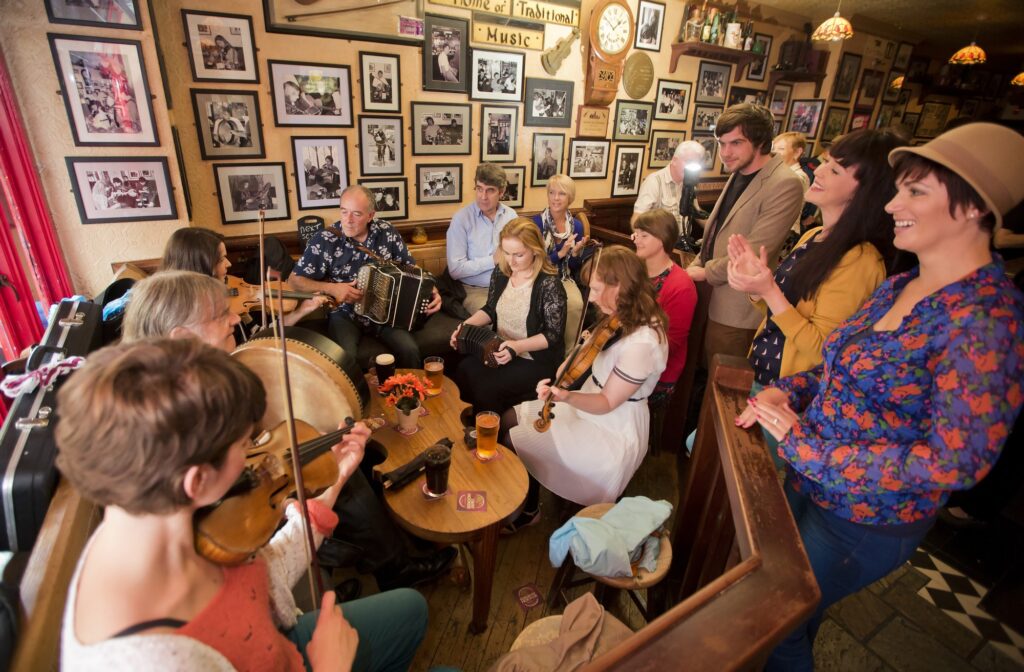
While you decide which activity and cultural event of Galway 2020 to choose, immerse yourself in the captivating culture of Galway; sing a song in one of the traditional Irish pubs, have a chat with the locals in one of the lively cafes that populate the cobbled medieval streets. In a few words, jump on board and enjoy the ‘craic’.
With its roots deep in culture and history, Galway is home to the largest community of native Irish or Gaelic speakers. The beauty of the Gaelic language, which has a profound impact on the Irish lifestyle, emerges from music, bursts into dance as well as other forms of art, culture and the history of the island. And throughout the year the Galway 2020 program will celebrate the Irish language and all other European languages through a wide range of exciting projects.

The program of Galway European Capital of Culture