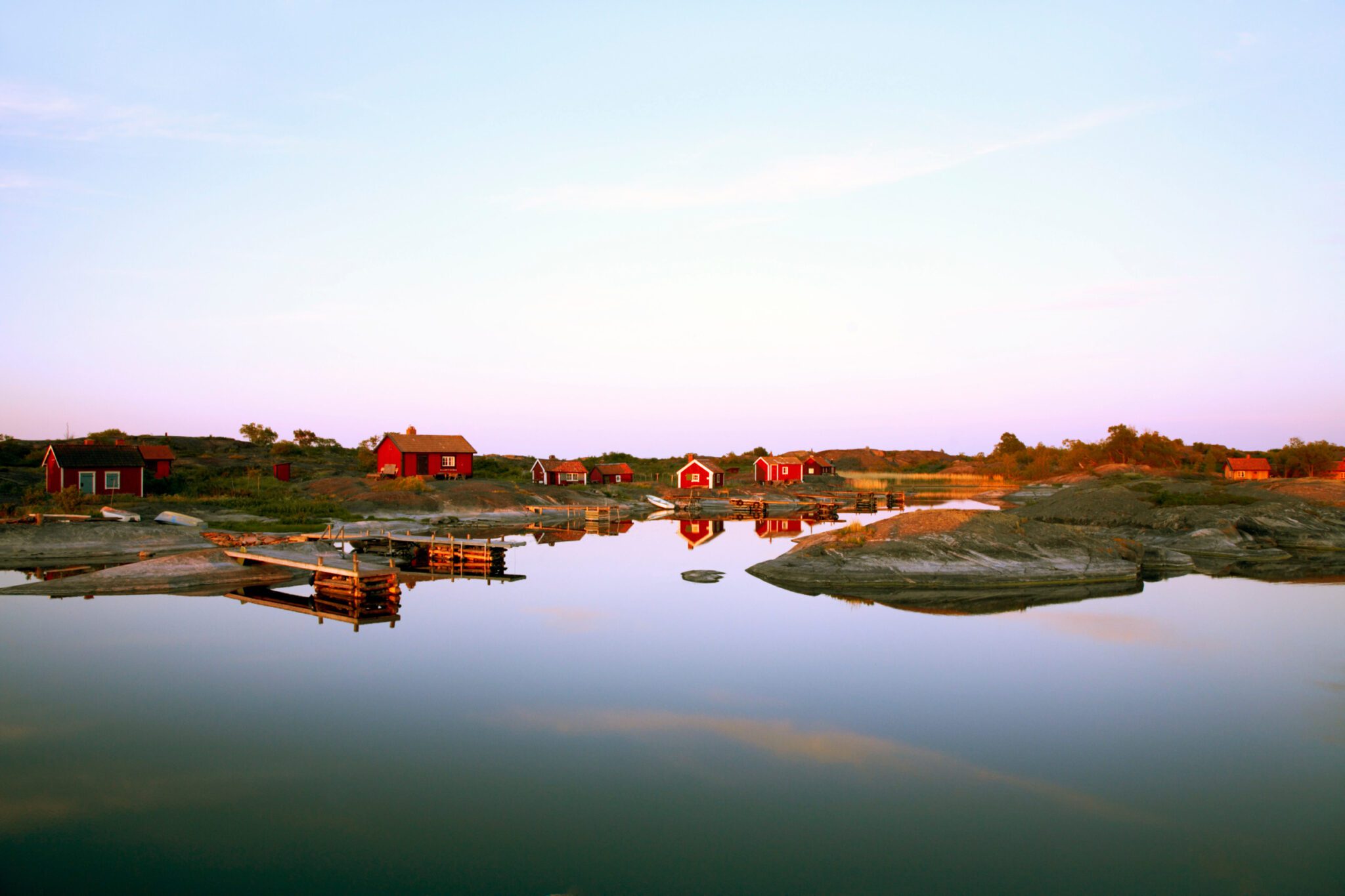

The charm of the Swedish capital, Stockholm, extends to its beautiful surroundings. Within the greater Stockholm area lies an archipelago of over thirty thousand islands, each distinguished by its own unique character.
The islands of the Stockholm Archipelago have inspired many artists and writers. The publishing house Iperborea, renowned for Nordic literature, together with Swedish hospitality experts, has mapped out a special artistic and literary route.
Runmarö
Fredrik Sjöberg, entomologist and hoverfly collector, introduced readers worldwide to the island of Runmarö through his novel The Fly Trap (published in Italy by Iperborea). One of the largest islands in the archipelago, it features charming villages and lakes, and is famous for its rich variety of orchids. A network of trails invites visitors to explore the shoreline on foot or by bike.
Nobel Laureate Tomas Tranströmer spent every summer on the island, often capturing its atmosphere in his poems. In an interview, he described his connection to Runmarö: “I have this idea that every person has a center of gravity in a specific place. Like a ball rolling until it finds the lowest point, where it can rest. For me, that place is here. When I stand on the pier and let my gaze drift over the water, I feel this is where my journey begins.”
Kymmendö
Kymmendö lies in the southern part of the archipelago, where its residents inspired August Strindberg to write the celebrated novel The People of Hemsö (1887). Strindberg was well acquainted with island life, having spent many summers here, where he also wrote Master Olof (1872) and drew inspiration for By the Open Sea (1890).
The real inhabitants of this “earthly paradise,” as Strindberg called it, were not pleased to see their lives depicted in his book. Feeling betrayed, they banished the author for life from Kymmendö. In the 1940s, the young Stig Dagerman stayed on Kymmendö, writing his novel The Island of the Doomed (1946) there. You can visit the cottage where Strindberg used to retreat to write, and in summer you can join guided tours.
Sandhamn
The small island of Sandhamn, positioned at the outer edge of the archipelago, becomes one of the liveliest spots in summer. It is a renowned meeting point for sailors and hosts regattas organized by the Royal Swedish Yacht Club. In the late 1800s, many celebrated writers and painters visited Sandhamn for inspiration and relaxation. Anders Zorn painted his famous “At Sandhamn” and “The Swan” here.
Strindberg, Verner von Heidenstam, Gustaf Fröding, and Bruno Liljefors were among the frequent guests. Today, bestselling author Viveca Sten sets her highly popular crime novels here (published by Marsilio), which have also been adapted into a TV series, The Sandhamn Murders. In Stieg Larsson‘s Millennium trilogy, the main character Mikael Blomkvist owns a house on Sandhamn where he retreats for peace and solitude.
Part of the island is covered in wind-bent pine forests and sandy beaches, while the village features traditional wooden houses mingling with elegant late-19th-century buildings, hotels, restaurants, cozy cafés, and boutique shops.
Sadelöga, Bodskär, Borgen, and Utö
Even film directors have fallen under the Stockholm Archipelago’s spell. Ingmar Bergman himself chose Sadelöga, Bodskär, and Borgen—three small islands off Utö in the southern archipelago—as the dramatic backdrop for the lovers’ escape in one of his most controversial films, Summer with Monika (1953).
Utö, celebrated for its beaches, is bustling in summer. Here you’ll find Sweden’s oldest iron mines, complete with preserved miners’ houses and a mining museum. Visitors can rent a bike upon arrival to tour the island. You can stay and dine at the Utö Wärdshus.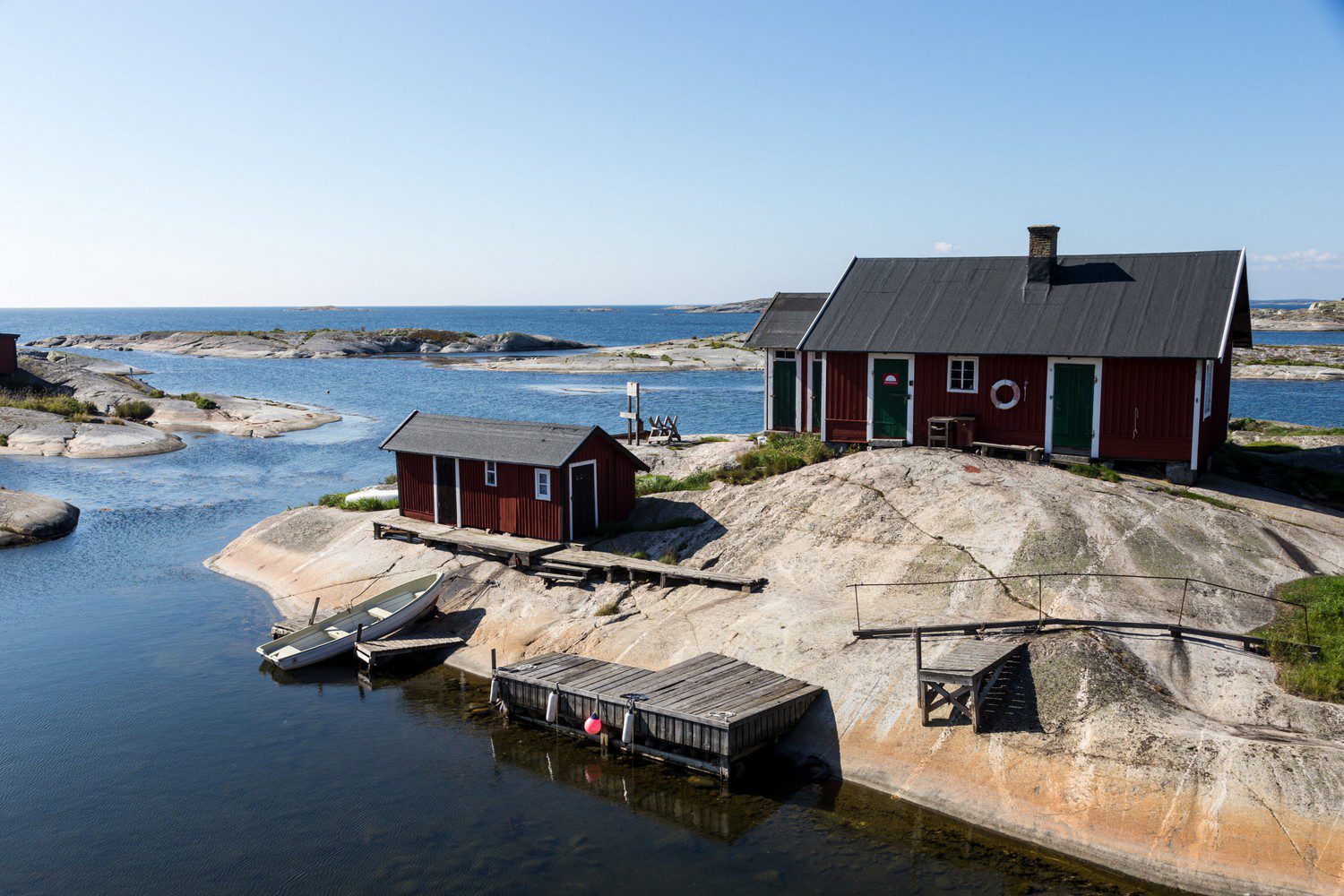
Viggsö
Dancing Queen and Fernando are just two of the many hits written on the tiny island of Viggsö, inside the little wooden cabin where ABBA spent time composing. Today, a faithful recreation of this cabin is featured in ABBA The Museum on Djurgården island, in Stockholm’s center. Viggsö is a small island in the inner archipelago, not far from the lush island of Grinda, where the Grinda Wärdshus hotel and restaurant stays open year-round.
Husarö
Husarö lies where the outer archipelago opens up, becoming wilder and grander. Unlike other islands, homes here rarely reach the beaches. Stieg Larsson used to rent a home on Husarö, which also features in the second volume of his Millennium trilogy, The Girl Who Kicked the Hornet’s Nest.
The island is famous for its abundance of blueberries, which inspired celebrated children’s book illustrator and author Elsa Beskow in her Putte in the Blueberry Forest (Puttes äventyr i blåbärsskogen, 1901), still unpublished in Italy but translated into over twenty languages.
Furusund
Furusund is located in the northern archipelago and was a favorite retreat of the Swedish nobility and many renowned authors and artists in the mid-19th century. August Strindberg drew much inspiration from the island, notably for his play A Dream Play (Ett drömspel).
Astrid Lindgren spent several summers here, enjoying the tranquillity away from city life. Furusund is connected to the mainland by a bridge, making it easily accessible both by car and ferry from central Stockholm.