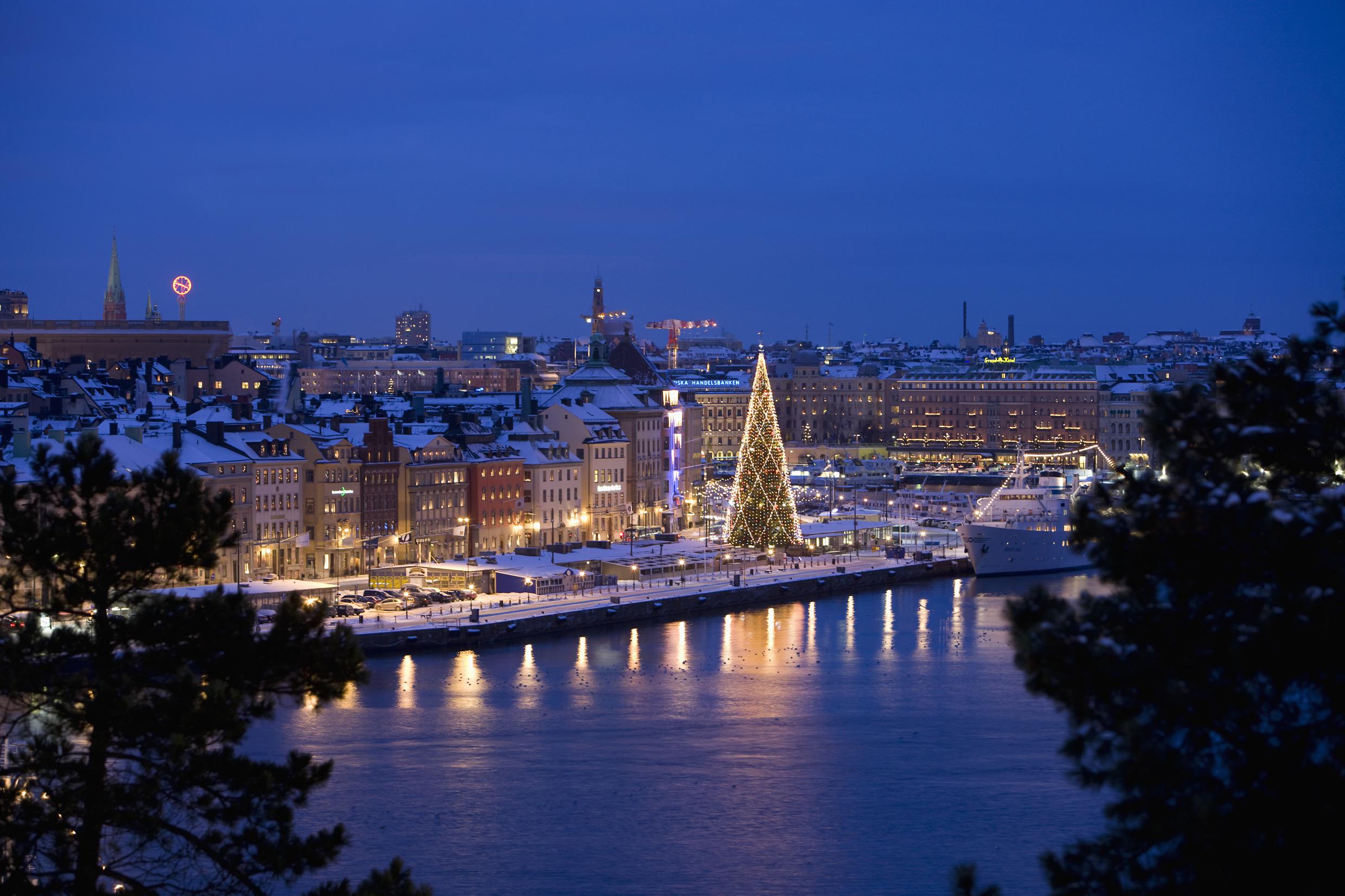


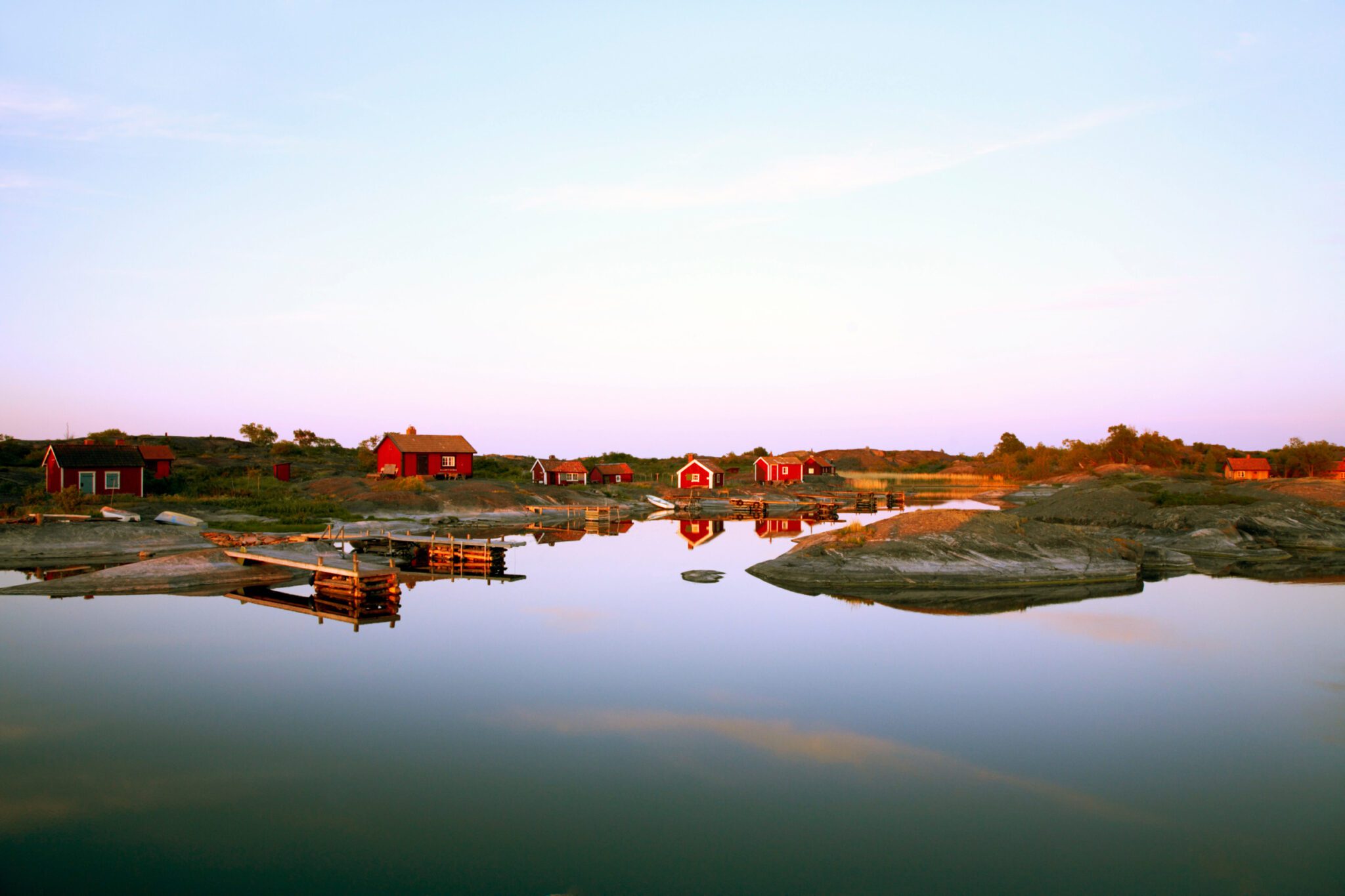

The charm of the Swedish capital, Stockholm, extends to the surrounding areas. Stockholm has within its district an archipelago of over thirty thousand islands with different and distinct characteristics.
The islands of the Stockholm archipelago have inspired several artists and writers, and the publishing house Iperborea, specialized in Nordic literature, along with experts in Swedish hospitality, have outlined an artistic-literary itinerary.
Runmarö
Fredrik Sjöberg, entomologist and hoverfly collector, made the island of Runmarö known to readers around the world with his novel The Art of Collecting Flies (published in Italy by Iperborea). It is one of the largest islands in the archipelago, hosting villages and small lakes, and is famous for its variety of orchids. The numerous trails allow walking or cycling along the entire coast of the island.
The Nobel Prize in Literature winner Tomas Tranströmer spent all his summers on the island and often described its atmosphere in his poems. He spoke about it in an interview: «I have this idea that every human being has their center of gravity in a certain place. Like a sphere rolling and rolling until it finds the lowest point, where it can stop. For me, that place is here. When I am on the jetty and let my gaze lose itself over the water, I feel that this is my starting point.»
Kymmendö
Kymmendö is located in the southern part of the archipelago, and its inhabitants inspired August Strindberg to write the famous novel The People of Hemsö (1887). Strindberg knew the islanders well, having spent many summers on the island, where he wrote Master Olof (1872) and found inspiration for Open Sea (1890).
However, the true inhabitants of what he himself had called his “paradise on earth” did not at all appreciate that the writer had taken their life and their island as a model for the book, and, feeling betrayed in their hospitality, they banished him for life from Kymmendö. In the 1940s, the young Stig Dagerman stayed in Kymmendö, writing his novel The Island of the Condemned (1946) there. You can visit the cottage where Strindbergs used to retreat to write, and during the summer, you can take part in guided tours.
Sandhamn
The small Sandhamn island, located in the outermost part of the archipelago, is one of the liveliest islands during the summer as it is a famous meeting place for sailors and the starting point of regattas organized by the The Royal Swedish Yacht Club. At the end of the 19th century, many famous writers and painters visited Sandhamn to find inspiration but also to have fun. The famous paintings by Anders Zorn “At Sandhamn” and “The Swan” were created on the island.
Strindberg, Verner von Heidenstam, Gustaf Fröding, and Bruno Liljefors were other regular visitors. Today the author Viveca Sten sets her bestselling thrillers (Marsilio), also made into a TV series, Murders in Sandhamn, here. In the Millennium trilogy by Stieg Larsson, the main character Mikael Blomkvist has a little house in Sandhamn where he goes to relax and be alone with himself. Part of the island is covered by pine forests bent by the wind and sandy beaches, while the other part is inhabited, and in this idyllic village, old wooden houses mix with charming late-century buildings, hotels, restaurants, cafés, and small shops.
Sadelöga, Bodskär, Borgen och Utö
Inte ens regissörerna är immuna mot den skarpa charmen i Stockholms skärgård. Samma Ingmar Bergman valde Sadelöga, Bodskär och Borgen, tre småöar utanför ön Utö i södra skärgården som bakgrund för kärleksflykten mellan två huvudpersoner i en av hans mest omdiskuterade och skandalösa filmer: Monica och önskan (1953).
Utö, känd för sina stränder, är en mycket populär ö under sommaren. På Utö finns Sveriges äldsta järngruvor med tillhörande gamla gruvarbetarbostäder bevarade som de var då, samt ett gruvmuseum. Besökare kan hyra cyklar vid ankomsten för att utforska ön. På ön kan man övernatta och äta på Utö Wärdshus.
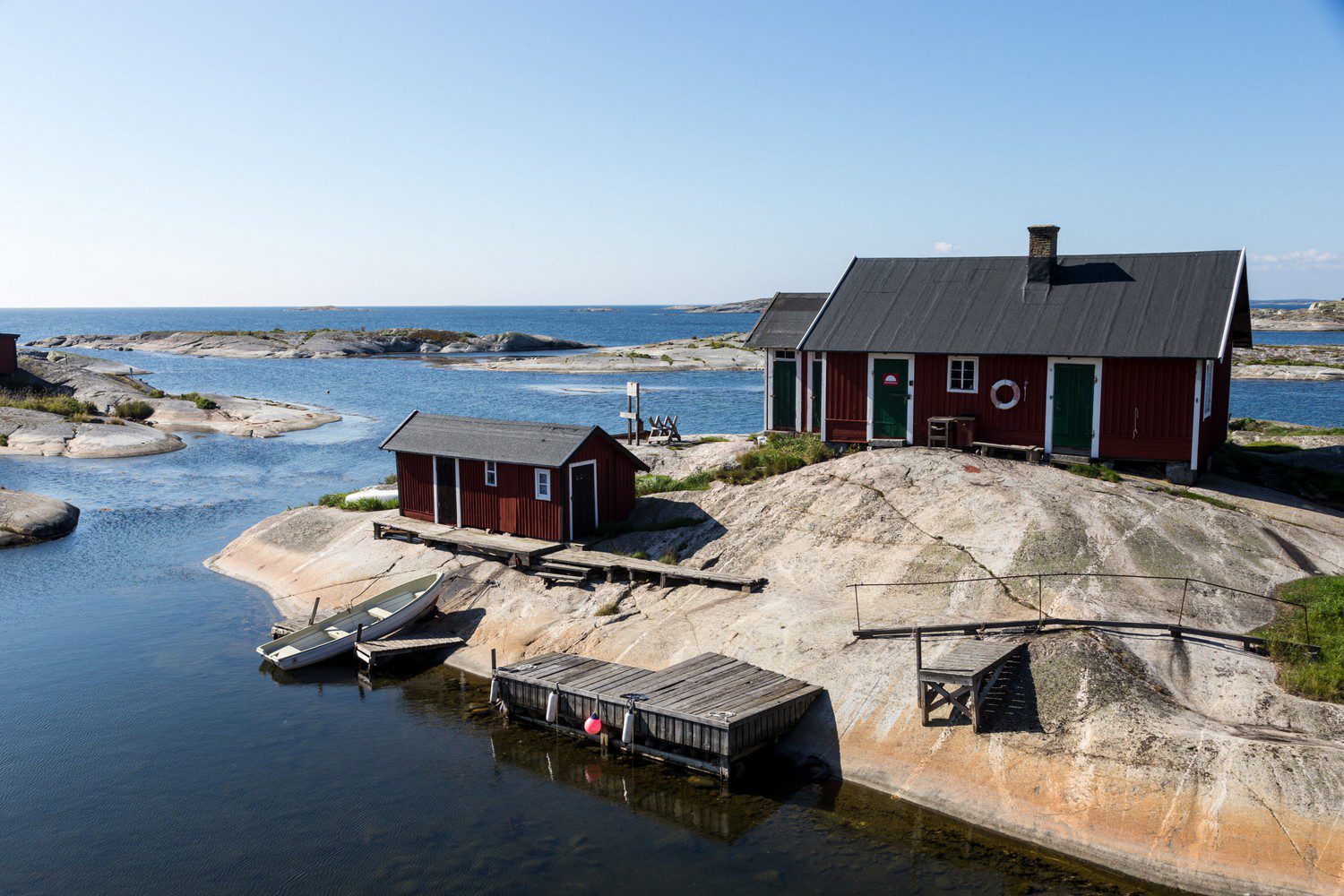
Viggsö
Dancing queen och Fernando är bara två av många hits som skapades på den lilla ön Viggsö, i den lilla trästugan som användes som kreativt studio där ABBA drog sig tillbaka för att komponera, och som idag finns i en trogen rekonstruktion på museet tillägnat dem, ABBA the Museum, på ön Djurgården i centrala Stockholm. Viggsö är en liten ö i den inre skärgården, inte långt från den gröna ön Grinda, där hotell och restaurang Grinda Wärdshus håller öppet året runt.
Husarö
The island of Husarö is located where the outer archipelago opens up and becomes wilder and more magnificent. Unlike many other islands, here the houses rarely reach the beaches. Stieg Larsson rented a house here on Husarö, which is also mentioned in the second chapter of the Millennium trilogy: The Girl Who Played with Fire.
The island is known for its abundance of blueberries, which inspired the famous illustrator and children’s book author Elsa Beskow for her The Adventures of Putte in the Blueberry Forest (Puttes äventyr i blåbärsskogen, 1901), still unpublished in Italy but already translated and published in more than twenty languages.
Furusund
Furusund is located in the northern archipelago and in the mid-1800s it was the preferred destination for noble vacationers, as well as the summer retreat of many famous writers and artists. August Strindberg drew much inspiration from here for his novels, including for The Dream Play (Ett drömspel).
Astrid Lindgren spent many summers on the island where she escaped the constant pressure she faced in the city: Furusund is connected to the mainland by a bridge, so it is very easy to reach also by boat from central Stockholm.