


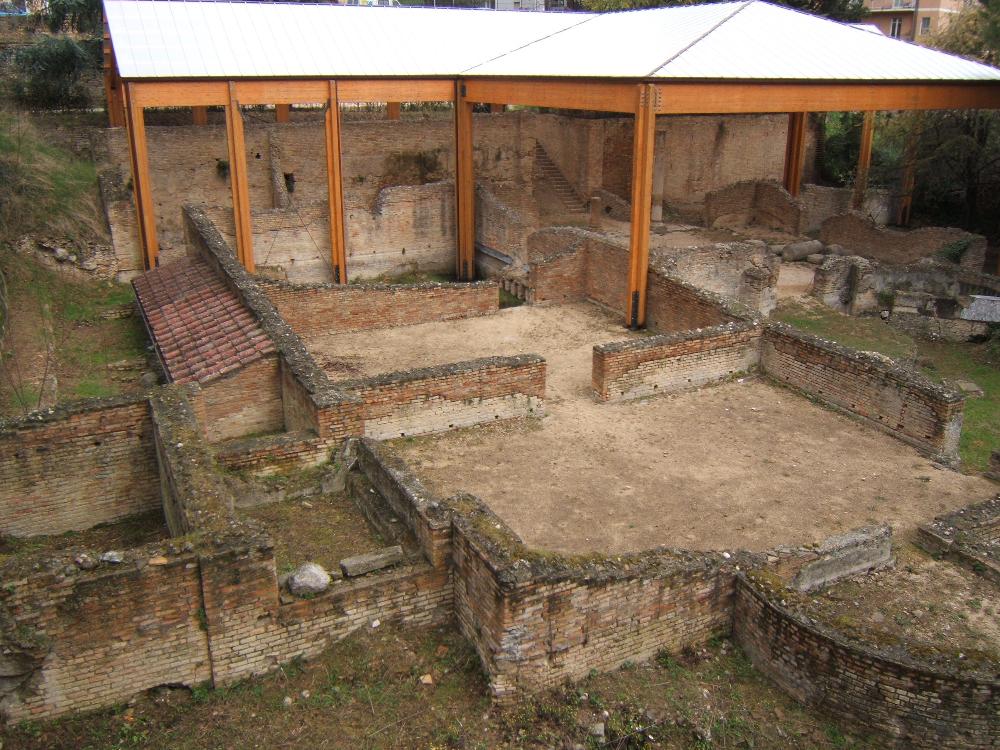


The Roman city Telate arose on a hill between the Pescara and Allento rivers, in a site inhabited since the prehistoric era. The settlement grew significantly in the 1st century BC, when it became a Roman municipality named Telate Marrucinum.
The most important archaeological remains, located in the public area of the city, are the Civitella, the theater, the baths, and the Roman temples.
In the archaeological area of the Civitella, terracottas, statues, and decorations from republican-era temples (1st century BC) and an amphitheater from the 1st century AD have been found.
At the foot of the Civitella hill lie the remains of the Roman theater (1st century AD), integrated within the urban fabric; the perimeter wall of the cavea and some remains of the semicircular corridor on two levels can be distinguished.
On the eastern slopes of the hill stood the baths (2nd century AD), a vast complex with mosaic decorations, divided into various rooms and supplied by the underground cistern facing the baths.
In the ancient forum stand the remains of the three Roman temples, dating back to the imperial era; mosaic floors and square-work structures dating from an older place of worship have been discovered at the site.
Information about Teate – Remains of the Roman City
Via delle Terme Romane
66100 Chieti (Chieti)
087133951
[email protected]
visit by appointment
Source: MIBACT