The main collection of the Museum of the Treasure of the Cathedral comes from a donation made by Francesco II Sforza to the newly established Diocese of Vigevano in 1534. In 1529, thanks to the intervention of Pope Clement VII, Francesco II Sforza regained control of the Duchy of Milan and received the pardon of Charles V, who had ousted him from the ducal throne in 1525 after initially granting it in 1521, accusing him of treason for the conspiracy orchestrated by his advisor Gerolamo Morone.
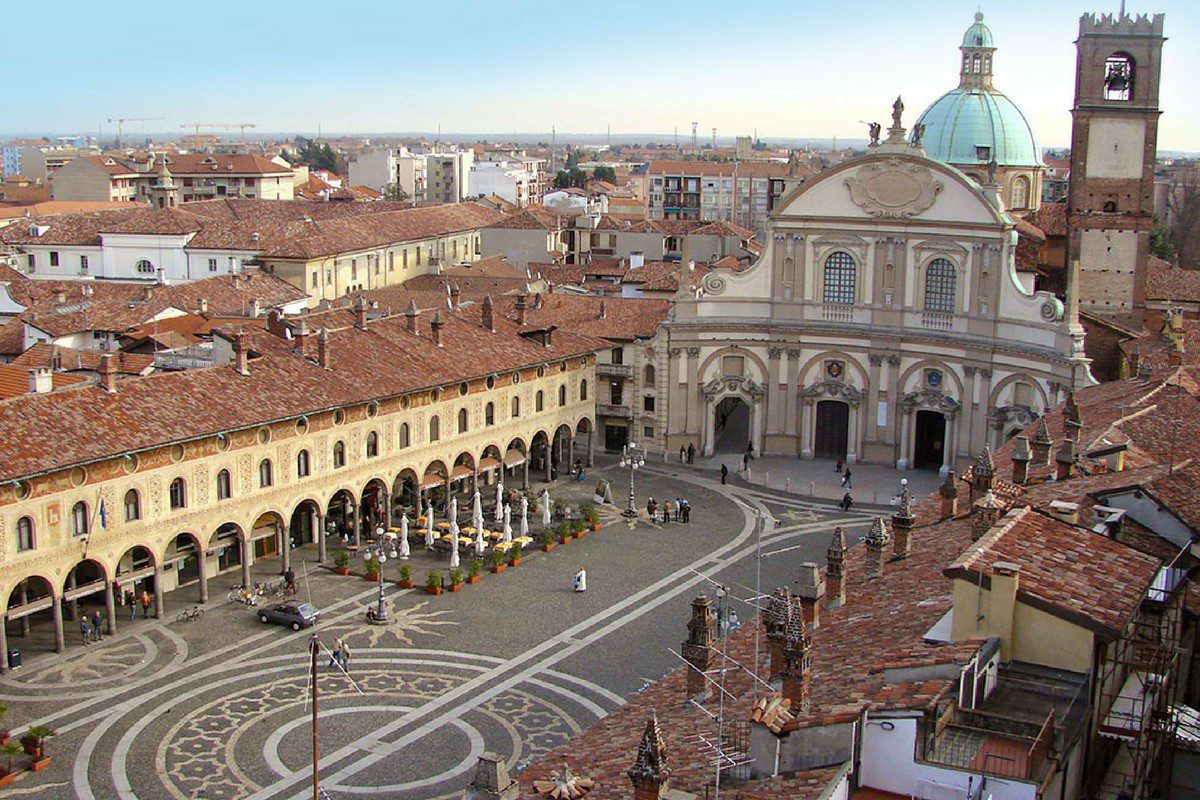
A few months later, Francesco II Sforza secured papal approval to raise his hometown, Vigevano, to the status of both a city and a diocese, fulfilling a longstanding wish of his father, Ludovico il Moro.
Recent historical studies have in fact revealed il Moro’s ambitious plan for Vigevano: to create a bishopric and build “a rich and prestigious ecclesiastical center worthy of serving the court, which now resided almost permanently in Vigevano and was largely made up of courtiers.” The vision of il Moro was thus a city, including its ecclesiastical sector, formed as the ideal backdrop for his court.
It was also highly significant that Francesco II obtained the right—for himself and his heirs—to personally appoint the bishops to the Chair of Vigevano.
Countless silverware pieces, tapestries, illuminated choir books, paintings, wooden furnishings, and liturgical vestments arrived in Vigevano to adorn the Cathedral—and these now represent the most important part of the Museum of the Treasure of the Cathedral.
The concept of a Treasure, though not exactly the term itself, already appeared in ancient documents and inventories compiled after Francesco II’s donation, where the primary focus was on the silver items.
Today, only eight silver objects remain from the original donation, but pieces such as the pax, the processional cross, the episcopal chalice, and the croziers are without doubt the most precious and distinguished items, defining the collection with their unique characteristics.