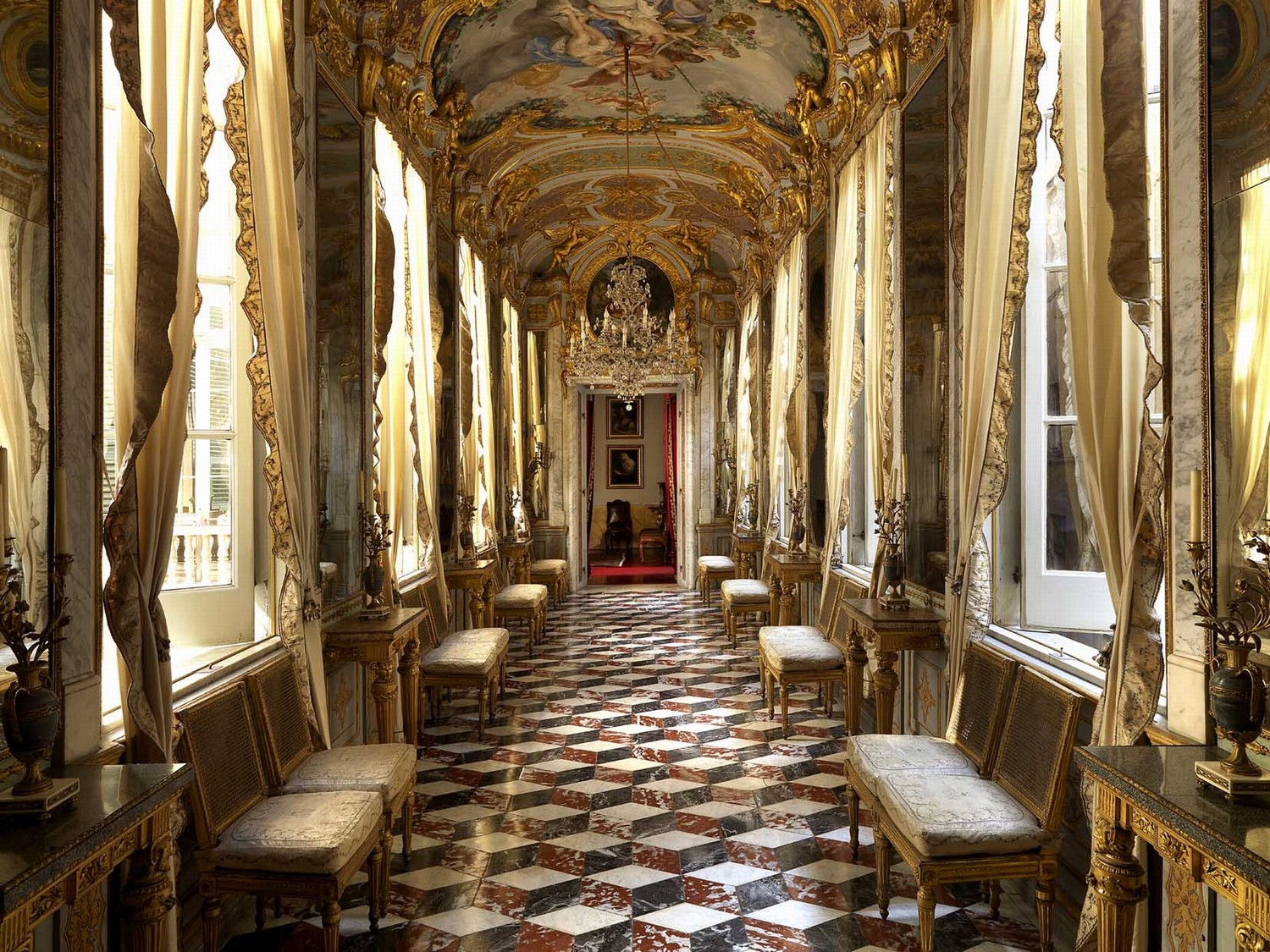


A convenient starting point to visit the historic center of Genoa is the Porto Antico, entirely redesigned by architect Renzo Piano. Close by stand the seventeenth-century Palazzo Reale and Palazzo San Giorgio, the original customs house. To the east lies the heart of Genoa, a labyrinth of alleys and narrow lanes, sometimes so tight that the sun struggles to penetrate, as described in the songs of Fabrizio de André. You are now in the historic center, whose symbols are the Cathedral of San Lorenzo, the cathedral, a magnificent example of Ligurian Gothic; Palazzo Ducale, once the residence of the doges, now a lively cultural hub, hosting exhibitions, libraries, archives, research workshops, and associations; the spectacular sixteenth-century palaces of via Garibaldi (Palazzo Rosso, Palazzo Bianco, etc.); the Teatro Carlo Felice with its rich seasons of opera and ballet. Not to be missed: Palazzo Rosso, Palazzo Tursi, Loggia della Mercanzia or Loggia di Banchi and the Botanical Garden.
- What to see in Genoa
- 1 Historic center
- 2 Genoa Aquarium
- 3 Genoa Doge’s Palace
- 4 Porta Siberia (of the pier)
- 5 Porta Soprana
- 6 Lanterna of Genoa
- 7 Linguistic Academy Palace
- 8 D’Albertis Castle
- Churches and Cloisters of Genoa
- 9 Cloister of Sant’Andrea della Porta
- 10 Cloister of the Canons of San Lorenzo
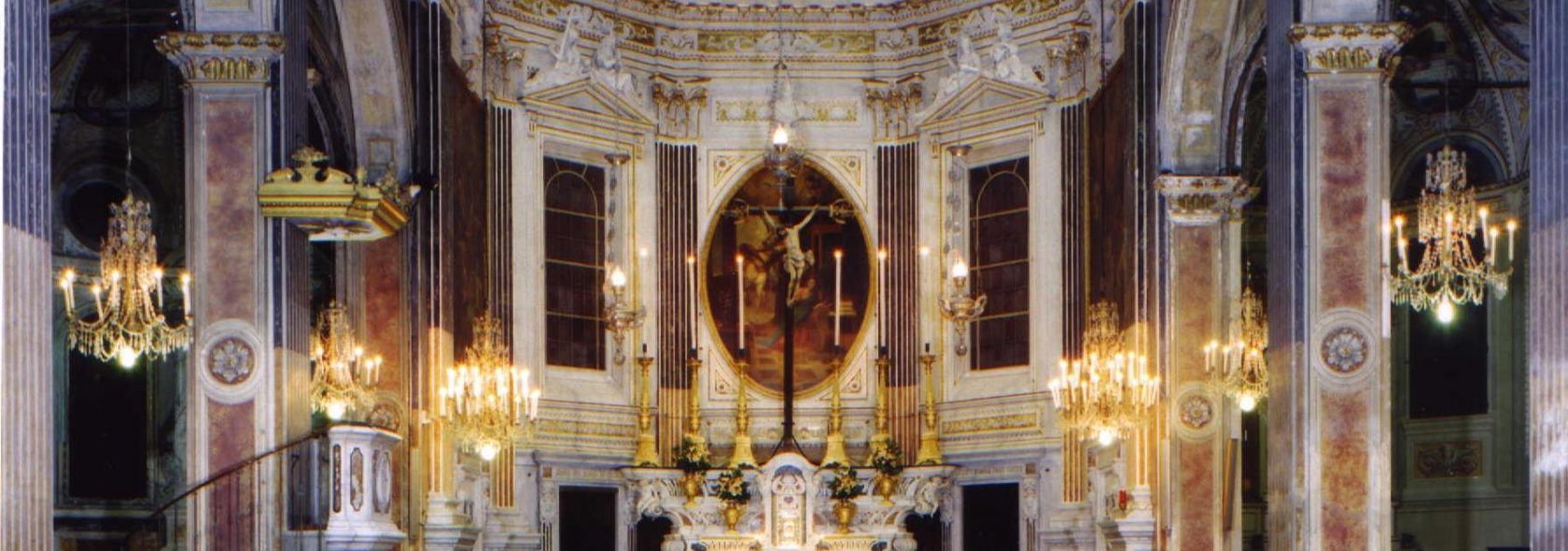
- 11 Church of SS. Annunziata di Portoria or St. Catherine of Genoa
- Museums of Genoa
- 12 Pegli Naval Museum
- 13 Jewish Museum of Genoa
- 14 Museum of Peasant History and Culture of Genoa
- 15 Garibaldian Museum of Genoa
- 16 Civic Museum of Natural History
- 17 Saint Augustine Civic Museum
- 18 Museotheater of the Commenda of St. John of Prè
- 19 “G. Boato” Physics Museum
- 20 Ligurian Archaeology Museum
- 21 Mazzini House
- 22 Colombo House
What to see in Genoa
1 Historic center
The historic center is closed to car traffic, but is comfortable and pleasant to explore on foot. Among the closest guarded parking lots are those in Piazza Dante and the Old Port. To avoid getting lost among alleys and narrow streets, it is recommended to get a map, which is provided free of charge at the tourist assistance kiosk Genoa Informa in front of Palazzo Ducale. Also not to miss are the new streets.

2 Genoa Aquarium
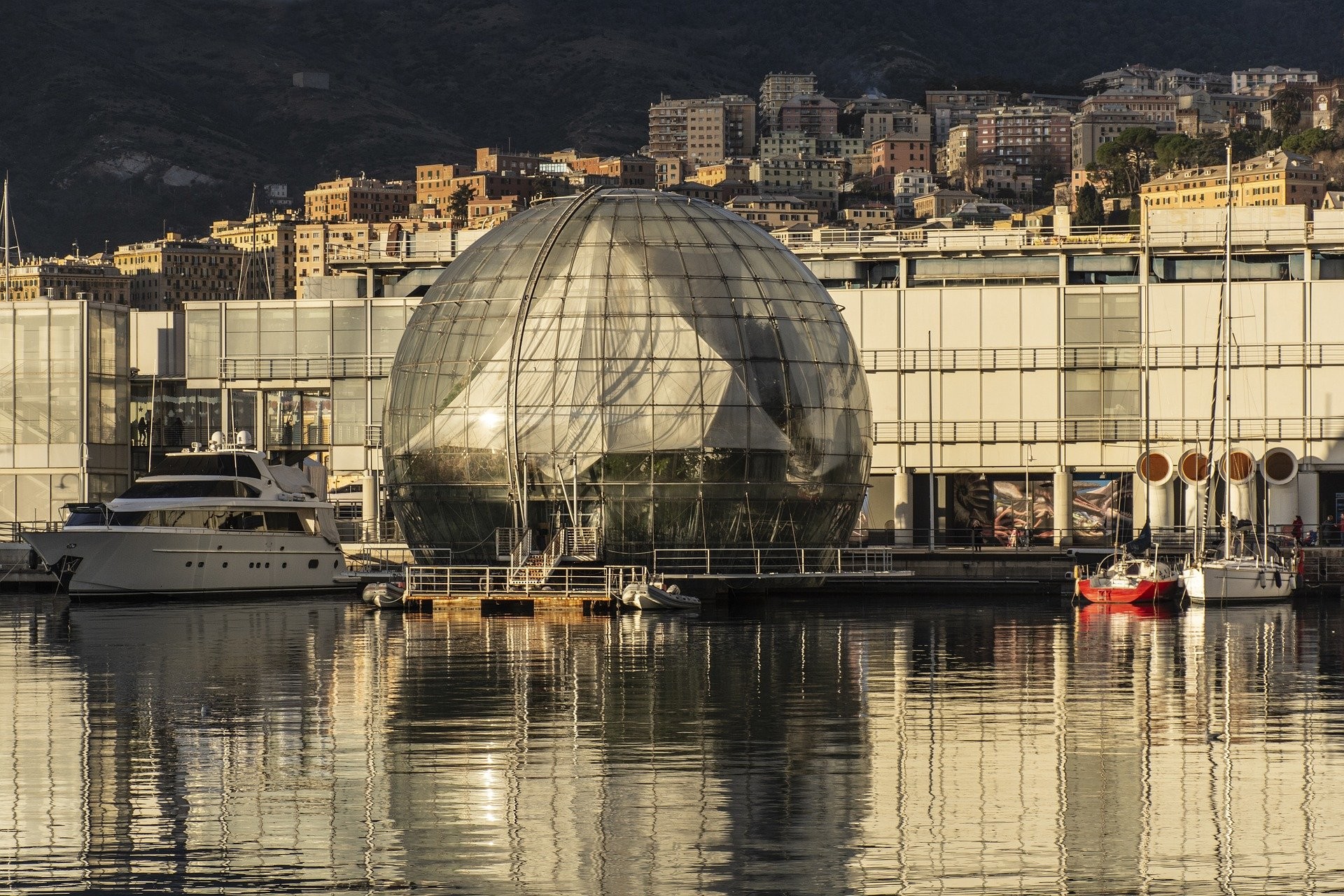
The Genoa Aquarium was built in 1992 and identified as the driving idea in the project of redevelopment and enhancement of a city area full of history and traditions, located in the heart of Genoa’s historic center: the Old Port.
With its 10,000 square meters and 63 tanks, it is the largest indoor aquarium in Europe and one of the most frequented cultural places in Italy. Modern aquariums are designed to represent parts of ecosystems, to draw the visitor’s attention to the environment and highlight the needs for overall nature conservation. The Genoa Aquarium is a messenger of stories about animals, plains, seas, ecosystems, and countries with the aim of leaving traces of respect towards aquatic environments, informing about their problems, and inspiring their safeguarding.
3 Genoa Doge’s Palace
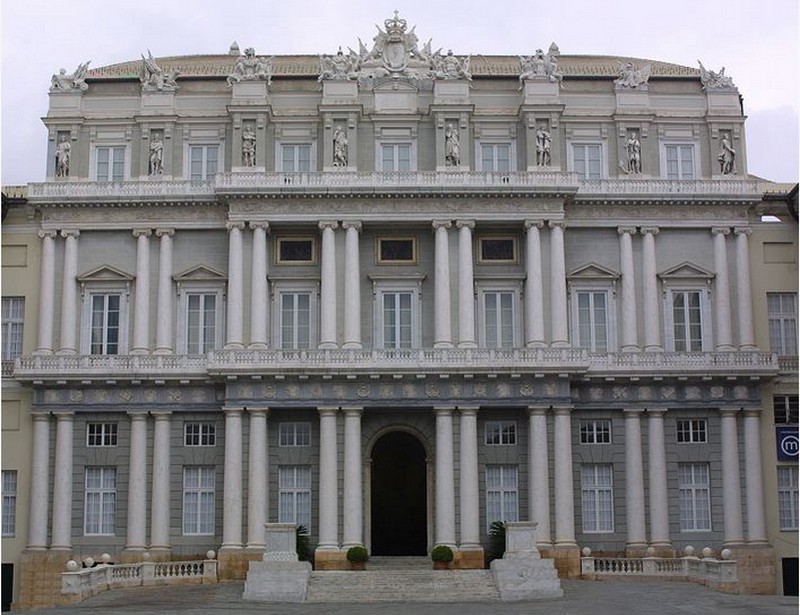
Seat since 1339 of the first Genoese Doge, Simon Boccanegra, the palace was born in 1291 from the merging of the Palazzo dell’Abate with the adjacent Palazzo Fieschi and Grimaldina tower. The acquisition of neighboring properties and the creation of a square, closed in the mid-1400s by a “curtain” for the palace guard, enlarged the complex which found unity in the project by Vannone (1590): a large building centered on a big atrium that connects two porticoed courtyards and leads through a solemn staircase to the Chapel, the Doge’s apartment, and the halls of the Major and Minor Council. These, destroyed by a fire in 1777, were innovatively rebuilt by Simone Cantoni. The curtain wall was demolished with the opening of via S. Lorenzo in 1850 based on a project by Gardella, while the tower and the underground remained used as prison. In 1929-35 Grosso restored Cantoni’s façade, returned the oldest parts of the building to their medieval phase, and freed the courtyards from 19th-century buildings by directly connecting the smaller courtyard to piazza De Ferrari where it attests a painted architecture façade. The 1992 restoration recomposed the heterogeneous spaces of the palace, which became a “cultural headquarters,” maintaining a mixture of medieval, 16th-century, neoclassical, and neo-medieval elements; in the underground the Cisterns and the Armory room, discovered during archaeological excavations, are made usable, while the new steel helical staircase places direct connection between entrances, terraces and the Grimaldina.
4 Porta Siberia (of the pier)
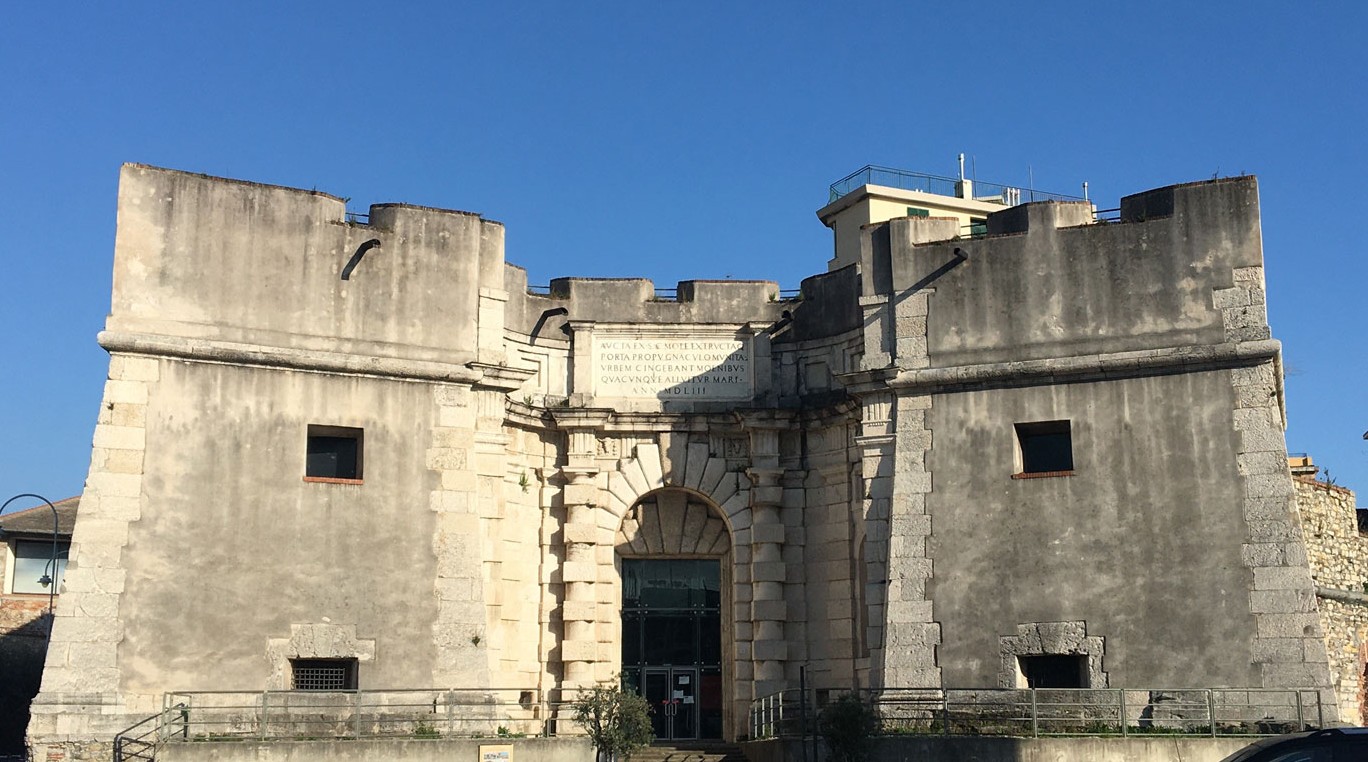
According to Vasari, Alessi’s activity in Genoa began with the design of the Porta del Molo, simultaneously with the construction of the 16th-century walls. In 1550, in fact, he was entrusted with the study of a military structure that, inserted into the new fortified line, could ensure both defensive and customs and transit functions between the pier and the city. The location, considering the urban significance of the intervention, was aptly chosen between the Malapaga Walls and the Mandraccio, close to the ancient artillery foundries. Antonio Roderio oversaw its execution from 1551 to 1553. The Dongione del Molo, through a dialectal distortion of the ancient name Porta Cibaria, became known as Porta Siberia at the end of the 19th century when foodstuff control of goods passing through the port was carried out within its walls. Spared from demolitions for the opening of the “Carrettiera Carlo Alberto” due to its position, the gate gradually lost all function due to the backfilling of the docks. The recovery project, carried out by Renzo Piano on the occasion of the Colombiane of 1992, allowed the renovation of the interior spaces, later housing the Luzzati Museum and temporary exhibitions of other artists.
5 Porta Soprana
The construction of this structure in 1155, probably by the same magistri antelami who created Porta dei Vacca (Master Giscardo, Giovanni Bono Cortese, and Giovanni di Castello), is documented in inscriptions embedded inside it; their rediscovery in 1865 initiated a long period of restorations. The removal of houses attached to Porta Soprana since the 16th century occurred at the end of the 19th century with the intervention by D’Andrade, during the development of via XX Settembre and piazza De Ferrari, and in the 1930s when Orlando Grosso led the restoration of the southern tower following the opening of piazza Dante. The 12th-century walls project erected against Emperor Frederick of Hohenstaufen, called Barbarossa, foresaw a gate at the eastern end of the primitive urban core on the crossing of Sanct Andrea Plain, where the road network led almost uninterruptedly to the ancient castrum (via Ravecca), the Mandraccio port (salita del Prione), and to the opposite side of the city, guarded by Porta Sottana (of Santa Fede or dei Vacca). The double name derives from both the structure’s location at the highest point of the walls and the presence of the nearby monastery of Saint Andrew, demolished early 20th century to trace via Dante. The gate, identified from the start with the medieval city enclosed by the contemporary defensive circle, simultaneously assumed a celebratory meaning by recovering the concept of “sacred gate“.
6 Lanterna of Genoa
The origin of the first tower on the San Benigno Promontory and its year of construction are not known for sure, although the first reliable source mentioning the Lanterna is a decree by the Council Fathers from 1128 which divided the duties regarding its maintenance and the supply of wood to feed the fire among men from the suburbs. The inhabitants of Torbella, Sassanedo, Porcile, Cavannuccia, and Granarolo in Val Polcevera had to perform guard duty while those from Borzoli, Sestri, Priano, and Burlo had to provide annually a bundle of “brisca” and “brugo” (dry broom and heather) to feed the fire at night.
In 1326 it became the Lanterna thanks to the use of olive oil lamps instead of fires, and after being used as a prison in the 14th century, it was incorporated into the French fortress of Briglia and had to undergo the destruction of its upper part during the Genoese recapture of the fortress; the reconstruction of the structure, carried out by a group of magisters antelami led by Martino da Rosio, began in 1543 thanks to funding from the San Giorgio Bank and the Lanterna took its definitive form the following year. The last change was in the early 19th century with the addition of the Savoy fortifications, now home to the Lanterna Museum. The tower underwent several restoration interventions beginning in 1932 until its opening to the public in 1994.

7 Linguistic Academy Palace
Between 1826 and 1832 a new three-story building arose in Piazza De Ferrari, on the site of the demolished San Domenico convent and leaning against the hill of Piccapietra, intended for the Library and the Academy which reused the portico designed by Barabino in 1821 for a barracks adjacent to the opera house, today the Carlo Felice Theater. The problem of the shallow lot depth on the ground floor was solved by the architect by increasing space on the upper floors, especially on the second floor where a series of colonnades ends in a Rotunda with a hemispherical coffered vault. Urban restructuring at the end of the 19th century and the beginning of the 20th century sacrificed the rear of the building and the Rotunda was demolished; only the frieze made by Santo Varni remains as a memory of the grand past – depicting the Triumph of Marcellus or the Transport of the Arts from Greece to Rome, once positioned along the walls and now stored in the museum’s depot in fragmentary state. The bombings of 1942 damaged the halls on the second floor and only after the war did the architect Mario Lab design the interior of the palace which would contain the Academy, the Nicolò Barabino Civic Artistic High School, a museum (probably the Chiossone Museum) and the Berio Civic Library. After the transfer of the Berio Library to the former Archiepiscopal Seminary, the building has remained exclusively the seat of the Ligurian Academy and its Museum.

8 D’Albertis Castle
The castle, home of the Museum of World Cultures, was built between 1886 and 1892 from an idea of Captain D’Albertis who on the remains of the walls of Montegalletto constructed a building designed by D’Andrade and Crotta, assisted by sculptor Allegro and archaeologist Campora. An original personality, he transferred into the project experiences of a life dedicated to the sea, explorations, and ethnographic research intending to create his own scientific-cultural model: a “before its time” museum with a central hall dedicated to Columbus, emphasizing his admiration for the great navigator whom he attempted to retrace with the Corsair on the 400th anniversary of the discovery of America. He reserved only a few rooms for his residence including the bedroom, arranged as a real ship’s cabin oriented toward the Lanterna.

Churches and Cloisters of Genoa
9 Cloister of Sant’Andrea della Porta
At the beginning of the 11th century, the monastery of Sant’Andrea arose next to the eastern passage of Porta Soprana; the first records of the Romanesque church actually date back to 1109, and the dedication to the Apostle Andrew immediately included the specific “de Porta”. The monastery and church underwent a series of transformations from the early 1500s until 1620, while the entire complex reached its definitive layout only at the end of the 18th century. In 1810, the convent was converted into a prison until the early 1900s when it was demolished to build via Dante; preservation efforts on the cloister began after its declaration of public utility (1890) through the survey conducted by Alfredo D’Andrade, head of the Regional Office for the Conservation of Monuments. The restoration project opted for conserving the monument in its original location, surrounding it with a garden; this clause was included in the contract of sale of the complex to the Municipality. In 1905, the now dismantled cloister was placed first in Sant’Agostino and later in Villetta Di Negro, awaiting a decision on its placement. Many years later, D’Andrade tried to refocus attention on the cloister, but reconstruction was only decided in 1922, in a completely changed cultural climate. The cloister, rebuilt on land surrounding the Columbus house arranged as a garden along with the nearby Porta Soprana, was to create an area dedicated to the celebration of national memories.
10 Cloister of the Canons of San Lorenzo
The cloister of the Canons of San Lorenzo was built between the Cathedral, the Criminal Palace, and Doge’s Palace between 1176 and 1184 on the remains of an older episcopal palace. The 12th-century construction, erected to replace an earlier cloister near the portal of San Giovanni and characterized by two floors of arches on paired columns, was transformed into the current structure undergoing modifications starting as early as the 13th century. From this period are the wooden ceiling decorations, while the 14th century is attributed the wall paintings in the first-floor rooms (Room of the Marble Mirrorings, Cycle of the Months). In the mid-1600s, the structure was elevated by two floors and the Romanesque loggias were replaced on two sides by large arches supported by pillars; in the 1700s frescoes of the upper loggia celebrating the “Glories of the Chapter” were added.
Abandoned by the canons from the second half of the 1800s until World War II, it was used as a residence; in 1958, the precarious conditions of the building forced the demolition of the two floors added in the 17th century, and only in 1985 did the recovery of the entire complex begin with a careful restorative conservation of the different components and building phases allowing its use and designation as the Diocesan Museum. A historical memory of the most significant milestones of the Genoese Church, it now fully belongs to the monumental and museum complex that also includes the Cathedral of San Lorenzo and the Museum of the Treasury.
11 Church of SS. Annunziata di Portoria or St. Catherine of Genoa
The complex of the Annunziata di Portoria was erected by the Minor Observants in 1488 on a building begun in 1422 and adjacent to the Hospital of Pammatone; only part of the cloister frescoes remain from the original Gothic structure, attributed to the painter from Pavia Lorenzo Fasolo, while the double portal on the facade, by P. A. Piuma, dates from 1521, completed in the 1700s by a Baroque pediment by Casaregis and a stucco relief with the Annunciation by Schiaffino. In 1538, part of the convent was demolished for work on new walls and was reorganized in 1556 at the request of the Protectors of the Hospital; throughout the 1500s, important Genoese families commissioned the best artists to decorate the chapels, Battista Grimaldi commissioned the frescoes of the apse vault and presbytery to G. B. Castello and later to Luca Cambiaso, already assigned to decorate the chapel of the Three Kings, while the frescoes and canvases of the other chapels were entrusted to local artists such as the Semino and Calvi brothers. The tomb of Caterina Fieschi Adorno, a noblewoman who dedicated herself to caring for the sick of Pammatone, was placed in 1593 in the tribune above the main entrance and in 1737 became a true mausoleum, the work of Schiaffino, which returned to occupy the right nave of the church after World War II. Since 1977, the convent has housed the Museum of Capuchin Cultural Heritage and the chapel, enlarged and connected in 1772 by a large staircase to the small square in front, has been used since 2004 as a multipurpose hall for exhibitions, conferences, and concerts.
Museums of Genoa
12 Pegli Naval Museum
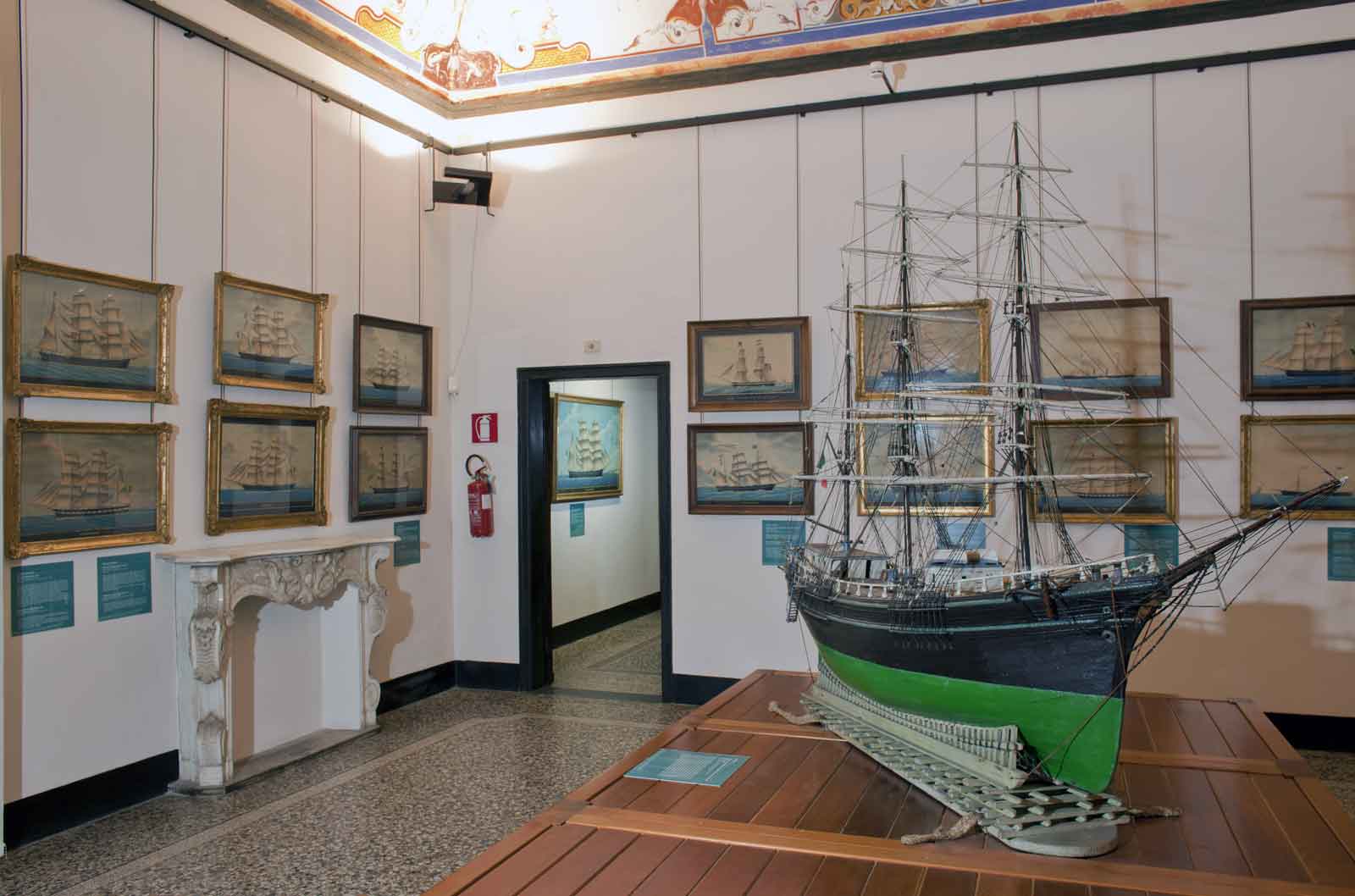
The theme of the collection, one of the richest among the museums of Genoa, is the relationship between the Ligurian Riviera and the sea. Starting from the Middle Ages, it examines the ways in which the coast, differently from the cities and in particular from Genoa, took on particular forms of trade, navigation, fishing, and shipbuilding. The exhibition unfolds as a journey through time, presenting portolans and atlases that show the coast, the Mediterranean, and the colonies that maintained a deep connection with the Riviera, leading up to the 18th-century views documenting the development of the northern shores of the Mediterranean. Between the late 18th and 19th centuries, there was the great development of Ligurian seamanship, based on a refined shipbuilding art and forms of navigation carried out by coastal crews. The museum ends with the image of the ships of the last sailing season, while next to dilapidated shipyards the first bathing establishments began to emerge.
13 Jewish Museum of Genoa
The Jewish Museum of Genoa preserves the works of the collection “Journey into the Jewish World” by Emanuele Luzzati, donated by the artist to the Jewish Community of Genoa. The collection is occasionally exhibited to the public due to organizational needs. On the occasion of institutional events such as the Day of Remembrance and the European Day of Jewish Culture, artistic, religious, or historical documentary exhibitions are set up in the Museum’s premises, open to the public. These exhibitions remain installed for several weeks during which guided tours by appointment are organized with particular attention to school groups; thematic lessons, held by specialized voluntary staff, are offered alongside visits for students. The Museum’s activity aims to acquaint the public with Jewish culture and the stages of the history of Ligurian and Italian Judaism. The Jewish Museum of Genoa was inaugurated in 2004, the year Genoa was European Capital of Culture. The design was entrusted to architect Gianfranco Franchini. The Museum is located on the top floor of the synagogue that has witnessed the history of Genoa’s Jews from 1935 to the present.
14 Museum of Peasant History and Culture of Genoa
The Museum of Peasant History and Culture of Genoa is housed in a villa in the immediate hinterland of Genoa, in the Polcevera valley, historically one of Genoa’s main land routes to the Po Valley markets. The hill where the Museum is located retains characteristics of an extra-urban area although it is close to densely inhabited urban areas. The building, set up as a villa connected to the organization of agricultural activities, dates back to the 18th-19th centuries. The exhibition sections offer a concise illustration of various themes: historical Ligurian settlements, organization of peasant homes and reconstruction of a kitchen, the cycle of hemp, cereal, vine, olive, chestnut cultivation, and popular religiosity.
15 Garibaldian Museum of Genoa
The museum occupies two rooms of the ancient Spinola villa, now Carrare villa, formerly the headquarters of Garibaldi, with richly frescoed ceilings, and preserves various relics (weapons, uniforms, and personal items of the hero of the Two Worlds and his companions), a correspondence collection of Garibaldi, manuscripts from the Garibaldian period along with weapons and Risorgimento documents and relics from the First World War.

16 Civic Museum of Natural History
The Museum was founded at the end of the 19th century by Giacomo Doria, a Natural History enthusiast, who displayed his collections alongside those of Lorenzo Pareto and Prince Oddone di Savoia. Subsequently, this core was enriched by acquisitions from expeditions financed by Doria and by legacies and donations. The vastness of the collected material made it necessary to transfer the museum headquarters to a building designed and constructed at the beginning of the 20th century. The collections are displayed in cases equipped with informational apparatuses about their contents. The layout is divided into 23 rooms. The journey begins in the space dedicated to Paleontology and continues with rooms exhibiting collections of high scientific value, mostly zoological. There are also sections showing botanical samples and collections of fossils, rocks, and minerals. Among the most important collections, mention should be made of those of Mammals, Birds, and Insects.
17 Saint Augustine Civic Museum
The Saint Augustine Civic Museum is located in the former Augustinian complex of the same name dating back to the second half of the 13th century. The Museum hosts sculptures ranging from the 10th to the 18th century, a ceramic section, and also paintings on canvas and frescoes. The Museum thus offers a comprehensive path but mainly focused on the Middle Ages, through Genoese and Ligurian art. The understanding of this art is the primary goal of the Institute, alongside continual references to the knowledge of Genoa’s art and history. The proposed activities—exhibitions, conferences, educational activities—aim to deepen knowledge about Genoa and Liguria’s art and history. Furthermore, situated in the central area of Sarzano, the Museum serves as a space to host and stimulate activities in the neighborhood and the historic center in general.

18 Museotheater of the Commenda of St. John of Prè
The Hospice of the Commenda of St. John of Prè is a very ancient building: it dates back to 1180 and was built to serve as support and assistance to pilgrims and crusaders traveling to or returning from the Holy Land. Since May 2009, after years of restoration and archaeological research, the Commenda presents an installation in the form of a “museotheater,” where historical documents become images and performance thanks to the collaboration between Mu.MA and Teatro del Suono. Sophisticated technologies allow animating the ancient walls bringing to life the characters of the time: from Brother Guglielmo, the builder of the building, to the protagonists of the Crusades who fought the Genoese or collaborated with them in Syria and Palestine, such as Balian of Ibelin or Saladin, the sultan, Kurdish by birth, who reconquered Jerusalem in 1187. The powerful message conveyed by the new installation is that no one should feel like a foreigner in Genoa. The concept of interculturality is at the heart of the Museotheater’s events because the Commenda was created to offer hospitality to pilgrims and travelers, connecting different peoples and cultures. Meanwhile, it has also become a point of reference for interreligious events with local foreign communities and a suggestive location for receptions.
19 “G. Boato” Physics Museum
The “Giovanni Boato” Physics Museum of Di.Fi. – University of Genoa was founded in 1991 with the task of preserving instruments and developing knowledge of scientific activities carried out in Genoa in various physics sectors from 1784 (year of the establishment of the old physics cabinet) to today. The Museum’s scientific collection is divided into two sections:
- classical physics, including artifacts from the 18th and 19th centuries up to the early 20th century;
- modern physics, including instruments and apparatuses from research laboratories active in various sectors of Genoese physics from the post-war period to today.
20 Ligurian Archaeology Museum
The Ligurian Archaeology Museum offers a wide panorama of the region’s most ancient past: from the gigantic cave bears that hibernated in our caves 80,000 years ago during the rigors of the last glaciation, to the important Roman cities of Liguria, especially Genoa. The exhibition itinerary, recently expanded and equipped with numerous educational supports, develops over two floors through sensational discoveries such as the Paleolithic burials, the most numerous and best preserved in Europe, among which the oldest, around 24,000 years ago, is called the “Prince of the White Arenas” for the extraordinary richness of the grave goods, testimonies of the first Neolithic farming civilizations, up to documentation of the first metallurgy in Liguria, the graves of the Ligurians and the first inhabitants of Genoa, founded in the 6th century B.C., on the commercial routes of the Upper Tyrrhenian from the Etruscans, and numerous sets from a large necropolis found under Via Venti Settembre are exhibited. The path is completed by sculptures, inscriptions, busts, and heads of Roman age from Genoa and Roman cities of Liguria and the Egyptian Room with the sarcophagus and mummy of the priest Pasherienaset joined by the funerary statuette.
21 Mazzini House
The building constructed in the 15th century by the Adorno family on “Lomellina Street” underwent significant transformations at the end of the 18th century: the building, with sober and rigorous lines, passed in those years to the Di Negro family. In 1794 the marquis Gian Carlo, a scholar and patron, rented until 1808 a three-room apartment with services between the first floor and mezzanine to his doctor Giacomo Mazzini, father of Giuseppe, and his wife Maria Drago. Upon Mazzini’s death, workers’ associations promoted a subscription to purchase the house and establish the first nucleus of the future Mazzinian Institute; the structure, donated to the Municipality, was overwhelmed by the progressive degradation of the area, which in fact limited its use. The building was declared a “national monument” only in 1925, and a subsequent decree ordered its expropriation and purchase, while the internal renovation had to wait until 1933. The new cultural center, which united the Risorgimento Museum of Palazzo Bianco, the historical archive, and the library, was inaugurated the following year but was already closed during the war period and transferred for safety reasons; in fact, in 1943 the building was hit by a bombing that damaged Mazzini’s apartment and part of the collection. The exhibition sector, since then continuously reduced, underwent a first important renovation at the beginning of the 1980s, and on the occasion of Mazzini’s bicentenary (2005), the multimedia section was installed.

22 Colombo House
The building preserved next to the cloister of Saint Andrea arose on the remains that M. Staglieno first and P. E. Taviani later identified as the house of the Genoese navigator. The original Colombo residence is believed to have been located in Portoria, where the father Domenico had been assigned by the convent of Santo Stefano to guard the Olivella Gate, an ancient access to San Vincenzo. From 1455 the same monks rented to Colombo the house at Vico Dritto 37, composed at the time of two floors: a ground-floor shop where Domenico, having lost his job as gatekeeper, conducted weaving and wine trading professions, and a kitchen use on the upper floor (a copy of the original lease contract is displayed inside the monument). During Christopher’s youth, and for about a century, this part of the city experienced exceptional demographic growth that resulted in further layering of the urban fabric; however, the original building was raised by three floors only in the 18th century because it was hit during the French bombing of 1684, as confirmed by the analysis of the floor beams conducted by T. Mannoni. In 1887 the Municipality purchased the building as part of the Porta Soprana restoration program; this allowed it to survive the transformations of the center carried out from the late 19th century to the 1930s. The archaeological excavations carried out during the last conservation restoration in 2001 revealed the existence of foundations predating the medieval period.