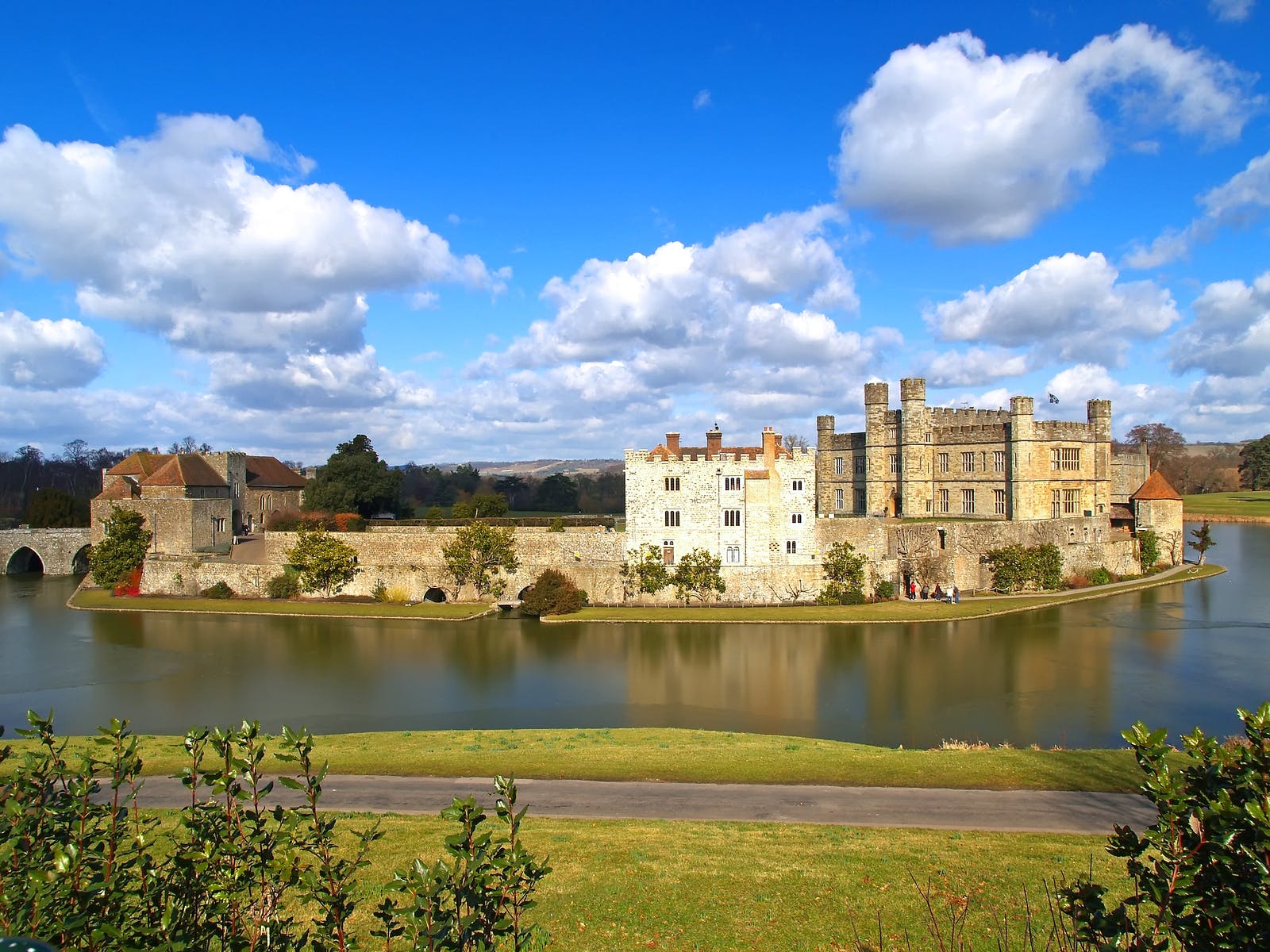


Just an hour by train from London (departing Waterloo station), Winchester welcomes visitors with its rich history and vibrant arts scene. The city’s origins date back to a Breton settlement, later flourishing as the Roman town Venta Belgarum. In 827, under King Egbert, Winchester became the capital of England.
When William the Conqueror designated London as a second capital, he was crowned in both cities—a tradition followed by later monarchs until London became the nation’s sole capital. William also tasked Winchester monks with compiling the Domesday Book, England and Wales’ great survey.
Winchester is perfect to explore on foot, offering a wealth of historical landmarks and evocative medieval corners.
What to See in Winchester, England
1 Winchester Cathedral
Any tour of Winchester should start with its Cathedral, the city’s crown jewel and one of England’s grandest churches. Its length—167 meters—is striking, and its dominant Gothic style is complemented by a Norman transept. Inside, visitors find elaborate bishop tombs, particularly those of Bishop Wykeham and Bishop Fox, finely carved 14th-century choir stalls, a remarkable 12th-century Norman baptismal font in black Tournai marble carved with scenes from the life of St. Nicholas, and stunning early medieval frescoes in the Chapel of Holy Sepulchre and Guardians’ Angel Chapel.
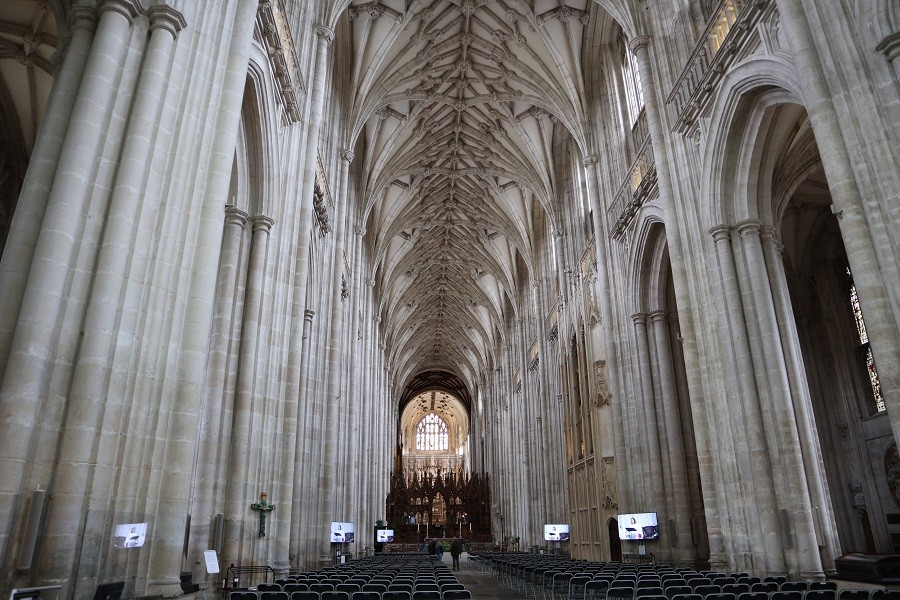
The Cathedral is also home to two memorials commemorating author Jane Austen, who spent many years here. She was not famous on her death, so her simple grave only hints at her “extraordinary endowments of her mind.” Later literary success earned her a richer plaque that celebrates her as a writer.

From the transept, you can access the 17th-century library and the treasury, which includes a beautifully illuminated 13th-century Bible. Free guided tours led by volunteers are highly recommended for insights into Winchester Cathedral’s history and secrets.

2 Around Winchester Cathedral
After exploring the Cathedral, enjoy a stroll among the adjoining historic buildings. Walk alongside the right aisle’s exterior to The Slype, a passage leading into The Close, the partly walled bishop’s precinct. Norman arches reveal remnants of the former chapter house linking the Cathedral’s transept to the Deanery. Passing by the 17th-century Long Gallery and Pilgrims’ School brings you to Dome Alley, famed for its half-timbered houses. Through St Swithun’s Gate, you’ll find the 14th-century Kingsgate; above its arch stands the tiny church of St Swithun upon Kingsgate.

3 Wolvesley Castle
Next to today’s bishop’s palace, a green path leads to the unexpected ruins of Wolvesley Castle, the medieval bishop’s residence destroyed in the 1646 Civil War. Dating to 970 and expanded in the early 12th century, its ruins still showcase the chapel and great hall—famously the setting for Queen Mary and Philip of Spain’s marriage banquet in 1554. The site’s impressive fortifications, added by Henry II, give it a true castle appearance.

4 The Great Hall and the Round Table
All that remains of the castle built by William the Conqueror are the Round Tower foundations and, most importantly, the Great Hall—beautifully preserved and renowned for housing the Round Table. It’s not King Arthur’s original, but rather a striking 14th-century wooden creation, likely crafted for a tournament, inscribed with knights’ names and an image of the king.

5 High Street
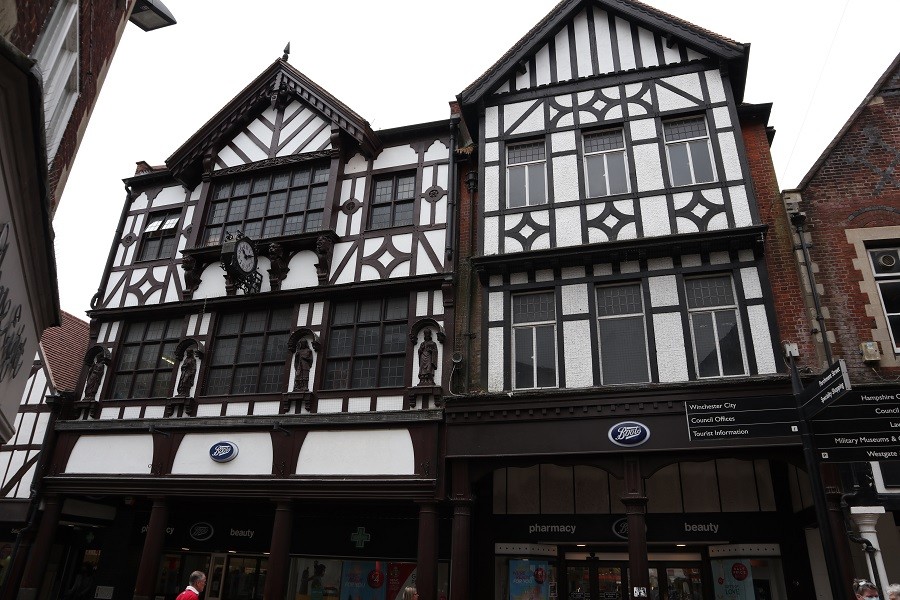
Winchester’s main thoroughfare is High Street, tracing the route of the Roman decumanus. Fully pedestrianized, it hosts shops and restaurants, often tucked inside picturesque, timbered cottages. Enter through the Westgate, with its small museum and rooftop offering city views.
The Old Guildhall, now a Lloyds Bank branch, has a prominent street-facing clock. At the far end, you’ll see the neo-Gothic Guildhall on the right and a central statue of Alfred the Great, erected in 1901.
6 Winchester College
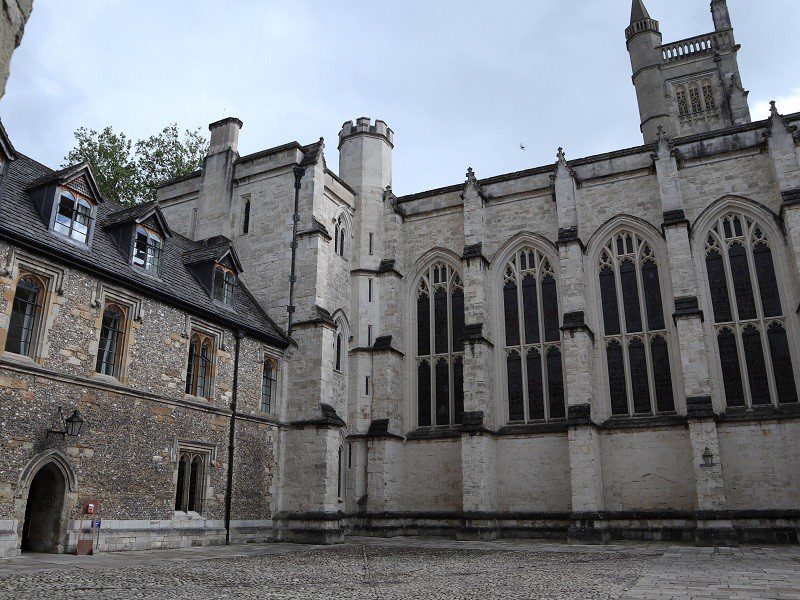
The city’s most prestigious institution is Winchester College—the oldest private school in England. Founded in 1382, it originally admitted underprivileged boys but today is among the UK’s most exclusive schools, known worldwide.
The grounds feature 80 historic buildings—mostly late 14th-century—spread across a 45,000-square-meter garden. You can visit the treasured archaeological collection in the school’s evocative stables. Guided tours are highly recommended to discover the site’s most beautiful spaces.
For a sneak peek at Winchester College, watch this short documentary
7 The Military Museums
Near the Great Hall lies Winchester’s Military Quarter, where late-18th-century barracks present six regimental collections tracing the British Army’s history from 1702 to today. Learn about the King’s Royal Hussars, Royal Hampshire Regiment, Royal Green Jackets, and the Nepalese Gurkhas, who served the British Empire for nearly 200 years—a highlight is the Waterloo battle diorama at the Royal Green Jackets Museum.
Beyond military history, the Military Quarter is also architecturally fascinating. The site stands atop William the Conqueror’s castle, partly ruined after the Civil War. In 1683, Charles II commissioned a palace here, modeled after Versailles and designed by renowned architect Christopher Wren (the same behind St Paul’s Cathedral in London). Construction halted at the king’s death; after years of neglect, the site was converted for military use in the late 1700s, housing up to 3,000 soldiers during the Napoleonic Wars.

8 The River Itchen and City Mill
Winchester also charms as a waterside town. The River Itchen and its canals flow beside the historic center—perfect for green escapes like the Keats’ Walk. The river powers the City Mill, dating from 1774 atop a medieval structure. Still operational, the mill demonstrates traditional flour production and milling, with fresh flour available to buy.

9 Where to Eat in Winchester
Winchester’s culinary scene is rooted in classic English pubs scattered through its historic center. Some are centuries old—such as The Eclypse Inn, set in a 16th-century former clergy house, and God Begot House, dating to 1052, now home to Ask restaurant and The Royal Oak pub along a narrow side lane.
Those after modern twists on traditional fare should try Pitcher and Piano, beside the Guildhall, for inviting design and creative cuisine.

10 Where to Stay
While Winchester can be explored in a day, an overnight stay lets you soak in medieval hotel charm. Some central pubs, like The Wykeham Arms and The Old Vine, offer atmospheric rooms above the bar.
For luxury seekers, just 4 km from the center in the Hampshire countryside is Lainston House, an elegant 17th-century villa turned five-star hotel.