



The Baja California peninsula stretches for 1,250 km just south of U.S. California, in Mexico. Narrow and largely untouched—even today it’s one of the planet’s most scarcely populated regions—the area boasts dramatic deserts, vast open spaces, and nature that’s remained impressively pristine.
- Northern and Southern Baja California
- Southern Baja California
- Vizcaino Desert
- Desert Plants of Southern Baja California
- Southern Baja California: The Beaches
- Southern Baja California: The Gray Whale
- Southern Baja California: Exploring the Marine Parks
- Things to Do in Baja California
- Baja California Travel: The Exclusive Local Tour Operator
Separated from mainland Mexico around two million years ago, Baja California is lined with volcanic mountains reaching up to 3,000 meters in the north, coastal plains (widest along the Pacific), and a large central desert. Here, you’ll find two unique protected areas: the Valle de los Cirios and the Vizcaino Desert, fantastic ecosystems home to many endemic species of both plants and animals.
Northern and Southern Baja California
The peninsula is split into two regions, Northern Baja California and Southern Baja California. Following the Mexican-American war in the 19th century—which cost Mexico Texas, New Mexico, and Alta California—the peninsula remained under Mexican control, thanks to the local people’s tenacity. Afterward, Baja California was divided into two territories, each with its own government and capital. The capital of the North is Mexicali (even if Tijuana is the most famous), while in the South it’s La Paz.
Southern Baja California
Nature lovers will be drawn to Southern Baja California for its wild landscapes. The Sierra de La Giganta massif near the colonial town of Loreto is among the region’s least explored sections—definitely worth discovering.
This territory is rich with rare flora and fauna, including the endangered Borrego (Desert Bighorn). It’s also an archaeological treasure recognized as a UNESCO World Heritage Site thanks to its remarkably well-preserved cave paintings, reached on foot or muleback from a time-frozen mountain village, through enchanting canyons. Further south, you’ll find another high massif, the Sierra de la Laguna—a Biosphere Reserve and UNESCO site—where climates shift from arid desert to palm-filled oases to lush, cool broadleaf and pine forests. Natural hot springs appear as hidden gems amid untouched nature.

Vizcaino Desert
The Vizcaino Desert extends across the peninsula’s central belt, from the Sea of Cortez to the Pacific. It’s one of the world’s largest protected reserves, boasting an amazing range of habitats. Traveling from Santa Rosalia inland, you can spot the silhouettes of three extinct volcanoes—Las Tres Vírgenes (El Viejo, El Azufre, El Virgen) whose last recorded eruption dates back to 1746.
The area is a sanctuary for hundreds of plant species, rare amphibians and reptiles, over 200 bird species, and around 50 mammals found nowhere else. This endemism is thanks to the unique isolation and climate here. In these arid zones, wildlife includes the jackrabbit, kangaroo rat, coyote, the infamous rattlesnake, plus myriad birds and insects. Head north or to higher elevations for fresher climates and vegetation, where you might spot pumas, bobcats, wild deer, bighorns, pronghorns, and others. Among iconic flora, look for the Fouquieria columnaris, or cirio, a fascinatingly shaped plant reaching up to 20 meters.

Desert Plants of Southern Baja California
Many of Southern Baja California’s desert plants are prized by botanists and enthusiasts. Some rare cacti even have commercial value, so their trade is regulated. The most common are cardones (Pachycereus pringlei Britton & Rose)—candelabra-shaped giants that reach up to 15 meters tall. These ancient cacti grow just a centimeter each year, blooming only after a century. Witnessing the desert in bloom is a moving experience, especially when you consider the resilience of these plants and the flocks of hummingbirds that depend on their nectar.
But Southern Baja California also holds lush, tropical areas. The contrast between the cool Pacific and the warmer Sea of Cortez brings veritable oases along the coast, with lush palm groves. The average annual temperature is a pleasant 22°C; the climate is dry except for the hot, humid spell in September, when rains sweep through.
If desert landscapes aren’t for everybody (their secret beauty reveals itself to patient observers), the local sea—teeming with life—is a true magnet for travelers.

Southern Baja California: The Beaches
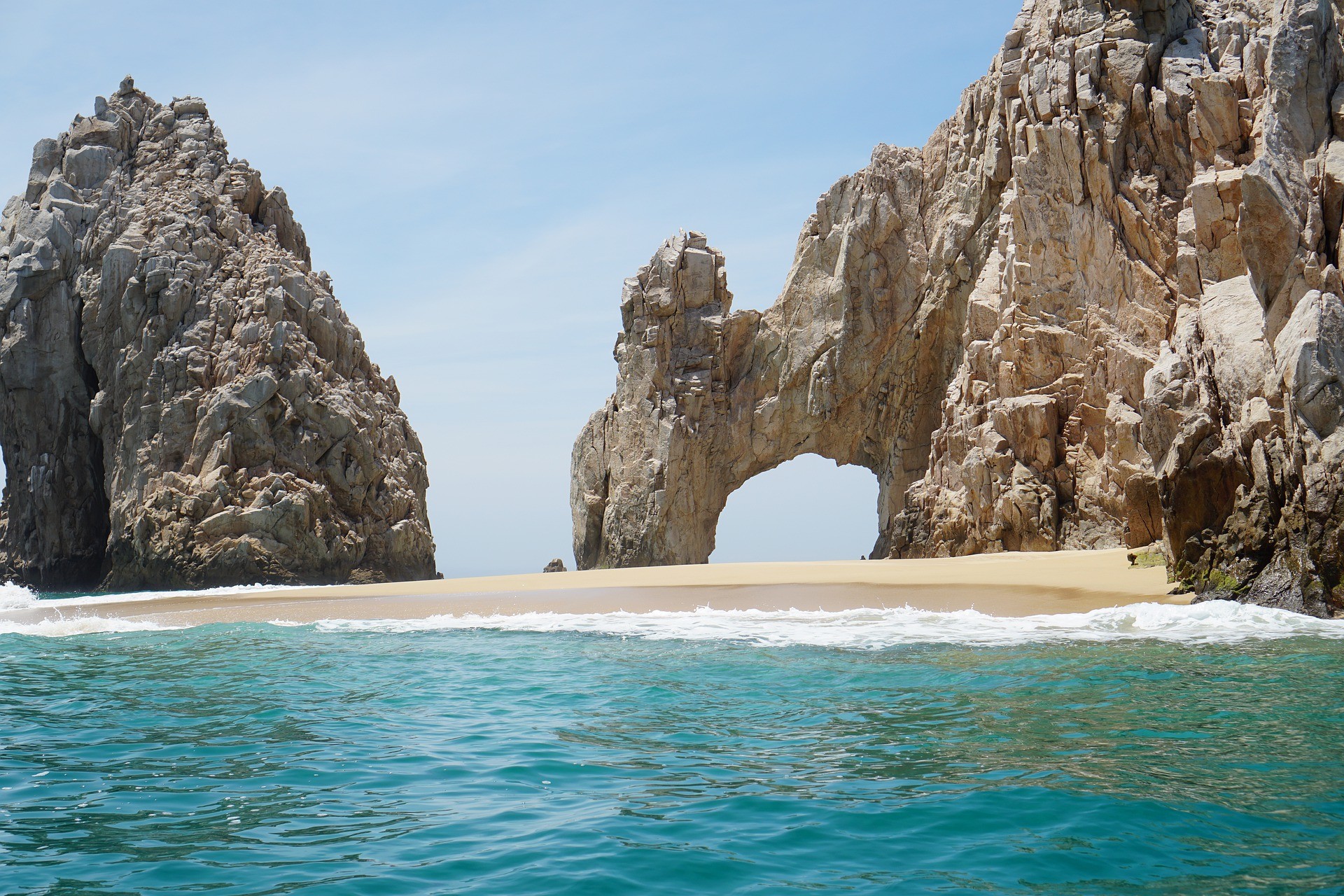
Untouched beaches, golden and white sands, crystal-clear waters, endless seashells, vibrant tropical fish, manta rays, marine turtles, dolphins—these delights await swimmers and divers. The peninsula also boasts many deserted islands—three larger ones in the Pacific and numerous smaller ones in the Gulf of California—some protected marine parks where you can explore by boat, snorkel, or dive to admire a remarkable aquatic world. There are also countless lagoons, estuaries, and mangroves, each a fascinating ecosystem.

Southern Baja California: The Gray Whale
The region’s most famous marine star is the majestic gray whale. Every year, starting late September or early October, these giants migrate from icy Alaska down to Baja California’s warm waters, arriving by January. Here, they mate and give birth to calves conceived the previous year. During what is the longest-known mammalian migration (16,000 km without stopping!), these whales often approach boats curiously, allowing visitors to experience emotional, close encounters where the gentle giants sometimes allow a friendly scratch.
Since the first gentle whale-human contact in 1977, the Mexican government has made concerted efforts to protect the whales’ vital habitats. Regulations tightly control whale watching—only a select few small boats are licensed, with strict distance and speed requirements; sonar and fishing are banned in the protected zone during breeding. This thoughtful protection has helped the population rebound, as indicated in recent surveys: in the Ojo de Liebre Lagoon and San Ignacio Lagoon alone, 830 gray whales were observed, including 268 calves and 562 adult females.
Gray whales are just one of many species that visit these waters annually. Humpbacks—the ocean’s legendary singers—arrive in November from British Columbia, Washington State, and Northern California. Along with blue whales and other cetaceans, they can be spotted on boat excursions off the coast of Baja Sur throughout the season.

Southern Baja California: Exploring the Marine Parks
For extra thrills, head to Cabo Pulmo, the western hemisphere’s most successful marine park, where you can spot sperm whales, whale sharks, and, above all, several shark species. Home to over 6,000 marine species, this park protects North America’s largest coral reef. A must-see for anyone passionate about the sea, it’s famous for its swirling schools of fish, rays, turtles, and even tiny, spectacularly colored nudibranchs.

Things to Do in Baja California
Baja California Travel: The Exclusive Local Tour Operator
Baja California Travel, based in La Paz, is a specialized tour operator for self-drive adventures around Southern Baja California. Created from a true passion for the region, it offers a unique service: independent trips by SUV or 4×4 through some of Mexico’s wildest landscapes.
The project owes a lot to its founder, a Roman entrepreneur who was so captivated by Baja’s raw beauty and endless open spaces that he made a life-changing move here. His deep, first-hand knowledge of every nook and cranny now helps travelers discover both popular and lesser-known gems in complete safety. Baja California Travel’s itineraries offer not only the major highlights—like remote Jesuit missions, Spanish colonial cities founded in the 17th century, old mining towns with gold rush legends, and Mexico’s top beaches—but also intimate natural wonders, including secret or remote spots.
[caption id="attachment_212022" align="aligncenter" width="2000"] Coyote in Baja California
With detailed travel resources—maps, accurate descriptions, and annually updated GPS tracks (since tides, wind, and intense September rains can quickly change landscapes)—plus constant phone assistance, Baja California Travel guests can safely venture into untouched territories: pastel-colored desert canyons, tiny fishing villages, lush oases, ancient indigenous rock art sites, and authentic villages where time seems to stand still and locals welcome you with a smile.
Customized based on your travel needs, preferences, vehicle, and driver experience, Baja California Travel’s itineraries promise to make your trip truly unique and unforgettable.

Beyond historic towns, remote landscapes, marine parks, and awe-inspiring whale encounters, Baja California Travel also offers short guided tours (2-4 days) to let you fully experience the desert, far from any connectivity or facilities. With dedicated guides and all the right equipment—tents, cots, camp kitchen, water tanks—you’ll explore mountain routes, deserted islands, abandoned missions, oases, ancient cacti forests, old waterfalls, dry riverbeds, and, most memorably, endless, perfect beaches. Sleeping in absolute silence under star-filled skies, sharing stories around the campfire, you’ll take with you an authentic experience with no environmental impact—leaving only footprints in your memory.