


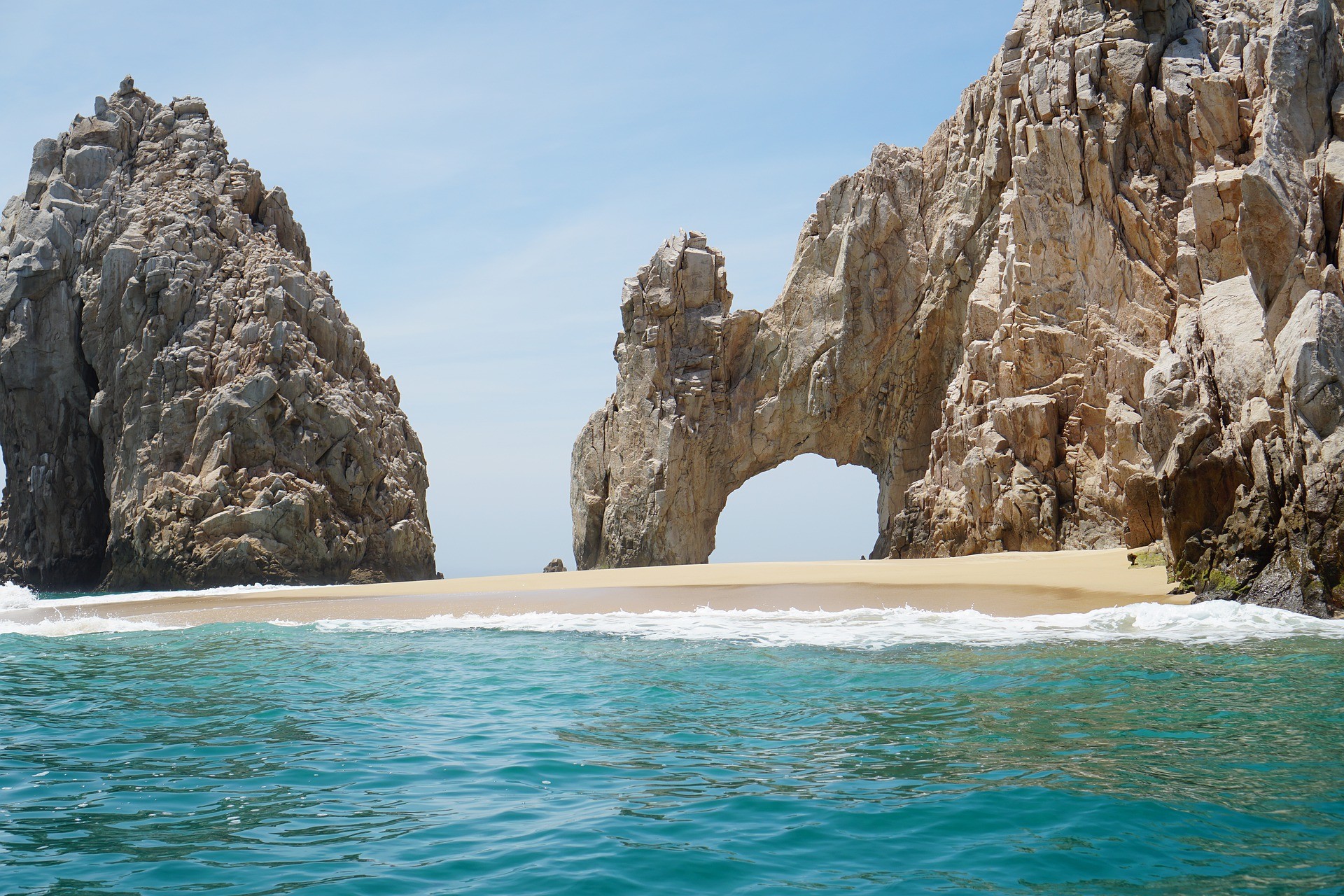

La Baja California is a peninsula in Mexico, long and narrow (1,250 km in length and up to 200 km wide) located south of American California. It is one of the most untouched areas on the planet (according to a 2015 estimate, the second least populated country in the world) with a low population density, almost entirely concentrated in a few cities, vast desert spaces, and a fortunately still intact nature.
- Lower California Norte and Lower California Sur
- Lower California Sur
- Vizcaino Desert
- Desert plants of Lower California Sur
- Lower California Sur: the beaches
- Lower California Sur: the gray whale
- Lower California Sur: visiting Marine Parks
- What to do in Baja California
- Baja California Travel, exclusive tour operator
Separated from the rest of Mexico two million years ago, it has volcanic mountains running parallel to the coast, reaching up to 3,000 meters high in the north, long plains near the coasts (the largest are on the Pacific side), and a large central desert area, which in turn includes two important protected areas, the Valle de los Cirios and the Desierto del Vizcaino, unique ecosystems in the world that host endemic plants and animals.
Lower California Norte and Lower California Sur
It is divided into two regions, Lower California Norte and Lower California Sur, following the Mexican-American war that in the mid-19th century cost Mexico the loss of Texas, New Mexico, and Alta California. Only thanks to the determination and sacrifice of the Mexican people was it impossible for the United States to also occupy the peninsula. At the end of the war, Lower California was divided into two territories, each with its own government and capital, that of the North is Mexicali (although Tijuana is the better known city) and that of the South is La Paz.
Lower California Sur
From a naturalistic point of view, Lower California Sur is characterized by the presence of large massifs. Sierra de La Giganta, not far from the historic colonial town of Loreto, is one of the least explored areas of the Lower California but worth visiting.
Characterized by the presence of endemic plants and animals such as the Borrego (the Desert Bighorn, unfortunately endangered), it also boasts a significant archaeological area, UNESCO World Heritage, rich in extraordinary petroglyphs perfectly preserved, accessible on foot or muleback, starting from a small timeless mountain village, along enchanting canyons. Another important massif rises further south and reaches 2,080 meters in height. Sierra de la Laguna, Biosphere Reserve and UNESCO World Heritage, is a complex and unique ecosystem worldwide for its extreme climatic variety, which quickly shifts from arid temperatures and desert landscapes to oases with palm trees and water bodies, up to cool and humid areas characterized by broadleaf forests, oaks, and evergreen pines. In the Sierra, there are also small hot spring oases amidst pristine nature.

Vizcaino Desert
The Vizcaino Desert, which embraces the entire central part of the peninsula, from the Sea of Cortez to the Pacific, constitutes one of the most important protected areas of Lower California Sur and is one of the largest biospheres in the world. Crossing it along the road starting from Santa Rosalia towards its interior, one can glimpse the silhouettes of three ancient dormant volcanoes, known as Les tres Virgenes, (El Viejo, El Azufre and El Virgen) whose last eruption, recorded in the memoirs of a Jesuit priest, dates back to 1746.
This area is the natural habitat of five hundred plant species, four amphibians, forty-three reptiles, two hundred bird species, and more than fifty mammals that are found exclusively in this area. The endemism is due not only to isolation but also to particular climatic conditions. In these arid zones, fauna is limited to small mammals, like the hare, kangaroo rat, and coyote, reptiles such as the feared rattlesnake, many birds, and insects. But just moving higher up and north, where there is more vegetation and cooler temperatures, one can encounter the puma, the bobcat, and other wild felines, the mule deer, the bighorn sheep, the pronghorn, and many other animals. Among the endemic plants, the Vizcaino is characterized by the presence of a plant with curious shapes, the Fouquieria columnaris, commonly called Cirio, which reaches a height of 20 meters.

Desert plants of Lower California Sur
Many of the numerous desert plants of Lower California Sur are of interest to botanists and enthusiasts. Some of these cacti, due to their rarity and uniqueness, have commercial value and therefore enjoy protection and safeguarding laws. The most common cacti are the cardones (Pachycereus pringlei Britton & Rose) with their distinctive candelabra shape, which can reach a height of 15 meters. They are millennial cacti, considering they grow only one centimeter per year and only after reaching a hundred years old can they bloom. Seeing the desert in bloom is an exciting spectacle, even more so if you consider how much time and struggle these plants had to endure before reaching maturity and providing the numerous small hummingbirds here with the nectar they feed on.
But Lower California Sur also has a lusher tropical aspect. The temperature difference that characterizes the Pacific coasts, cooler than those of the Sea of Cortez, makes these coasts very green, rich in shady palm groves. On the plains along both coasts, the average annual temperature is quite pleasant, about 22 degrees Celsius, and the climate is dry, except for summer which is very hot and in September also humid due to heavy rains affecting the peninsula.
If the desert terrestrial beauties do not awaken enthusiasm in everyone (one must be attentive observers to grasp their secret wonder), the same cannot be said of the sea, which bursts with life and is the obvious reason for the huge tourist flow that every year floods these shores.

Lower California Sur: the beaches
Untouched beaches, white or golden, very clear waters, shells, every kind of colorful tropical fish, mantas, sea turtles, and dolphins delight bathers. The peninsula is also rich in deserted islands and islets, three large ones on the Pacific side and many smaller ones in the Gulf of California, some of which are part of enchanting marine parks that can be visited by boat and where you can dive or snorkel to admire the abundance and variety of marine life. There are also numerous lagoons, estuaries, and mangroves, which constitute another fascinating, very rich ecosystem.

Lower California Sur: the gray whale
The star of these seas is undoubtedly the gray whale. At the end of September or beginning of October, these large mammals begin their migration, leaving the icy Alaska to arrive in these warm waters around early January. Here they begin courtship rituals and give birth to calves conceived the previous year. During the longest migration known, they never stop, traveling 16,000 kilometers, day and night, until reaching the coasts of Lower California. Almost aware that humans here do not represent a danger, they approach boats carrying small groups of curious tourists, who melt into tears of emotion when these marine giants show their appreciation with water spouts at the scratches on their backs and faces and plant one of their large primitive eyes, mysteriously full of sympathy and understanding, into the emotional human eyes.
Since the first gentle contact between a whale and a human being, which occurred back in 1977, the Mexican government has promoted a farsighted campaign for the protection and conservation of the marine and terrestrial habitat of these mammals, so important for their feeding and reproduction. Through the Ministry of Environment and Natural Resources, it has promulgated laws and established precise regulations for whale watching, granting permits only to a limited number of small boats, determining the distance and speed to be maintained during the approach, prohibiting the use of sonar and probes to locate their presence, fishing, and any aquatic and aerial activities in the protected area, to avoid any disturbance during mating or birth.
This policy, which has also borne fruit economically by promoting tourism activity, has led to the success of species conservation and this year the National Commission for Protected Natural Areas, which conducted the gray whale census, celebrated the birth of 14 calves, and more generally, between Ojo de Liebre Lagoon and San Ignacio Lagoon, recorded the presence of as many as 830 cetaceans, of which 268 were calves and 562 adult females.
Gray whales are only one species among those that annually migrate to southern Californian waters. A couple of months earlier, in November, humpback whales also arrive, the largest singers, albeit without vocal cords, of the Ocean. They come from British Columbia, Washington State, and Northern California. Together with blue whales and other cetaceans, they can be seen moving by boat from various coastal locations of Baja Sur where they stay for a few months each year.

Lower California Sur: visiting Marine Parks
Other thrills, and not only of emotion, come from sperm whale sightings, whale sharks but above all sharks, in the most successful marine park of the Western Hemisphere: Cabo Pulmo. The park hosts as many as 6,000 marine species living along the largest coral reef in North America. An unmissable place for anyone who loves the sea, it inspires wonder in diving and snorkeling enthusiasts for the swirling schools of fish of all shapes and sizes, manta rays, sea turtles, and even tiny, bizarre, and colorful nudibranchs.

What to do in Baja California
Baja California Travel, exclusive tour operator
In this corner of earthly paradise, specifically in the town of La Paz, is based Baja California Travel, a tour operator specialized in Self Drive trips. Born more out of a passionate love for the territory than a planned business strategy, it offers tourists a service that was not available: fully autonomous trips in South Baja California, both in SUVs and off-road vehicles.
The project owes much to the adventurous and exploratory spirit of its founder, a brave Roman entrepreneur who, enchanted by the beauties of the peninsula and its vast open spaces, not only impulsively moved there, giving a new direction to his life, but has visited every corner, thoroughly learning all its aspects to promote knowledge and share this passion with his guests, in complete safety. The itineraries of Baja California Travel, in fact, do not overlook the most visited locations, which offer the thrill of reliving a distant and exotic past. The visit to the ancient missions of the Jesuit fathers founded amidst the dust, the cities with Spanish colonial architecture established in the 17th century, the mining towns where the excitement of the gold rush is still felt, or the stops on the most beautiful beaches in all of Mexico, are however accompanied by the more intimate and emotional experience of unmissable natural jewels, including those little known, remote, or secret.

Thanks to detailed travel material that includes maps, accurate descriptions, and GPS tracks of routes verified annually—because here the weather (storm surges, winds, and the heavy rains of September) can change the landscape of a place very quickly—and thanks to constant telephone assistance, guests of Baja California Travel can venture into the most beautiful and untouched territories of the peninsula, into the desert and along canyons with pastel colors, can reach tiny fishing villages, surprising oases rich in spring waters and palm groves, discover ancient testimonies of indigenous populations and stop in small towns where life still follows old ways and rhythms and where the hospitality, simplicity, and good humor of this very kind population are, if possible, even more appreciable.
Planned based on the traveler’s needs, tastes, and expectations, the choice of vehicle and the driver’s experience, the itineraries of Baja California Travel will fit you perfectly and make your holiday a unique and unforgettable experience.

Besides historic cities, remote places, marine parks, an invaluable resource of this peninsula, and the extraordinary contact with whales, Baja California Travel also offers visitors the possibility to enrich the Self Drive experience with small guided tours, lasting from two to four days, to stay in the desert, in areas without connectivity and lacking any accommodations. Thanks to the experienced staff and suitable equipment, made up of comfortable tents, cots with pillows and mattresses, field kitchen, water tank for personal hygiene, you will travel along mountain paths, deserted islands, abandoned missions, oases, forests of millenary cacti, ancient waterfalls and riverbeds, and especially, boundless, beautiful deserted beaches lapped by crystal-clear turquoise waters full of life. Here, camps will be set up for the night, in absolute silence broken only by the waves, under skies full of stars, where around the fire you can pleasantly share some life stories and experiences, in a stay fully respecting such a pure but fragile environment and leaving traces only in your hearts.



. Advice on what to see among rock paintings, canyons, desert, ocean, pristine beaches, sea turtles, crystal-clear waters with tropical fish and dolphins.)