
FullTravel.it recommends tourism manuals published in the last two years, capable of providing industry professionals with the insights and ideas needed to relaunch their business in the post-Covid era.
Add us to your preferred sources.

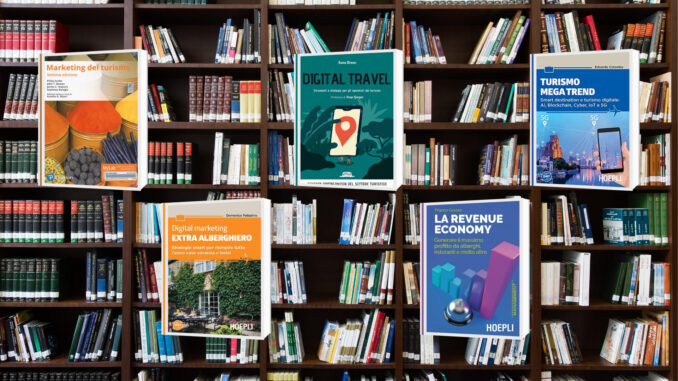
The world of tourism, which was severely hit by the pandemic, is preparing to restart in September with new rules to comply with, changing needs of tourists to satisfy, and considerable uncertainty about the steps to take in order to adapt to the different ways of traveling that have emerged since the summer of 2020. To best advise tourism operators,FullTravel.it, a historic travel web magazine that is about to celebrate 20 years of activity, has brought together 5 manuals published in the last two years that offer a broad perspective on the tourism of the future. Here they are in order of publication.
Summary
1 Tourism Marketing by Philip Kotler (Pearson, 2018)
The tourism manual by the father of modern marketing, Philip Kotler has reached its seventh edition and has the merit of helping readers master the basic concepts and practices of marketing management as applied to the hospitality and travel sector. The text addresses the subject with methodological order and the necessary scientific rigor in a world often prone to improvisation, where marketing is seen only as a function of sales. Kotler’s holistic marketing vision, on the other hand, interprets marketing as a tool to bridge the gap between the complex reality of markets and a company’s ability to design, develop, and deliver value to the customer. The Italian edition also contains an interesting appendix of case studies from our country.
2 Digital Marketing for Extra-Hotel Businesses by Domenico Palladino (Hoepli, 2019)
Domenico Palladino, an economic journalist specializing in tourism, has created a guide for hospitality entrepreneurs whose subtitle fits well with the reality we are experiencing: “Smart strategies to fill vacation homes and hotels year-round.” Digital marketing becomes the present and future key to operating in sectors where demand is lower than supply, thanks to building a unique brand identity and working within specific audience niches. A theory increasingly validated in the post-coronavirus world, which accelerated digital adoption during the lockdown period. The book offers a working method particularly aimed at hosts and property managers who have entered the world of hospitality without specific training in tourism marketing.
3 Digital Travel by Anna Bruno (Flaccovio, 2020)
Anna Bruno’s manual, professional journalist and digital travel specialist, was released ahead of its time in January 2020. The book identifies the digitalization of tourism businesses as an opportunity to compete in a tourism landscape that appears to be dominated by online operators, offering a new approach for companies in the sector with practical advice and tips on using digital marketing tools through the testimony of experts and successful players’ stories. Useful for understanding how digital makes travel more engaging and how to reach potential clients online in a time when the traveler’s customer journey is increasingly shifting towards digital channels.
4 The Revenue Economy by Franco Grasso (Hoepli, 2020)
Franco Grasso is considered one of the leading experts in revenue management in Italy, and in his third book, he addresses hoteliers who want to learn how to maximize their revenue by making the most of dynamic pricing tools. The author offers an objective and balanced view of the present and future of the economy and shows—using certified data and Italian and international case studies—how an economy based on revenue management offers greater earning potential compared to traditional static pricing or low-cost strategies that disregard the quality of tourism services.
5 Tourism Mega Trends by Edoardo Colombo (Hoepli, 2020)
At the heart of Edoardo Colombo’s book, an expert in innovation in tourism, is the “Super Traveller,” who is always connected—a more and more digital interlocutor targeted by the major online operators who, after flights, hotels, and restaurants, have developed new platforms to intermediate both on-site and digital experiences. The keywords that guide the reader through this journey into tourism technology trends are artificial intelligence, chatbots, blockchain, digital identity, IoT, robotics, cybersecurity, and 5G. The author explores models to emulate, such as Smart Destinations and digital ecosystems, offering destination managers and sector consultants insights and technological innovations to be future-proof, along with interesting contributions from entrepreneurs and experts, and reflections on the mass adoption of technologies resulting from the Covid-19 pandemic.
Pubblicato in Books & Meetings
Be the first to comment