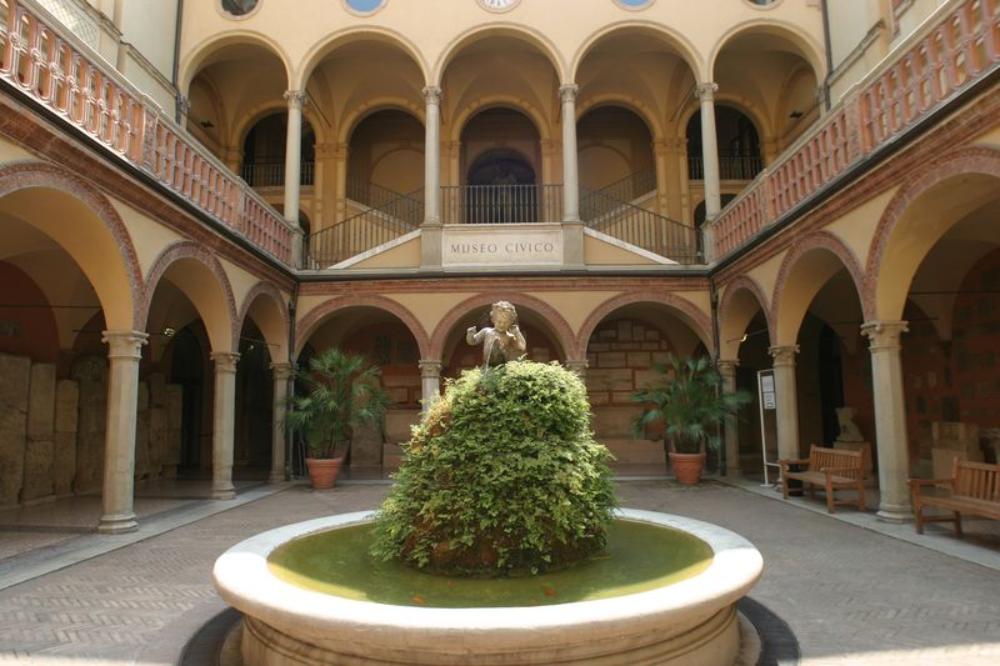

Il museo, hosted in the fifteenth-century Palazzo dell’Ospedale di Santa Maria della Morte – a fifteenth-century building renovated in 1875 – was founded in 1881 from the merger of two museums, the University Museum, heir to the “Stanza delle Antichità” of the Academy of Sciences founded by Luigi Ferdinando Marsili (1714), and the Municipal Museum, recently enriched by the large collection of the painter Pelagio Palagi (1860) and numerous artifacts from the successful excavation campaigns conducted in Bologna and the surrounding territory between the second half of the nineteenth century and the first decades of the twentieth century.
Formed by the joining of the Aldrovandi, Cospi, and Marsili university collections, the rich collection of the painter Pelagio Palagi, and archaeological materials from excavations in Bologna and its territory, the museum ranks among the most important Italian collections.
Besides the Egyptian collection, one of the most important in Europe, among the historic collections, alongside the Etruscan-Italic and the Roman – from which come the artifacts enriching the exhibition path I Pittori di Pompei –, stands out the Greek collection, which preserves the marble head of Athena Lemnia, an Augustan age copy of the bronze statue by Phidias that stood at the entrance of the Acropolis of Athens in the 5th century BC.
Within the rich Bolognese archaeological documentation, which illustrates the oldest history of the city and its surrounding territory from the Paleolithic to the Roman age, the materials of the Etruscan civilization constitute the most important core of the museum because, through thousands of funerary equipment, they document the development of Felsina (the Etruscan name of Bologna) from the 9th century BC to the early 4th century BC.
The life of the Roman city of Bononia, a Latin colony founded in 189 BC on the site of the Etruscan Felsina, is also widely documented. The milestones, remains of architectural decorations, and especially the numerous inscriptions, arranged in the atrium and courtyard, offer a lively snapshot of the city’s history in the Republican and Imperial era. The decoration of the theater, brought to light in the current city center, is attributed to the beautiful headless statue of Nero.
Completing the museum collections is one of the most important numismatic collections in our country, with over 100,000 specimens including coins, medals, punches, and dies, and the Gipsoteca.
Its heritage is primarily made up of the rich collections of materials documenting Bolognese archaeology from prehistory to the Roman age, among which the numerous Etruscan funerary equipment from the Villanovan and Felsina age stand out. The museum’s arrangement, now extensively renewed compared to the original layout, is divided into sections exhibiting artifacts from the Palagi and University Collections (Egyptian, Greek, Etruscan-Italic, and Roman Rooms), and those documenting the city’s history (Prehistoric, Etruscan, and Lapidary Sections). Significant collection groups also gather in the Egyptian section, which counts about 3,500 pieces, including masterpieces such as the reliefs from Pharaoh Horemheb’s tomb, and is one of the most important in Europe.
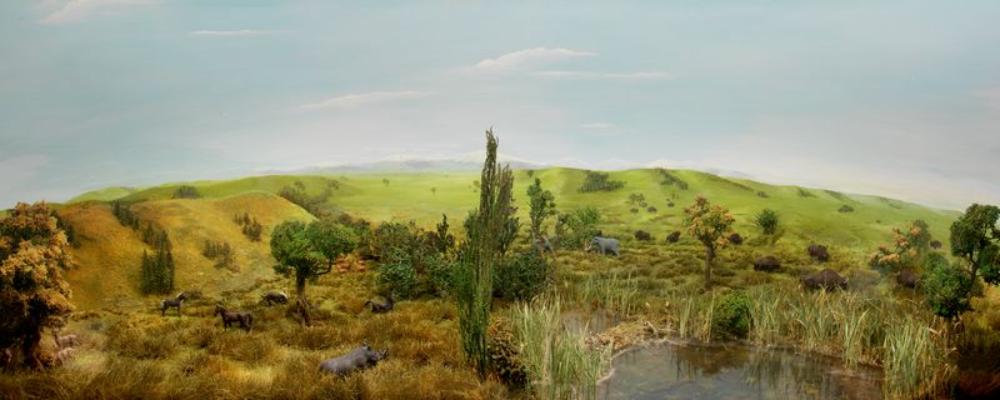
The museum also preserves an important numismatic collection, consisting of about 100,000 coins and medals. In the recently renovated prehistoric section, the evolution of the Bolognese settlement is represented by a series of Paleolithic stone tools and numerous artifacts documenting the development of the Neolithic, Copper Age, and Bronze Age. Particularly significant are the testimonies from the Farneto Cave, the Rocca di Badolo hoard (16th century BC), with its forty-one bronze axes, and artifacts from various inhabited sites, among which the one from S. Giuliano di Toscanella stands out, including a well-preserved casting mold for sickles and arrowheads. The exhibition path is characterized by a very rich Etruscan section. Bologna’s Villanovan phase (9th – mid-6th century BC) is illustrated by a wide selection from about four thousand tomb equipment from the necropolises (including those of Savena, S. Vitale, Benacci, Arnoaldi), comprising personal objects and bronze tools, as well as ceramic and bronze pottery. Of particular note are the famous Benacci askos, a very rare vase form dating to the late 8th century BC, and the extraordinary complex of the “S. Francesco hoard,” found near the eponymous basilica: a foundry deposit formed by a large dolium that contained over 14,000 bronze pieces, whole and fragmented, both locally made and from other origins.
The fully urban phase of Felsina, Etruscan Bologna (the “Certosa” or Felsine phase), is again illustrated mainly by grave goods, among which stand out the exceptional ones from the “Great Tomb” and the “Stool Tomb,” attributable to the Giardini Margherita necropolis. From the Certosa cemetery comes the name of the important bronze situla decorated with scenes of military, civil, and religious life. Also of great importance is the core of about two hundred and fifty sandstone carved stelae, which marked the most prestigious tombs. A room is dedicated to the Villanovan culture of Verucchio, the main site of Romagna in the early Iron Age, where a princely tomb characterized by a rich wooden furniture set is exhibited. Concerning the Roman age, in the atrium is displayed the loricate marble torso of Emperor Nero found during the 17th century in the theater area (Piazza dei Celestini), while between the atrium and courtyard is distributed the rich collection of inscriptions, mostly dating between the 1st century BC and the 1st century AD, interesting both for the onomastic and magistrate documentation and for the testimony offered by some decorations with scenes inspired by the deceased’s profession. Also placed in the courtyard are some milestones from the Via Aemilia.
Moving to the sections dedicated to objects of collectible provenance, in the Etruscan-Italic antiquities room, the bucchero pottery and, among the mirrors, the famous “Cospian patera” stand out. In the Greek section, the famous marble head of Athena Lemnia from the Palagi collection is exhibited, a beautiful Augustan-era copy of an original Phidian bronze. The series of Greek and Magna Graecia ceramics, gems, and goldsmithing is considerable. Special mention goes to the Egyptian collection, one of the most important in Europe, largely from Palagi’s provenance, recently rearranged, rich with over three thousand objects such as sarcophagi, stelae, ushabti, and various artifacts, documenting three millennia of civilization. Among the most important pieces are reliefs from Horemheb’s tomb at Saqqara (13th century BC), a monument rediscovered by recent excavations, for which a computer graphics video is dedicated. The museum is equipped with an IT section, with some workstations intended for visitors to explore and deepen aspects and themes of the rich museum heritage.
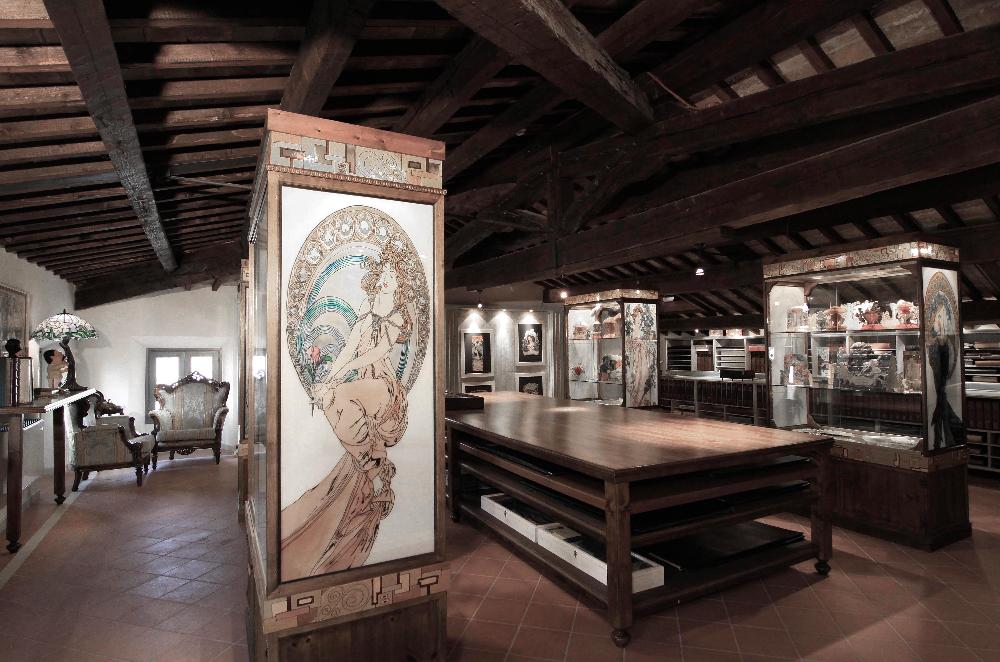
The exhibition hall, located on the ground floor, is a nearly 1000 sq. m. functional and suitable space to host highly significant exhibitions: over the past 40 years, hundreds of temporary exhibitions have been presented here to the public, both produced by the museum and organized in collaboration with other partners.
The museum is also known for the quality of its educational offer and lifelong learning, which make it a primary point of reference for the analysis of museum educational practices.
Of fundamental importance for the enhancement of the permanent heritage are finally the relationships with other national and international institutions linked to historical and scientific research activities, as evidenced by the numerous projects and the considerable number of loans in which the museum is engaged each year.